Best Compostable Dishware for Zero Waste Dining (2026)
Compare molded fiber and bamboo plates, understand commercial versus home composting, and choose dishware that fits your meal and disposal options.
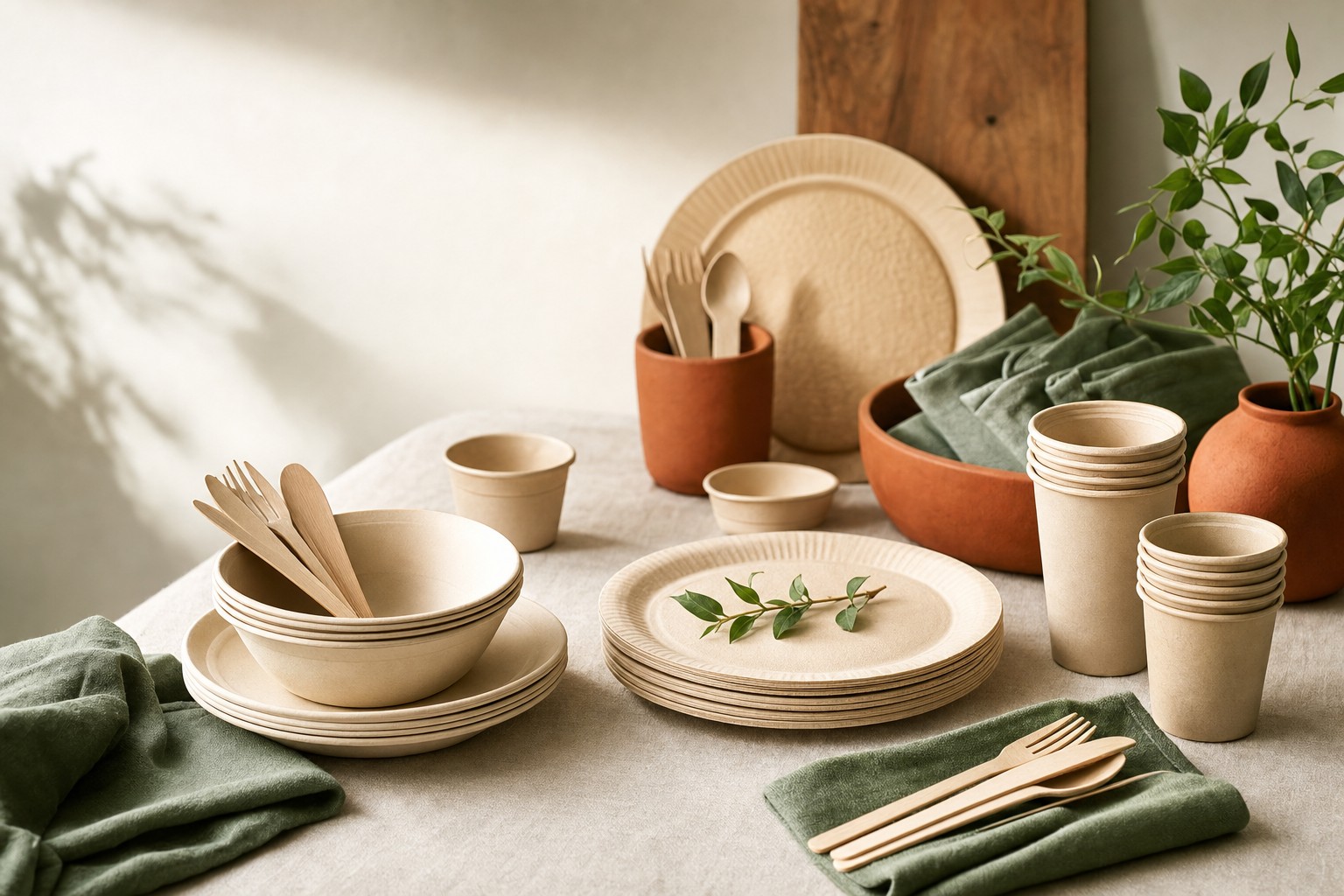
Featured Options Compared in This Guide
Full specs & notes ↓This post contains an affiliate search link. If you purchase through it, GreenChoice may earn a commission at no extra cost to you.
The best compostable dishware for your gathering depends on both the meal and where the used dishes will go. A plate that your compost collector rejects cannot deliver its intended composting benefit through that service.
EPA prefers reusable dishware when there is an effective system for collecting, washing and using it again. When disposables are necessary, EPA recommends certified commercially compostable options only where a program accepts those specific items and collection is arranged. That makes disposal access the first buying decision, before material or appearance. Source: EPA food service ware guidance
Choose the disposal route before ordering
For a catered meal or party, ask the venue or hauler whether its destination facility accepts plates, bowls, cups and utensils individually. Acceptance of food scraps does not establish acceptance of compostable dishes, and some commercial facilities reject compostable products altogether. Ask about the exact items you intend to buy, including lids and bin liners. Source: EPA food service ware guidance
Your practical choices are:
- An accepting commercial program is available: Compare certified dishware that the operator agrees to take, then choose formats suited to your menu.
- You have only a backyard compost bin: Choose items explicitly intended for home composting. Commercial certification alone does not establish suitability for that bin.
- Neither route is available: Use existing, borrowed or rented reusable dishes where practical. If disposables remain necessary, EPA recommends considering certified recyclable options that the local recycling program accepts.
BPI now distinguishes commercial-only certification from certification covering both commercial and properly managed home composting. Its home program uses a separate standard and different testing conditions; a commercial compostability mark is not interchangeable with a home claim. Sources: BPI certification, EPA food service ware guidance
Comparing plates for different meals
Molded fiber and bamboo veneer offer different formats and serving instructions. The useful comparison is between the specific plates, rather than assuming that all bamboo is stronger or all sugarcane is cheaper.
For a round plate with stated microwave and freezer compatibility: Eco-Products describes its GreenStripe 9-inch plate, SKU EP-P013, as molded natural fiber and lists microwaveability, freezer compatibility, and grease and cut resistance. These manufacturer specifications make it an option to consider when reheating on the serving plate matters. Its page states compliance with ASTM D6868; that standards claim should not be treated as a separate BPI certification or permission to compost it at home. Source: Eco-Products 9-inch plate
For square plates and several course sizes: World Centric offers its square fiber plates in 6-, 8- and 10-inch sizes. The company describes them as unbleached plant fiber suitable for hot or cold food, with resistance to moisture and grease, and claims certification for home and industrial composting. The range gives you smaller formats to consider for appetizers and larger ones for main courses. Match the home-compost claim to the exact item you order rather than extending it to every World Centric product. Source: World Centric square fiber plates
For bamboo veneer and smaller pack options: bambu’s Veneerware round plates come in 7-, 9- and 11-inch sizes, with packs of 8 or 25 and cases of 100. The brand positions the smallest size for appetizers or desserts, the middle size for salads or lunch, and the largest for dinner. It describes the plates as made from FSC-certified bamboo and approved by the Compost Manufacturing Alliance for commercial composting. Those are different claims: material sourcing does not establish backyard compostability. For a small gathering, compare the smaller packs against your guest count before buying a case. Source: bambu round plates
For a buffet, choose the plate size around the actual portions and whether guests will carry their meal or eat seated. Before committing to a bulk order, try a sample with the intended food and serving duration. That is particularly useful for saucy dishes or meals requiring a knife; a manufacturer’s resistance claim does not tell you how the plate will perform with your menu.
Hot food, reheating and cups need separate decisions
Holding a hot meal and reheating it in an appliance are different uses. Eco-Products explicitly lists its EP-P013 plate as microwaveable. World Centric describes its square plates as suitable for brief oven and microwave use, but that wording is not a cooking schedule. Obtain instructions for the exact plate before planning appliance use. Sources: Eco-Products, World Centric square plates
Do not extend a plate’s heat suitability to matching cups or lids. World Centric identifies its clear PLA items as intended for cold foods and drinks, while distinguishing heat-tolerant formulations used for other items. Its FAQ also says it does not claim microwave suitability for its paper cups, paper bowls or lids. For coffee service, select a hot-drink cup and compatible lid separately from cold-drink supplies. Source: World Centric FAQ
Plant-based plastic is still plastic, and plant origin alone establishes neither biodegradability nor compostability. Likewise, “biodegradable” is not a substitute for a compostability claim tied to suitable conditions. Source: EPA recycling and composting FAQ
Make cleanup match what you bought
At an event, place clearly labeled compost, recycling and trash bins together. Name the accepted items on the signs so guests can distinguish a compostable plate from an unaccepted lid or wrapper. EPA recommends keeping event food service ware reusable or certified commercially compostable when using a compostable service system, to reduce sorting confusion. Source: EPA food service ware guidance
Separate packaging from the dishes. World Centric, for example, says it uses HDPE wrapping for some products; a compostable plate does not make its wrapper compostable. Follow the collection program’s rules for each component. Source: World Centric FAQ
Keep compostable plastics out of conventional plastic recycling. If your collection service rejects them, ask about an accepting drop-off location. Do not use the recycling bin as a fallback or assume a commercial composting claim promises breakdown in a landfill. Source: EPA recycling and composting FAQ
There is also no universal backyard breakdown deadline for dishware. BPI uses different conditions and timeframes for commercial and home certification, and distinguishes disintegration testing from biodegradation testing. Those testing periods are not a countdown for your own compost pile. Source: BPI certification
Buying without overbuying
Count the dishes needed for each course, then compare pack quantities and the total delivered cost. Include any compost collection charge when budgeting for the event. A larger case is only useful if you have a plan for the unused plates.
You can browse compostable plates on Amazon. This is an affiliate search link, not a recommendation of every listing. Match the exact plate, serving instructions and accepted disposal route before ordering.
For everyday meals, repeated use remains the priority. For occasional disposable service, choose the plate that fits your food and has an actual composting destination. Find broader kitchen ideas in the zero-waste kitchen guide.
Sources
Products Compared in This Guide
Compostable plates
Compare current manufacturer specifications, materials, and package options for Compostable plates.