Best Zero Waste Kitchen Storage Solutions (2026)
Compare jars, reusable silicone bags and wax wraps for pantry staples, leftovers and freezer storage, with practical care and disposal guidance.
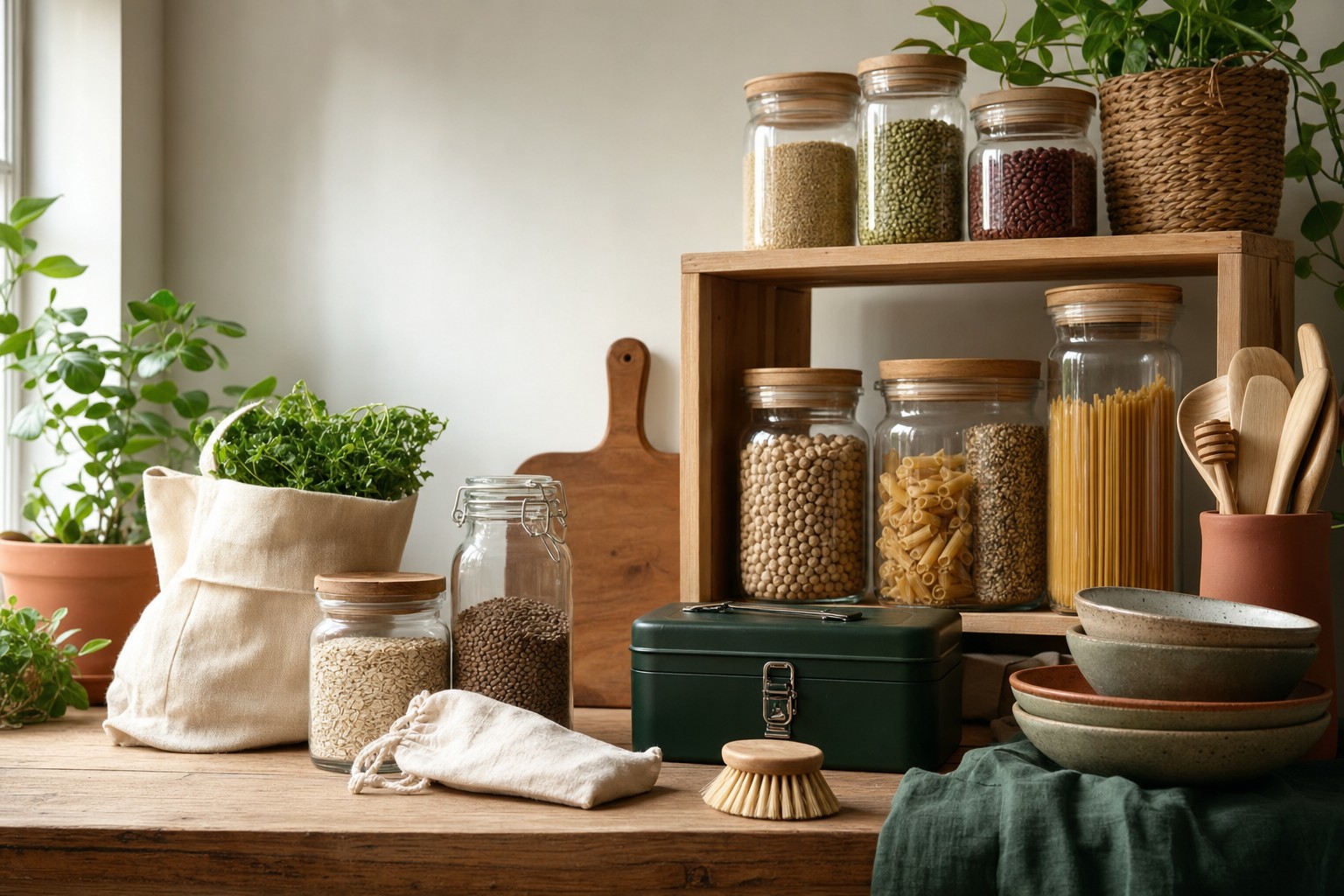
Featured Options Compared in This Guide
Full specs & notes ↓This post contains affiliate links. If you purchase through them, we may earn a commission at no extra cost to you.
The most useful kitchen storage setup starts with containers you already use, then fills specific gaps: a dependable closure for pantry staples, visible containers for leftovers, freezer-compatible storage and a reusable covering for bread or bowls. Treat “zero waste” as a goal for reducing disposable packaging and wasted food, rather than a promise attached to a material.
Food preservation deserves as much attention as the container. EPA recommends labeling stored food, keeping track of leftovers and freezing food you will not eat in time. Those habits give your storage a purpose beyond organizing shelves. Source: EPA food-waste prevention
Choose storage by the job it needs to do
| Storage job | Useful choice | Main tradeoff or restriction |
|---|---|---|
| Grains and other bulk pantry staples | An airtight container with a contents-and-date label | A decorative lid or snug closure does not necessarily provide an airtight seal. |
| Refrigerated leftovers | Clear, labeled containers sized for the portions you actually save | Visibility helps you identify food, but you still need a plan to eat or freeze it. |
| Food destined for the freezer | A reusable bag or jar explicitly suitable for freezing | Glass compatibility can depend on the jar shape, cover and headspace. |
| Bread, cheese or a covered bowl | A reusable wax wrap when cool-water handwashing fits your routine | A breathable wrap does not serve the same purpose as an airtight pantry container. |
| Storage followed by microwave reheating | A container with explicit microwave instructions | The container and its lid or other components can have different care requirements. |
The pantry and leftover recommendations follow EPA guidance. The distinctions for jars, bags and wraps are illustrated by the manufacturers’ WECK, Stasher and Bee’s Wrap care instructions; they should not be extended to every product made from the same material.
Glass jars: pay attention to the closure and components
Glass jars are a practical format for a pantry where you want to see the contents. Before buying a matching set, decide what each jar will hold and whether its opening accommodates your scoop or cleaning brush. Choose capacities around the quantities you normally buy, rather than increasing purchases to fill large jars. EPA advises buying only the amount you need and storing bulk food in labeled, airtight containers. Source: EPA
WECK’s FAQ makes an important distinction between a tight storage closure and an airtight canning seal. It recommends its glass lid, rubber ring and clamps—or its Keep Fresh Covers—for a tight storage closure. It describes an airtight seal as resulting from water-bath processing with the canning components. Simply closing a jar does not make its contents shelf-stable; this storage guide is not a canning procedure. Source: WECK FAQ
The lid material matters, too. WECK allows its wood lids for food storage and refrigeration but advises against freezing them. It does not recommend its porous cork lids for food or liquid storage. An attractive pantry lid therefore may be a poor choice for the food you intend to store. Source: WECK FAQ
For cleaning and reheating, WECK says its jars and glass lids can go in the dishwasher and microwave, while rubber rings, metal clamps and its other listed cover types cannot. It also warns against abrupt temperature changes. Separate the components before washing or heating instead of treating the assembled jar as one dishwasher- or microwave-compatible item. Source: WECK FAQ
Reusable silicone bags: useful when washing and drying are manageable
A reusable bag is worth considering if disposable food bags are something you regularly replace. Think through the whole cycle: filling it, emptying it, reaching food residue in the corners and finding space to dry it open.
Stasher says its silicone bags and bowls can be washed in the dishwasher or by hand. It recommends cleaning corners and seals with a bottle brush and drying the bag upside down with its opening spread. Turning it inside out can damage the seal or cause tears. If that cleaning routine would discourage you from using a bag, choose a container whose interior is easier for you to reach. Source: Stasher FAQ
For freezer-to-reheating routines, Stasher permits freezer and microwave use. Its microwave directions require leaving the seal partly open for ventilation, and it advises caution when handling a hot bag or bowl. These are instructions for Stasher’s products, not a general heat-use claim for all reusable bags. Source: Stasher FAQ
Wax wraps: choose them for covering, not every storage task
Wax wraps make sense when your recurring task is wrapping bread, cheese or a sandwich, or covering a bowl. Bee’s Wrap describes a breathable closure formed by warming and molding the wrap with your hands. For grains that need airtight storage, choose a suitable container instead. Sources: Bee’s Wrap FAQ, EPA pantry guidance
The main compromise is care. Bee’s Wrap requires handwashing with cool water and mild dish soap, followed by air drying. It advises keeping wraps away from hot water, dishwashers, microwaves and ovens. It also excludes raw meat and fish and says not to wrap hot food. Use another suitable container when those restrictions conflict with the meal you are storing. Source: Bee’s Wrap FAQ
Do not leave perishable food out while waiting to use a wrap. EPA advises refrigerating or freezing leftovers and not leaving perishables at room temperature for more than two hours. Source: EPA
Replacement should depend on condition and function. Bee’s Wrap says its wraps can last up to a year with regular use and proper care, and identifies thinning, excessive softness or failure to stick as signs that useful life has ended. That is a manufacturer estimate, not a guaranteed replacement interval. Source: Bee’s Wrap FAQ
Build a small system around what you actually store
Start by matching your existing food-storage containers with their lids. Assign useful sizes to recurring foods before adding anything new. A practical arrangement is to give leftovers an easy-to-see place, keep pantry labels facing forward and label freezer portions with both contents and dates.
For freezing in WECK jars, the details are specific: the FAQ names its Mold, Mini Mold and Quadro collections, used with Keep Fresh Covers and 1–1½ inches of headspace. Do not assume that every jar or lid combination has the same freezer suitability. Source: WECK FAQ
Produce needs its own decisions. EPA recommends high-humidity refrigerator storage for vegetables prone to wilting, such as leafy greens and carrots. It recommends a cool, dry, dark and ventilated location for produce including potatoes, onions and garlic, and separating ethylene-producing fruits from other produce. Buying more sealed containers will not replace those storage conditions. Source: EPA
If you need an additional container, browse reusable kitchen storage on Amazon. This affiliate link opens search results; compare the particular item’s dimensions, closure and care instructions against the job you need it to perform.
For changes beyond food storage, see the complete zero-waste kitchen guide.
Plan for worn-out storage
Disposal options differ by item and local collection rules:
- Glass: EPA says glass food and beverage containers can be recycled repeatedly, but local acceptance varies. Its guidance excludes broken glass from the recycling bin. Do not assume every durable glass storage item belongs in the same stream as packaging jars. Source: EPA recycling guidance
- Stasher silicone: The manufacturer says most recycling facilities do not accept silicone. It offers a TerraCycle route for damaged Stasher products, with free shipping labels limited to U.S. returns. Source: Stasher FAQ
- Bee’s Wrap: The manufacturer describes its wraps as compostable at the end of their useful life. Its FAQ does not specify composting conditions or a breakdown time; confirm acceptance before placing one in a collection program. Source: Bee’s Wrap FAQ
Sources
Products Compared in This Guide
Reusable kitchen storage
Compare current manufacturer specifications, materials, and package options for Reusable kitchen storage.