Cookware Materials: Ceramic Coatings, Cast Iron and PTFE
Compare ceramic-coated and seasoned cast-iron cookware, understand PTFE and PFAS claims, and weigh care requirements and warranty limits.
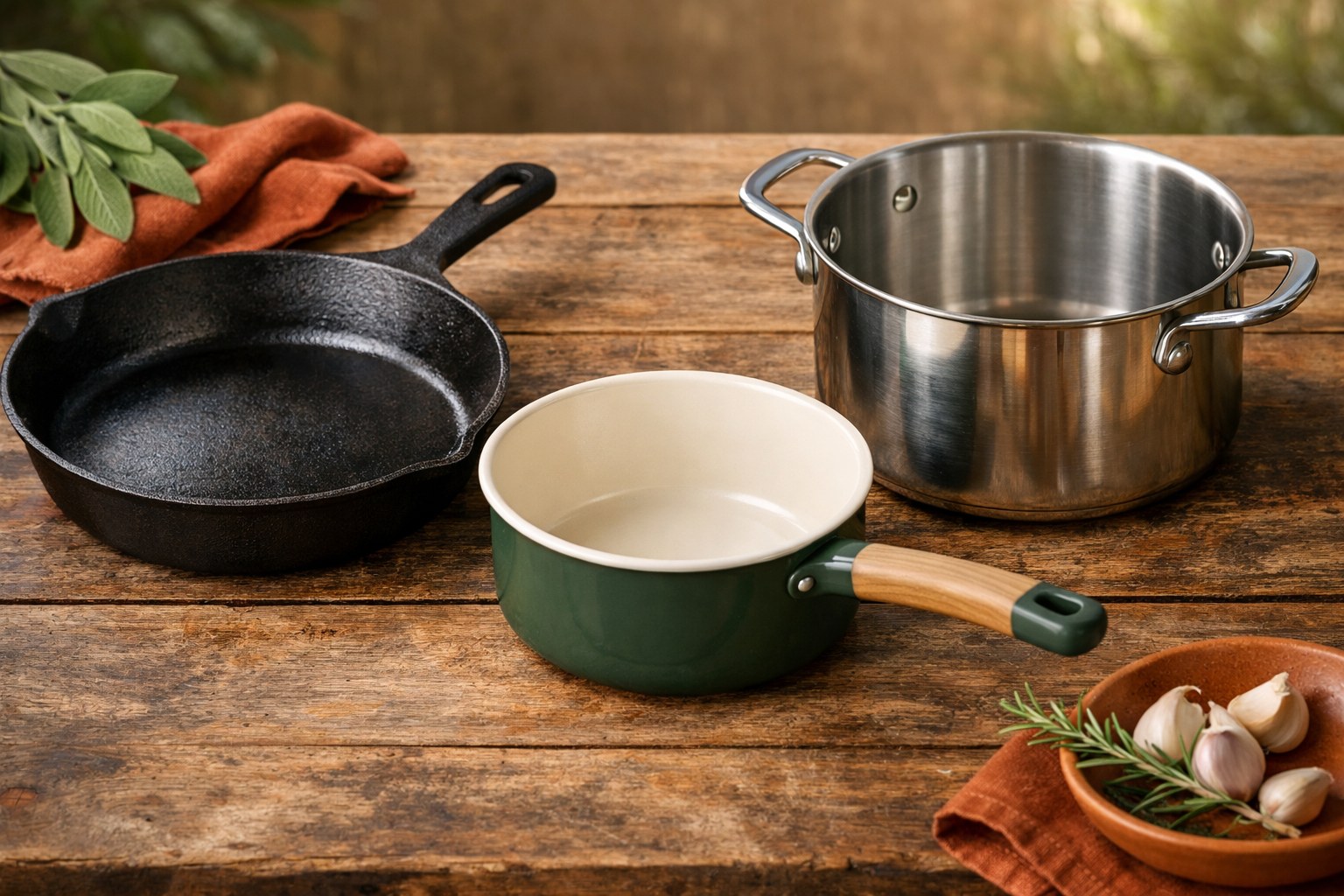
Featured Options Compared in This Guide
Full specs & notes ↓Choosing cookware starts with the cooking surface, the meals you make, and the care you can sustain. For someone avoiding PTFE coatings, a seasoned cast-iron skillet and a ceramic-coated pan offer different approaches: Lodge describes an oil-seasoned surface, while Our Place describes a ceramic coating over aluminum. Neither description, by itself, proves that one pan is healthier or better for every kitchen.
You also do not need to replace a functioning PTFE pan solely because it contains PTFE. Germany’s Federal Institute for Risk Assessment (BfR) says adverse health effects are not expected when PTFE cookware is used as intended. Its central precaution is to avoid overheating, especially heating an empty pan. BfR’s PTFE guidance
What PFOA-free, PTFE-free and PFAS-free tell you
These claims answer different questions:
- PFOA-free addresses one particular substance. It does not establish that a pan contains no PTFE or other PFAS.
- PTFE-free addresses the fluoropolymer commonly used for nonstick coatings. BfR identifies PTFE as part of the PFAS group and notes that other fluoropolymers can also be used in coatings.
- PFAS-free is a broader claim. Distinguish a manufacturer’s statement about its formulation from a laboratory result reporting that tested substances were not detected within a method’s reporting limits.
The first two distinctions follow from BfR’s explanation of PTFE and related coatings. Caraway’s testing FAQ illustrates the third: it describes both formulations made without PFAS and testing with reporting limits. A nondetection result is not a measurement of absolute zero.
PFOA’s phaseout also needs context. EPA’s stewardship program asked eight participating companies to work toward eliminating PFOA and related chemicals from emissions and products by 2015. EPA reports that all participants said they met the goals, while noting that existing stocks might still be used and some imported articles might contain PFOA. That does not support a blanket claim that PFOA disappeared from all cookware in 2013. EPA’s PFOA stewardship fact sheet
For a plastic-free kitchen, be precise about your objective. Avoiding a PTFE cooking surface is one purchasing criterion; establishing the materials of the entire pan, lid, handles and accessories is a separate question. A coating claim cannot answer both.
Which option fits your cooking?
| Your priority | Option to consider | Practical tradeoff |
|---|---|---|
| A seasoned surface for stovetop, oven and outdoor cooking | Lodge seasoned cast iron | Lodge lists broad heat-source compatibility, but the 12-inch skillet weighs 7.69 pounds before food is added and requires washing, drying and oiling. |
| A ceramic-coated pan with a lid and integrated utensil storage | Our Place Ceramic Nonstick Always Pan | The manufacturer lists an aluminum body, nesting beechwood spatula and a 450°F oven limit. The coating still requires care. |
| A ceramic cookware brand explaining its chemical testing | Caraway | Its testing FAQ describes formulation and laboratory screening claims; its US warranty has a one-year term and substantial exclusions. |
| Avoiding an unnecessary purchase | Your existing cookware | Start with the cooking task your current pans cannot handle satisfactorily before choosing a replacement or addition. |
Product details above come from Lodge’s skillet page, Our Place’s pan page, and Caraway’s testing FAQ and warranty.
Lodge: choose it for a seasoned surface and broad cooking compatibility
Lodge describes its Classic skillet as cast iron seasoned with vegetable oil and made without PFAS. It lists compatibility with induction and other stovetops, ovens, grills and campfires. That makes it a relevant option when your cooking extends beyond the stovetop to outdoor heat sources.
The practical constraint is handling. Lodge lists the 12-inch model at 7.69 pounds. Consider lifting it from a low cabinet, carrying it with food, and washing it in your sink before choosing that size. The care routine is straightforward but requires follow-through: hand wash, dry and oil. Lodge’s specifications and care instructions
Choose it if that handling and maintenance suit your routine. Its surface is seasoned; describing it as having no surface treatment would be misleading. Neither its seasoning nor the manufacturer’s durability language establishes a guaranteed lifetime or superior food release compared with ceramic cookware.
Our Place: choose it for the features you will actually use
Our Place describes the Ceramic Nonstick Always Pan as having an aluminum body and lid, a Thermakind ceramic coating, pour spouts and an included beechwood spatula that nests on the handle. The company says the coating is made without PFAS, including PTFE and PFOA, and without lead or cadmium. These are manufacturer disclosures. Our Place’s product description
The lid and pour spouts are relevant if you frequently switch between covered cooking and draining or serving. The nesting spatula may appeal where counter space is tight. But a multifunction pan still occupies one burner and cooks one batch at a time: it cannot replace the separate pots needed to cook several components simultaneously.
Our Place specifies oven use up to 450°F. Treat that as this product’s oven limit, not a recommended stovetop temperature or a threshold for every ceramic coating. Its page recommends a small amount of oil or butter and advises against aerosol sprays. It also states a three-year limited warranty, conditional on following care instructions; that statement does not establish three years of unchanged nonstick performance. Our Place’s care and warranty FAQ
Caraway: weigh the testing claims alongside the warranty
Caraway says its cookware and bakeware formulations are made without PFAS, including PFOA and PTFE. Its FAQ describes testing of food-contact materials by independent laboratories, with PFAS not detected within the methods’ reporting limits. It also describes testing for metals such as lead and cadmium against applicable limits. The company says testing varies by product line. These statements should not be expanded into a claim that every substance is absent or that every product performs identically. Caraway’s testing FAQ
For a purchase decision, the warranty is equally useful. Caraway’s US limited warranty covers qualifying defects in materials, construction or workmanship for one year, subject to its terms. It excludes normal wear and several forms of damage, including coating damage from excessive heat or metal utensils, thermal shock, abrasive cleaning and improper storage. Purchases must meet its seller and proof-of-purchase requirements. Caraway’s warranty
If you routinely use sharp utensils or abrasive scrubbers, those exclusions are a reason to reconsider whether coated cookware fits your habits. They also undermine any assumption that buying a ceramic set guarantees years of replacement-free use. Start with the vessel you need rather than buying a set to obtain a general health promise.
Keeping a PTFE pan: the precautions that matter
BfR places PTFE decomposition and the potential release of hazardous gases at around 360°C and above. This is a hazard threshold, not a cooking target. The institute advises against heating PTFE cookware empty and highlights how quickly gas and induction stoves can heat a pan. It also advises against conditions such as direct grill flames where those temperatures may occur. Follow any lower limits in the pan’s own instructions. BfR’s cooking guidance
Scratches and overheating should not be treated as the same issue. BfR says accidentally swallowing tiny PTFE particles from a scratched coating is not expected to harm health because the particles are not digested and pass through unchanged. A damaged or poorly performing pan can still warrant replacement under its manufacturer’s guidance, but scratches alone do not establish that a meal is poisonous. BfR’s assessment of scratched coatings
Environmental concerns are a separate consideration. EPA describes persistence and environmental exposure among the reasons for its PFOA program. Those concerns can inform a preference to avoid PFAS in future purchases without implying that intended use of a current PTFE pan has been shown to harm its owner. EPA’s explanation
Build around a missing cooking task
Before shopping, identify one problem: a skillet is awkward to lift, a coating no longer performs satisfactorily, you need a covered pan, or you want cookware suitable for a grill. Match the purchase to that problem.
If existing stainless-steel or carbon-steel cookware already meets your needs, keep it in the plan rather than assuming a ceramic set must replace it. Choose Lodge when its seasoned surface, listed heat-source compatibility and care routine fit. Consider the Always Pan when its lid, pour spouts and utensil storage solve a practical problem. For Caraway, weigh the stated formulation and testing approach against the warranty exclusions and your cleaning habits.
Buy the number of vessels your meals require. A single pan may fill the gap; a coordinated set is optional. For broader kitchen planning, see The Complete Zero-Waste Kitchen Guide.
Sources
Products Compared in This Guide
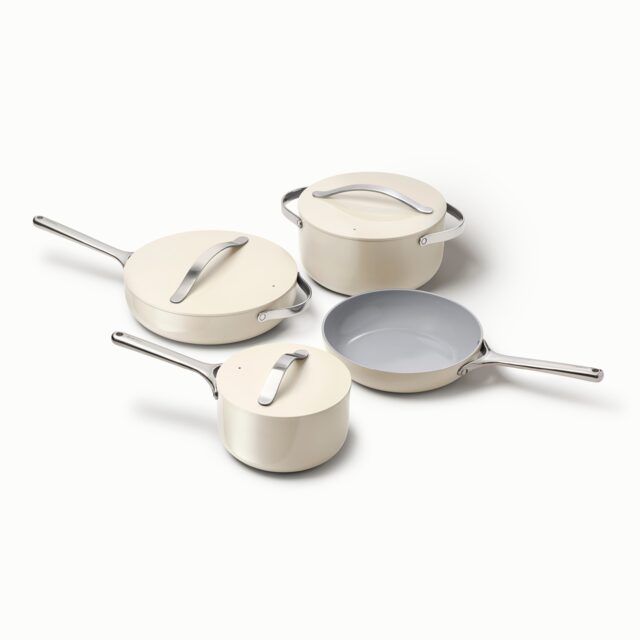
Caraway Cookware Set (7-piece)
The best ceramic set for most households. Even heat distribution, PTFE/PFAS-free coating, and the storage solution (magnetic pan rack + lid caddy) is genuinely clever. Handles 3-5 years of daily use with care.
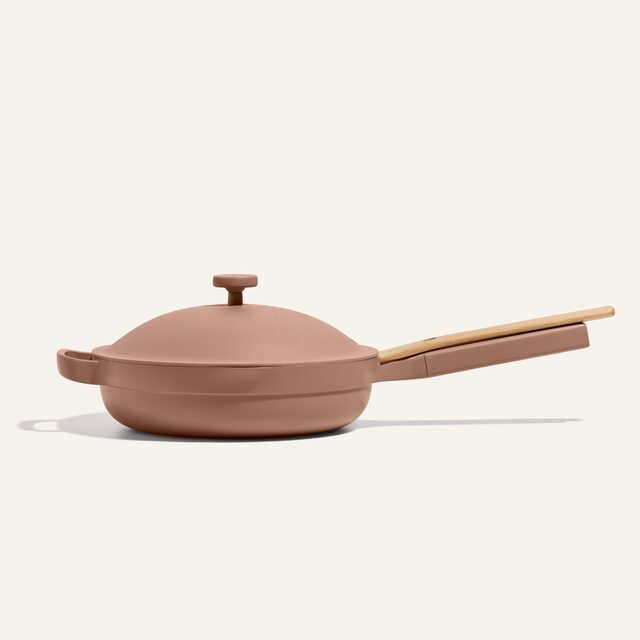
Our Place Always Pan 2.0
One pan that braises, steams, fries, and strains. Better for minimalist kitchens than the full Caraway set. The 2.0 fixed the heat distribution unevenness of the original.
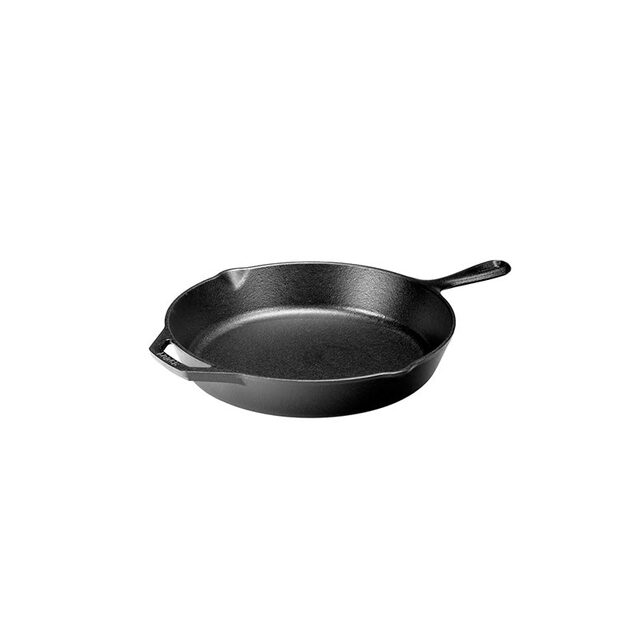
Lodge Cast Iron Skillet (12-inch)
The indestructible, buy-once option. Heavy, requires seasoning, reacts with acidic foods—but gives you the best sear of any pan on this list and gets better with every use. Lodge comes pre-seasoned.
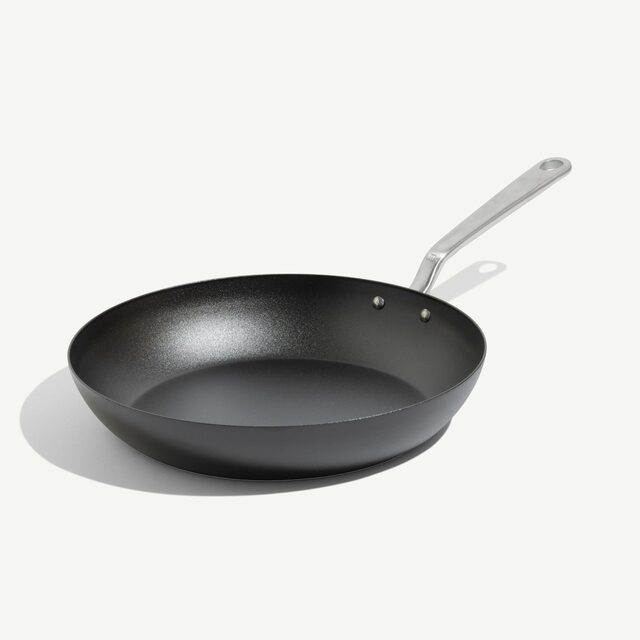
Made In Carbon Steel Skillet
Lighter than cast iron, heats faster, gets just as non-stick once properly seasoned. The professional kitchen choice. Steeper learning curve than ceramic, but it's the most durable pan on this list.