Compostable Trash Bags and Zero-Waste Bin Alternatives (2026)
Compare compostable kitchen bag formats, home and commercial composting requirements, and reusable bin options for your waste collection routine.
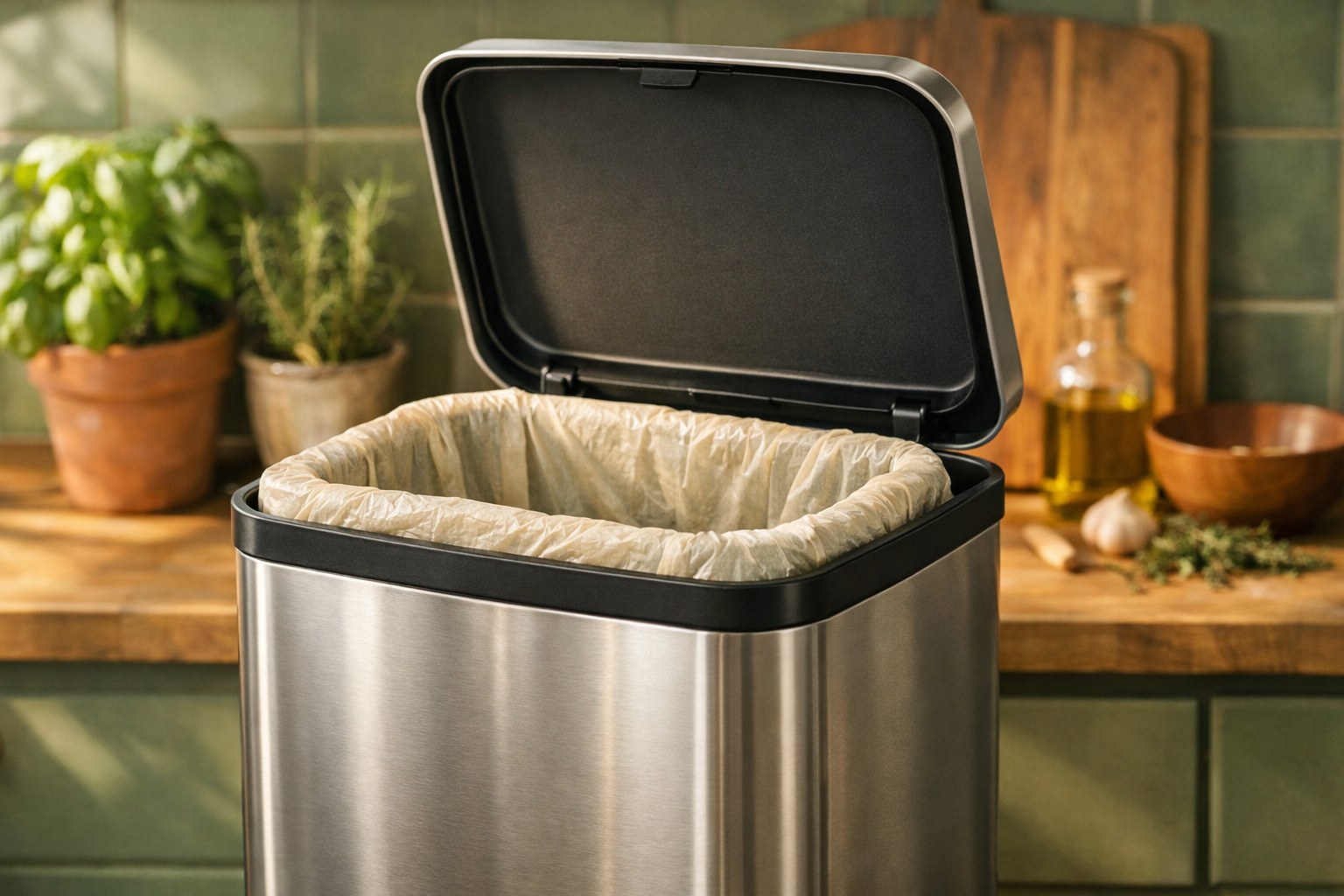
Featured Options Compared in This Guide
Full specs & notes ↓A compostable bag is most useful as a food-scrap liner going to a composting system that accepts it. For mixed trash headed to landfill, its compostability mark does not establish an environmental advantage. For dry household waste, an existing washable bin may let you skip a disposable liner.
The first decision is where the waste will go. EPA distinguishes commercial composting from backyard composting and says residents should confirm whether their collection program accepts compostable plastics. Acceptance of food scraps does not automatically include acceptance of their liner. EPA composting guidance
Match the bag to the disposal route
| Your situation | Practical collection choice | What to resolve before buying |
|---|---|---|
| Food-scrap collection accepts compostable liners | A liner meeting the program’s requirements | Which bags and food scraps the program accepts |
| Food-scrap collection rejects compostable plastic | A washable container emptied directly, or a permitted liner | Whether the service accepts loose scraps or requires another liner type |
| You compost at home | An unlined collection container, or a bag with an explicit home-compostability designation | Whether the designation applies to that exact bag |
| You have only ordinary garbage collection | The liner your waste and collection method require | Whether small dry-waste bins can go without separate liners |
| You carry recycling to a shared collection point | A reusable tote or bin that you empty and bring back | Accepted materials and local bagging rules |
EPA advises checking local acceptance and prioritizing waste reduction and reuse. A compostable liner does not change which contents belong in a collection stream. EPA recycling guidance, EPA compostable-plastic guidance
Kitchen bag differences that affect the choice
Manufacturer descriptions offer useful distinctions in dimensions, closure, materials, and intended composting setting. They do not establish which bag carries the heaviest load or resists leaks best.
| Bag | Manufacturer-described details | Practical implication |
|---|---|---|
| UNNI 13 Gallon Tall Kitchen Food Scrap Bag | Lists 50 bags per roll, dimensions of 23.8 × 31.5 inches, and thickness of 0.9 mil. The page states BPI certification to ASTM D6400 and TÜV Austria OK compost HOME certification. | Offers an explicit manufacturer claim for home compostability. Its listed dimensions provide more height than HoldOn’s tall kitchen bag. |
| HoldOn Compostable Tall Kitchen Bags | Lists 40 bags per box, a drawstring, dimensions of 24 × 27 inches, and thickness of 0.98 mil. States BPI industrial compostability. | A drawstring option for an accepting commercial composting route. Check that the listed height leaves room to fold over your bin’s rim and close the bag. |
| BioBag Tall Kitchen 13 Gallon Food Scrap Bags, 12ct | Describes a straight top and star bottom, for collecting separated organic waste. | The 12-count format provides a smaller initial quantity than the listed UNNI roll or HoldOn box. The page does not identify a home-composting designation. |
| If You Care 13 Gallon Compostable Tall Kitchen Bags | Describes potato starch blended with a compostable polymer, without added plasticizers or polyethylene. | Useful composition information, but it does not by itself establish home compostability or comparative strength. |
HoldOn’s tall kitchen bag is excluded from the brand’s TÜV home-compostable certification claim. Its materials page makes that exception explicit, so a home-composting claim for another HoldOn size should not guide this purchase. HoldOn materials
Nominal gallon capacity is only a starting point for fit. Compare the bag’s width and height with your container and allow room for the rim and closure. UNNI and HoldOn both describe 13-gallon bags, yet their listed heights differ. Thickness alone does not establish how much wet waste either can carry.
Storage and emptying routines also matter. HoldOn recommends cool, dry storage, draining excess liquid from wet material, and taking garbage out every two to three days when using its bags for trash. UNNI recommends cool, dry storage, use within one year of purchase, and buying only what you expect to use within nine months. These are brand-specific instructions, not a shared shelf life or performance guarantee. HoldOn instructions, UNNI instructions
What a compostability claim does—and does not—establish
Home and commercial composting require different designations. BPI offers Commercial Only and Commercial & Home certifications. The latter includes properly managed home compost bins. A general statement that a bag is BPI certified does not tell you which setting applies. Local collection acceptance remains a separate requirement. BPI certification, EPA composting guidance
Certification also does not supply a universal disappearance deadline. BPI specifies different temperatures and durations for disintegration and biodegradation testing. Its biodegradation tests run for six months under commercial conditions and twelve months under home conditions. Those laboratory testing periods do not predict the exact time a bag will take in your own compost bin. BPI certification
Plant ingredients do not establish that a bag is plastic-free. HoldOn identifies PBAT, PLA, and cornstarch in its material blend and acknowledges crude oil use in PBAT production. If You Care describes a potato-starch-and-polymer blend. EPA explains that plant-derived plastics are not automatically biodegradable or compostable. Choose on the basis of the material’s intended disposal setting, rather than treating a starch ingredient as the whole composition. HoldOn materials, If You Care materials, EPA plastics guidance
Landfill disposal provides no compostability shortcut. EPA explains that ordinary disposal environments do not support unqualified claims of complete decomposition within a year. A compostability certification therefore gives you no reason to expect a bag to compost inside landfill-bound mixed trash. Without an accepting compost destination, paying extra for that designation has no demonstrated landfill benefit here. EPA disposal guidance
Bin alternatives that reduce disposable liners
Leave small dry-waste bins unlined
Try an existing washable bin for dry household waste, then empty it into your main collection container as local rules allow. This can eliminate individual liners in several small bins even when the final garbage collection still requires a bag.
If a removable carrier makes emptying easier, consider a washable liner that stays with you after disposal. Choose one whose cleaning instructions fit your routine. Start with what you own: EPA encourages reducing bag use and reusing bags rather than discarding them after one use. EPA bag guidance
Size a food-scrap container around the trip to collection
A tall kitchen bin may be unnecessary when you separate food scraps from other waste. Choose a container based on the available counter or cupboard space, the amount you collect between trips, and how you will carry it to pickup or drop-off. Where loose scraps are accepted, a washable container can serve as both storage and transport without a disposable liner.
Before buying, compare the opening for scraping plates, access for washing, lid removal, and carrying design. These features are more useful to assess than assuming a filter guarantees odor-free storage.
If you need a dedicated container, this Amazon search for stainless countertop compost bins can help you compare sizes and designs. This is an affiliate search link; GreenChoice may earn a commission from qualifying purchases. Individual listings are not recommendations.
Carry recycling in a reusable tote
Use a bin or tote to move accepted recyclables to the collection point, empty it according to the program’s rules, and bring it back. A compostable bag should not enter plastic recycling with the contents: EPA says compostable plastics can contaminate and disrupt that stream. EPA compostable-plastic guidance
EPA generally advises emptying and rinsing plastic, metal, and glass containers, while keeping paper clean and dry. Plastic bags and film generally require a separate collection route, and a resin code does not guarantee local acceptance. EPA recycling guidance
Apartment equipment still needs a destination
For an apartment, a washable scrap container paired with an accepting pickup or drop-off service is a practical starting point. Ask separately about food scraps and compostable liners. If there is no accepting pickup, EPA recommends asking your waste company or local government about drop-off options for compostable plastics. EPA composting guidance
Bokashi requires a further processing stage. The University of Saskatchewan describes fermenting food waste, including meat and dairy, in a sealed bucket. The fermented food waste then goes into a large indoor soil tub, an outdoor compost pile, or garden soil to finish decomposing. Its indoor method calls for garden soil rather than sterile potting soil. University of Saskatchewan bokashi guidance
Before adding a bokashi bucket, account for both the bucket and that finishing destination. For more on indoor options, see the apartment composting guide.
Make the purchase fit your routine
For an accepting organics service, first select the permitted bag type, then compare dimensions and closure. Divide the current delivered price by the actual number of bags to compare costs. Start with a smaller quantity if fit is uncertain, and keep bulk purchases within the manufacturer’s storage guidance.
For dry bins, try removing a liner before buying a replacement system. If your only destination is ordinary garbage collection, focus on reducing unnecessary bags and discarded material. EPA identifies waste prevention and reuse as preferred approaches. EPA waste-reduction guidance
For related storage changes, see the complete zero-waste kitchen guide.
Sources
- EPA: Plastic recycling and composting questions
- EPA: Frequent questions on recycling
- BPI: Compostability certification
- UNNI: 13 Gallon Tall Kitchen Food Scrap Bag
- HoldOn: Compostable Tall Kitchen Bags
- HoldOn: Materials
- BioBag: Tall Kitchen 13 Gallon Food Scrap Bags, 12ct
- If You Care: 13 Gallon Compostable Tall Kitchen Bags
- University of Saskatchewan: Bokashi composting
Products Compared in This Guide
Amazon search for stainless countertop compost bins
Compare current manufacturer specifications, materials, and package options for Amazon search for stainless countertop compost bins.
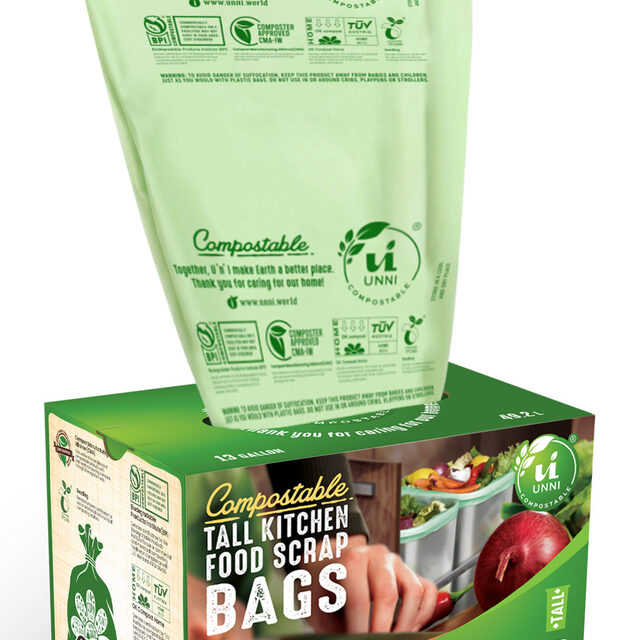
Compostable Trash Bags (30-count, 13-gallon)
BPI-certified compostable, made from plant starch. Holds kitchen waste without tearing under normal load. Compostable in industrial conditions; in landfill, breaks down faster than LDPE plastic.
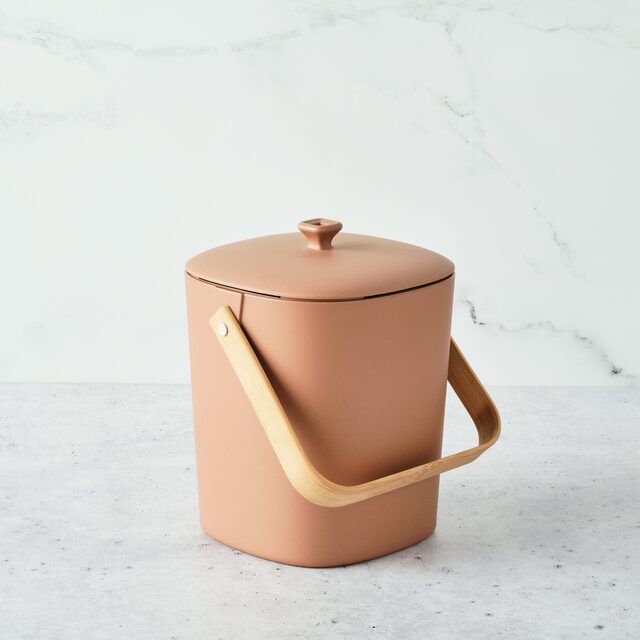
Small Compost Bin for Kitchen Counter (1.3-gallon)
Stainless steel with charcoal filter to prevent odors. The right size for 2-4 days of kitchen scraps before emptying. Better than a large outdoor-only bin for daily kitchen use.
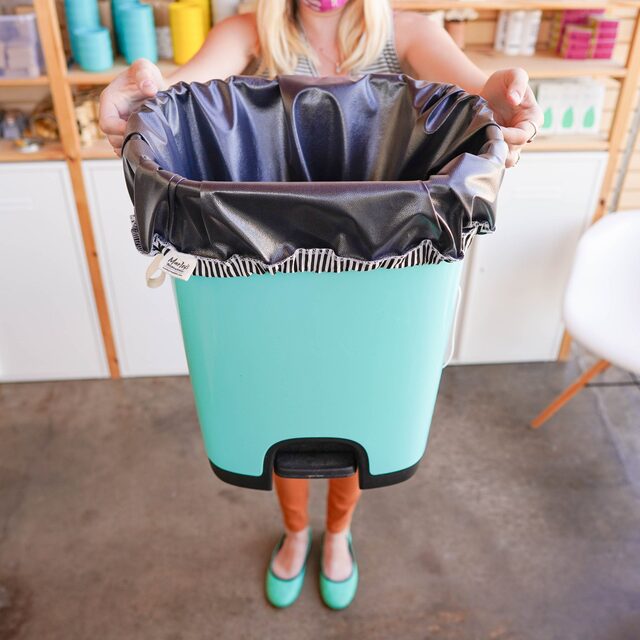
Reusable Trash Can Liner (Set of 3)
Machine-washable canvas or nylon bin liners. For dry waste (paper, cardboard, recyclables) where the bin liner doesn't actually need to be disposable. Wash weekly, reuse indefinitely.
Frequently Asked Questions
Should I use compostable bags for landfill-bound kitchen trash?
Compostability certification does not establish a landfill benefit. Choose these bags for a composting system that accepts them; for ordinary trash, reduce unnecessary liners while following collection rules.
Does BPI certification mean a bag can go in backyard compost?
Only an applicable home-compostability designation supports that use. BPI offers Commercial Only and Commercial & Home certifications; a general BPI claim does not identify which applies.
Can compostable bags go in plastic recycling?
No. EPA says compostable plastics can contaminate and disrupt plastic recycling. Keep them out of plastic recycling collections.
Does bokashi eliminate the need for a compost destination?
No. Bokashi ferments food waste. The fermented food waste must then finish decomposing in a suitable indoor soil tub, outdoor compost pile, or garden soil.