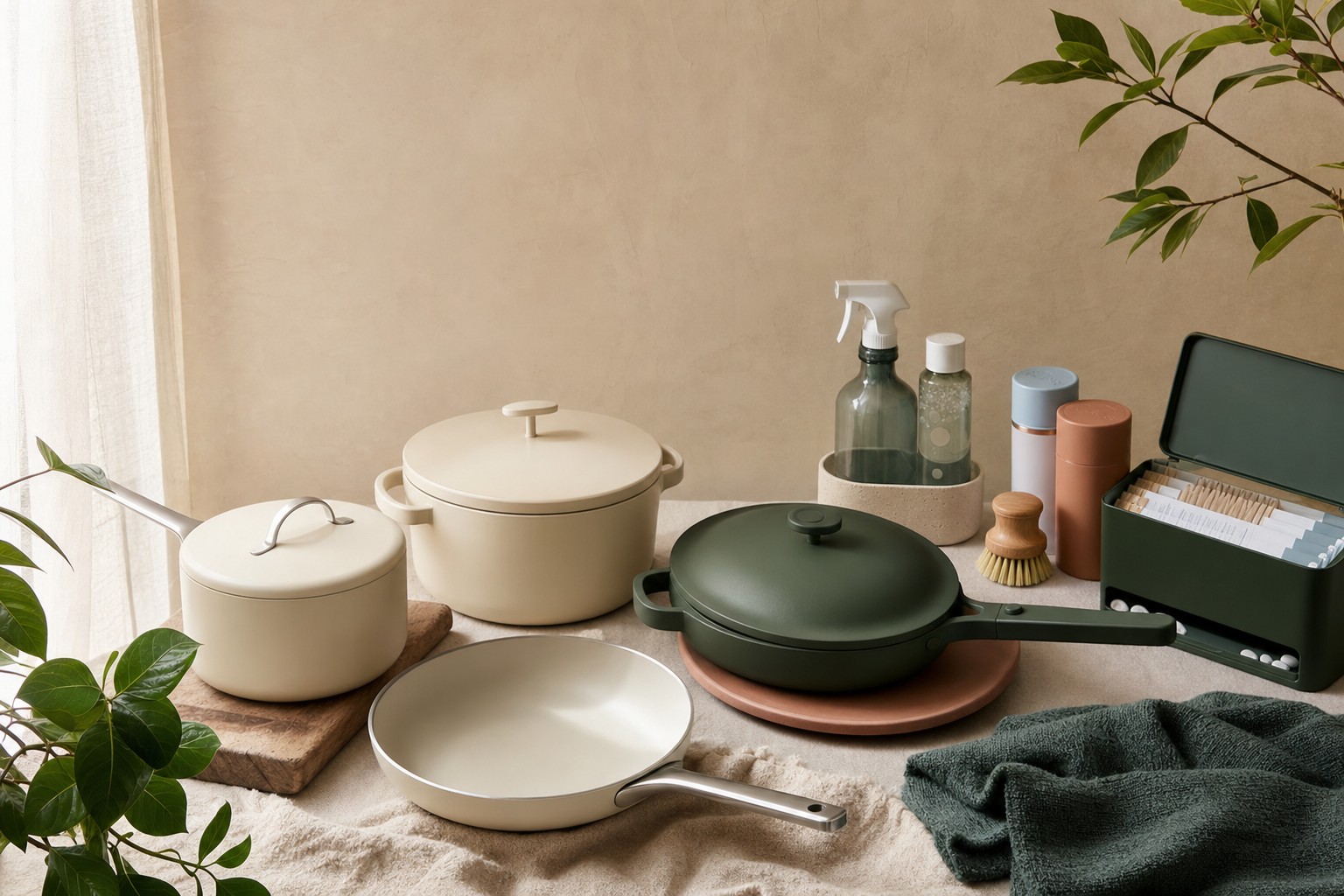
Featured Options Compared in This Guide
Full specs & notes ↓A zero-waste kitchen starts with fewer things to discard, not a new set of everything. Keep useful equipment, make food easier to use before it is forgotten, and replace recurring disposables where a reusable option fits your routine.
Storage, cleaning, cookware, and composting solve different problems. A refillable spray bottle addresses repeated bottle purchases; a compost bin handles suitable scraps; neither fixes groceries that go uneaten. Use the decisions below to build a kitchen routine you can maintain.
Start with what leaves your kitchen
For a week, note the items you throw away. Separate edible food you did not use, preparation scraps, packaging, and worn-out equipment. This is a way to choose your next change—not a requirement to measure every scrap.
| What keeps appearing | First action to try | Purchase only if needed |
|---|---|---|
| Forgotten leftovers | Create a visible place for food to use next and plan a meal around it | Containers that fit your actual portions and fridge |
| Disposable lunch bags | Pack a typical lunch in a container you already own | A reusable bag or container suited to that lunch |
| Wrap used over bowls | Pair frequently used bowls with existing fitted lids | A cover in the size you repeatedly need |
| Empty cleaning sprays | Pick one routine cleaning job to move to a refill system | The appropriate bottle and refill, rather than a whole-house kit |
| Fruit and vegetable scraps | Choose a composting destination | A collection container or compost bin suited to that route |
Avoid making a replacement schedule around arbitrary monthly spending. Finish usable supplies and buy for a specific unmet need.
Food storage: choose by the meal, not the matching set
Before buying storage, match your existing containers with their lids. Put the combinations you actually use within reach. Then identify the gap: carrying soup, storing a large dinner portion, covering a bowl, or fitting food into a crowded freezer.
| Option | When to consider it | Decision that matters |
|---|---|---|
| Existing food-storage containers | Everyday leftovers and packed meals | Do the portions fit, and do you still have usable lids? |
| Glass containers | When you want rigid containers and easy visibility | Compare the filled weight and available replacement lids; do not assume every glass container permits oven use or freezer-to-oven transfer |
| Reusable silicone bags | When a flexible format fits your lunch or storage space | Try one before buying a set; assess the closure, cleaning access, and drying routine |
| Beeswax wraps or other flexible covers | When covering bowls is the recurring job | Match the cover to the bowl and intended food; do not treat a wrap as a leakproof transport container |
| Food-storage jars | When their shape suits your dry ingredients | Make sure your scoop fits and the jar fits the shelf; special uses such as freezing or canning need suitable jars and instructions |
Treat heat, freezing, dishwasher use, and food compatibility as properties of the particular container and lid. A material name alone is not a complete set of use instructions.
For a practical trial, replace one disposable use with one reusable item. Keep it only if filling, washing, drying, and storing it fit your routine. A large set is unnecessary when a single missing lunch container is the problem.
Explore the food-storage guide and reusable beeswax wrap guide for those specific decisions.
Cleaning: tablets versus liquid concentrate
Refill systems ask you to keep using the dispensing bottles. The meaningful comparison is how you prepare each cleaner, which jobs the kit covers, and whether you will use its contents.
Blueland: separate tablets for separate jobs
Blueland’s Clean Essentials page lists four bottle-and-tablet combinations: foaming hand soap, multi-surface cleaner, bathroom cleaner, and glass and mirror cleaner. Its instructions say to add warm water to the indicated line, dissolve the tablet, and then replace the nozzle. The listed kit does not include dish soap or toilet bowl cleaner. Source: Blueland
This format suits someone who prefers a designated refill for each bottle. For a kitchen-only purchase, consider whether you need the bathroom and glass cleaners as well as the multi-surface cleaner and hand soap.
Scent also distinguishes the formulas. The page describes lemon scents for hand soap and multi-surface cleaner, eucalyptus mint for bathroom cleaner, and an unscented glass and mirror cleaner. Do not choose the entire kit expecting every formula to be unscented. Source: Blueland
Branch Basics: one concentrate, different dilutions
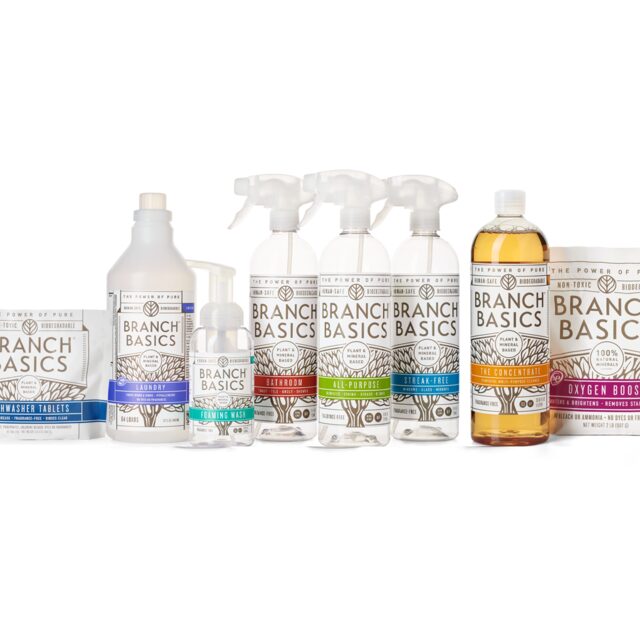
Branch Basics’ Premium Starter Kit page describes a concentrate, a separate Oxygen Boost powder, and refillable bottles for all-purpose, bathroom, streak-free, laundry, and foaming-wash uses. It offers plastic and glass bottle options. The different cleaning solutions use different proportions of concentrate and water, guided by the bottle markings. The company describes its products as fragrance-free. Source: Branch Basics
This approach suits someone willing to prepare different dilutions from one concentrate. It also reaches beyond kitchen cleaning, so count how many of those uses you actually want before choosing the kit. Refillable does not mean there is no packaging left to manage.
Branch Basics explicitly states that its products are not disinfectants, sanitizers, or antibacterial soap. Do not substitute a routine cleaner for a task requiring disinfection merely because the packaging promises broad versatility. Source: Branch Basics
Compare the ongoing routine and cost
For either system, compare the cost of refills needed to make the same amount of ready-to-use cleaner, including shipping. Keep starter bottles separate from recurring costs, and distinguish an introductory subscription discount from later refill charges. Neither format guarantees savings for every household.
If Safer Choice certification matters to your purchase, use the EPA product finder. It supports searches by product or company and includes a fragrance-free filter. Match the particular formula rather than extending a certification claim to everything a brand sells.
For a closer comparison, see Branch Basics versus Blueland.
Cookware: keep useful pans and replace for a defined reason
Replacing cookware is not a necessary first step in reducing kitchen waste. Start with whether your existing pans still meet your cooking needs and their care instructions.
PTFE belongs to the PFAS group, but that classification alone does not establish that ordinary cooking with it causes harm. Germany’s Federal Institute for Risk Assessment, BfR, says adverse health effects are not expected when PTFE cookware is used as intended. It warns that strong overheating, around 360°C and above, can release hazardous gases and advises against heating PTFE cookware empty. That temperature is a hazard threshold, not a cooking target. Source: BfR
If you need a replacement and prefer a coating made without PFAS, Our Place describes its Ceramic Nonstick Always Pan coating that way. The company lists oven use up to 450°F and recommends a small amount of oil or butter while avoiding aerosol sprays. These are specifications and care directions for that pan, not rules for all ceramic cookware. Source: Our Place
Choose the replacement around how you cook:
- One pan has failed: consider replacing that piece rather than buying a full set.
- You cook several dishes at once: a multifunction pan still occupies only one cooking vessel; count the separate pans your meals require.
- You move food from stove to oven: match the pan, lid, and accessories to the temperature you need.
- Your current stainless steel or cast-iron pieces still work: keep them in the rotation rather than replacing them for a coordinated appearance.
A warranty or a long list of advertised functions is not a promise of lifetime service. More cookware decisions are covered in the cookware guide.
Everyday supplies: reuse first, plan disposal before buying
For wiping counters, try washable cloths you already own and decide where used ones will go until laundering. When buying a brush or sponge, consider the whole item: handle, bristles, scrub layer, backing, and any replaceable parts. A plant-derived component does not establish that the assembled item belongs in compost.
For parties, count your existing plates and consider borrowing additional dishware before buying disposables. If washing is impractical, choose disposable items around the collection route available at the event.
BPI’s directory identifies products down to the item number. It says every listed item has commercial-compostability certification; only entries marked Yes in the home-compostability column also have home certification. Commercial certification therefore does not automatically make a plate, bag, or sponge suitable for a backyard pile. Source: BPI
Local acceptance is a separate decision. EPA advises checking whether a commercial facility accepts the material and lists compostable foodservice ware and bags among items generally unsuitable for ordinary backyard piles. If your collector excludes an item, its compostability claim does not provide a disposal route through that service. Source: EPA
See the compostable dishware guide for event planning and the kitchen sponge guide for cleaning-tool choices.
Give unavoidable food scraps a destination
Choose the destination before buying a countertop appliance or a supply of liners.
With a municipal or community program: get its accepted-materials list and collection schedule. EPA recommends local collection or drop-off programs as options when home composting space is unavailable. Store suitable scraps in a closed container; EPA includes the refrigerator or freezer among collection options. Source: EPA
With backyard space: start with fruit and vegetable scraps, coffee grounds and paper filters, and crushed eggshells. EPA recommends mixing food scraps with roughly two to three times their volume in dry carbon-rich material, such as leaves, while maintaining moisture and airflow. Keep meat, fish, dairy, grease, pet waste, and produce stickers out of the ordinary backyard pile. Source: EPA
A two-bay layout can separate incoming material from a batch that is finishing. Once a batch moves to the finishing bay, stop adding fresh scraps to it. Leave room to turn and remove material, rather than allocating all available space to the bins themselves. The two-bay compost guide explains this collecting-and-finishing arrangement.
Without a yard or collection service: worm composting is another option, provided you can maintain the bin and feed suitable scraps. It needs a suitable worm species, bedding, and ongoing care. It is not simply a countertop container for mixed kitchen waste. Source: EPA
An appliance that grinds and dehydrates food scraps produces dried material, not finished compost. EPA says that output still needs a composting system, either at home or through an appropriate collection program. Identify that next step before buying the appliance. Source: EPA
Reduce incoming purchases without creating another unused collection
Before grocery shopping, plan around ingredients and leftovers already in the kitchen. For bulk purchases, compare the quantity you will use and the storage space available. Ask whether the shop accepts your containers and how it handles their empty weight before filling them.
Apply the same approach to coffee supplies, kitchen hand soap, and other recurring purchases: identify the disposable you want to avoid, then choose a replacement compatible with the equipment and routine you already have. Do not buy a new brewing setup merely to accumulate another option.
Make your next purchase specific: a replacement lid, one lunch container, a refill for an emptied bottle, or a scrap container for an established collection route. The zero-waste kitchen starter guide focuses on putting those first changes into practice.
Sources
- EPA: Composting at Home
- BPI: Find Certified Products
- BfR: PTFE cookware questions and answers
- EPA: Search Products that Meet the Safer Choice Standard
- Blueland: Clean Essentials kit contents and directions
- Branch Basics: Premium Starter Kit contents and directions
- Our Place: Ceramic Nonstick Always Pan specifications and care
- Rude Insect: Build a Two-Bay Compost System
Products Compared in This Guide
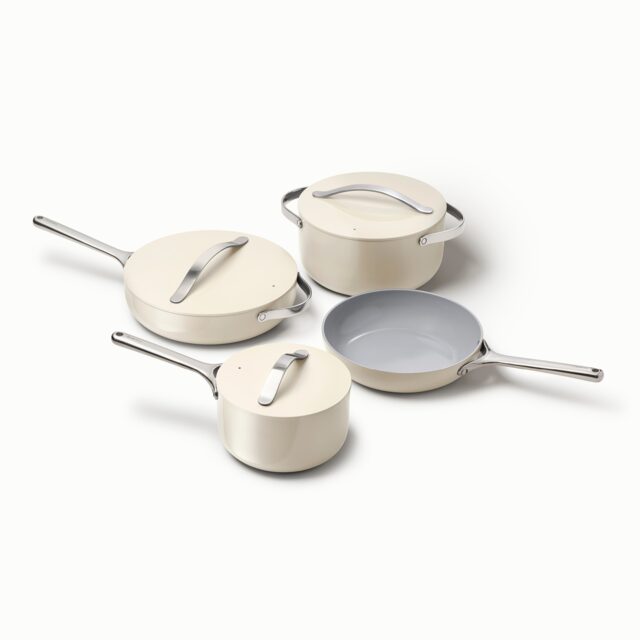
Caraway Cookware Set
The benchmark for non-toxic ceramic cookware. Even heat, PTFE-free, and genuinely easy to clean without scrubbing. The 7-piece set covers most households permanently.
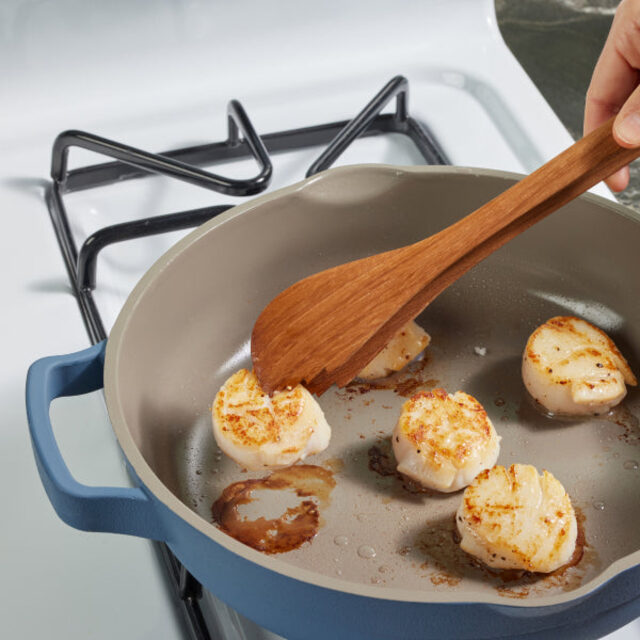
Our Place Always Pan 2.0
Does the work of eight pans. Ceramic coating, steam-woven lid, pour spout, nesting spatula. Overkill for some, perfect for single-pan households.
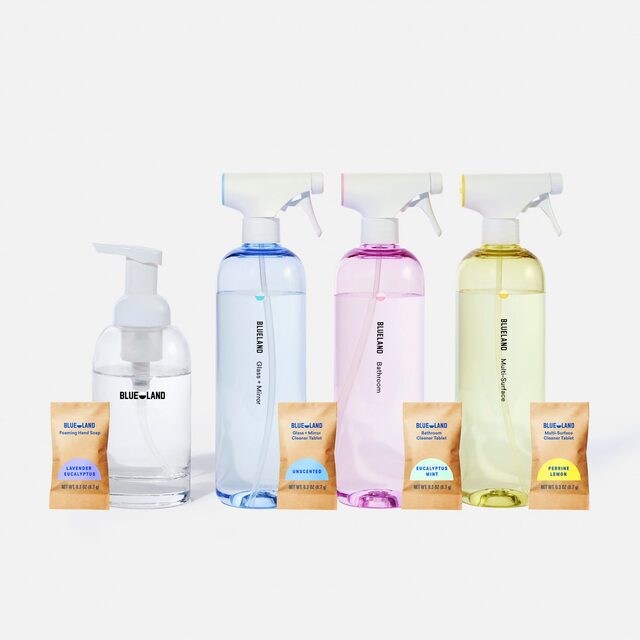
Blueland Clean Essentials Kit
Tablets that dissolve in water in your reusable bottle. Multi-surface, glass, and dish soap covered. The foam cleaner is excellent on stainless steel.
Branch Basics Starter Kit
One concentrate, multiple dilutions for every cleaning job in the house. The all-purpose formula replaces six products. Worth the upfront cost over 12 months.
Frequently Asked Questions
Where should I start reducing kitchen waste?
Look at what you repeatedly discard: unused food, disposable bags, wrapping, or empty cleaning bottles. Choose one recurring problem and first try solving it with containers or supplies you already own.
Should I replace my PTFE cookware immediately?
A waste-reduction plan does not require an automatic cookware replacement. Germany’s Federal Institute for Risk Assessment says adverse health effects are not expected when PTFE cookware is used as intended. It advises against heating it empty or overheating it.
Does Blueland Clean Essentials include dish soap?
The kit page lists foaming hand soap, multi-surface cleaner, bathroom cleaner, and glass and mirror cleaner. Dish soap is not among those kit contents.
Are refillable cleaners disinfectants?
Refillability does not establish disinfecting ability. Branch Basics explicitly says its products are not disinfectants, sanitizers, or antibacterial soap. Choose a product with directions for the particular task you need.
Can BPI-certified products go in a backyard compost pile?
Commercial certification alone does not establish home compostability. BPI says all catalog items are certified for commercial compostability, while only items marked Yes in its home-compostability column also have home certification. Collection programs can have their own acceptance rules.