Sustainable Pet Supplies: Which Material and Design Changes Matter?
Explore practical pet-supply changes in recycled content, reusable bed covers, grooming concentrates, and modular furniture, with clear limits to eco claims.
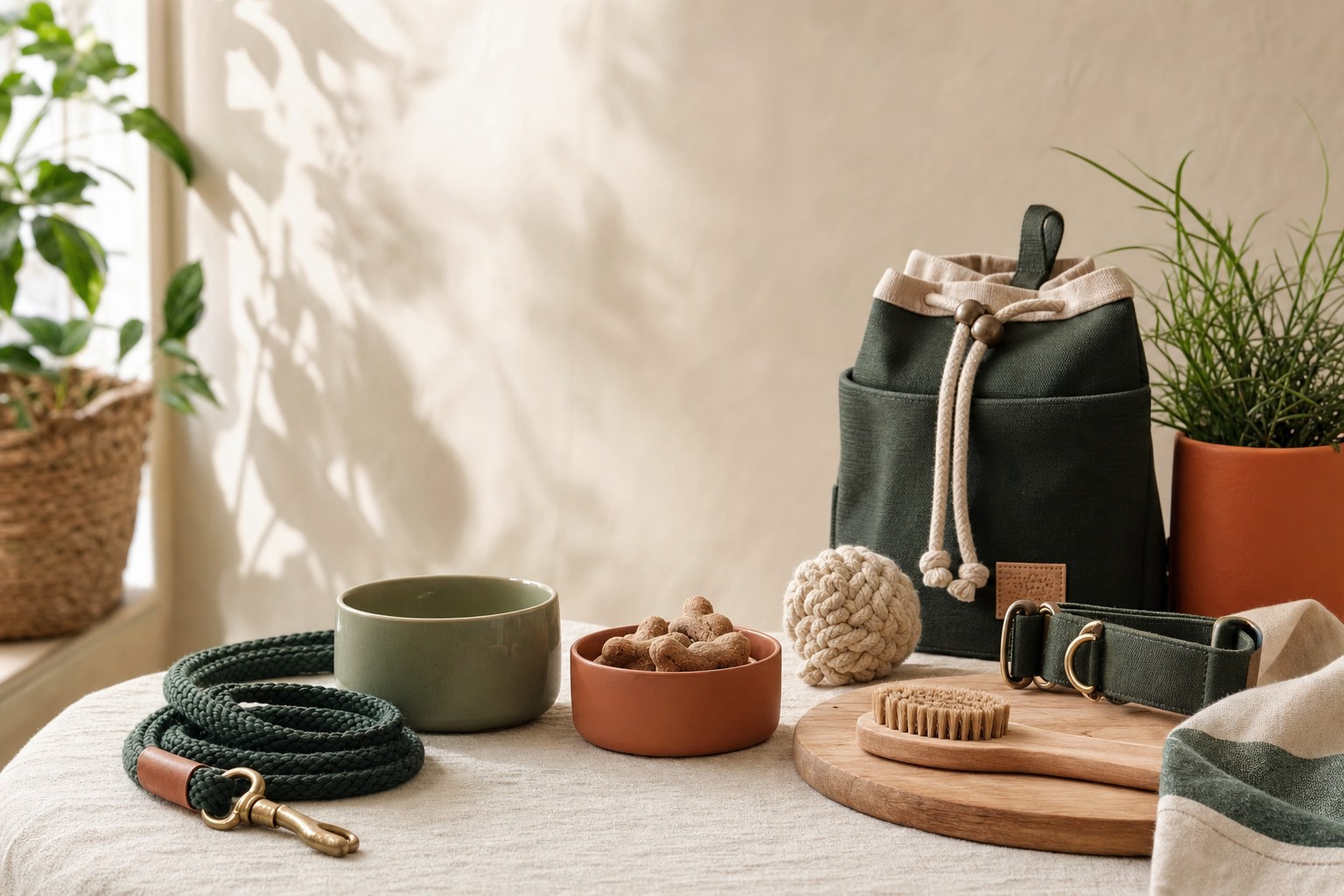
Featured Options Compared in This Guide
Full specs & notes ↓The most useful changes in sustainable pet supplies are specific and practical: disclosed recycled content, removable covers, usable refills, and replaceable wear parts. Buy those features when they solve a need. An intact bowl or well-fitting leash does not need replacing just because a newer one carries an eco label.
The examples below illustrate product-design directions available to shoppers. They do not establish market growth, industry-wide emissions reductions, or a claim that every new material is better for every pet.
Compare recycled content at the component level
A percentage is more informative than “made from recycled materials,” especially when it identifies the component. Earth Rated’s FAQ states 65% post-consumer recycled plastic in its current poop bags. Ruffwear’s Front Range Collar lists polyester webbing with 16% recycled content.
Those percentages describe different things. Earth Rated’s refers to the bag material; Ruffwear’s refers to webbing, not its buckle and ring. Neither means the used product is accepted by curbside recycling.
For a purchase, ask three questions: What portion is recycled? Is the percentage for the whole item or a component? What happens to it after use? This keeps a feedstock benefit separate from a disposal claim.
Our dog-poop-bag guide applies this distinction to daily waste collection.
Bed systems can separate cleaning from replacement
Molly Mutt’s Two Covers Kit pairs cotton-canvas covers with a stuff sack. A household can use suitable existing textiles as fill and keep another cover available for washing. That is a concrete reuse opportunity when clean, appropriate fill is already available.
The limitation is equally practical: reused textiles can be lumpy, may have incompatible care requirements, and do not establish orthopedic support. Choose the dog’s sleeping space and support needs first. A product described as recycled or organic is not automatically appropriate for an animal recovering from surgery.
See reused-textile and recycled-fill beds for the differences between a duvet system and a prefilled bed.
Concentrated grooming products need a workable routine
A concentrate can let an owner prepare only the shampoo needed for a bath. For example, earthbath’s fragrance-free oatmeal-and-aloe shampoo permits dilution with ten parts water to one part product, but requires disposal of diluted shampoo after 24 hours.
That instruction matters more than the general appeal of a large bottle. Diluting a whole bottle and storing it indefinitely would not follow the directions. Buy a size you can use appropriately, keep the label, and use a separate clean mixing container.
A durable brush and washable towels can remain in service across many baths. Their usefulness depends on coat fit and cleaning, not just a bamboo handle or an earthy color. Our grooming guide gives a task-based way to build the kit.
Modular furniture can make worn parts accessible
The Catastrophic Creations Hanging Cat Bed Hammock uses bamboo planks, fabric, and steel hardware in its canvas version. The fabric can be removed for cleaning, and the modular system can connect with other components.
This is useful when the wall can support the specified installation and the cat can reach the resting area comfortably. It is not a reason to improvise anchors or buy an oversized climbing system. A stable scratcher the cat actually uses may be a better purchase than furniture selected only for appearance.
Before buying anything called modular or repairable, identify the wear part and the replacement route. A theoretical ability to disassemble an item is less useful when no compatible parts are sold.
Claims that still need careful reading
| Claim | Better question |
|---|---|
| Compostable | Under what conditions, and will my waste service accept this item after use? |
| Recyclable | Is there a collection route for the complete item where I live? |
| Natural | What are the complete materials or ingredients, and is the product suitable for this animal? |
| Refillable | Where is the actual refill, and how is it stored and dispensed? |
| Sustainable | Which specific benefit is documented, and what trade-offs remain? |
The FTC’s environmental-claims summary advises against broad unqualified green claims. A material improvement is worth recognizing without expanding it into a promise of universal safety or negligible environmental impact.
Prioritize the next needed replacement. For bowls, buy around cleaning and stability; for bedding, around fit and care; for consumables, around actual use and disposal. Specific improvements accumulate without requiring a complete replacement of the pet cupboard.
Sources
Products Compared in This Guide
Sustainable Pet Supplies — Top-Spec Options
Compare current model specifications, material disclosures, and third-party certifications for latest trends in eco friendly pet supplies 5.
Certified Latest Trends In Eco Friendly Pet Supplies 5 Alternatives
Check verified certification scope, replacement parts, and packaging details across eco pet care listings.