Household Cleaners Around Pets: What to Use and How to Use It
Choose cleaners for pet bowls, counters, floors and bedding. Learn why dilution, rinsing and drying matter, and when a disinfectant is needed.
Featured Options Compared in This Guide
Full specs & notes ↓A cleaner’s safety around pets depends on the product, concentration and use—not just a “pet-safe” label. For ordinary dirt, choose a cleaner suited to the surface. For a job that needs disinfection, use a suitable disinfectant with its full contact time and any required rinse. Keep animals away during cleaning and until the label’s re-entry conditions are met.
ASPCA says most cleaning products can be used around dogs and cats when label directions are followed. It advises additional veterinary guidance around birds, which are especially sensitive to fumes. A blanket ban on conventional brands is less useful than knowing exactly what is in your bottle and how it should be used. ASPCA household-product guidance.
Match the cleaner to the job
| Cleaning task | Practical starting point | What could make it unsuitable |
|---|---|---|
| Hand-washing a food bowl | An appropriate dish liquid, a brush and thorough rinsing | Leaving soap residue; using hand dish liquid in a dishwasher |
| Wiping a counter | A surface-compatible spray cleaner | Using it on unsealed or otherwise excluded materials |
| Mopping a floor | A cleaner explicitly approved for that floor and finish | Borrowing a dilution from a different concentrate; assuming a counter spray is a mop product |
| Washing bedding | Detergent and the bed’s care label | Overdosing, leaving the filling damp, or using heat the material cannot tolerate |
| Cleaning a urine accident | A product labeled for that mess and surface | Treating odor removal as proof of disinfection |
Start by naming the task, not the brand. This prevents buying a large “everything” kit when the actual need is one bowl cleaner or one floor product.
Two real products with different uses
Seventh Generation Dish Soap — Free & Clear
The current manufacturer page describes this hand-dishwashing liquid as fragrance- and dye-free. Its listed formula includes sodium lauryl sulfate, lauramine oxide, decyl glucoside and preservatives. It is not a preservative-free product. The page explicitly says it is not for automatic dishwashers. Seventh Generation product and ingredient page.
This is a practical option to compare for hand-washing washable pet bowls when you want no added fragrance. Wash away food, rinse away the detergent, and dry the bowl. It is neither a pet shampoo nor a claim to disinfect. Someone avoiding a particular ingredient should review the full list instead of relying on “Free & Clear” alone.
Blueland Multi-Surface Cleaner Starter Set
Blueland’s current multi-surface product is Fresh Lemon scented. It is not a fragrance-free alternative. Its tablet is made up with 24 ounces of water; the directions say to let it dissolve before replacing the nozzle. The manufacturer lists counters, sealed wood and sealed stone as intended surfaces. Blueland product directions.
The important limitation for pet owners: Blueland says this product is not indicated for general floor cleaning, although it allows spot cleaning on sealed floors. A refill system may suit someone who will keep using its bottle, but do not buy this particular spray as a universal mop solution. Its refill packaging is described as industrially compostable, subject to access to an accepting facility; that does not make the whole cleaning routine waste-free.
Use each product for its defined job and complete its rinsing and drying steps before pets return.
What labels can help you choose?
EPA’s Safer Choice standard sets requirements for products and their ingredients. Its additional Fragrance-Free label requires a review confirming no fragrance materials; a standard Safer Choice logo alone does not mean fragrance-free. Use the full product name and variant when comparing certifications. EPA standard and fragrance-free criteria.
A certification is not permission to ignore handling instructions. “Plant-based” also does not identify every ingredient or establish that concentrated liquid is safe to swallow. A smaller ingredient list cannot tell you the appropriate dilution or whether the product is compatible with your floor finish.
When cleaning needs a second step
CDC distinguishes removing dirt with soap or detergent from killing germs with a disinfectant. Cleaning is generally sufficient for many pet items; illness, urine or fecal contamination, and vulnerable household members can call for additional disinfection. Follow the disinfectant’s label, including pre-cleaning, wet contact time and any rinse. Do not mix bleach with other cleaners. CDC also advises against phenol-containing disinfectants around cats. CDC pet-supply cleaning guidance.
Do not infer ingredients from an entire brand name: different products within a brand can use different active ingredients. If a label is unreadable or the liquid was transferred to an unidentified container, replace it with an identifiable product before using it near pet items.
Vinegar is not a universal substitute. CDC does not recommend it as a dependable cleaning or disinfection method for pet items. ASPCA notes that vinegar is acidic and may irritate or upset the stomach; its advice includes dilution, rinsing and drying. Avoid spraying vinegar to repel a cat or adding essential oils to improvise a cleaner. CDC on vinegar, ASPCA exposure guidance.
Make the routine easier to follow
Move pets, food and water bowls before opening a cleaner. Keep the bottle handy so you can follow its directions, and store it securely afterward. Prevent access to mop buckets, concentrated refills and used wipes. Plan the job so pets have a comfortable place to wait; a dry-looking patch of floor is not a substitute for completing every label step.
If a pet may have swallowed or contacted a harmful product, contact a veterinarian or ASPCA Poison Control at 888-426-4435 promptly and have the package available. Do not wait for symptoms before seeking exposure advice. ASPCA contact guidance.
For products applied to the animal itself, use our pet shampoo and grooming guide. For reducing repeated purchases of bedding and accessories, see the sustainable pet care guide.
Shopping link: Search Amazon for Seventh Generation Free & Clear dish soap. This is an affiliate search, not a verified offer; choose the hand-dishwashing liquid and check its current ingredients. We may earn a commission from qualifying purchases.
Sources
Products Compared in This Guide
Seventh Generation Free & Clear dish soap
Compare current manufacturer specifications, materials, and package options for Seventh Generation Free & Clear dish soap.
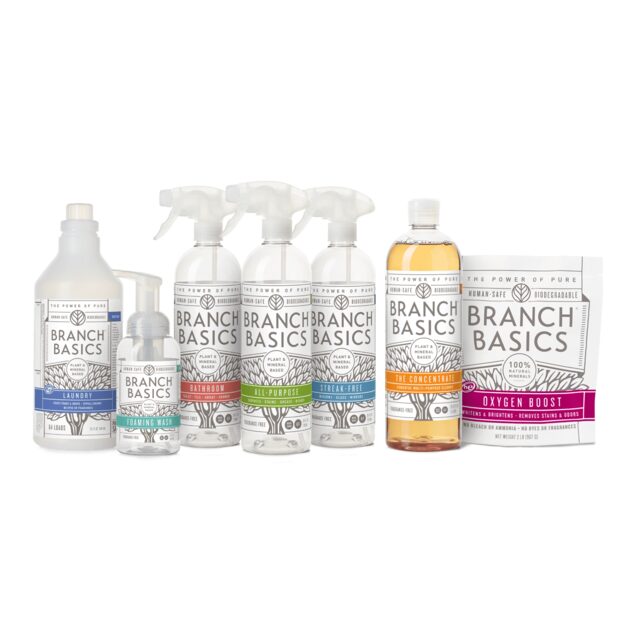
Branch Basics Concentrate Starter Kit
Plant-based concentrate that dilutes into all-purpose cleaner, bathroom cleaner, laundry, and dish soap from a single bottle. Rated 'A' by EWG Skin Deep, Made Safe certified, no QACs, no synthetic fragrance. The starter kit pays for itself within 2-3 refill cycles vs. buying individual products.
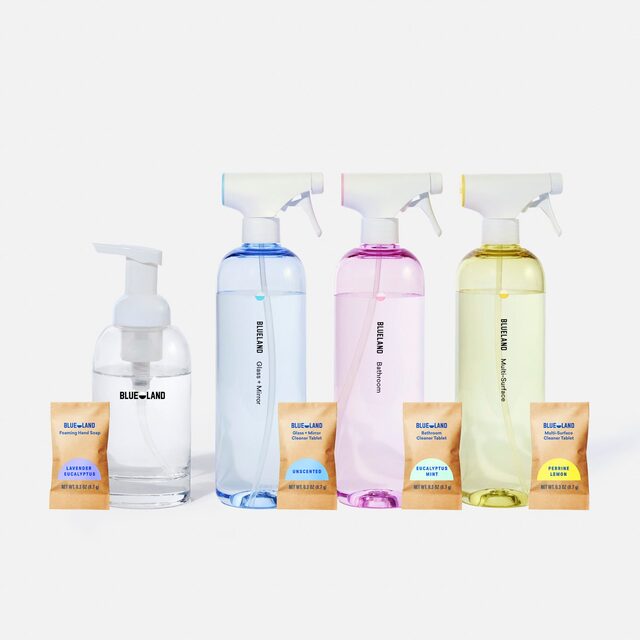
Blueland Clean Essentials Kit
Refillable spray bottles + dissolvable tablets (all-purpose, bathroom, glass). No QACs, no synthetic fragrance, Made Safe certified. The tablet system eliminates single-use plastic cleaning bottles. Safe for pets and children per Made Safe certification. The all-purpose formula is the most used.
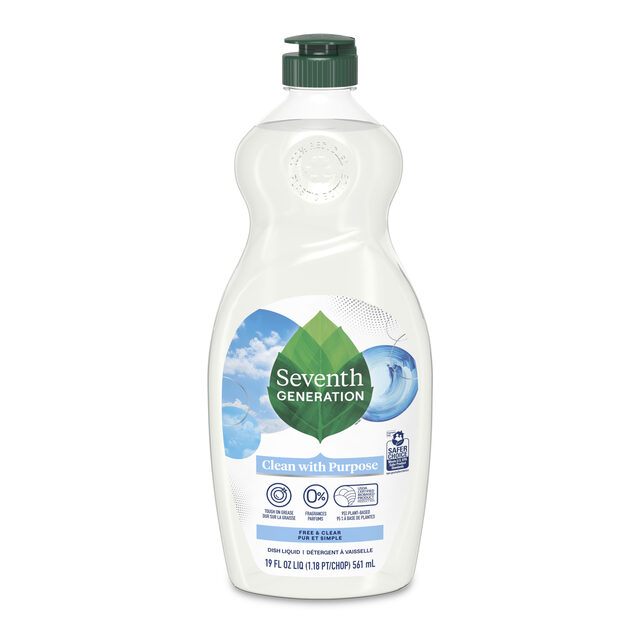
Seventh Generation Free & Clear Dish Soap (25 oz)
No fragrance, no dye, no chlorine. Plant-based surfactants. USDA Certified Biobased. The Free & Clear version is the appropriate choice for households with pets — the scented versions contain synthetic fragrance. Effective at cutting grease, rinses cleanly. Safe for pet bowls and food prep surfaces.
Frequently Asked Questions
Is vinegar a reliable disinfectant for pet items?
No. CDC recommends soap or detergent for cleaning and suitable disinfectants for killing germs. Vinegar is not a dependable substitute for a labeled disinfectant.
Can bleach be used in a home with dogs or cats?
ASPCA says appropriately diluted bleach can be used on pet toys and kennels when followed by thorough rinsing and airing out. Follow the exact product label, keep pets away during use, and never mix cleaning products.
Does fragrance-free mean safe for a pet to lick?
No. Fragrance-free describes the formula's fragrance content, not permission to ingest it. Keep pets away from cleaners and follow rinsing and drying directions.
How long should pets stay away after cleaning?
Use the label's re-entry instructions, including any rinse step, and allow surfaces to dry. There is no reliable universal five- or ten-minute wait because products and conditions differ.