Zero Waste Kitchen Starter Kit: A Beginner's Guide (2026)
Build a practical zero-waste kitchen starter kit with containers you own, reusable cleaning cloths, a refill plan, and food-scrap collection that fits your home.
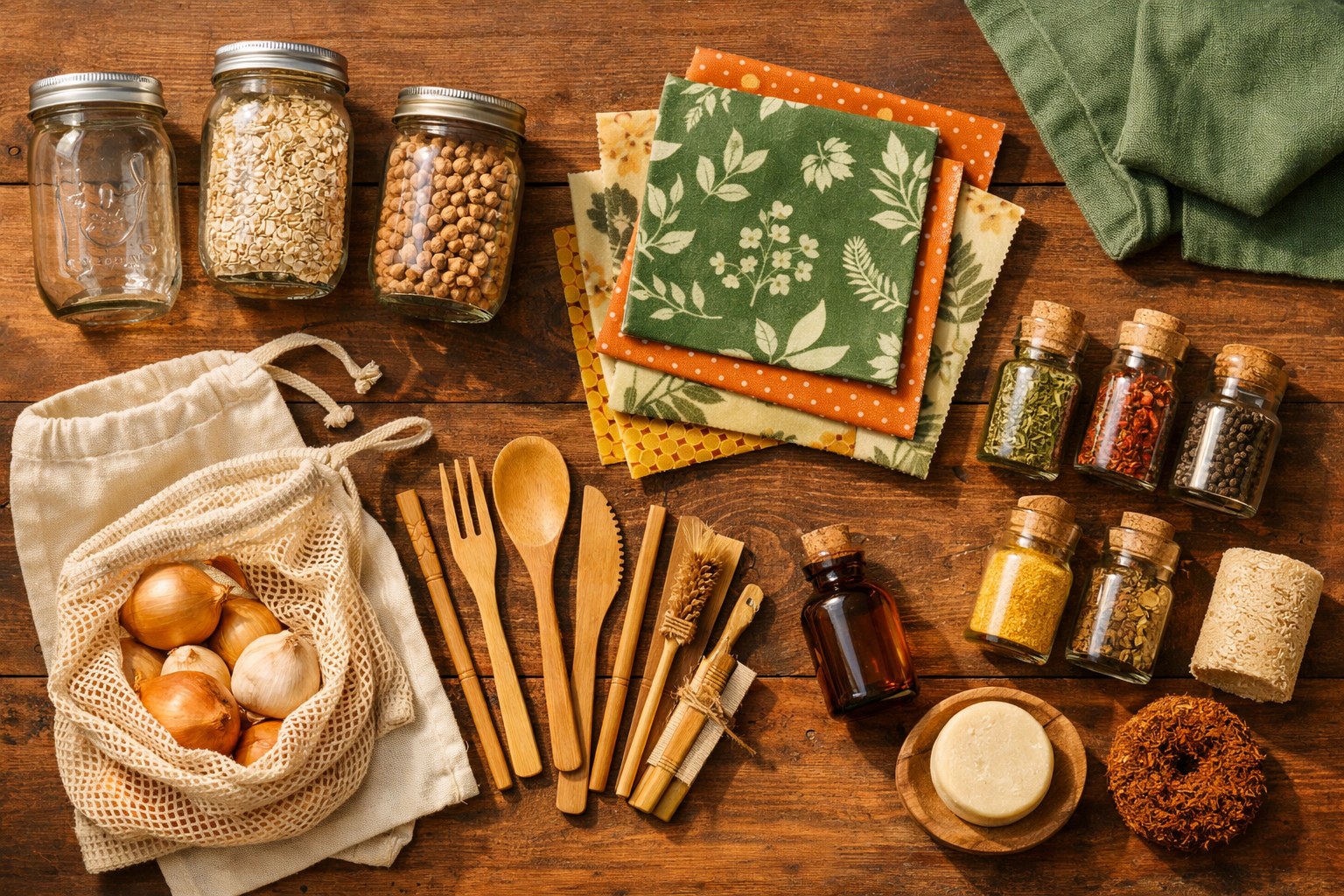
Featured Options Compared in This Guide
Full specs & notes ↓A useful zero-waste kitchen starter kit begins with the jobs your kitchen needs to do: store food, carry groceries, wipe surfaces, and handle scraps. You may already own much of the equipment.
Start by gathering those items, then buy only what is missing. EPA recommends preventing waste through reduced purchasing and reuse, including reusing bags and containers and choosing reusable cleaning rags. There is no fixed shopping total or universal set that every household needs. Source: EPA waste guidance.
Assemble this starter kit first
| Job | Start with | When a purchase makes sense |
|---|---|---|
| Store leftovers and packed lunches | Food containers with their matching lids | You repeatedly lack a suitable size or closure for a meal you actually store or carry |
| Carry groceries | Bags already in your home | Your existing supply no longer meets your shopping needs |
| Wipe kitchen surfaces | Washable cleaning cloths or rags | You lack enough usable cloths for your cleaning and laundry routine |
| Refill a cleaner | Your current cleaner while you use it up | It is running low and you have chosen a refill format for the same task |
| Collect unavoidable food scraps | A closed container, once you have a destination | Your collection routine needs a different capacity or easier handling |
| Remember food before it spoils | A meal list and a way to label stored food | Usually an organizing task rather than an equipment purchase |
Put the containers where you prepare food and the shopping bags where you leave home. Choose a place for clean cloths and another for used ones awaiting washing. These are practical setup choices: the kit needs to be convenient enough to use repeatedly.
Make food storage useful before upgrading it
Before buying glass containers, silicone bags, or wraps, match the containers you own with their lids. Set aside the sizes you use for lunches, leftover portions, and ingredients. A missing lunch container is a clearer reason to buy something than wanting every container to match.
Pair that storage kit with a short routine:
- Look through the refrigerator, freezer, and pantry before writing your shopping list.
- Plan meals around ingredients that need using, including a meal for leftovers.
- Label stored food with its contents and date.
- Freeze suitable food you expect to leave uneaten before it spoils, using containers intended for freezing.
EPA recommends these planning, labeling, and freezing practices to prevent wasted food. It also advises refrigerating or freezing perishable leftovers within two hours. Source: EPA food-waste prevention.
For a later storage purchase, decide the job first. Does lunch need a secure closure for transport? Do you need a container intended for reheating? Will a portion fit in the freezer? Choose an item whose stated uses cover that job; glass or silicone alone does not establish oven, microwave, freezer, or dishwasher suitability.
Bulk bins are optional. They can let you buy the quantity you need with less packaging, but a large purchase is useful only if you eat it. EPA recommends storing bulk foods in labeled, airtight containers. Bring your own container where the shop permits it, and ask how its weight is handled before filling. Source: EPA food-waste prevention.
Choose one cleaning refill approach
When your cleaner runs low, compare the refill task and the equipment you need. A whole-home bundle may include more than a kitchen starter kit requires.
| Approach | What the manufacturer describes | Practical decision |
|---|---|---|
| Blueland Clean Essentials | Three spray-cleaner bottles for multi-surface, bathroom, and glass/mirror cleaning, plus a foaming hand-soap bottle; each comes with its corresponding tablet | Consider the bundle if you need all four functions. For kitchen surface cleaning alone, account for the extra bottles and formulas before choosing the kit |
| Branch Basics The Concentrate | A liquid concentrate diluted with water for different uses; the company allows users to supply their own refillable bottles | Consider this format if you want to keep suitable bottles and are comfortable measuring different dilutions |
Blueland instructs users to fill its bottle to the indicated line with warm water, add the tablet, and let it dissolve before replacing the nozzle. Branch Basics provides different dilution instructions for different jobs; its all-purpose mixture uses one part concentrate to eleven parts water. These are different preparation routines, so choose the one you are willing to repeat. Sources: Blueland Clean Essentials, Branch Basics The Concentrate.
Branch Basics explicitly states that it is not a disinfectant, sanitizer, or antibacterial soap. Keep that limitation in mind if the task requires disinfection. Its page also states that its packaging is not biodegradable. A refill system still has materials to manage at the end of use. Source: Branch Basics.
For more on the two formats, see the Branch Basics and Blueland comparison.
Treat wraps and compostable sponges as optional
Beeswax wraps suit a narrower set of jobs than an all-purpose storage container. BfR explains that hand warmth helps shape the wrap, but the wax coating prevents cleaning at high temperatures. It advises against using reusable wraps in contact with raw animal foods because inadequate cleaning can transfer pathogens to other food.
BfR also recommends avoiding jojoba oil in beeswax wraps and advises against using wraps containing additional substances with fatty foods. That makes an unspecified wrap a poor default purchase for cheese or fatty sandwiches. If you want a wrap for fruit, vegetables, or an appropriate covering task, examine its composition and food-contact instructions first. Source: BfR beeswax-cloth guidance.
A plant-based sponge does not automatically have a home-composting destination. The FTC says compostability claims need evidence covering all materials in the item, with qualifications when home composting is unsuitable or required facilities are not widely available. A cellulose body alone does not establish the compostability of an attached scrub layer or other components. Source: FTC Green Guides summary.
For the starter kit, use washable cloths for suitable wiping tasks and choose a replacement scrubber when needed. Buy a compostable option for its disposal benefit only when its whole-item claim and your disposal route match.
Give scraps a destination before buying a bin
A kitchen scrap container collects material; it does not establish a composting system. Choose the destination first:
- Local collection or drop-off: Find out which scraps and liners the program accepts. EPA suggests collecting scraps in a closed container on the counter, under the sink, or in the refrigerator or freezer.
- Backyard composting: Plan for dry leaves or other carbon-rich material, moisture, air, and ongoing management. EPA advises excluding meat, dairy, fats, pet waste, compostable bags, and compostable foodservice ware from a backyard pile.
- Worm composting: Allow space for a ventilated bin, moist bedding, suitable composting worms, and regular attention. Add more food only after the previous scraps have been eaten.
These options and their operating needs are described in EPA’s home-composting guide. The same guide explains that appliances that grind and dehydrate scraps produce a dried mixture requiring further composting, rather than finished compost.
For a beginner using a collection service, an existing closed container may be all the kitchen equipment needed.
Decide what to add after using the kit
Before the next purchase, note what still causes trouble. If packed lunches still need disposable bags, address that storage gap. If a refill is sitting unused because preparation is inconvenient, reconsider the format before ordering more. If food is spoiling inside new containers, adjust shopping quantities and meal planning.
Spend on the missing function you have identified. You do not need to add a product category every month. For broader changes beyond this starter kit, continue to the complete zero-waste kitchen guide.
Sources
Products Compared in This Guide

Beeswax Wraps Variety Pack (S/M/L)
The fastest swap in a zero-waste kitchen. Three sizes cover 90% of what cling wrap does, for less than the cost of one large roll of plastic wrap.
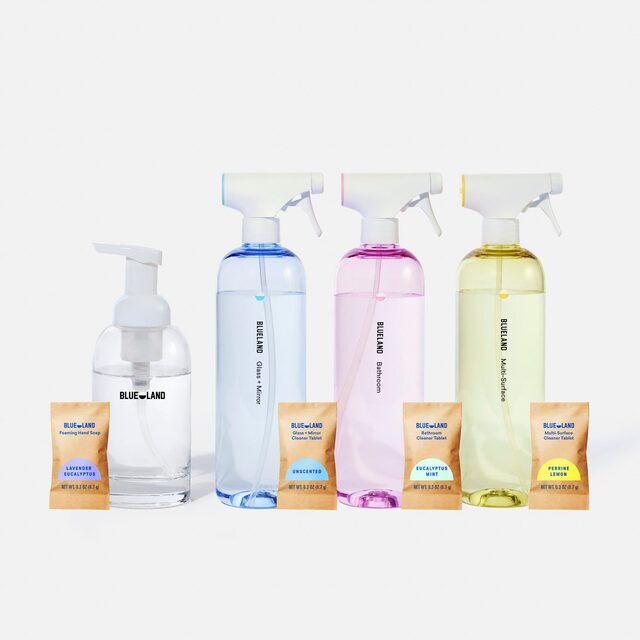
Blueland Clean Essentials Kit
Four reusable bottles, four cleaning tablets. Drop a tablet in, add water. The simplest refillable cleaning system available. Replaces 4+ plastic spray bottles immediately.
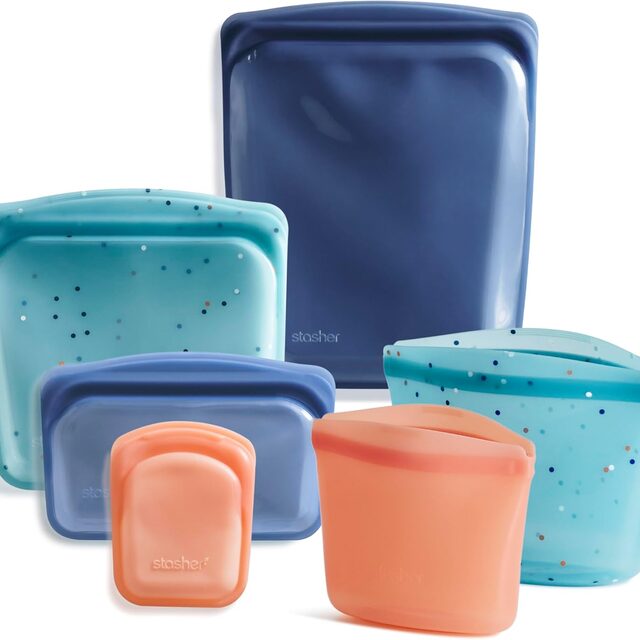
Silicone Reusable Bags (6-pack)
Replaces ziplock bags for sandwiches, snacks, and fridge storage. Dishwasher-safe, freezer-safe, stand-up design. One purchase that eliminates hundreds of disposable bags per year.
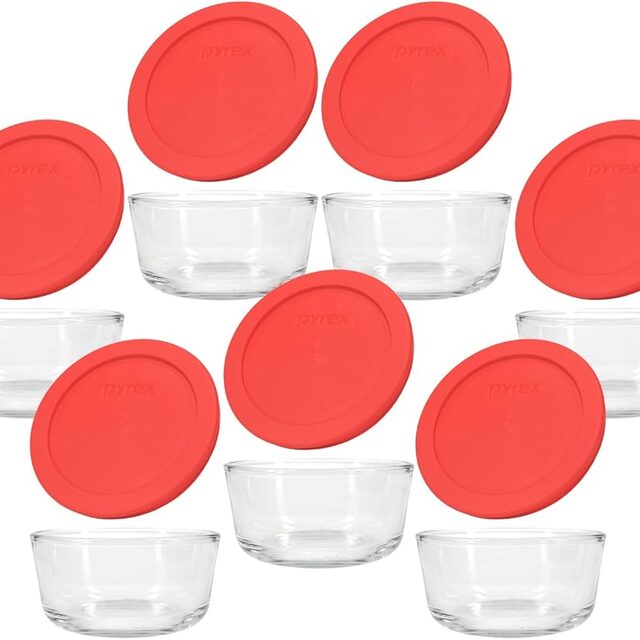
Glass Food Storage Containers (18-piece)
The container upgrade from plastic Tupperware. Oven-safe, freezer-safe, dishwasher-safe. Doesn't stain or absorb odors. Heavier—that's the only meaningful tradeoff.
Frequently Asked Questions
What should go in a beginner's zero-waste kitchen kit?
Start with reusable food containers and grocery bags you already own, washable cleaning cloths, and a meal list. Add a closed food-scrap container once you have a composting destination, and choose a refill when your current cleaner runs low.
Do I need to replace my plastic containers with glass?
You do not need a matching replacement set to start. Keep containers that remain suitable for their intended use, and buy replacements for specific storage needs as they arise.
Are beeswax wraps an essential first purchase?
No. They are optional for suitable food-covering tasks. BfR advises against contact with raw animal foods, recommends avoiding jojoba oil in wraps, and advises against using wraps containing additional substances with fatty foods.
Can renters collect food scraps without buying a composting appliance?
Yes. If a local collection or drop-off program is available, a closed container can hold accepted scraps until collection. EPA also describes storing scraps in the fridge or freezer. A worm bin is another option if you can maintain it.
Does a compostable sponge belong in my home compost?
Do not assume so from the material name alone. A compostability claim should cover the whole item and specify any required conditions. For a collection program, confirm that it accepts the item before adding it.