ANTHBOT Genie Review: Lawn Size, Setup and Buying Limits
Compare ANTHBOT Genie 600, 1000 and 3000 capacity, grass-height fit, RTK setup, daylight operation and return and warranty limits.
Featured Options Compared in This Guide
Full specs & notes ↓ANTHBOT Genie is worth considering for a lawn that fits its cutting range, advertised area capacity and RTK installation requirements—with enough daylight available for mowing. Its strongest buying argument is perimeter-wire-free mapping with app-managed zones. Its clearest exclusions are grass maintained above 70 mm, a full acre of turf, or a schedule that depends on nighttime operation. Product specifications; lighting limitations.
Choose the cutting height before the model
All three models share a listed 30–70 mm cutting range, approximately 1.18–2.76 inches. Buying a larger Genie increases advertised capacity, but does not solve a grass-height mismatch. ANTHBOT product page.
University of Maryland Extension’s mowing recommendations show why this matters. These recommendations address Maryland lawns; use your local grass-care guidance elsewhere.
| Grass | Maryland Extension’s recommended height | Fit with Genie’s listed range |
|---|---|---|
| Tall fescue | 3–4 inches | Genie cannot reach the recommended range |
| Fine fescue | 3–4 inches | Genie cannot reach the recommended range |
| Kentucky bluegrass | 2½–3½ inches | Only the lower portion overlaps |
| Zoysia | 1½–2½ inches | The full recommended range falls within Genie’s range |
| Bermudagrass | 1–1½ inches | Partial overlap; Genie cannot reach a 1-inch target |
Sources: Maryland Extension mowing guidance and Genie cutting specifications.
For a tall-fescue lawn maintained at 3.5 inches, rule Genie out before comparing batteries or connectivity. For zoysia maintained at 2 inches, cutting height passes the initial check, leaving area, terrain and installation to assess. Height compatibility alone does not establish mowing quality.
ANTHBOT also advertises a maximum slope of 45%, approximately 24 degrees. A percentage grade is not an angle in degrees. Treat that figure as a manufacturer limit, not assurance of traction on every surface or near a drop. Genie terrain specifications.
Genie 600, 1000 or 3000?
The U.S. product page gives the following comparison for the three named models:
| Model | Advertised maximum lawn area | Battery capacity | Listed zones | Connectivity in comparison table |
|---|---|---|---|---|
| Genie 600 | 900 m² / 0.22 acre | 2.5 Ah | 20 | 2.4 GHz Wi-Fi |
| Genie 1000 | 2,000 m² / 0.49 acre | 5 Ah | 20 | 2.4 GHz Wi-Fi and 4G |
| Genie 3000 | 3,600 m² / 0.89 acre | 10 Ah | 30 | 2.4 GHz Wi-Fi and 4G |
These are ANTHBOT’s advertised specifications, not guaranteed completion times. The same page separately offers a Genie 600e (4G) variant; do not transfer that variant’s connectivity to the ordinary 600.
Measure mowable grass, excluding buildings, paving and beds. A one-acre property may fit; one acre of grass—about 4,047 m²—exceeds the 3000’s listed maximum. For example, 1,200 m² of turf exceeds the 600’s advertised capacity but falls within the 1000’s. A 2,500 m² lawn exceeds the 1000’s and falls within the 3000’s.
There is a material discrepancy between ANTHBOT pages. The separate series overview lists 0.25 acre for the 1000 and 0.74 acre for the 3000, alongside a 5000 model. It also gives different zone information. The table above follows the U.S. purchasing page; if your lawn approaches its limit, obtain written confirmation for the exact model and regional configuration being sold.
Available mowing time matters as much as area. Plan around charging, travel between zones, rain and times when people use the lawn. In particular, do not make a marginal capacity choice on the assumption that Genie can work through the night: ANTHBOT’s support guidance advises against low-light operation. Obstacle and positioning guidance.
RTK placement can make or break the installation
Genie uses satellite positioning with an RTK reference station and four cameras. The installation guidance still requires a suitable antenna location, despite the product page’s broad claims about working in shade.
ANTHBOT’s beginner’s guide calls for:
- No wall or large building blocking the RTK within 3 metres.
- An unobstructed 120-degree space above the RTK.
- A flat charging location, with a clear approach facing the lawn.
- Placement away from trees and eaves that interfere with the signal.
- A solid green RTK indicator before fixing the installation in place.
Assess the antenna and charger locations together. A convenient outdoor outlet beneath an eave may be a poor antenna site. Conversely, an open antenna position may leave the charger too far from power or without a usable lawn approach.
The product FAQ says the standard arrangement places RTK and charging station together. It describes optional RTK extension cables and wall-mount hardware for other arrangements. The box list includes a charging-adapter extension cable; that should not be mistaken for an included RTK extension cable. Budget for the installation your site actually needs.
Automatic mapping is intended for lawns with clearly defined boundaries; remote-control mapping is also available. Inspect the resulting boundary and configure no-go areas before relying on a schedule. A high zone count does not establish that a mower can pass through your gates or negotiate every connection between lawns. Mapping guide; map controls.
Obstacle detection has practical limits
ANTHBOT’s support article is more useful for planning than an obstacle-recognition headline. For Genie, it identifies low light, dirty or obstructed camera lenses, objects smaller than 10 × 10 × 10 cm, and transparent, pure-white or low-contrast objects as potential detection problems. It also says low light can affect positioning. Those dimensions are a troubleshooting consideration, not a promise that every larger object will be detected. ANTHBOT obstacle troubleshooting.
Schedule mowing in well-lit conditions, clear loose objects and inspect the camera lenses. Keep children and pets out of the mowing area. Use exclusions for hazards and do not rely on recognition claims to protect a pond edge or drop.
The advertised rain sensor returns the mower to its charger when rain is detected. That does not establish whether already-wet turf is suitable for mowing. Maryland Extension advises against mowing wet grass or grass that has stopped growing under drought or heat stress, and recommends removing no more than one-third of the blade at a time. Adjust the schedule to growth and lawn conditions. Genie rain sensor; Extension mowing guidance.
Ownership costs include connectivity and return conditions
The product page advertises one year of included 4G service for Genie 1000 and 3000. It says initial app pairing uses Bluetooth, with Wi-Fi or 4G needed for remote control and map updates. Before paying extra for cellular access, establish whether Wi-Fi meets your needs and what continued 4G service will cost; the stated offer does not establish a renewal price. Connectivity details.
Allow for cleaning and replacement blades, both covered as maintenance topics in the beginner’s guide. ANTHBOT also provides a manual download page for operating and maintenance instructions.
The 30-day return window should not be treated as an unconditional lawn trial. ANTHBOT’s policy allows requests within 30 calendar days after delivery, but says it may refuse returns found to be used or damaged. For non-quality returns, the buyer pays return shipping. The policy calls for original or recommended packaging and all accessories, including promotional gifts. Obtain written terms for a return after installation or mowing if site suitability remains uncertain. Return and refund policy.
Warranty coverage also varies by component. The Genie warranty table lists three years for specified mower components, the charging station and RTK base, but two years for the battery. Blades and several other accessories have no listed coverage, and normal wear is excluded. Refurbished Genie units have a separate one-year table.
The statement also asks buyers to record unpacking as evidence for service or missing-item claims. Keep the receipt and applicable terms. For repairs, it assigns shipment to the service centre and any customs duties to the customer, while describing one-way shipping coverage for qualifying claims. Confirm the service route for your seller and region before purchase. Warranty conditions and shipping responsibilities.
When Genie makes sense
Genie is a reasonable candidate when the grass can be maintained within its height range, the site supports the prescribed RTK placement, and the chosen model has sufficient advertised capacity for your available daylight schedule. A larger model can address area requirements; it cannot fix unsuitable cutting height, poor antenna placement or dependence on night mowing.
Before sizing the mower, decide which turf you want to retain. Maryland Extension recommends considering alternatives where grass is unused or struggles because of shade, slope or soil conditions. Replacing those patches may simplify the mowing area and add habitat, although new planting still requires establishment and maintenance. Extension lawn alternatives.
For further reading, see Genie versus Navimow, Genie versus Mammotion LUBA or lawn alternatives for a greener yard.
Sources
- ANTHBOT U.S.: Genie product specifications and FAQ
- ANTHBOT: Genie series overview
- ANTHBOT: Genie beginner’s guide
- ANTHBOT Support: Obstacle-detection limitations
- ANTHBOT Support: Genie manual download page
- ANTHBOT: Return and refund policy
- ANTHBOT: Warranty statement
- University of Maryland Extension: Maintaining an established lawn
- University of Maryland Extension: Lawn alternatives
Products Compared in This Guide
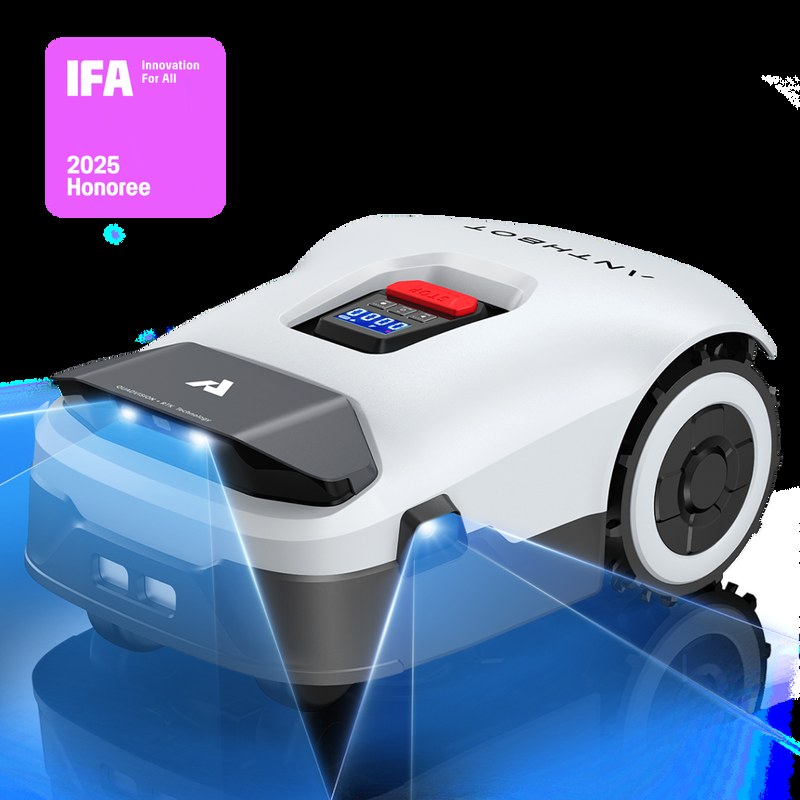
ANTHBOT Genie Wire-Free RTK Robot Lawn Mower
Flagship wire-free pick when RTK accuracy and multi-camera vision matter more than squeezing the budget. Best ANTHBOT model for complex yards.
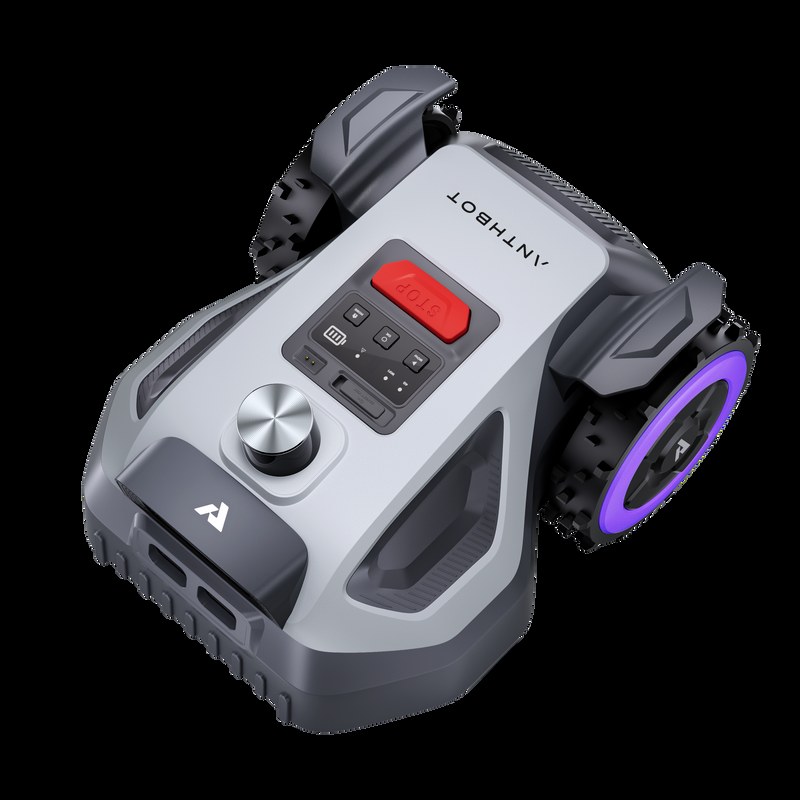
ANTHBOT M5 LiDAR (skip-Genie alternative)
Buy this instead of Genie if your yard is mid-size and you mainly need better obstacle sensing.
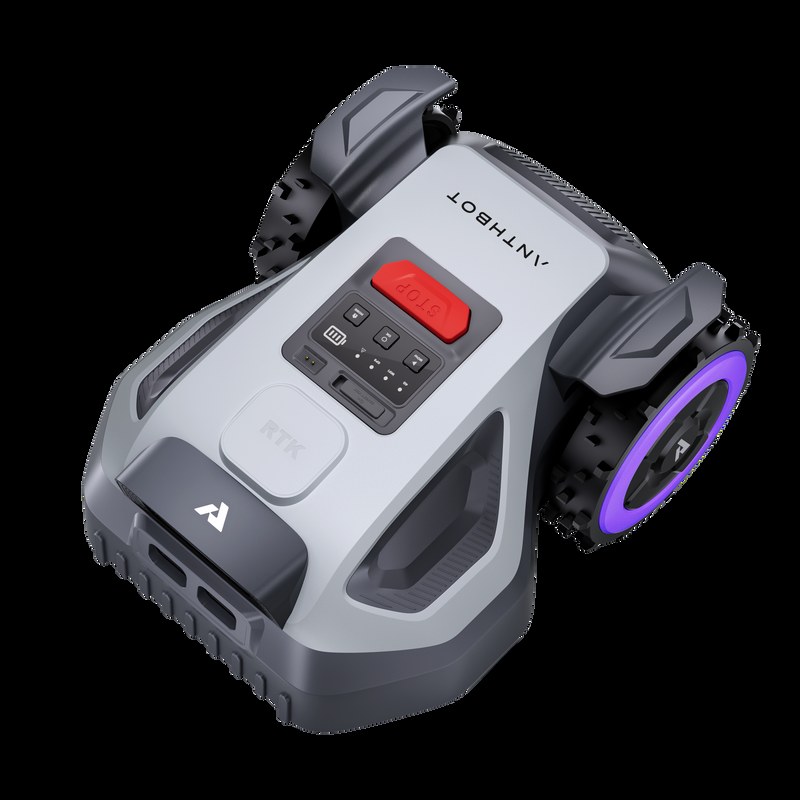
ANTHBOT M5 Entry Robot Mower
Skip Genie if the lawn is small and simple — put savings into blades, a cover, and finishing setup.
Frequently Asked Questions
Does ANTHBOT Genie need a perimeter wire?
No. Genie uses RTK positioning, cameras and a digital map. Installation still requires a charging station, power, suitable antenna placement and app setup.
Can Genie 3000 mow a full acre of grass?
The U.S. product page lists a maximum of 3,600 square metres, approximately 0.89 acre. A full acre of mowable grass exceeds that advertised capacity.
Can Genie maintain grass at 3.5 inches?
No. Its listed cutting range is 30–70 mm, approximately 1.18–2.76 inches.
Can ANTHBOT Genie mow at night?
ANTHBOT support advises against nighttime or low-light operation because both obstacle detection and positioning can be affected. Plan mowing around well-lit conditions.
Is the 30-day return policy a free lawn trial?
Do not assume so. ANTHBOT allows return requests within 30 calendar days of delivery but reserves the right to refuse used or damaged returns. Buyers pay return shipping for non-quality reasons.