Balcony Container Garden Setup for Apartment Renters
Plan a small balcony vegetable garden around sunlight, building rules, wet container weight, drainage and a watering routine you can maintain.
Featured Options Compared in This Guide
Full specs & notes ↓Start with two or three containers matched to your balcony’s direct sunlight and your ability to water them. A small setup gives you room to reach each plant, catch drainage and learn how quickly the growing mix dries before adding more pots.
Establish what your balcony can accommodate
Before buying containers, ask building management about permitted planter materials, railing attachments, drainage and weight restrictions. Sketch the available floor space with the door fully open, leaving access to drains and a clear route through the balcony. Include the space needed to reach a saucer or reservoir filling point.
Container material can be a tenancy issue as well as a gardening choice. For example, Croydon Council’s policy for its council tenants permits living plants in pots made from materials with limited combustibility and requires placement that avoids a falling hazard. It also prohibits screening and several kinds of balcony storage. Those are local policy requirements, so use your own building’s rules when choosing pots or considering a trellis. Croydon balcony policy.
An empty pot’s weight tells you little about the finished setup. Maryland Extension gives an example of a 20-inch container weighing 100 pounds once filled with moist growing medium and plants. That is an illustration, not a specification for every pot that size. Include stored reservoir water and other balcony uses when discussing your proposed layout with management. Maryland container-location guidance.
Victoria’s Building and Plumbing Commission identifies heavy pots, furniture and groups of people as additional structural loads. If you notice instability, loose railings or deteriorating concrete, stop using the affected area and arrange assessment through management by a suitably qualified professional. Neither placing pots beside a wall nor dividing their weight by the balcony’s area establishes capacity. Balcony structural guidance.
Match your first crops to direct sun
Observe when direct sunlight reaches the proposed planting spot, including shade from the balcony above. Maryland Extension recommends six to eight hours for warm-season vegetables such as tomatoes and peppers, and three to five hours for cool-season crops such as lettuce and spinach. Nearby masonry and other hard surfaces can also increase heat around plants. Sunlight and site guidance.
Choose a starting layout around that observation:
| Balcony conditions or priority | Suggested starting setup | Space decision |
|---|---|---|
| Three to five hours of direct sun | A broad container of leaf lettuce or other cool-season greens | Reserve surface area for plant spacing rather than buying a deep pot intended for a large fruiting crop |
| Six to eight hours of direct sun | One compact pepper in a pot of at least five gallons, plus a separate herb pot | Leave access around the pepper as its canopy grows |
| Tomatoes are the main goal | One bush or dwarf tomato in a container sized for that cultivar | Allow for both mature foliage and support before adding neighboring pots |
Maryland lists minimum volumes of half a gallon for leaf lettuce, two gallons for cherry tomatoes and five gallons for standard tomatoes and peppers. These are crop-size starting points, not instructions to crowd several plants into one minimum-size pot. Larger tomato containers can support greater growth; a cherry tomato’s small fruit does not by itself establish a compact plant habit. Look for a bush or dwarf variety when space is limited. Container sizes and crop selection.
For herbs, separate plants with different watering needs. Basil and cilantro need more consistent moisture than thyme and oregano. Maryland suggests two- to five-gallon pots for these smaller herbs, with larger herbs such as rosemary and sage needing at least five gallons. A mixed herb planter is easiest to manage when its occupants prefer similar moisture conditions. Herb-growing guidance.
Choose pots around watering and runoff
Apply the building’s material restrictions first, then compare the permitted options:
| Container type | Practical reason to choose it | Main tradeoff |
|---|---|---|
| Outdoor plastic pot with drainage holes | Retains moisture longer than porous clay and starts relatively light | Still becomes heavy when filled; needs a runoff collection plan |
| Self-watering planter | A reservoir can reduce watering maintenance | Requires access to refill it and manage overflow; stored water adds weight |
| Fabric grow bag | Lightweight when empty, reusable and available in broad shapes | Needs a suitable place to drain; fabric may contain synthetic materials |
| Unglazed terracotta | Its porous walls help growing mix dry between waterings | Dries faster than plastic and can crack through freeze-thaw cycles |
Maryland Extension describes these material differences and notes that a broad container is more stable in a breeze than a tall, narrow container of equal volume. Avoid pairing a tall plant with a small, lightweight pot. Container comparison.
Reusing a container can avoid a purchase, but its previous contents matter. For edible crops, Maryland recommends food-grade containers and advises against using containers that held paint, detergents or other chemicals. Do not reuse cracked or degraded plastic for growing food.
For ordinary pots, keep drainage holes open and use a saucer you can reach and empty. Pot feet can help keep the outlets unobstructed. Do not add a gravel layer to improve drainage: Maryland explains that it can worsen waterlogging while taking away rooting space. Empty collected water without sending it onto a neighbor’s balcony, and avoid leaving the pot standing in water. Drainage guidance.
A self-watering planter still needs an outdoor overflow arrangement. Maryland describes systems with a reservoir beneath a separating platform and a side overflow. Manufacturer setup details differ: LECHUZA, for example, instructs users to remove designated sealing screws outdoors and to top-water newly planted containers during root establishment. Apply those directions only to the relevant system. Do not plug an ordinary pot’s holes and assume it will function the same way. Maryland reservoir explanation; LECHUZA setup instructions.
Fill the pots and establish a workable routine
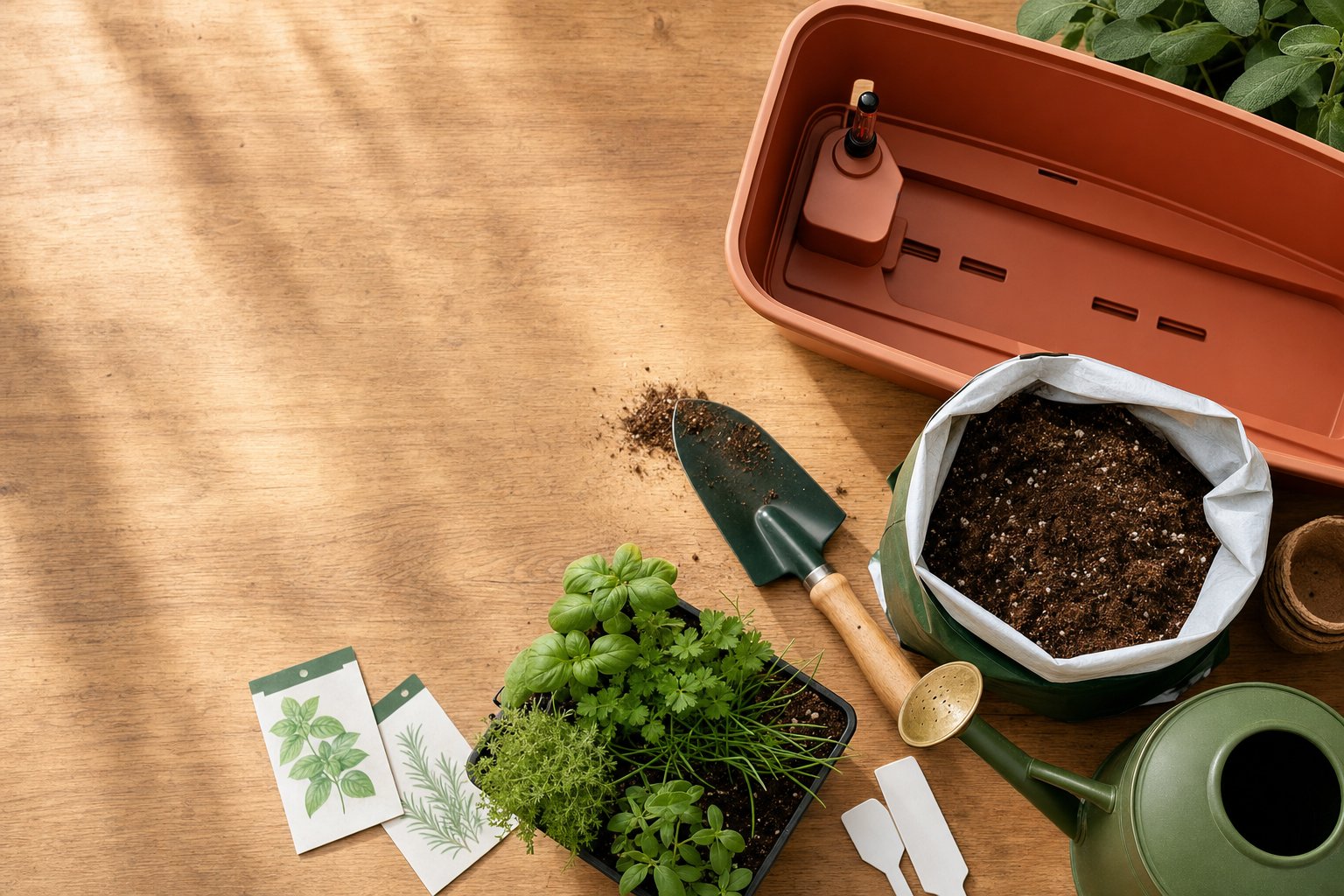
Position containers before filling them. Use a container growing mix: garden soil is dense and can restrict air and water movement around roots. Moisten dry mix before planting, fill loosely rather than compressing it, and leave about an inch below an ordinary pot’s rim for watering. Follow the reservoir planter’s specified fill level when using that system. Sow seeds at the crop’s recommended depth and spacing, then thin crowded seedlings. Maryland planting guidance.
Check below the mix’s surface daily at first. For a small, lightweight pot, comparing its weight before and after watering can also help you recognize dryness. Water an ordinary container thoroughly enough to moisten the full root zone and let excess water drain. Hot, dry conditions may require watering more than once a day, depending on the container. Plan help during absences around the watering demand you observe, including reservoir checks. Maryland watering guidance; Minnesota container care.
Check whether the mix already contains fertilizer before adding more. Minnesota Extension explains that repeated watering can carry nutrients away even from mixes containing slow-release fertilizer. Soluble fertilizer provides nutrients promptly; slow-release fertilizer supplies them over time but may need supplementation for large, fast-growing plants. Follow the fertilizer’s application directions instead of assuming every pot needs the same dose or schedule. Fertilizing container plants.
Use finished compost as a growing-mix ingredient if desired, while allowing for continued fertilization. Keep food-scrap processing separate from occupied plant pots: EPA explains that countertop grinders and dehydrators produce material requiring further treatment, rather than finished compost. For apartment-specific options, see the Lomi and bokashi comparison. Maryland compost guidance; EPA composting guidance.
Before expanding, identify the actual constraint. Frequent drying may favor a different container system; inadequate direct sun calls for different crops; difficult saucer access calls for a revised layout. Add another pot only when you have room and a manageable care routine for it.
Sources
- University of Maryland Extension: Growing Vegetables in Containers
- University of Maryland Extension: Growing Vegetables in Containers and Salad Tables
- University of Minnesota Extension: Fertilizing and Watering Container Plants
- Building and Plumbing Commission, Victoria: Balconies, Decks and Balustrades
- Croydon Council: Balcony Fire Safety
- LECHUZA: Frequently Asked Questions
- US EPA: Approaches to Composting
Products Compared in This Guide
Eartheasy GrowBox Self-Watering Planter (15-gal)
Sub-irrigation reservoir handles 3–5 days without watering. Wicks moisture from below — root-zone consistency without waterlogging. No drainage holes means no staining your balcony surface. Made from recycled polypropylene. The 15-gal size fits one indeterminate tomato or 2–3 pepper plants.
Eartheasy GrowBox Self-Watering Planter (5-gal)
Same sub-irrigation design as the 15-gal, scaled for herbs, lettuce, and smaller pepper or determinate tomato varieties. Stackable for efficient balcony space use. The 5-gal size is the right choice for starting a collection before committing to larger containers.
EarthHero Terra Cotta Fiber Planter (10-in, 3-pack)
Biodegradable rice-hull fiber composite — the look of terra cotta with one-fifth the weight and no breakage risk. Excellent for herbs and shallow-rooted crops. The fiber composition means the pot breathes, which prevents root rot in herbs that dislike wet feet (Mediterranean herbs especially). Sold in a 3-pack.
Eartheasy Organic Potting Mix (2 cubic feet)
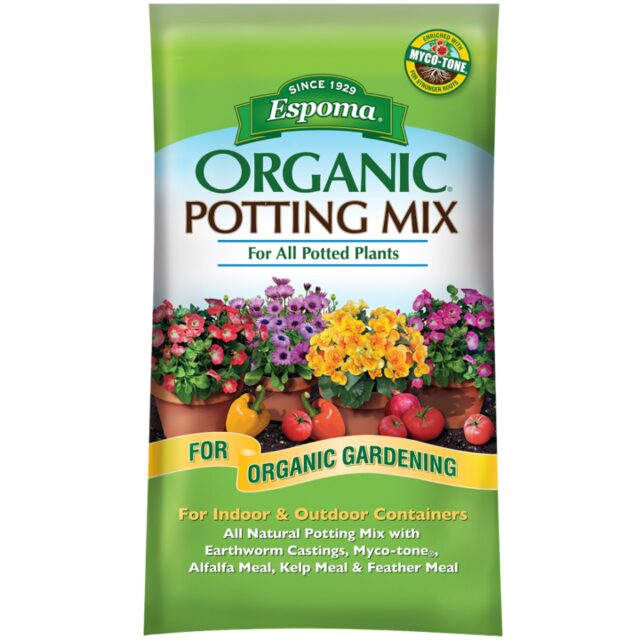
Peat-free blend based on coir, aged bark fines, and compost. Drains correctly for containers without compacting. The coir base holds moisture better than bark-only mixes in hot climates. Pre-charged with organic nutrients for the first 4–6 weeks — no added fertilizer needed at planting.
Frequently Asked Questions
Do self-watering planters need drainage?
For outdoor use, choose a system with an overflow or drainage arrangement that releases excess rainwater. Follow its outdoor setup instructions and keep the outlet clear; a reservoir does not eliminate runoff.
Can I calculate a balcony load limit from its floor area?
Floor area alone does not establish capacity. Ask building management about the balcony’s documented restrictions and seek a qualified assessment where needed. Include wet containers, reservoir water, furniture and people in the discussion.