Beginner Raised Bed Kits: Size, Materials and Soil Setup
Choose a beginner raised bed kit by reach, planting depth and soil volume. Compare cedar frames, metal beds and elevated planters for your site.
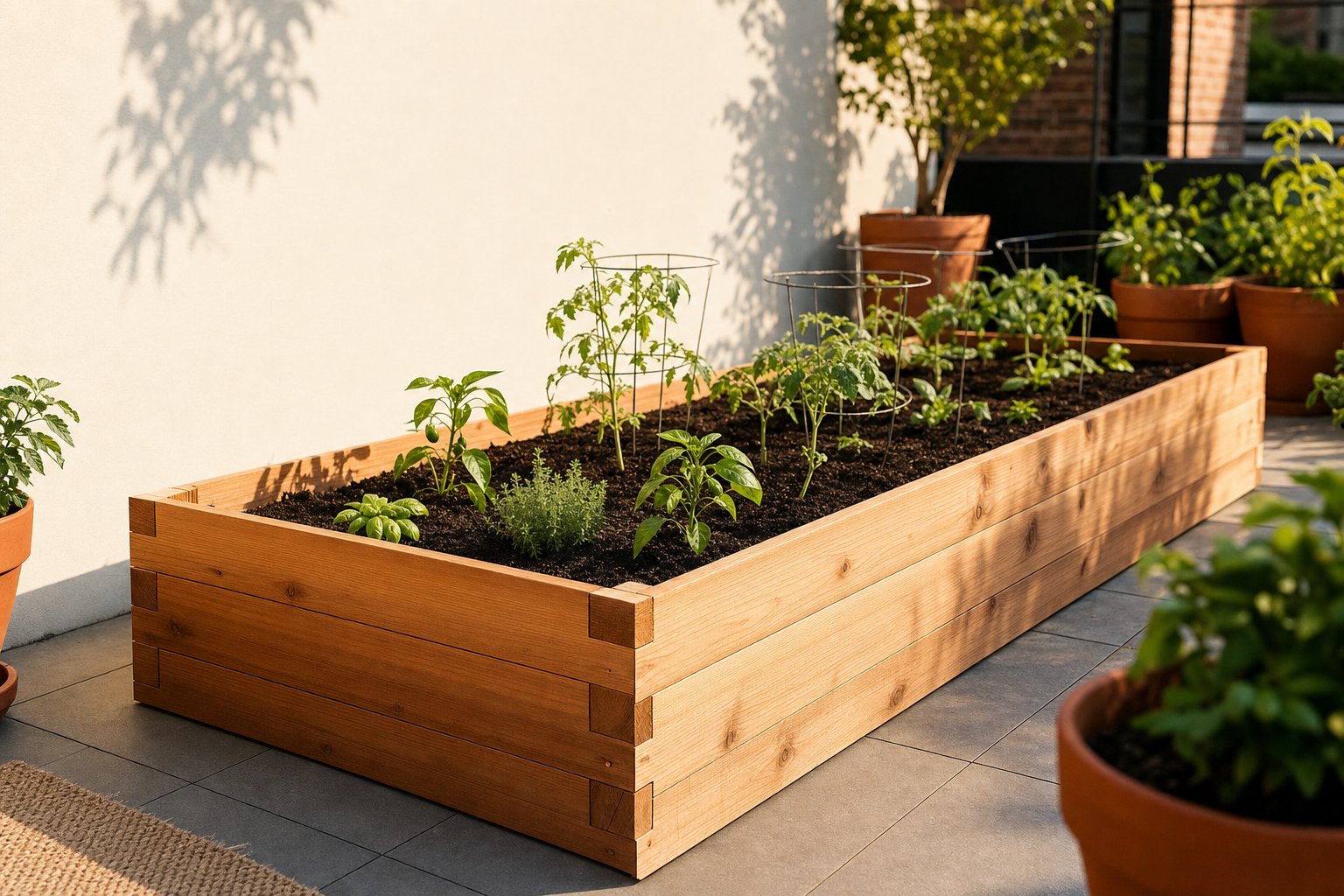
Featured Options Compared in This Guide
Full specs & notes ↓Choose your first raised bed kit by where it will sit, how far you can comfortably reach and how much growing medium it needs. A larger interior footprint requires more fill at the same planting depth; a deeper fill requires more material at the same footprint. Choose extra height when it supplies needed root space or makes gardening more comfortable.
Watering frequency needs a separate comparison. Minnesota Extension advises that taller raised beds need more frequent watering. For pots, Illinois Extension says larger containers need less frequent watering when plant types and numbers, location and container type are the same. Greater overall size alone does not establish greater watering work.
For a bed accessible from both sides, 3–4 feet is a typical width. Against a wall, size it so you can reach the back without stepping into the soil. Mark the footprint before buying and try reaching it from your usual standing or seated position. NC State Extension’s accessibility guidance makes comfortable reach the deciding factor.
Match the design to the job
| Design | When it makes sense | What should decide the purchase |
|---|---|---|
| Cedar frame on soil | You want a wooden enclosure with roots able to grow into suitable ground below | Board thickness, corner connections, support for longer sides and replacement-board availability |
| Metal-sided bed | You prefer metal construction or want a tall enclosure | The particular kit’s dimensions, panel connections, bracing and edge finish |
| Rigid recycled-plastic board frame | You prefer a non-wood enclosure | How the boards are supported, how joints assemble and whether individual parts can be replaced |
| Elevated planter on legs | Seated access or less bending is the main goal | Knee clearance, actual planting-box depth, drainage and the manufacturer’s loaded-weight specification |
| Unframed raised growing area | Your priority is spending on soil and plants | Room for sloping sides and permanent paths |
Maryland Extension lists wood and rigid recycled-plastic boards among enclosure materials and describes an unframed option with sloping sides. Minnesota Extension also covers metal beds, noting that they generally cost more than wood and can last longer. These broad material comparisons do not establish the lifespan of a particular kit. Maryland: building raised beds; Minnesota: raised bed gardens.
For seated gardening, distinguish a tall frame filled from ground level from a table planter with space underneath. NC State describes garden tables as shallow planting boxes on legs that can provide knee clearance. Total height alone does not tell you either the usable root depth or whether your chair fits underneath. Garden tables and accessibility.
What the Eartheasy cedar design offers
The Eartheasy Natural Cedar Raised Garden Beds listing describes an open-bottom kit made with untreated, kiln-dried cedar. Its stated construction includes 1-inch-thick boards, half-lapped corners and stainless-steel corner rods. Boards stack in 5.5-inch increments, and beds 5 feet or longer include crossbars to support the long sides.
This design is an option for gardeners who want a stackable wooden frame. Select the width, length, height and trim option before comparing the complete order with another kit. Eartheasy says the basic frame assembles without tools, while the optional trim attaches with screws; include that distinction in your assembly planning.
Cedar is among the decay-resistant woods identified by Maryland Extension. Decay resistance does not establish how many years this kit will last in a particular garden. If considering reclaimed lumber instead, Maryland advises avoiding older CCA-, creosote- and Penta-treated wood.
Choose depth from the base and the crops
Over suitable garden soil: A shallow frame can work because roots have access to the soil underneath. Minnesota Extension notes that many gardeners do not need to raise a bed more than a few inches. Avoid installing a permanent bottom barrier by default: it can restrict root growth. Minnesota raised-bed guidance.
On paving: The planting medium must supply the rooting space. Maryland Extension recommends at least 8 inches for leafy greens, beans and cucumbers, and 12–24 inches for peppers, tomatoes and squash. It also warns that hard-surface beds can dry quickly and expose plants to extra heat. An 11-inch wall therefore falls below its recommended depth range for those larger crops, even before leaving space below the rim. Maryland’s hard-surface guidance.
In a shallow table planter: Match the planting-box depth to the crop. NC State’s accessibility guide favors boxes at least 4–6 inches deep over its shallowest examples to provide more root space and reduce watering. Its container handbook gives more specific minimum depths: 4–6 inches for radishes and spinach, 6–8 inches for lettuce, and 8 inches for kale and Swiss chard. A shallow table therefore needs a different crop plan from a deep bed intended for tomatoes or squash. NC State garden-table guidance; NC State container crop depths.
For a balcony or rooftop, settle structural weight limits before choosing a soil-filled bed. Illinois Extension recommends consulting a building architect about heavy containers in these locations. The balcony container garden guide can help organize the wider setup. Illinois container guidance.
Calculate soil before ordering the frame
Use interior length × interior width × intended fill depth, with every measurement in feet. Divide the result by 27 for cubic yards.
| Example interior footprint and fill depth | Calculated volume |
|---|---|
| 4 × 4 feet, filled 11 inches deep | 14.67 cubic feet; about 0.54 cubic yard |
| 4 × 8 feet, filled 11 inches deep | 29.33 cubic feet; about 1.09 cubic yards |
| 4 × 8 feet, filled 12 inches deep | 32 cubic feet; about 1.19 cubic yards |
These are geometric examples, not stated capacities of the cedar kit. Outside measurements include the frame, and wall height may exceed your intended fill depth. Account for existing soil before ordering. Doubling the fill depth doubles the calculated volume for the same footprint.
Choose the fill for the installation:
- Bed connected to the ground: Maryland describes one part compost mixed with one or two parts garden soil or purchased topsoil. If the existing soil is already suitable, improving it may require much less imported material than filling an empty frame. Maryland raised-bed construction and fill.
- Bed on paving: Maryland recommends equal parts compost and soilless growing mix. It allows topsoil up to 20% by volume in beds at least 16 inches deep. Maryland soil-fill scenarios.
- Table planter: Use container growing medium and a bottom that drains while retaining the mix. NC State explains that ordinary field soil can be too heavy and poorly aerated for containers. NC State growing media; garden-table construction.
For bulk topsoil, ask the supplier for its origin, composition and soil-test results. Maryland also cautions that bags labeled “organic soil” may contain bark, compost and other organic ingredients without mineral topsoil. The ingredients matter when you are trying to assemble a particular mix. Buying topsoil.
Avoid filling the entire bed with compost or adding manure compost automatically each season. Minnesota Extension explains that excessive compost can build up nutrients and soluble salts; manure-based compost is generally higher in salts than plant-based compost. Use finished compost and let soil-test results guide later additions. Too much compost and manure.
Prepare the site for the bed you chose
Place the bed where water is accessible and sunlight suits the crops. Minnesota recommends at least 6–8 hours of daily sun for tomatoes, peppers and eggplants. Raised beds dry more quickly than in-ground gardens, so include watering access in the layout before filling makes the frame difficult to relocate. A watering can or soaker hose can serve a small setup; aim water close to the soil to limit splashing onto leaves. Site selection and watering.
Test existing soil before using it for food growing, including a lead test. EPA recommends laboratory testing and clean soil in raised beds or containers where lead levels are elevated. A new frame does not address exposure from surrounding contaminated soil or dust; get advice for your site from your extension office or health department if testing finds a problem. EPA: lead in soil.
Clear vegetation, level the frame’s base and install the required supports before filling. For a bed over suitable ground, preserve access to the underlying soil. On paving, any bottom material used to retain soil should allow water through rather than seal the bed with impermeable plastic. Minnesota’s barriers and liners guidance.
Before placing the order, write down the chosen configuration, interior fill estimate, soil mix and delivery access. Keep paths wide enough for the way you garden, and buy extra height when it provides needed root space or a more comfortable working position.
Sources
- University of Maryland Extension: Building Raised Beds for Vegetable Gardening
- Eartheasy: Natural Cedar Raised Garden Beds
- University of Maryland Extension: Soil to Fill Raised Beds
- University of Maryland Extension: The Safety of Materials Used for Building Raised Beds
- University of Minnesota Extension: Raised bed gardens
- NC State Extension: Accessible Gardening—Raised Beds, Containers, and Garden Tables
- NC State Extension Gardener Handbook: Plants Grown in Containers
- Illinois Extension: Container Size
- US EPA: Lead in Soil
- University of Minnesota Extension: How to correct problems caused by using too much compost and manure
Products Compared in This Guide
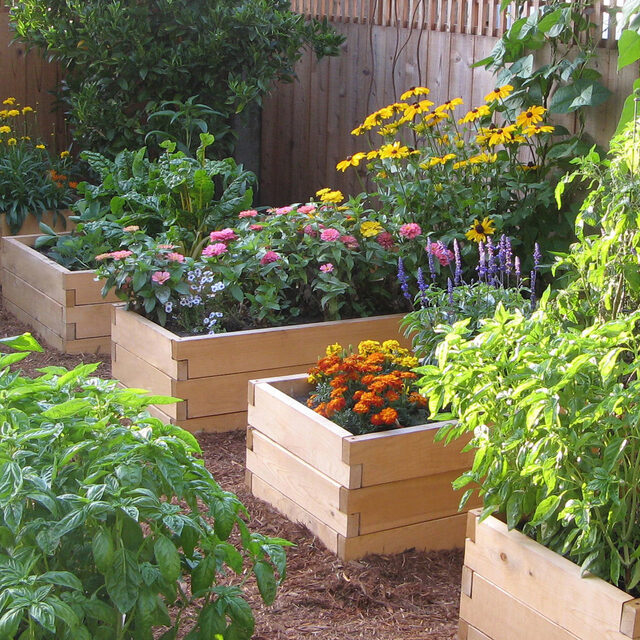
Eartheasy Cedar Raised Garden Bed (4x8x11in)
Western red cedar — naturally rot-resistant for 10–20 years without treatment. Mortise-and-tenon corner assembly, no power tools required. Ships flat in 2 boxes; assembly is 30–45 minutes with a rubber mallet. The 11-inch depth is the minimum for most crops; if you can only buy one depth, this one works. Can be stacked with a second tier to reach 22 inches for deep-rooted crops.
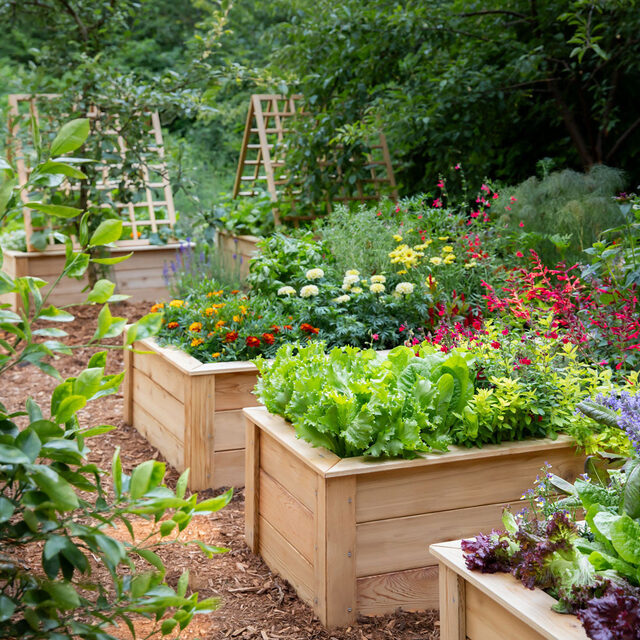
Eartheasy Cedar Raised Garden Bed (4x4x11in)
The square 4x4 option — fits tighter spaces and works for patios or narrow side yards. Two 4x4 beds give you the same growing area as one 4x8 with the flexibility of positioning them independently. Same cedar quality and assembly as the 4x8.
Bootstrap Farmer 4x8 Farm Table (24-inch depth)
A raised bed on legs — brings the growing surface to waist height, eliminating all bending. Built from untreated cedar with galvanized hardware. The 24-inch depth is exceptional: more than enough for any root vegetable or fruiting crop. The table-height design makes it accessible for anyone with back issues or mobility limitations. Also suited for patio use where ground-level beds aren't possible.
Eartheasy Certified Organic Raised Bed Soil Mix (1 cubic foot)
Pre-blended for raised bed use: 40% peat-free compost, 30% coir, 30% perlite. Correct structure for raised beds — drains well, holds moisture, doesn't compact. Pre-charged with organic nutrients for the first season without added fertilizer. A 4x8x11-inch bed requires approximately 24 cubic feet of soil; this mix ships in convenient cubic-foot bags.
Frequently Asked Questions
How much soil does a 4-by-8-foot raised bed need?
An empty bed with interior dimensions of 4 by 8 feet and a 12-inch fill depth holds 32 cubic feet, about 1.19 cubic yards. Calculate from interior dimensions and intended fill height, allowing for soil already present.
Is a six-inch raised bed too shallow?
It can work over suitable soil because roots can grow below the frame. On paving, the bed must provide the rooting depth: Maryland Extension recommends at least 8 inches for leafy greens, beans and cucumbers, and 12–24 inches for peppers, tomatoes and squash.