Lawn Alternatives: What to Plant for Your Site and Foot Traffic
Compare lawn alternatives for sun, shade and foot traffic, including clover, creeping thyme, sedges, moss and native meadows.
Featured Options Compared in This Guide
Full specs & notes ↓Replace unused or struggling lawn first. Keep turf where children play, pets run or people regularly cross the yard. Groundcovers, planted borders and meadows can serve the remaining space, but they differ in the conditions they tolerate and the work they require. Maryland Extension notes that garden maintenance can take about as much time as lawn care; reducing mowing does not eliminate maintenance. Lawn alternatives
Choose by use, then sunlight and soil
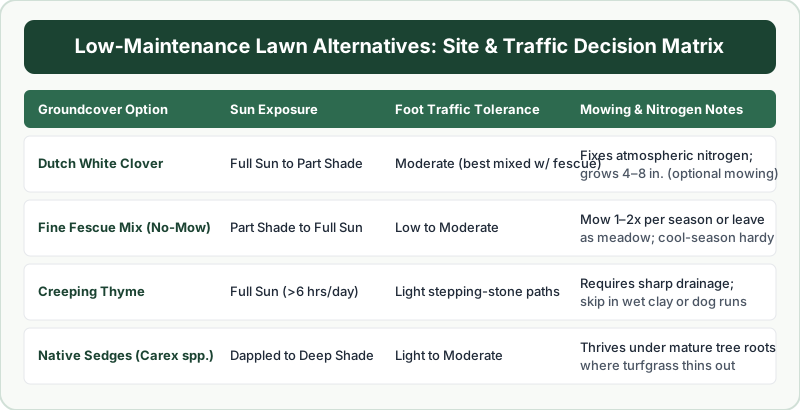
Mark your regular walking routes before choosing plants. Maryland Extension recommends mulched or paved paths through frequently traveled groundcover beds because stems can break and roots can suffer from compacted soil. Its plant lists are regional: the examples below are starting points for matching plants to your own climate and native range. Groundcovers
| Site or goal | Option to consider | Main tradeoff |
|---|---|---|
| Frequent play or pet exercise | Keep a smaller turf area | Retains mowing and lawn care |
| Grass-like appearance with little traffic | Fine fescues or suitable sedges | Fine fescues tolerate heavy wear poorly; sedges need species-specific selection |
| Sunny, well-drained ground between pavers | Creeping thyme, Thymus praecox | Tolerates moderate traffic, but wet soil is unsuitable |
| Flowering lawn with little traffic | Dutch white clover | Attracts pollinators but has poor traffic and shade tolerance |
| Damp, shaded ground where moss already grows | Encourage existing moss | Moss species differ; existing growth is a useful starting point |
| Dry shade beneath trees | Pennsylvania sedge, wild ginger or green-and-gold where regionally appropriate | Filling in takes time; tree roots complicate planting |
| Sunny space managed for wildlife | Native flowering border or meadow | Requires establishment weed control and ongoing vegetation management |
| Lawn struggling beneath a tree | Wood mulch, optionally with understory plants | Mulch depth and clearance from the trunk matter |
Sources for these choices: Maryland lawn alternatives, groundcovers, NC State creeping thyme and Minnesota white clover.
Clover or creeping thyme?
These flowering alternatives suit different sites.
Dutch white clover (Trifolium repens) fits a flowering lawn where wear is limited. Minnesota Extension describes it as favoring cool, moist soil with partial sun, while performing poorly in shade and under foot traffic. It supplies nitrogen through nitrogen fixation and provides forage for bees. It is introduced to the United States, so choose regionally native plants instead if restoring native habitat is your main goal. Its creeping stems root at their joints, which also means you should plan for spread beyond the initial patch. Dutch white clover
Creeping thyme (Thymus praecox) fits sunny, freely draining spaces. NC State describes a low mat that tolerates moderate foot traffic and can grow between pavers. Sandy or rocky soil suits it; wet or poorly drained soil can lead to root rot. It attracts bees and butterflies, and pruning helps maintain its appearance. For a daily walking route, let pavers carry the repeated footsteps and use thyme in the gaps. Creeping thyme
The botanical name matters here: Thymus praecox and Thymus serpyllum both go by creeping thyme. The growing and traffic guidance above applies to T. praecox. Neither its moderate traffic tolerance nor clover’s low growth makes either a strong choice for a heavily used play lawn.
Fine fescues and sedges for a grassy appearance
Fine fescues remain grasses, but they can reduce mowing frequency. Maryland Extension lists hard, creeping red, Chewings and sheep fescues as lower-mowing alternatives to tall fescue. The group suits shady conditions, with hard and sheep fescue the stronger choices for full sun. Heavy foot traffic and thatch buildup are limitations. Unmown plants develop a clumpy appearance, and the guidance advises against mowing during hot, drought-stressed summer conditions. Low-mow fescues
Sedges offer a grass-like planting without frequent mowing, but choose the species by site. Maryland’s groundcover guide lists Pennsylvania sedge (Carex pensylvanica) for drought-tolerant shade plantings and Wood’s sedge (Carex woodii) for well-drained soil in both sunny and shaded settings. Both spread by rhizomes relatively slowly. Plan these as planting areas with defined routes through them, rather than assuming they will handle lawn-style wear. Sedge options
Shade: distinguish damp ground from tree-root competition
Where moss already grows, encouraging it can be more practical than repeatedly reseeding grass. Moss does not cause lawn decline; it occupies places where grass has thinned under unfavorable conditions. Many mosses favor moist, partly shaded sites, though the group includes species with different requirements. Moss alone does not establish that soil is acidic or needs lime. Moss in the landscape
Remove weak grass and weeds around an existing moss patch, and clear fallen leaves and twigs to help it spread. Maryland lawn alternatives
Dry shade needs a different approach. A tree canopy can intercept rain while roots compete for moisture. Maryland lists wild ginger and green-and-gold among drought-tolerant shade groundcovers; wet-tolerant shade candidates include sensitive fern and golden ragwort. The latter two can spread aggressively, so reserve room for them and expect to manage their boundaries. Use small plugs around established roots to reduce the size of planting holes. Shade groundcovers and planting sizes
Mulch is another option beneath trees. Maryland recommends a wood-mulch layer of 2–3 inches beneath the canopy. Keep mulch about 3 inches away from the trunk, leave the root flare exposed and replenish only as needed to maintain the depth. Repeatedly adding fresh layers can restrict oxygen reaching roots. Lawn alternatives; excess mulch problems
A flowering border or a meadow?
For a small yard, start with a native border or island bed. Combine plants with different flowering seasons and include grasses or shrubs where space permits. Maryland’s sunny-site grass examples include switchgrass and little bluestem; its wildlife-garden guidance emphasizes flowers, berries, seeds and nesting resources. Choose species native to your region and suited to the bed’s moisture. Garden beds and native plantings
A meadow suits a larger sunny area where you can manage taller vegetation. Maryland recommends at least six hours of daily sun and describes establishment as a multiyear project involving weeding and occasional mowing. A generic wildflower mix may deliver first-year flowers without producing a lasting, locally adapted meadow. Meadow guidance
Choose seed for scale; consider plants for smaller areas and earlier visible results. Minnesota Extension explains that seed generally costs less, while transplants establish more quickly. Its prairie guidance stresses removing competing vegetation before planting and controlling weeds during the first two years. Small established prairie gardens can be maintained by mowing rather than burning. Check local vegetation ordinances and site requirements before committing a large area. Planting and maintaining a prairie garden
Simply stopping mowing produces a different result: succession can bring shrubs and tree seedlings as well as herbaceous plants. That can suit a natural area, but invasive plants still need management. Natural areas
Make the first section manageable
Start with an awkward mowing strip or extend an existing bed. If food production is the goal, use part of the lawn for an edible garden with defined access paths; the raised-bed setup guide covers that option separately.
For a groundcover conversion:
- Clear competition before planting. Remove sod and existing weeds. Maryland advises removing temporary smothering covers before installing groundcovers.
- Buy for the planting area and recommended spacing. Closer spacing covers soil sooner, but crowding can increase competition and disease risk. Small plugs are useful among tree roots.
- Protect exposed soil while plants fill in. Temporary mulch or biodegradable coverings can help limit erosion, particularly on slopes.
- Plan for watering and weeding. Check soil moisture below the surface, especially near tree roots. Once groundcovers establish, avoid replenishing mulch where it would hinder their spread into gaps.
These establishment steps follow Maryland Extension’s groundcover guidance. That guide also advises against invasive Maryland groundcovers including periwinkle, Japanese pachysandra and English ivy. Nursery availability does not establish ecological suitability.
A useful first conversion gives each part of the yard a clear purpose: turf for wear, paths for access and plants chosen for the conditions where they will grow.
Sources
- University of Maryland Extension: Lawn alternatives
- University of Maryland Extension: Groundcovers
- University of Maryland Extension: Moss in the landscape
- University of Maryland Extension: Excess mulch problems
- University of Minnesota Extension: Dutch white clover
- University of Minnesota Extension: Planting and maintaining a prairie garden
- NC State Extension Gardener Plant Toolbox: Creeping thyme, Thymus praecox
Products Compared in This Guide
Lawn Alternatives — Top-Spec Options
Compare current model specifications, material disclosures, and third-party certifications for 10 sustainable lawn alternatives for a greener yard.
Certified 10 Sustainable Lawn Alternatives For A Greener Yard Alternatives
Check verified certification scope, replacement parts, and packaging details across sustainable gardening listings.