Apartment Composting: Lomi vs Bokashi and Where the Output Goes
Compare Lomi and bokashi for apartment food scraps, including output destinations, daily upkeep, running costs and when worms or collection fit better.
Featured Options Compared in This Guide
Full specs & notes ↓For an apartment, choose where the output will go before choosing between Lomi and bokashi. Bokashi needs a second decomposition stage outside its sealed bucket. Lomi offers appliance processing, but processed scraps should not automatically be treated as finished compost. If a collection service already accepts your scraps, a closed container may meet your needs without either system.
EPA defines compost as a biologically stable soil amendment made through aerobic decomposition. It describes residential grinding and dehydrating appliances as preprocessing equipment: their dried output can enter a composting system. RHS likewise explains that bokashi fermentation alone does not finish the job.
Lomi vs bokashi: the apartment tradeoffs
| Decision | Lomi | Bokashi |
|---|---|---|
| What happens indoors? | An electric appliance processes batches of food scraps | Inoculated bran ferments scraps in an airtight bucket |
| What comes out? | Processed food material that the manufacturer calls Lomi Earth | Fermented food that remains recognizable and needs further decomposition |
| Where does it go next? | A suitable compost system or another use allowed by the exact machine’s instructions; collection requires local acceptance | A compost bin or suitable ground burial, as described by RHS |
| What takes your attention? | Loading batches, operating the machine and maintaining it according to its manual | Adding bran, pressing out air, sealing the lid and draining liquid |
| What space must you plan? | Operating space for the appliance and somewhere for its output | Space for a filling bucket, a resting bucket and the finishing route |
| What recurring costs belong in the budget? | Electricity, filters and any consumables used by your setup | Bran, plus any costs of finishing or transporting the contents |
The Lomi details above come from its manufacturer’s end-product page; the bokashi process comes from RHS guidance. Neither option has a universal running cost: your scrap volume, routine and destination matter.
Choose bokashi when you can finish each bucket
Bokashi is a practical candidate if you want to handle cooked leftovers as well as vegetable scraps and have access to a suitable finishing destination. RHS includes cooked meat among possible inputs, while advising against excessive liquid, oil or grease and against moldy or rotten food. Large bones are better left out or broken up because they decompose slowly. RHS bokashi guide.
The routine is hands-on but straightforward: layer scraps with bran, compress them to remove air pockets, close the lid and drain accumulated liquid every few days. Once the bucket is full, RHS recommends leaving it for about two weeks while continuing to drain it. A second bucket lets you collect new scraps during that resting period.
The resting period is fermentation time, not a promise of finished compost. RHS directs the contents to a compost bin or ground burial. For burial, it advises waiting two weeks before planting above the material because fresh pre-compost is acidic. That ground-burial advice should not be treated as a timetable for an occupied balcony planter. Keep fresh material away from existing roots and arrange a separate finishing location. RHS.
Before using a shared compost site, ask whether it accepts fermented scraps and whether meat or cooked food changes that answer. EPA notes that ordinary backyard piles generally exclude meat, dairy and grease; fermentation should not be assumed to override a recipient’s rules. EPA.
Expect a sour, slightly sweet smell when opening the bucket. RHS identifies a foul smell or substantial dark mold as signs of a problem with fermentation. The drained liquid also needs attention: RHS describes diluted plant uses, but it is an additional output to manage, not a reason to buy the system if you have nowhere for the solids.
Choose Lomi for appliance processing, with an output plan
Lomi may appeal if you prefer loading a machine to maintaining fermenting buckets. Its end-product page describes Grow and Eco-Express modes and suggests either mixing output with soil or adding it to compost. Those are manufacturer recommendations, not a basis for assuming that every batch is mature compost or suitable for every plant. Lomi end-product guidance.
The distinction matters most in an apartment with only a few houseplants. A small collection of pots should not become the default destination for every appliance batch. Before buying, decide whether you will follow applicable soil-use directions for your actual machine or send the output to an accepting compost system. EPA explicitly identifies further composting as a route for dried appliance output. EPA.
Do not use a general end-product article as an input list. Check the machine’s instructions for the food or packaging you intend to process. If you plan to use a collection service, confirm that it accepts appliance output before relying on it.
Packaging needs its own distinction. BPI now has separate commercial and home compostability certification programs; commercial certification alone does not establish home compostability. Neither designation by itself establishes compatibility with a particular appliance. For collection, the receiving program’s acceptance rules still apply. BPI certification schemes; EPA.
When collection or worms fit better
With reliable organics collection, start with storage. EPA suggests keeping scraps in a closed container on the counter, under the sink, or in the refrigerator or freezer. Match the container to your pickup or drop-off interval and the program’s accepted materials. An appliance or bokashi setup needs to solve an additional problem to justify its cost and upkeep. EPA.
With mostly vegetable scraps and a use for compost, consider worms. A worm bin can operate indoors and produce harvestable vermicompost. It needs moist bedding, ventilation and controlled feeding. NC State Extension recommends maintaining the bin at 59–77°F and excluding meat, oily foods, citrus, onions and garlic. That makes a stable indoor location more suitable than a balcony exposed to temperature extremes. NC State Extension.
Worms also impose a capacity limit: add more food only after the previous feeding has been consumed. Overfeeding can cause rotting scraps and odors. EPA gives a typical harvest window of three to six months and says harvested vermicompost needs no additional curing. You still need a destination for excluded scraps and a use or recipient for the harvest. NC State Extension; EPA.
Budget for the complete routine
For bokashi, include two buckets if you want uninterrupted collection, recurring bran and the space or transport needed to finish the contents. For Lomi, include the purchase, filters, any applicable additives and electricity. Measure space with lids open and allow access for emptying and cleaning.
For appliance electricity, use:
Annual cycle cost = kWh per cycle × cycles per year × your electricity rate per kWh.
Use energy consumption for the setting you actually run; operating hours alone do not tell you the cost. Include standby consumption separately if applicable. Virginia Cooperative Extension explains that energy cost depends on consumption and your utility rate, and that actual power use can vary by setting. Appliance energy guidance.
If your goal is simply enough compost for a few balcony containers, compare buying finished compost and using collection against maintaining a processing system. If you have suitable outdoor access, an outdoor compost bin may provide the missing finishing stage.
With no workable destination, postpone the equipment purchase. Plan meals around food already on hand and freeze leftovers you will not eat in time. These actions reduce the amount you need to manage regardless of which composting route becomes available. EPA food-waste prevention guidance.
Sources
Products Compared in This Guide
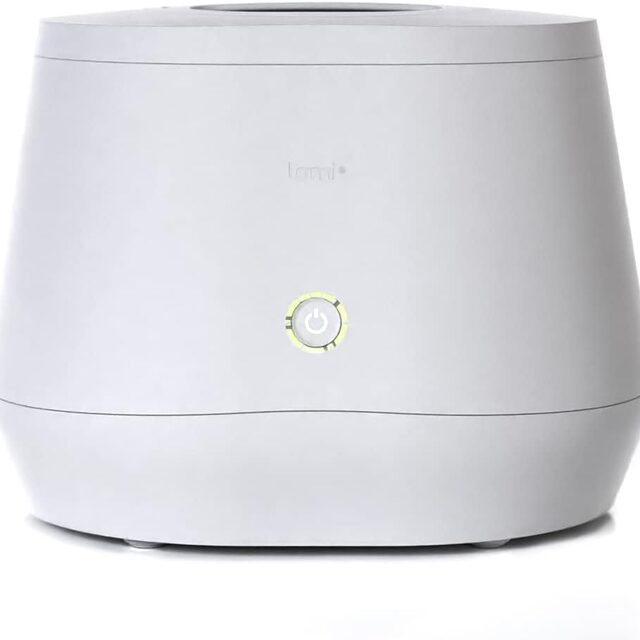
Lomi Classic Electric Composter
Converts food scraps (including meat and dairy) to a dry, crumbly soil amendment in 4–16 hours. No smell during the cycle when the lid is closed. Countertop footprint approximately 16×13×12 inches. Each cycle uses approximately 1 kWh. Output is best used as a soil amendment (mix into potting soil at 10–15% by volume) rather than a standalone growing medium. The 'Eco Express' mode takes 4 hours; 'Grow' mode takes 16–20 hours and produces output with higher biological activity.
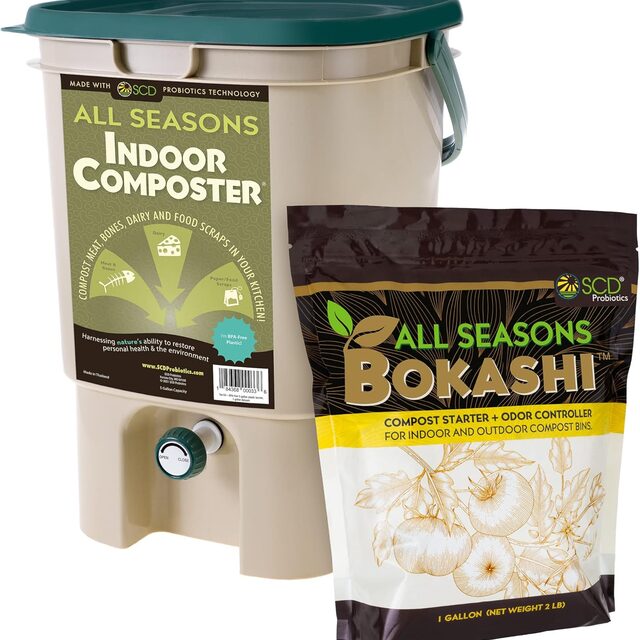
SCD Probiotics All Seasons Indoor Composter (Bokashi Kit)
Airtight bucket system with drain tap for leachate collection. Comes with a 1-lb bag of Bokashi bran inoculated with EM (effective microorganisms). The drain tap is important — Bokashi leachate is highly acidic and needs draining every few days. Use the diluted leachate (1:100 ratio with water) as a liquid fertilizer for containers.
Eartheasy Worm Castings (5-lb bag)
Finished vermicompost for use as a soil amendment and compost tea ingredient. If you're not running your own worm bin, purchased worm castings are the fastest route to high-quality biological soil amendment for container gardens. Eartheasy sources from a vermicomposter that processes food waste through worm bins — the output is genuinely active, not sterilized.
Frequently Asked Questions
Does a Lomi cycle produce finished compost?
Do not assume it does. EPA distinguishes dried output from grinding and dehydrating appliances from biologically stable compost. Lomi describes soil uses for its output, but those manufacturer directions should not be generalized to every model, mode or batch.
Can bokashi go straight into a planted balcony pot?
Fresh bokashi is acidic pre-compost. RHS advises keeping it away from plants initially and finishing it in a compost bin or through ground burial. A planted balcony pot is not an equivalent finishing setup.
What if I have no garden or compost drop-off?
Neither Lomi nor bokashi eliminates the need for an output destination. An indoor worm bin can produce vermicompost from selected scraps if you can maintain it and use or share the harvest. Reducing avoidable food waste remains useful with any setup.