From Plate to Palette: How the Food We Eat Inspires Eco-Friendly Home Decor
Bring food-inspired colors into your home with reusable table settings, practical food displays, and thoughtful furniture choices.
Featured Options Compared in This Guide
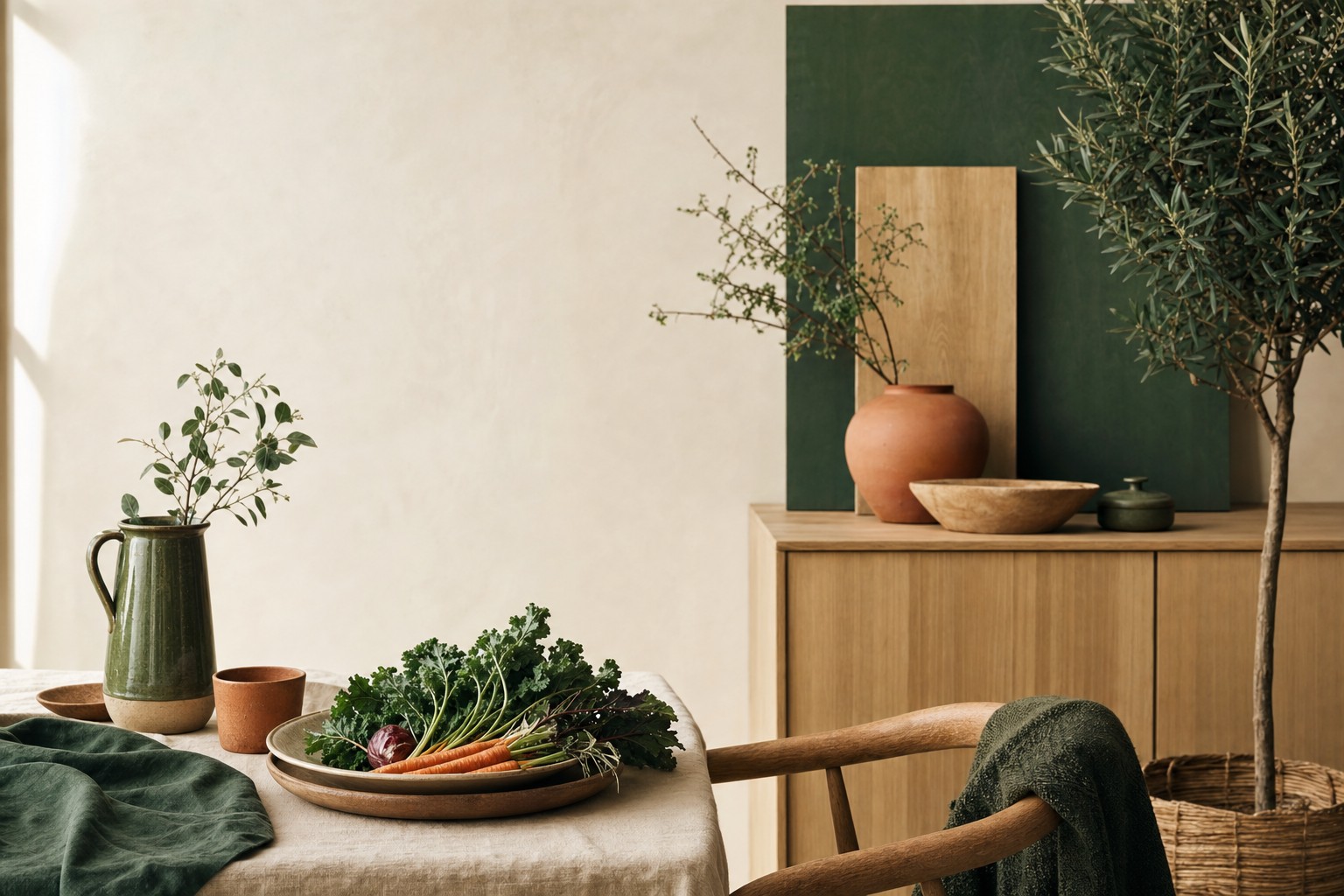
Full specs & notes ↓Food offers a useful starting point for decorating: the green of herbs, the cream of oats, or the deep purple of an eggplant can suggest a room’s colors. Everyday bowls, table linens, and food storage can make that connection practical, too.
The environmental value comes from how you furnish and use the space. Keeping useful objects, setting a reusable table, and arranging food so it gets eaten put the idea into practice. EPA recommends reusing dishes and decorations and planning food purchases and storage to prevent waste. (EPA reuse guidance, EPA food-waste guidance)
Build a palette from a meal you enjoy
Choose a familiar ingredient as your accent color, then work with the furniture and finishes already in the room. These are design suggestions, with no need for a matching collection of new accessories:
| Food inspiration | Suggested combination | Where to try it first |
|---|---|---|
| Herbs and oats | Sage green, cream, and existing wood tones | Arrange cream dishes on a wooden table with a green cloth you already own. |
| Tomatoes and olives | Muted red, olive green, and warm neutrals | Use red as a small table accent if the room already has strong colors. |
| Eggplant and rice | Deep purple, off-white, and brown | Try a purple textile beside pale dishes before committing to a large painted surface. |
| Citrus and leafy greens | Yellow, green, and white | Bring in color through food you intend to eat, alongside everyday white tableware. |
Test colors in the actual room, during daylight and under the lamps you normally use. JRL Interiors explains that lighting and surrounding colors change how green appears, and suggests using it either across larger surfaces or as an accent. That makes a movable textile a useful first experiment before repainting cabinetry. (JRL Interiors)
Let useful objects carry the look
Start with the bowls, serving dishes, and linens in your cupboards. Group mismatched pieces by a shared color, or repeat one accent across the table. A serving bowl can become the visual focus without adding a separate decorative object.
For regular meals, put reusable dishes and cloth napkins where they are easy to reach. For occasional gatherings, consider borrowing extra place settings before buying a set that needs storage the rest of the year. EPA recommends reusable tableware and saving decorations for future occasions. (EPA)
Choose between open display and closed storage according to use. An open shelf can feature the dishes you reach for daily; a cupboard can accommodate assorted containers without requiring them to match. Avoid making pantry organization depend on replacing every serviceable container with identical jars.
When storing grains or bulk purchases, prioritize airtight containers with contents and dates marked on them. EPA also advises buying only the quantities you expect to use. A coordinated pantry should still support those habits. (EPA)
Make an edible centerpiece fit the food’s storage needs
A produce display works best when it is part of an upcoming meal plan. Put out a modest amount you expect to use, and choose the arrangement around appropriate storage.
A mixed bowl is not suitable for every ingredient. EPA advises keeping ethylene-producing fruits, including apples, bananas, and pears, away from other produce they may cause to ripen faster. Leafy greens belong in the refrigerator’s high-humidity drawer; potatoes, onions, and garlic need a cool, dry, dark, ventilated location. (EPA)
For a dining table, consider displaying suitable fruit briefly during a meal, then returning it to its storage location. For a permanent arrangement, use an empty serving bowl or an existing decorative piece rather than buying food solely for display. Keep refrigerated ingredients in the refrigerator until needed.
The same principle applies to attractive leftover containers: make the food easy to identify. EPA recommends clear containers labeled with contents and dates, and refrigerating or freezing leftovers promptly. (EPA)
Choose the dining table separately from its styling
If your table still meets your needs, try the food-inspired palette through the setting first. If you need a different table, compare dimensions, seating space, condition, and whether it can accommodate everyday meals before choosing its appearance. Selling or donating usable furniture can keep it in use. (EPA)
For new wood furniture, FSC labels provide specific information about forest-based materials:
- FSC 100%: Those materials come from FSC-certified forests.
- FSC Recycled: Those materials are verified as recycled.
- FSC Mix: Those materials come from FSC-certified forests, recycled sources, or controlled wood. Controlled wood is not FSC-certified forest material.
These distinctions help when comparing a recycled-material preference with a certified-forest sourcing preference. They do not establish how comfortable a chair is or how a table’s finish will perform. (FSC label explanations)
If repainting furniture to match your palette, consider emissions and application conditions alongside color. EPA explains that low-VOC or zero-VOC wording may concern outdoor smog regulations and may not account for every compound relevant indoors. Follow application precautions, provide ventilation, and buy only the amount needed. (EPA VOC labeling guidance, EPA exposure guidance)
Give food scraps a practical place
A food-inspired kitchen also needs somewhere for the scraps left after cooking. Choose the destination first: a backyard compost system or an available community collection program. Then decide whether a closed collection container fits best on the counter, under the sink, or in the refrigerator or freezer—all locations described by EPA. (EPA composting guidance)
A countertop collection container stores scraps until you transfer them. Appliances that grind and dehydrate scraps produce a dried mixture that still needs composting. For backyard piles, EPA advises excluding meat, dairy, greasy foods, and compostable serviceware; community facilities may have different acceptance rules. (EPA)
For a simple refresh, choose one food-inspired accent, rearrange existing tableware, and make room for food storage and scrap collection. Let the room’s daily use determine which additions are worthwhile.
Sources
Products Compared in This Guide
From Plate to Palette — Top-Spec Options
Compare current model specifications, material disclosures, and third-party certifications for from plate to palette how the food we eat inspires eco friendly home decor.
Certified From Plate To Palette How The Food We Eat Inspires Eco Friendly Home Decor Alternatives
Check verified certification scope, replacement parts, and packaging details across sustainable home listings.