Hemp vs Linen Sheets: Fabric, Fit and Care Compared
Compare Evenfall hemp and CULTIVER flax linen sheets by composition, dimensions, finish and laundry needs to choose the pieces that suit your bed.
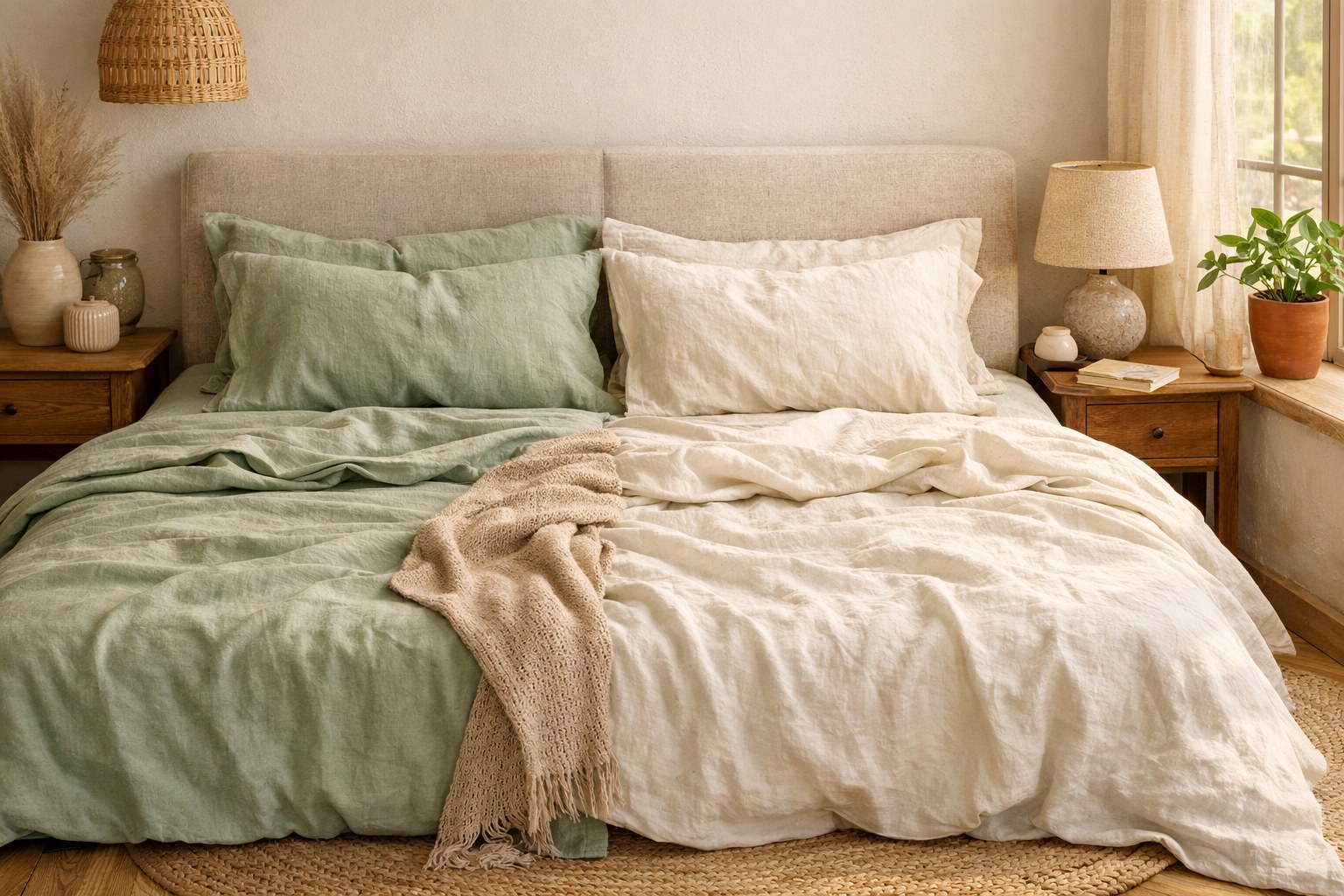
Featured Options Compared in This Guide
Full specs & notes ↓Hemp versus linen sheets is a choice between specific fabrics and bed setups. Evenfall’s hemp top sheet suits someone who wants a separate sheet made entirely from hemp and can use a low dryer setting. CULTIVER’s linen range suits someone who wants to select fitted sheets, flat sheets and pillowcases individually, with a deeper listed fitted-sheet pocket. These differences come from the makers’ specifications; they do not establish that either fiber sleeps cooler or lasts longer. Evenfall specifications; CULTIVER specifications.
What you get with hemp and flax linen
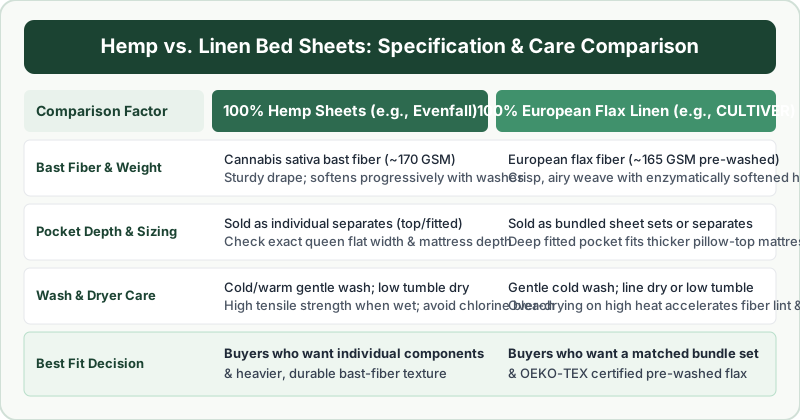
Linen comes from flax. Hemp is a separate fiber, so a sheet described as hemp should not automatically be treated as flax linen. For this comparison, both examples have a stated single-fiber fabric composition: Evenfall lists 100% hemp, and CULTIVER lists 100% European flax linen. CULTIVER fabric information; Evenfall product details.
| Detail | Evenfall hemp sheets | CULTIVER flax linen sheets |
|---|---|---|
| Fabric composition | 100% hemp | 100% European flax linen |
| Stated finish | Garment dyed in Portugal | Prewashed; the brand describes enzyme washing on its fabric page |
| Fabric weight | No GSM specified on the top-sheet page | 165 GSM |
| Purchase format on the linked page | White flat sheet with queen and king choices | Select or omit pillowcases, fitted sheet and flat sheet |
| Queen fitted-sheet dimensions listed | 60 × 80 inches, with 14-inch depth | 153 × 204 cm, with 41 cm depth |
| Drying instructions | Lowest dryer setting, short cycle; outdoor drying also permitted | Line drying or warm tumble drying |
Sources: Evenfall hemp top sheet, CULTIVER white sheet set, CULTIVER fabric finish and CULTIVER care. Evenfall includes fitted-sheet and pillowcase dimensions on its top-sheet page, but those pieces are not included in the top-sheet purchase.
If you already have a fitted sheet and pillowcases you like, either flat-sheet option lets you replace just that layer. If you want to assemble a matching linen setup, CULTIVER’s component selector also lets you pair a queen fitted sheet with king pillowcases or leave out the flat sheet entirely.
Keep blends separate when comparing alternatives. A hemp-and-cotton sheet is a different composition from Evenfall’s pure hemp fabric. The FTC’s textile guidance covers bedding and generally requires labels to disclose fiber names and percentages by weight.
Fit creates a concrete purchase tradeoff
For a queen bed, the flat-sheet choices differ substantially in width:
- Evenfall queen hemp top sheet: 96 × 106 inches, approximately 244 × 269 cm.
- CULTIVER Queen/King linen flat sheet: 280 × 265 cm.
CULTIVER’s option is therefore about 36 cm wider and 4 cm shorter. Choose it if extra fabric at the sides is useful for your preferred drape or tucking. Evenfall’s narrower queen option may suit you if you dislike excess side fabric. Compare these dimensions with a sheet you already find comfortable before ordering. Evenfall dimensions; CULTIVER size guide.
For a king top sheet, the difference is much smaller: Evenfall lists 110 × 106 inches, approximately 279 × 269 cm, against CULTIVER’s 280 × 265 cm Queen/King flat sheet. Here, width gives little reason to choose one over the other; fabric preference and care become more useful deciding factors.
Fitted-sheet depth is another meaningful distinction. Evenfall lists a 14-inch pocket, equivalent to about 35.6 cm, while CULTIVER lists 41 cm. If you use a thick topper, CULTIVER offers more listed depth. These are sheet dimensions, not guarantees of maximum mattress compatibility. Measure your mattress with its topper and protector, and assess how the corners and elastic sit before washing.
Both permit machine drying, with different settings
Evenfall hemp: The maker recommends gentle machine washing, using cold water whenever possible and lukewarm water when needed. It prohibits bleach. For machine drying, it specifies the lowest available setting and a short cycle; low-temperature ironing is optional. Evenfall care instructions.
CULTIVER linen: The maker recommends gentle machine washing up to 40°C, followed by line drying or warm tumble drying. It advises against bleach, soaking, dry-cleaning and fabric softener, and recommends detergent without optical whiteners or brighteners. For line drying, it advises limiting prolonged direct sun exposure to reduce uneven fading. CULTIVER care instructions.
For someone who already uses cold washes and low dryer heat, Evenfall’s hemp fits that routine. If your usual bedding routine uses a warm dryer setting, CULTIVER explicitly permits it. Neither example calls for hand washing or mandatory line drying, so hemp does not automatically mean a more laborious laundry routine.
If you combine an Evenfall hemp top sheet with CULTIVER linen pieces, retain the instructions for each. CULTIVER’s permission to tumble dry warm does not extend to the hemp sheet.
Finish does not settle softness or lifespan
CULTIVER describes an enzyme wash intended to soften its linen before purchase. Evenfall describes its hemp as garment dyed and soft. These descriptions do not establish a head-to-head softness result, and garment dyeing does not by itself describe an equivalent softening treatment. CULTIVER finish; Evenfall fabric description.
CULTIVER’s 165 GSM tells you the fabric’s mass per square metre. Evenfall does not provide a corresponding GSM on its top-sheet page, so there is no numerical basis here for calling either fabric lighter. Nor does fabric weight alone establish overnight cooling, drying time or years of service.
If texture is decisive, compare swatches before committing to full sheets. CULTIVER also makes an important distinction between prewashing and first-use care: it still instructs customers to wash new linen before sleeping on it, but does not accept washed linen for return. Try it on the bed and assess the fabric first. That restriction is specific to CULTIVER and should not be assumed to describe Evenfall’s terms. CULTIVER care and return restriction.
Organic and substance-testing claims answer different questions
Both makers describe OEKO-TEX certification: Evenfall names STANDARD 100 for its Lea hemp fabric, while CULTIVER identifies STANDARD 100 in its fabric information. The standard concerns testing for specified harmful substances, with bed linen included in the direct-skin-contact class. Certificate numbers or label QR codes can be checked through OEKO-TEX. This does not establish organic farming or a comfort advantage. Evenfall; CULTIVER; OEKO-TEX STANDARD 100.
For organic fibers and processing requirements, GOTS accepts both hemp and flax/linen. Its organic grade requires at least 95% certified organic fibers, and its made-with-organic-materials grade requires at least 70%. It also includes environmental and social requirements across processing through the finished product. Neither example should be treated as GOTS-certified on the strength of its fiber composition or OEKO-TEX wording. GOTS key features.
For these two options, the most actionable differences are the queen flat sheet’s width, the fitted sheet’s listed depth, component selection and dryer settings. Choose around those needs and your texture preference; neither hemp nor flax earns an automatic environmental or comfort win from its name.
Where to browse
Prices and availability change. These search listings are a place to check the current product.
Sources
- Evenfall: Hemp flat sheets, composition, dimensions and care
- CULTIVER: White linen sheet set and component choices
- CULTIVER: Linen fabric and finishing information
- CULTIVER: Size guide
- CULTIVER: Care and washed-linen return restriction
- FTC: Textile labeling requirements
- GOTS: Eligible fibers, label grades and processing requirements
- OEKO-TEX: STANDARD 100 and label checking
Products Compared in This Guide
Evenfall hemp sheet
Compare current manufacturer specifications, materials, and package options for Evenfall hemp sheet.
CULTIVER linen sheet
Compare current manufacturer specifications, materials, and package options for CULTIVER linen sheet.
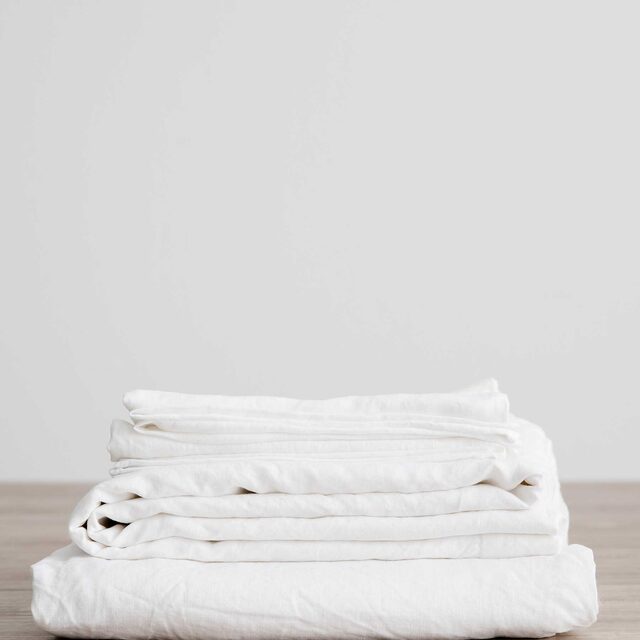
Cultiver Linen Sheet Set (Queen)
European flax linen, OEKO-TEX certified. The roughness on night 1 is real — by wash 15 it has broken into a soft, lived-in texture nothing else matches. Exceptional moisture-wicking. Best linen option tested across the 6-month period.
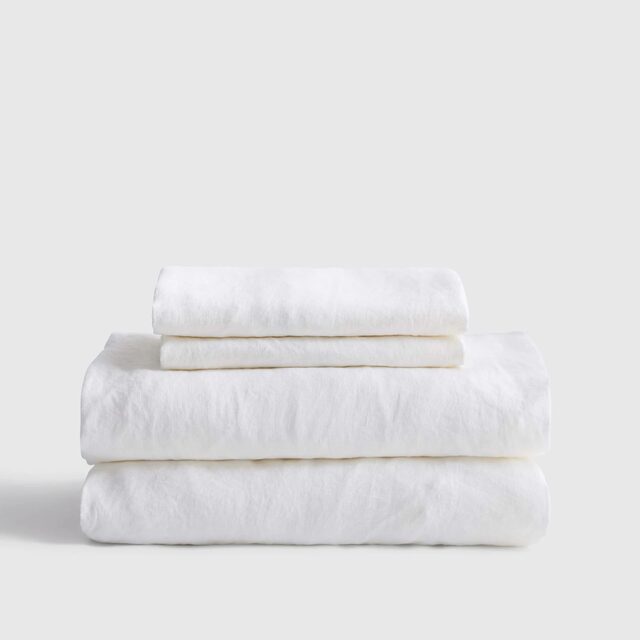
Quince European Linen Sheet Set (Queen)
OEKO-TEX certified European flax linen at roughly 60% of the Cultiver price. Slightly rougher initial texture, softens on the same timeline. Fewer colorway options. The value case is strong for the $149 entry point into linen.
Frequently Asked Questions
Can hemp sheets go in the dryer?
Evenfall permits machine drying for its hemp sheets, specifying the lowest available setting and a short cycle. This instruction applies to its fabric; other hemp sheets may have different requirements.
Are hemp and linen queen sheets the same size?
Size names do not establish identical dimensions. Evenfall lists its queen hemp top sheet at 96 by 106 inches, while CULTIVER lists its Queen/King linen flat sheet at 280 by 265 cm. CULTIVER's option is wider but slightly shorter after conversion.
Can both hemp and linen sheets be GOTS-certified?
Yes. GOTS accepts certified organic hemp and flax/linen, subject to its processing and finished-product requirements. Neither fiber name alone establishes certification.