Natural Fiber Towels: Cotton, Linen, Weave and GSM Explained
Compare cotton, linen and bamboo-derived rayon towels by construction, GSM, size, care needs and bathroom drying space.
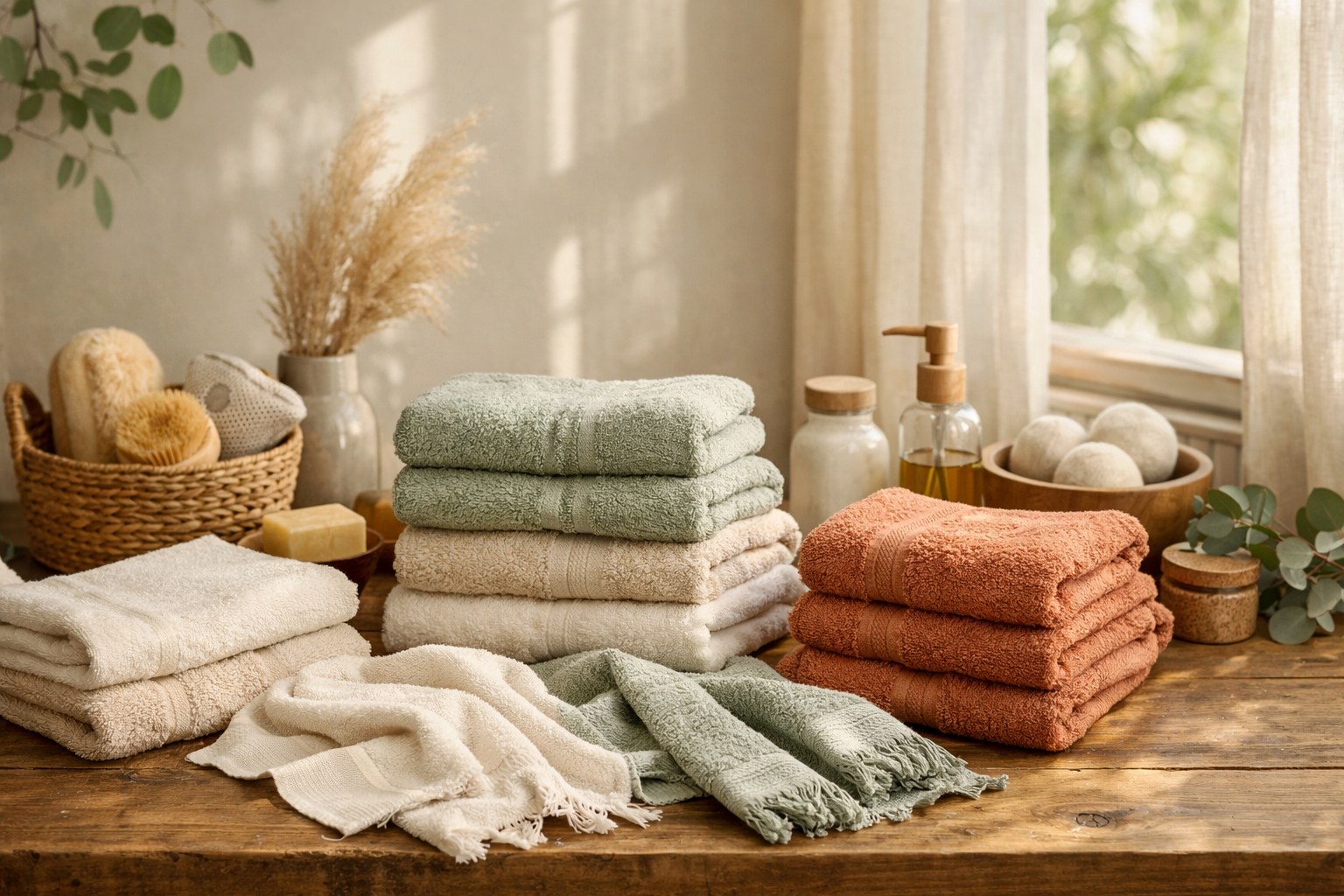
Featured Options Compared in This Guide
Full specs & notes ↓Choose a towel by the combination of fiber, construction, fabric weight and size. Cotton alone does not tell you whether a towel will be a substantial bath wrap or a light, textured towel. Linen deserves a separate care comparison, while bamboo-derived rayon should be understood as a manufactured fiber.
Before buying a set, decide what you want to improve: the feel against your skin, wrap coverage, storage space or the ability to get towels dry between uses. Buy one towel first if you are changing construction or fiber, then assess it after washing according to its instructions.
Cotton, linen and bamboo-derived rayon
| Fiber description | How to use it in your decision |
|---|---|
| Cotton | Compare construction and GSM within the category; cotton towels can have very different specifications. |
| Organic cotton | Separate the organic sourcing claim from questions about weight, feel and drying. Certification scope matters. |
| Turkish cotton | Treat this as an origin description, not evidence of organic production or a particular weave. |
| Linen/flax | Check whether the towel is entirely linen or a blend, and whether its washing and drying requirements fit your routine. |
| Rayon or viscose made from bamboo | Compare it as a manufactured fiber or blend, rather than assuming it behaves like the bamboo plant. |
The FTC’s textile guidance distinguishes textiles made directly from bamboo fiber from rayon or viscose produced using bamboo as the raw material. Its advertising guidance also explains that claims about retained antimicrobial properties require evidence. A bamboo origin claim alone does not establish that a towel resists odors or needs less washing.
For linen, make care compatibility part of the purchase. Libeco’s general linen instructions recommend mild soap, washing at no more than 40°C/104°F, avoiding chlorine bleach and line drying where possible. Those are Libeco’s directions, not a universal prescription for every linen towel. If your usual towel routine relies on hotter washing, choose a towel whose own instructions permit it.
GSM measures fabric weight, not overall quality
GSM means grams per square meter: mass divided by fabric area. ASTM D3776/D3776M covers measurement of this fabric property. It is not an absorbency or drying-time test.
At equal dimensions, higher GSM means more fabric mass. Across different sizes, compare both GSM and area: a large bath sheet and a smaller bath towel are not equivalent laundry or storage choices. GSM also does not describe the surface texture or yarn construction.
Brooklinen’s towel comparison illustrates these distinctions within cotton:
- Super-Plush: listed as 100% Aegean Turkish cotton, 770 GSM, with zero-twist construction.
- Plush: listed as 100% Aegean Turkish cotton at 500 GSM.
- Waffle: listed as 100% Turkish cotton at 290 GSM, with a textured waffle weave.
These specifications offer a useful choice between higher fabric mass and a lighter construction. They do not establish a measured drying-time difference in your bathroom. Zero-twist describes yarn construction; waffle describes the weave. Neither term replaces the fiber composition or GSM.
Brooklinen lists its standard bath towel at 30 × 58 inches and bath sheet at 40 × 65 inches on the same page. Before choosing the sheet for additional coverage, measure your available hanging space. A larger towel is only convenient if you can hang, store and wash it comfortably.
Match the towel to the bathroom
If you want a substantial wrap: Consider a higher-GSM cotton towel, then choose dimensions based on the coverage you actually need. Super-Plush is one manufacturer-documented example of this construction; its specifications do not establish that it is the most absorbent or longest-lasting choice.
If towels stay damp between showers: First give each towel room to hang spread out and address bathroom moisture. The EPA recommends effective bathroom exhaust ventilation that discharges outdoors. A lighter construction is worth trying, but changing fibers cannot substitute for removing excess moisture from the room.
If cupboard or gym-bag space is tight: Start with the smallest dimensions that provide adequate coverage. Compare folded bulk and total towel weight where available, rather than relying on GSM alone. Choose a waffle towel because its texture and size suit you, without treating the weave name as a guaranteed drying schedule.
If organic sourcing is the deciding factor: Look for certification that addresses that priority. GOTS covers certified organic fibers and subsequent processing, with environmental and social criteria. Its organic label grade requires at least 95% certified organic fibers; its made-with-organic-materials grade requires at least 70%.
OEKO-TEX STANDARD 100 addresses testing for harmful substances. It does not, by itself, establish organic cotton content. Brooklinen lists STANDARD 100 for the towels above; that listing should not be converted into an organic claim. For a guide focused on organic sourcing, see the organic bath towel comparison.
Make the care routine work before replacing towels
Whirlpool’s towel-care guide advises washing new towels before use, loading the washer loosely and following the towel’s care tag. It also explains that excess detergent can leave residue and that towels should be fully dry before folding and storing.
Temperature advice needs to follow the particular towel. Although Whirlpool discusses warm and hot washing generally, Brooklinen specifies cold washing and low tumble drying for Super-Plush. Do not apply a generic hot-wash routine to a towel with different instructions.
If towels feel stiff, review detergent dosing and drying before deciding the fiber is wrong for you. Brooklinen advises avoiding fabric softener, and Whirlpool explains that softener or dryer-sheet coatings can interfere with absorbency. For linen, Libeco additionally advises avoiding overdrying and detergents with optical whitening agents on colored fabrics.
A useful purchase is a towel whose texture you enjoy, whose dimensions fit your space and whose care requirements you can follow consistently. Choose those features together rather than paying for a fiber name or the highest GSM alone.
Sources
- FTC: Bamboo textile labeling
- FTC: Bamboo-derived rayon and marketing claims
- ASTM: Fabric mass-per-area test scope
- Brooklinen: Towel specifications, dimensions and care
- Libeco: Linen care
- EPA: Bathroom ventilation and moisture management
- GOTS: Certification scope and organic fiber requirements
- OEKO-TEX: STANDARD 100 scope
- Whirlpool: Washing and drying towels
Products Compared in This Guide
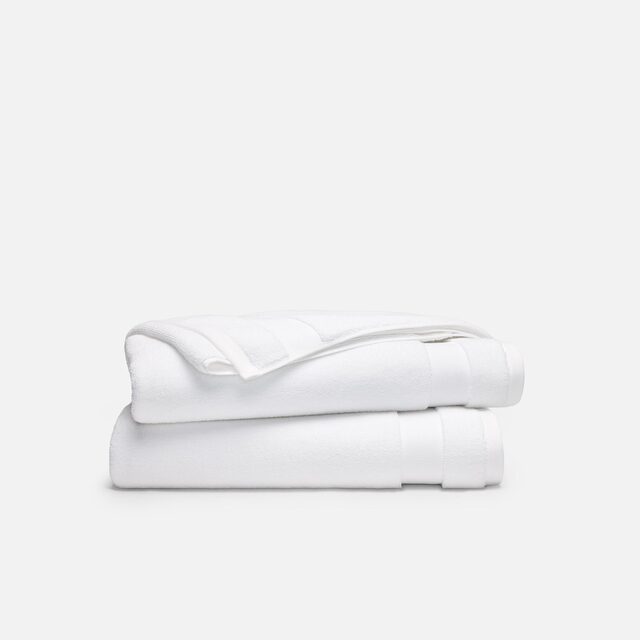
Brooklinen Super-Plush Bath Towels (Set of 2)
Turkish cotton loops get noticeably fluffier from wash 3. Still fluffy and absorbent at 6 months. No color bleeding after wash 1 conditioning wash. The weight (700 GSM) is the heaviest in the test — plush feel but slow to dry between uses.
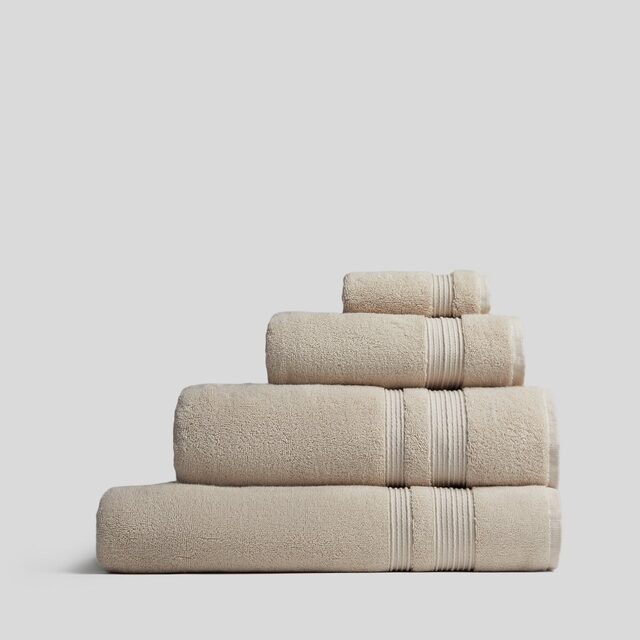
Parachute Classic Turkish Cotton Towels (Set of 2)
600 GSM Turkish cotton, gets softer and more absorbent with each wash. Dries faster than the Brooklinen due to slightly lighter weight. No synthetic finishes — the initial stiffness resolves by wash 3. One of the best towels in the test for daily-use durability.
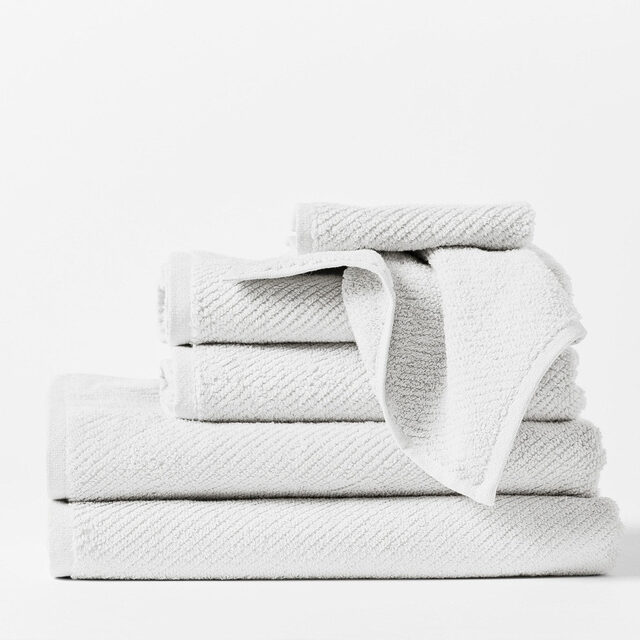
Coyuchi Air Weight Organic Towel (Bath)
GOTS-certified, 450 GSM. The 'Air Weight' construction means a waffle weave with more open structure — dries in 30 minutes in a humid bathroom vs. 2–3 hours for plush loop towels. Best for humid climates or shared bathrooms where towels never fully dry.
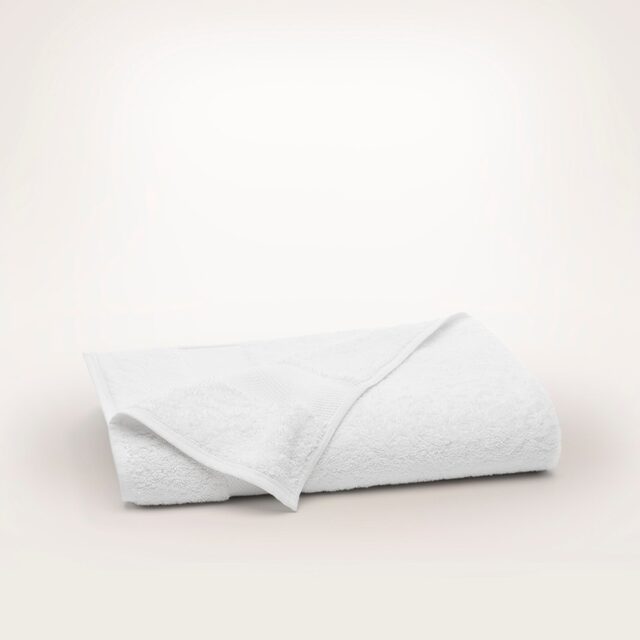
Boll & Branch Plush Bath Towel
GOTS-certified, Fair Trade, 600 GSM. The weave tightens after the first wash, then softens progressively. At 6 months, one of the two softest towels in the test (alongside Brooklinen). The Fair Trade certification adds labor accountability that organic certifications alone don't address.
Frequently Asked Questions
Does higher GSM always mean a better towel?
No. GSM expresses fabric mass per unit area. It helps compare weight, but does not independently establish absorbency, drying time or durability. Consider construction and finished dimensions too.
Is a bamboo towel a natural-fiber towel?
Not necessarily. The FTC distinguishes actual bamboo fiber from manufactured rayon or viscose made using bamboo. Use the stated fiber composition when comparing towels.
Should I use fabric softener on towels?
Brooklinen advises skipping fabric softener for Super-Plush towels, and Whirlpool explains that softener coatings can reduce absorbency. Follow the specific towel's care instructions.