GOTS vs. OEKO-TEX: What Each Bedding Certification Covers (2026)
Compare GOTS and OEKO-TEX STANDARD 100 for bedding, understand organic-content and chemical-testing claims, and check what a certificate covers.

Featured Options Compared in This Guide
Full specs & notes ↓Choose GOTS when your priority is organic fiber plus requirements for how bedding is processed and made. Choose OEKO-TEX STANDARD 100 when your priority is testing the textile and its components for harmful substances. A STANDARD 100 label does not establish that the fiber is organic; GOTS also includes chemical restrictions and product-safety criteria. Their purposes overlap, but they are not interchangeable. GOTS scope · STANDARD 100 scope
GOTS vs. STANDARD 100: the differences that affect a purchase
| Shopping question | GOTS | OEKO-TEX STANDARD 100 |
|---|---|---|
| Does it require organic fiber? | Yes: at least 70%, with a separate 95% threshold for the organic label grade | Does not establish organic fiber content |
| How does it address chemicals? | Chemical-input restrictions and product-safety requirements within certified textile processing | Harmful-substance testing under criteria matched to the article’s intended use |
| Does it address manufacturing impacts? | Includes wastewater, resource efficiency and greenhouse-gas management requirements | Does not establish the broader environmental processing requirements covered by GOTS |
| Does it address workers? | Includes working conditions, labor rights and other social criteria | Does not establish labor certification |
| Is it only for finished sheets? | Covers applicable processing, manufacturing and trading stages through the finished product | Can cover yarn, components and finished articles; check the scope of the label |
The comparison follows the programs’ own descriptions: GOTS key features and OEKO-TEX STANDARD 100. Here, “OEKO-TEX” means STANDARD 100 specifically. OEKO-TEX offers several other standards, so the organization name alone is not enough to identify what a label covers.
What the two GOTS label grades mean
GOTS has two organic-fiber thresholds:
- Organic: at least 95% certified organic fibers.
- Made with Organic Materials: at least 70% certified organic fibers.
Neither grade automatically means 100% organic fiber. If that is your requirement, compare the stated fiber composition as well as the certification grade. GOTS requires incoming organic fibers to meet recognized organic agriculture standards, then applies its own requirements through textile processing. Those include chemical restrictions, wastewater treatment and social criteria, supported by independent audits and documented material flows. GOTS requirements
GOTS also covers linen/flax, hemp and wool, among other eligible natural fibers. A preference for linen does not require abandoning organic certification. If organic flax is your goal, look for a GOTS claim covering the linen article; STANDARD 100 alone answers a different question. Eligible GOTS fibers
What STANDARD 100 testing means for sheets
OEKO-TEX describes STANDARD 100 as testing against a list of over 1,000 harmful substances, with requirements becoming stricter as skin contact increases. Its scope includes components such as sewing thread, buttons and accessories. The program can use previously certified components within its modular certification system, so the label should not be read as a claim that every individual retail sheet underwent a separate laboratory test. STANDARD 100 testing and certification
Product Class 2 covers direct-contact textiles such as bed linen. Product Class 1 covers products for babies and children up to age three and has the strictest requirements. When comparing adult sheets and baby bedding, the intended-use class matters more than a vague claim that both are “OEKO-TEX certified.” Certification indicates compliance with the program’s criteria; it is not a promise that an individual will never experience irritation. STANDARD 100 product classes
Where OCS, MADE SAFE and Fair Trade fit
These labels can answer additional questions, but counting logos is not a useful way to rank bedding.
OCS: organic-material traceability. Textile Exchange’s Organic Content Standard follows certified organic raw materials through the supply chain. That is more than a farm-only check. Its scope does not include processing chemicals or social and environmental production conditions beyond preserving the integrity of the organic material. OCS is useful for an organic-content claim; it cannot substitute for GOTS’s processing requirements or STANDARD 100’s substance-testing claim. Its narrower scope also does not prove that a particular sheet contains problematic finishes. Textile Exchange’s OCS explanation
MADE SAFE: material and ingredient screening. MADE SAFE describes a review that starts with a banned/restricted list covering over 15,000 substances, then examines disclosed substances, processes and potential effects on people and ecosystems. This is a different approach from STANDARD 100’s textile-testing program. Comparing list sizes does not establish which certification offers greater protection for a particular sheet, and neither description establishes a medical benefit for people with chemical sensitivities or autoimmune conditions. MADE SAFE’s approach
Fair Trade Certified factories: manufacturing conditions and worker-directed funds. Fair Trade USA’s factory program includes social, economic and environmental requirements. It also provides a premium that funds projects selected through worker participation. That premium is a concrete feature to consider alongside GOTS’s existing labor requirements. Factory certification does not, by itself, establish organic fiber content or STANDARD 100 testing, and its scope should not be extended automatically to every upstream supplier. Fair Trade USA’s factory program
How to choose between two certified sheet sets
For organic cotton plus production requirements, prioritize a GOTS claim covering the finished bedding. An OCS sheet and a GOTS sheet may both support organic-material claims, but only GOTS among those two includes the broader processing and social criteria described above. Adding STANDARD 100 to an OCS claim still does not establish those GOTS requirements. GOTS · OCS
For linen with harmful-substance testing, identify the exact OEKO-TEX standard. CULTIVER’s Forest Linen Sheet Set page describes its European flax linen as OEKO-TEX certified, but that wording alone does not identify STANDARD 100 or provide a certificate number. Ask for those details before treating it as a STANDARD 100 purchase. European flax sourcing also does not establish organic cultivation. CULTIVER product description
For organic bedding with additional material screening, look for separate product-specific claims. Avocado’s Organic Cotton Sheets page states that Control Union certifies the materials and finished product to GOTS, and separately states MADE SAFE certification. This illustrates how two programs can apply to one item. Those are the manufacturer’s claims for that sheet line; they should not be extended to every Avocado product or interpreted as evidence of superior sleep or health outcomes. Avocado product specifications
For worker-directed community funding, consider Fair Trade alongside your fiber requirements. Its premium mechanism gives you a specific reason to seek the additional label, rather than assuming GOTS lacks labor criteria. Fair Trade premium · GOTS social criteria
Check that the certificate matches the bedding
For GOTS, ask the seller for the certificate, certified entity name and issuing certification body. Use the Certified Suppliers Database to compare the entity’s operations and certified products with the claim. A supplier entry is not enough to conclude that every item sold by a brand is certified.
A missing result needs follow-up. The database explicitly warns that certification bodies are still updating information in its repository. Ask the seller and issuing body to resolve the gap instead of treating an empty search as proof of fraud. Database notice
For STANDARD 100, scan the label’s QR code or enter its certificate number in Label Check, accessible from the STANDARD 100 page. Compare the returned information with the bedding you intend to buy. The program issues certificates for one year, so a historic label image is not sufficient evidence of current validity.
If browsing marketplaces, the existing Amazon search for CULTIVER linen sheet sets is a search link, not confirmation of a matching item, seller or certification. This is an affiliate link; GreenChoice may earn a commission from qualifying purchases.
Sources
- GOTS: key features, label grades and eligible fibers
- GOTS: Certified Suppliers Database
- OEKO-TEX: STANDARD 100
- Textile Exchange: Organic Content Standard
- MADE SAFE: Ecosystem Approach
- Fair Trade USA: certified factories
- Avocado: Organic Cotton Sheets
- CULTIVER: Forest Linen Sheet Set with Pillowcases
Products Compared in This Guide
Amazon search for CULTIVER linen sheet sets
Compare current manufacturer specifications, materials, and package options for Amazon search for CULTIVER linen sheet sets.
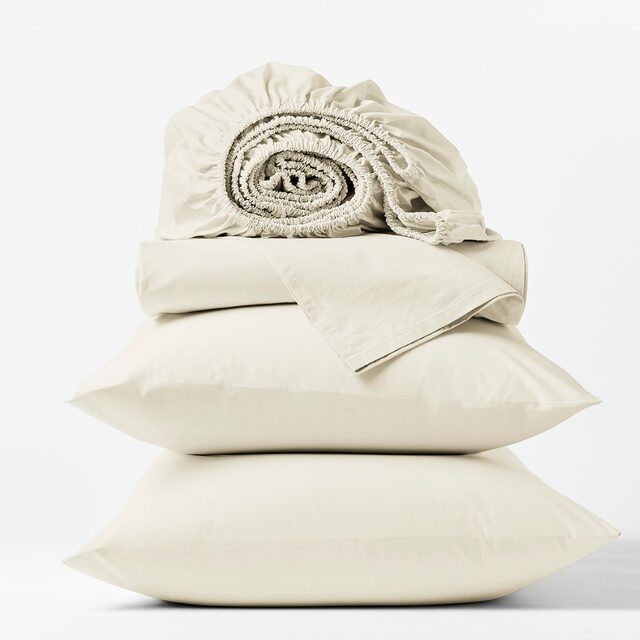
Coyuchi Organic Percale Sheet Set
GOTS-certified with a verifiable certificate number (search global-standard.org). The gold standard for certified organic cotton bedding — long-staple cotton, no formaldehyde finish, supply chain traced from field to bedroom.
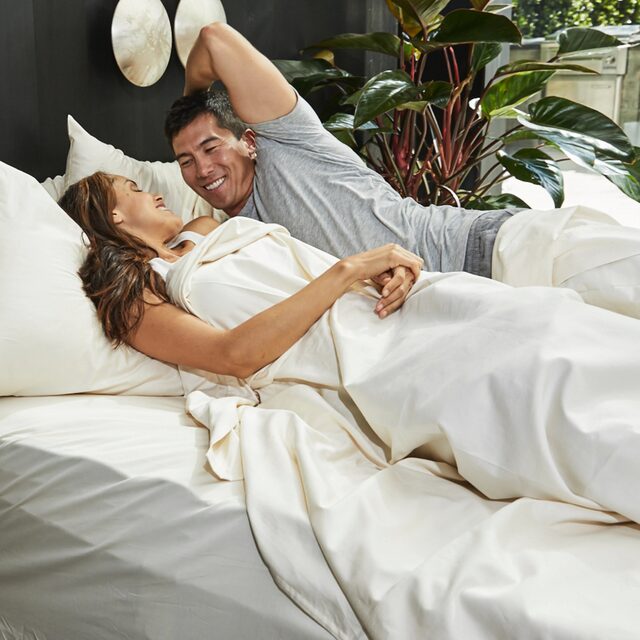
Avocado Green Organic Sheet Set
GOTS + MADE SAFE dual-certified. MADE SAFE screens 6,500+ chemicals including endocrine disruptors not covered by GOTS's banned list. Best option for households with chemical sensitivities.
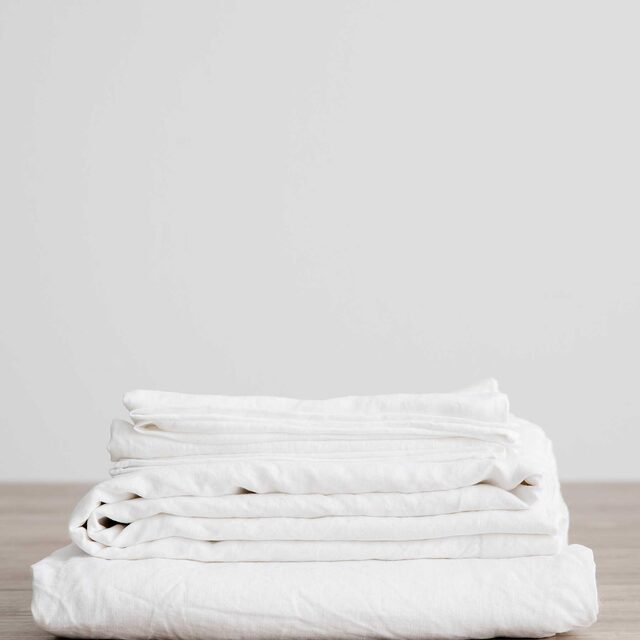
Cultiver Linen Sheet Set
OEKO-TEX Standard 100 certified European flax linen. The right certification for linen — GOTS is cotton-specific. Verified free of harmful substances in the finished product. Breaks in to exceptional softness after 15+ washes.
Frequently Asked Questions
Is GOTS better than OEKO-TEX for bedding?
GOTS is the more relevant choice when you want certified organic fibers together with processing, environmental and worker requirements. OEKO-TEX STANDARD 100 addresses testing for harmful substances. The better fit depends on which claim matters to your purchase.
Does GOTS apply to linen and wool?
Yes. GOTS covers eligible organic natural fibers including cotton, linen/flax, hemp and wool. It is not limited to cotton bedding.
Does a missing GOTS database result prove a claim is false?
No. The certified-suppliers database warns that certification bodies are still updating its repository. Ask the seller for the certified entity, certificate and issuing certification body, then resolve the missing information before relying on the claim.
How does OCS differ from GOTS?
OCS tracks certified organic raw materials through the supply chain. It does not address processing chemicals or social and environmental production requirements beyond organic-material integrity. GOTS includes those broader categories of requirements.