Linen vs Cotton vs Bamboo Sheets: A Buying Decision Guide
Compare linen, cotton percale and bamboo-derived viscose sheets using concrete examples of surface feel, mattress fit, laundry needs and certification.
Featured Options Compared in This Guide
Full specs & notes ↓Choose between linen, cotton percale and bamboo-derived viscose by matching the surface you prefer to your mattress and laundry routine. CULTIVER’s linen, Coyuchi’s Refined Organic Percale and Cariloha’s Resort sheets provide three concrete examples. Their specifications help narrow a purchase; they do not establish a universal winner for comfort or cooling.
Start with fiber and weave
Cotton, linen and viscose identify fibers. Percale and sateen describe weaves. Cotton can be woven into either percale or sateen, so a comparison between cotton percale and viscose sateen changes both the fiber and the construction.
Coyuchi explains that its percale alternates threads over and under in a balanced pattern. It describes the resulting surface as matte, smooth and crisp. Its sateen construction lets yarns pass over several others before interlacing, producing a more lustrous surface on one side. These distinctions help explain why two cotton sheets can feel different. Source: Coyuchi’s weave guide.
For the viscose option here, bamboo identifies the plant source. The FTC distinguishes viscose, also called rayon, made from bamboo from fiber obtained directly from the bamboo plant. Source: FTC textile labeling.
Which surface would you choose?
| Named example | Composition and manufacturer-described surface | A practical reason to consider it |
|---|---|---|
| CULTIVER white linen set | Entirely European flax linen; prewashed, with a relaxed texture and softened feel. | You want a textured surface and care instructions that permit warm washing. |
| Coyuchi Refined Organic Percale Sheet Set | Entirely organic cotton; Coyuchi describes a smooth, crisp surface reminiscent of freshly pressed shirting and identifies the product as GOTS certified. | You want crisp cotton percale and an organic certification claim attached to the specific set. |
| Cariloha Resort | Entirely viscose made from bamboo, woven as sateen; Cariloha describes a smooth surface. | You prefer the described smooth sateen feel and need a stated mattress-height allowance of up to 18 inches. |
Sources: CULTIVER materials and care, Coyuchi set details, Cariloha sheet comparison and Resort specifications.
Linen versus cotton percale: compare CULTIVER’s described texture with Coyuchi’s crisp, matte percale. If the appeal of your existing sheets is their crispness, Coyuchi is the more directly relevant candidate to handle. If you want a more textured surface, explore CULTIVER. Neither description demonstrates better overnight temperature control. Sources: CULTIVER, Coyuchi weave guide.
Cotton percale versus bamboo-derived viscose: Coyuchi’s crispness and Resort’s smooth sateen description give you a surface preference to investigate. Their cold-wash and low-heat drying instructions are broadly compatible, so feel and mattress fit may settle this choice before laundry does. Coyuchi also provides a specific organic cotton certification claim; Resort’s bamboo origin is a different kind of information. Sources: Coyuchi, Resort.
Linen versus bamboo-derived viscose: consider both surface and washing temperature. CULTIVER permits warm washing, whereas Resort specifies cold water. If either fabric appeals equally, that difference can decide which fits your household. Sources: CULTIVER, Resort.
Handle samples in similar condition and ask whether they have been washed. Avoid generalizing from one sample to a whole fiber category: Cariloha itself lists Classic as twill and Resort as sateen while identifying both as bamboo-derived viscose. Source: Cariloha sheet comparison.
Compare dimensions before ordering
Measure your mattress width, length and total height with the topper in place. A fitted sheet’s listed depth and a manufacturer’s maximum supported mattress thickness are different specifications.
| Example | Listed Queen fit information | Other Queen pieces |
|---|---|---|
| CULTIVER white linen | Fitted sheet: 153 × 204 × 41 cm, width × length × depth; perimeter elastic. | Queen/King flat sheet: 280 × 265 cm; standard pillowcase: 50 × 69 cm. Components can be selected individually. |
| Coyuchi Refined Organic Percale | Fitted sheet: 60 × 80 × 15 inches, width × length × depth. | Flat sheet: 90 × 106 inches; pillowcases: 20 × 32 inches. Queen set includes one fitted sheet, one flat sheet and two pillowcases. |
| Cariloha Resort | Manufacturer states compatibility with mattresses up to 18 inches thick; corner bands and perimeter elastic. | Queen set includes one fitted sheet, one flat sheet and two pillowcases. |
Sources: CULTIVER size chart and set builder, Coyuchi size chart and contents, Resort fit and contents.
For a thick mattress and topper, Resort offers an explicit height limit to compare with your measurement. Do not treat Coyuchi’s 15-inch depth or CULTIVER’s 41 cm depth as equivalent fit promises; obtain confirmation of the supported mattress height. Eliminate Resort if your total height exceeds its stated limit.
Flat-sheet coverage also deserves attention if you share a bed or like substantial tuck-in fabric. Compare the listed width and length with a flat sheet whose coverage already works for you. Check pillow dimensions separately rather than assuming every standard pillowcase has the same measurements.
If only one piece is worn, CULTIVER’s builder allows omitted components, and Coyuchi lists separate Refined Organic Percale fitted sheets and flat sheets. Replacing that piece can avoid buying a full set you do not need.
Let laundry requirements narrow the choice
| Example | Washing instructions | Drying and finishing instructions |
|---|---|---|
| CULTIVER linen | Warm machine wash; no bleach or soaking. | Line dry or tumble dry warm. Limit prolonged sunlight to reduce uneven fading. |
| Coyuchi Refined Organic Percale | Cold water, gentle cycle, similar colors. Coyuchi recommends detergent without bleach or whiteners. | Tumble dry low and remove promptly; warm ironing is optional. Coyuchi suggests wool dryer balls instead of softeners or dryer sheets. |
| Cariloha Resort viscose | Cold water with similar colors and mild detergent; avoid bleach. | Shake before drying; use a gentle drying cycle and low heat. Avoid fabric softener and dryer sheets. |
Sources: CULTIVER care, Coyuchi care, Resort care.
If warm washing is a firm requirement, CULTIVER is the match among these three examples. If you already wash bedding cold and tumble dry low, both Coyuchi and Resort fit those settings. Coyuchi specifically calls for prompt removal from the dryer and permits a warm iron, which gives readers who prefer a pressed finish a clear care option.
Before combining sheets with other bedding, compare the required settings. Conflicting instructions may mean separate loads. These routines belong to the named products; they should not be generalized to all linen, cotton or viscose sheets.
Separate crispness and initial coolness from overnight comfort
Coyuchi’s descriptions of crisp percale and Cariloha’s descriptions of smooth sateen can guide a preference. They do not demonstrate that one set keeps sleepers cooler throughout the night.
ASTM D7984-21 measures thermal effusivity in dry fabric under ambient conditions. This property relates to the warm or cool sensation at initial contact. Its scope does not establish overnight comfort in a complete bed or performance when fabric becomes damp. A reference to the method without results for identified comparison fabrics cannot establish a cooling winner.
If the purchase’s return conditions allow sleeping on and laundering the sheets, keep your mattress protector, top bedding and room settings consistent while assessing them. Notice initial coolness separately from later comfort, and check whether the fitted corners remain in place. Read the applicable return terms before starting.
What the environmental labels establish
Coyuchi identifies Refined Organic Percale as GOTS certified. GOTS covers organic fiber content and processing through the finished product, including chemical restrictions, environmental criteria and working conditions. Its organic label grade requires at least 95% certified organic fibers; its made-with-organic-materials grade requires at least 70%. Cotton and flax are both eligible fibers, so certification is not a reason to assume cotton always has an advantage over linen. Source: Coyuchi product details.
OEKO-TEX STANDARD 100 addresses testing textiles and their components for harmful substances. It does not establish organic cultivation. Its label check accepts a certificate number or QR code. The bedding certification comparison explains the distinction further.
Bamboo’s plant origin alone cannot establish a viscose sheet’s environmental performance. The FTC’s guidance describes hazardous emissions associated with typical rayon production and requires substantiation for claims that rayon retains bamboo’s antimicrobial properties. This general guidance is not an assessment of Resort’s particular factory.
Likewise, Lenzing’s solvent-recovery description concerns its TENCEL Lyocell production. Those process details cannot be transferred to bamboo-derived viscose merely because both fibers originate from plants.
Sources
- CULTIVER: White linen set materials, dimensions, components and care
- Coyuchi: Refined Organic Percale Sheet Set composition, surface description, dimensions and care
- Coyuchi: Percale and sateen weave explanations
- Coyuchi: Refined Organic Percale fitted sheet
- Coyuchi: Refined Organic Percale flat sheet
- Cariloha: Sheet compositions, weaves and surface descriptions
- Cariloha Resort: Composition, mattress compatibility, contents and care
- FTC: Bamboo textile labeling
- FTC: Bamboo-derived textile claims
- ASTM D7984-21: Thermal effusivity method and scope
- GOTS: Fiber requirements, label grades and processing criteria
- OEKO-TEX: STANDARD 100 scope and label checks
- Lenzing: TENCEL Lyocell production
Products Compared in This Guide
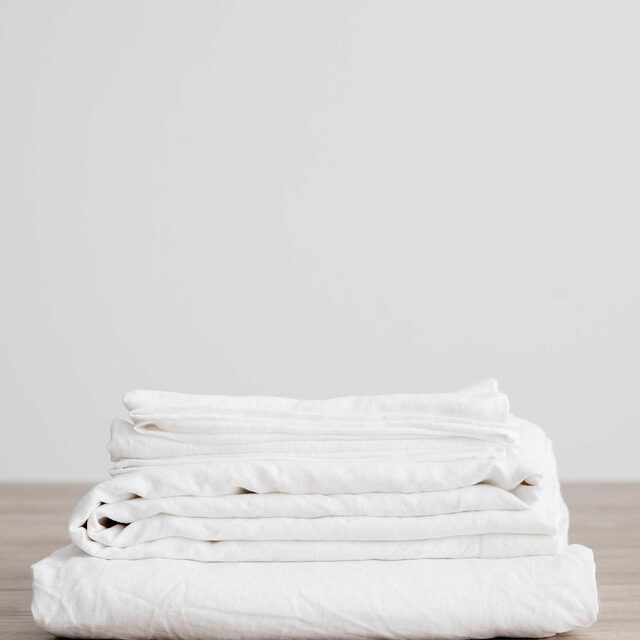
Cultiver Linen Sheet Set (Queen)
European flax linen, OEKO-TEX certified. The clear cooling winner in the test at 90 nights — moisture-wicking was measurably faster than both cotton and bamboo. Initial roughness breaks in by wash 15. For hot sleepers willing to wait out the break-in period, this is the correct sheet.
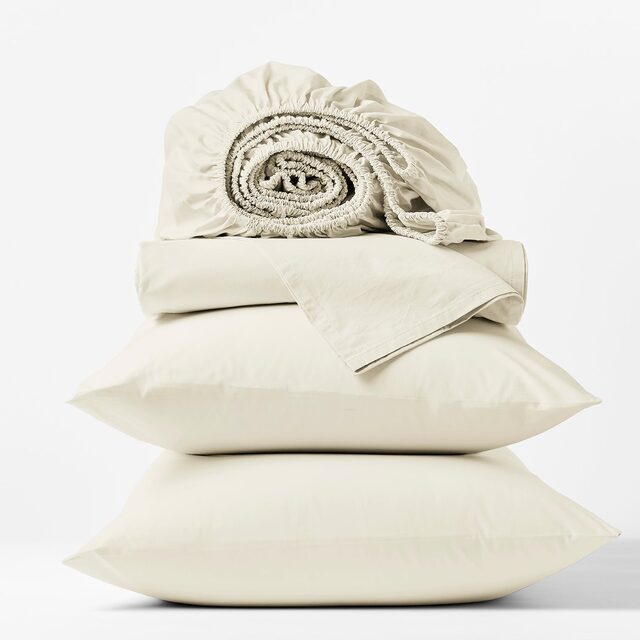
Coyuchi Organic Percale Sheet Set (Queen)
GOTS-certified long-staple organic cotton, percale weave. Most breathable cotton option in the test — crisp open weave allows airflow that sateen and flannel don't. Best cotton cooling sheet. Not as cool as linen but the most comfortable night-1 experience of the three fiber types.
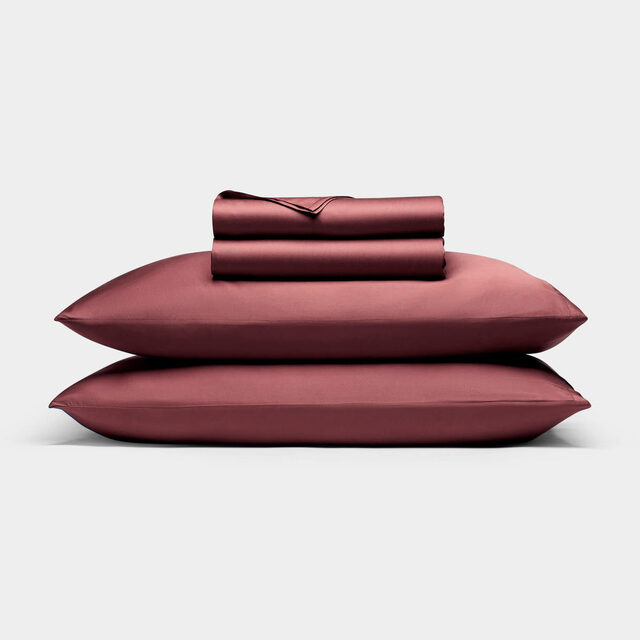
Cozy Earth Bamboo Sheet Set (Queen)
100% bamboo viscose (lyocell-adjacent but using conventional viscose processing). OEKO-TEX certified final product — chemical-tested. Notably silky feel. Cooling performance was middle of the pack — better than sateen cotton, not as cool as percale cotton or linen. The eco case for bamboo viscose is weaker than marketing suggests.
Frequently Asked Questions
What is the difference between cotton and percale?
Cotton identifies the fiber; percale identifies the weave. Coyuchi describes its cotton percale as a balanced weave with alternating over-and-under threads, producing a matte surface with a crisp feel.
Are bamboo sheets always cooler than cotton?
A bamboo-derived fiber label does not establish a cooling advantage. ASTM D7984-21 concerns initial contact sensation in dry fabric, not overnight comfort in a complete bed.
Does a 15-inch fitted-sheet depth mean it fits a 15-inch mattress?
A listed sheet depth is not necessarily a maximum supported mattress height. Coyuchi lists a 15-inch fitted-sheet depth for Refined Organic Percale; confirm compatibility with your mattress and topper together.
Does OEKO-TEX STANDARD 100 mean sheets are organic?
No. STANDARD 100 concerns testing for harmful substances. GOTS separately sets requirements for organic fiber content and textile processing.