How to Choose and Switch to Alternative Cat Litter
Choose corn, wood, or paper litter around your cat's preferences, then plan a gradual switch, daily cleaning, cost comparison, and responsible disposal.
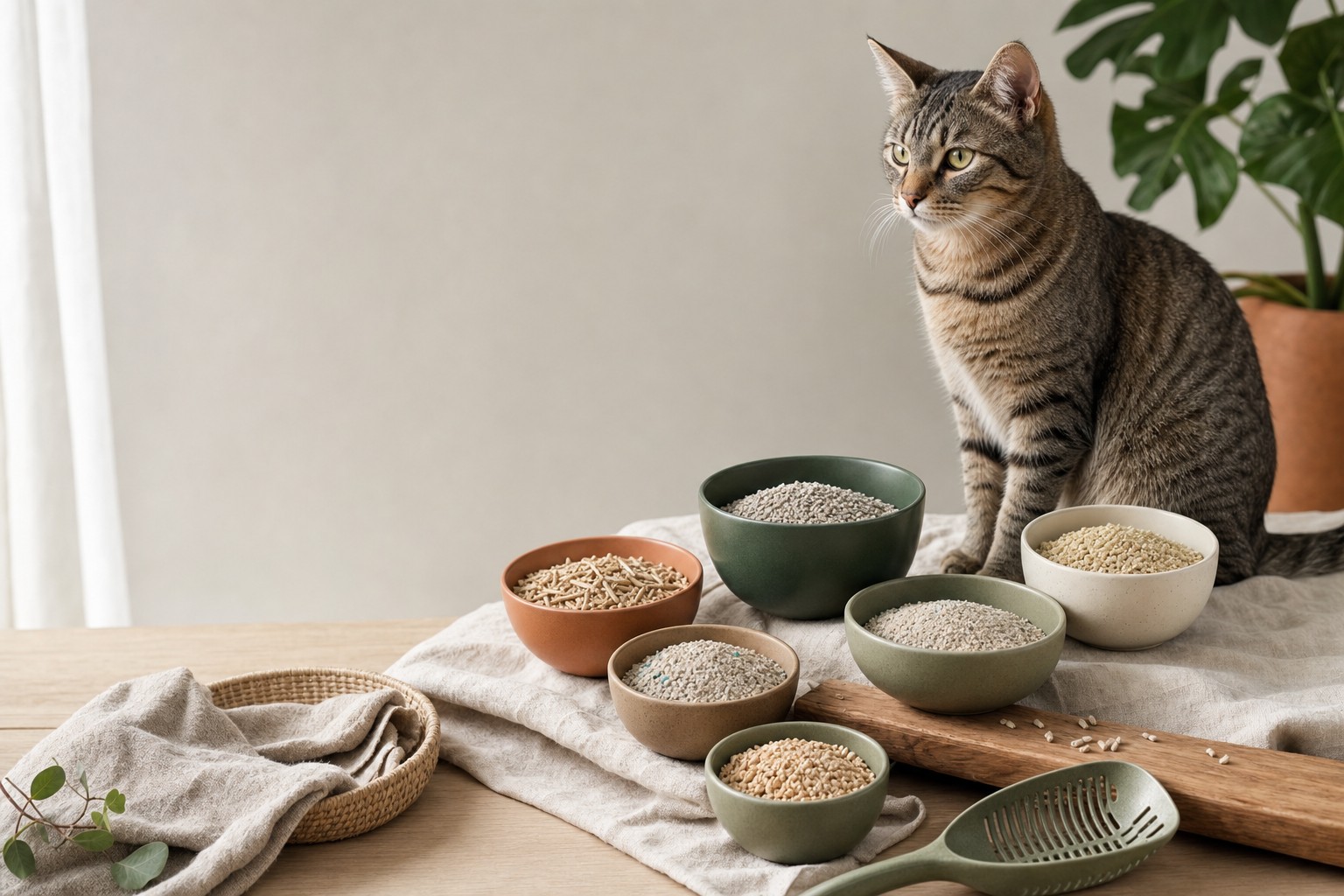
Featured Options Compared in This Guide
Full specs & notes ↓Choose a litter your cat will use consistently, then compare its materials and waste. Changing every box to a new “eco” formula at once can leave a texture-sensitive cat without a comfortable toilet. A small trial alongside the familiar litter is a better starting point than a bulk order.
An alternative material can replace mined clay, use recovered inputs, or change how much litter you throw away. Those are different benefits. None follows automatically from the word “natural.”
Decide whether to keep your current cleaning routine
If you want to keep scooping urine clumps: compare clumping corn and wood formulas. World’s Best Multiple Cat Unscented uses whole-kernel corn, while ökocat Original Premium uses wood fiber. Both direct owners to scoop daily.
If you want pellets: distinguish clumping pellets from non-clumping ones. ökocat Paper Pellet is non-clumping. Its instructions call for removing expanded soiled pellets, scooping feces daily, and replacing the litter weekly. The word “pellet” alone does not tell you which cleaning method to use.
If you have an automatic box: begin with the box manufacturer’s approved litter types. A renewable material is not a reason to ignore the mechanism’s requirements. ökocat’s Original FAQ recommends manual equipment rather than automatic litter machines.
For more detail on those products, see the corn, wood, and paper litter comparison.
A switch that leaves the cat an option
Ohio State recommends placing a box of the new litter beside the old box when a change is needed. Many cats favor fine, unscented textures, but individual preferences differ. Ohio State Indoor Pet Initiative
- Buy the smallest practical package of one candidate formula.
- Keep the familiar box clean and available. Put the trial box nearby, without blocking access to either.
- Use the new product’s fill depth and cleaning directions. Keep the location and other household routines steady.
- Watch which box the cat actually uses. A sniff or a paw placed in the litter is not the same as normal elimination.
- Continue only if the cat remains comfortable. If the new litter is rejected, return to the known routine and reassess texture, scent, and box access.
There is no fixed three-week schedule that guarantees acceptance. Mixing can also make performance harder to interpret: a clump formed from two materials does not show how either formula works alone.
Compare waste and cost after acceptance
Keep a brief record over a complete cleaning cycle: package cost, amount added, frequency of full changes, and usable litter lost while scooping. This makes a lightweight bag and a dense bag comparable in your household.
Ask a manufacturer whether its recovered material claim refers to the litter itself or just its package. Whole-kernel corn is a crop input; reclaimed wood and paper are recovered inputs. Neither description alone measures farming, processing, transport, or disposal impacts.
Do not use fragrance to cover a box that needs cleaning. Clean boxes daily by removing waste, and follow the product’s full-change instructions. Ohio State also recommends regular washing with mild detergent. Avoid making the switch, relocating the box, and adding a new scented cleaner at the same time.
Keep cat waste out of ordinary compost
EPA excludes pet waste and cat litter from ordinary home composting. EPA composting guidance
Bag used litter for the locally accepted waste stream; do not default to flushing. If a specialist collection service accepts pet waste, ask whether it accepts your exact litter and bag. Acceptance of yard debris or food scraps is not enough.
Daily waste removal also matters for hygiene: CDC explains that Toxoplasma shed in cat feces takes time to become infectious and recommends daily litter-box cleaning and handwashing after contact with contaminated material. CDC prevention guidance
A cat that stops using the box may have a medical or environmental problem. Do not keep experimenting with products when normal urination or defecation changes; contact your veterinarian.
Sources
Products Compared in This Guide
How to Choose and Switch to Alternative Cat Litter — Top-Spec Options
Compare current model specifications, material disclosures, and third-party certifications for eco friendly cat litters for.
Certified Eco Friendly Cat Litters For Alternatives
Check verified certification scope, replacement parts, and packaging details across eco pet care listings.