Pet Bowl Materials: A Practical Guide to Durable Feeding Dishes
Compare stainless steel, ceramic, silicone, plastic, and bamboo-composite pet bowls by cleaning, condition, stability, and realistic replacement needs.
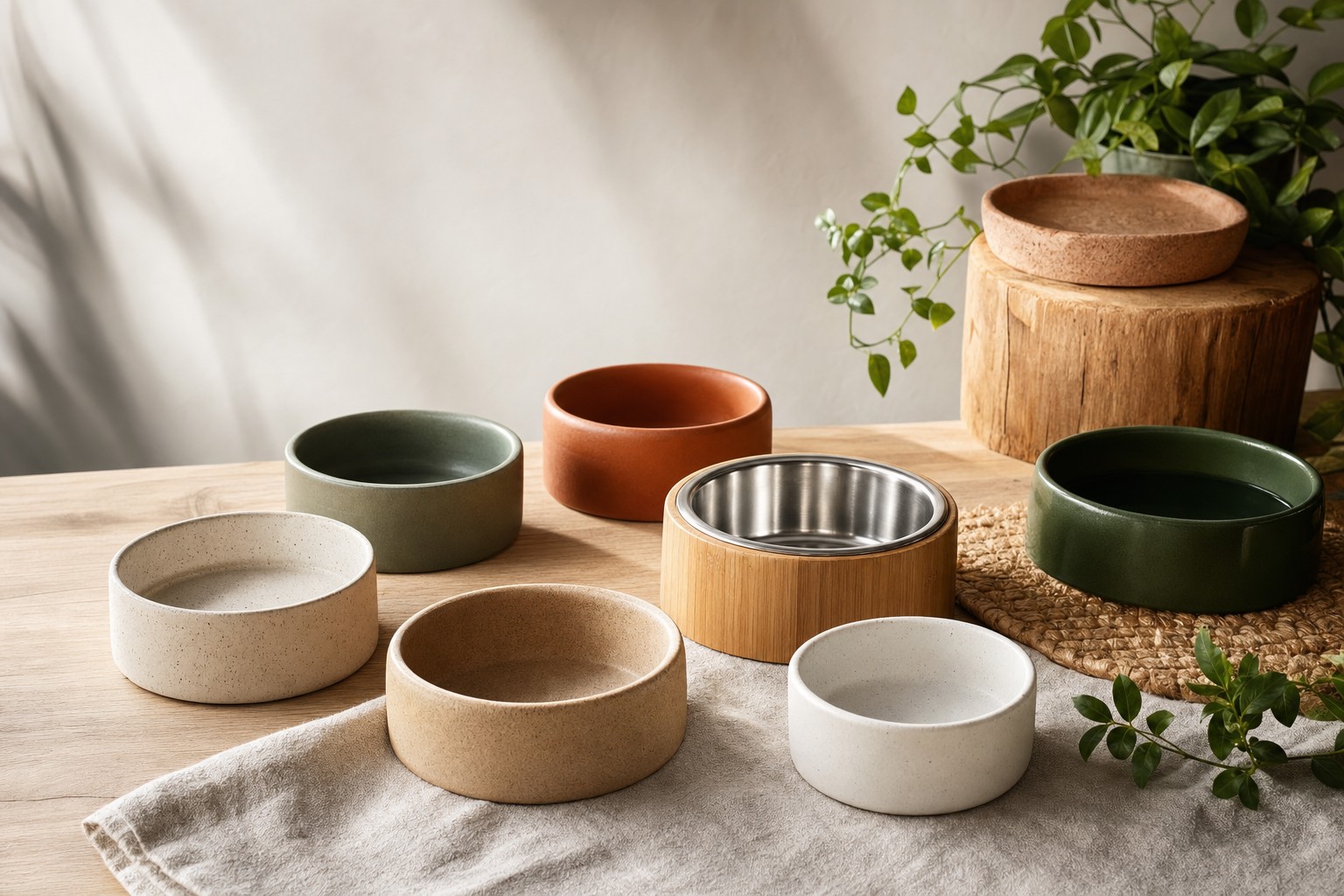
Featured Options Compared in This Guide
Full specs & notes ↓A simple, washable stainless-steel bowl is a practical starting point when you need a replacement. Its main advantages are an accessible cleaning surface and resistance to shattering. If your existing food-contact bowl is intact, stable, appropriately sized, and easy to clean, keep using it.
The environmental value comes partly from avoiding unnecessary replacements. No material is automatically the lowest-impact option, and a bowl made with a renewable filler can still contain plastic resin, coatings, and other components.
Compare complete constructions
| Construction | Useful qualities to seek | Limits to check |
|---|---|---|
| Stainless steel | Smooth food-contact surface, accessible underside, clear dishwasher instructions | Attached rubber, coatings, and mixed-material shells may need separate care |
| Glazed ceramic | Stable weight, suitable food-contact glaze, comfortable shape | Chips, cracks, and crazing are reasons to stop using a damaged bowl |
| Silicone | Collapsible shape for travel and simple washing | Folds can trap debris; do not assume curbside recycling or chew resistance |
| Plastic, including recycled plastic | Light weight and clear food-contact and cleaning directions | Scratches, chew damage, and heat limits; recycled percentage does not establish safety |
| Bamboo-fiber composite | Full composition and care disclosure | The binder matters; bamboo fiber does not make the whole bowl compostable |
A wood stand with a removable steel insert is also different from a molded bamboo-composite bowl. Look at the surface that actually touches food and water, then inspect the remaining parts.
The FTC’s environmental-claims guidance explains why a renewable-material claim should not imply recyclability or biodegradability without supporting evidence. For a discarded bowl, ask the receiving recycler about the whole item, not just one material named on it.
What a real mixed-material bowl looks like
The Loving Pets Bella Bowl in Pink Argyle has a stainless-steel interior, a poly-resin exterior, and a removable rubber base. The manufacturer permits dishwasher cleaning after removing the rubber ring.
That makes it an example for shoppers who want a steel food surface with a decorative exterior and removable base. It is not an all-metal bowl, and the product page does not establish recycled content or whole-bowl recyclability. The reviewed Pink Argyle listing was marked out of stock, so treat it as a construction example rather than an available offer.
Compared with this format, a plain steel bowl has fewer different components to separate and maintain. Compared with a ceramic bowl, either steel construction avoids a brittle ceramic food surface. Neither comparison proves that a particular pet will prefer it or that one finished product has a lower carbon footprint.
Match the shape to the meal
Check the usable inside width and depth, rather than shopping only by the maker’s dog-weight category. The pet should reach the food comfortably and the dish should stay in place. A wide base or intact non-slip ring can help with movement; it also needs cleaning underneath.
Choose capacity around the actual meal and water routine. A large dish does not determine an appropriate food portion. If a pet struggles to swallow, regurgitates, or has mobility problems, ask the veterinarian about feeding position and equipment instead of assuming a raised bowl is therapeutic.
For travel, a collapsible dish can be convenient, but let it dry fully before folding it into a bag. A bowl used outdoors should come back into the cleaning routine, not remain filled with old water indefinitely.
The cleaning routine matters more than an “antibacterial” claim
CDC recommends cleaning bowls after every wet-food use and every day for dry food and water. Wash with soap and water, scrub residue away, rinse, and dry. Use a dishwasher only when the item is labeled dishwasher-safe. CDC pet-supply cleaning guidance
Remove detachable parts as directed and clean the area beneath them. Check rims, seams, and rubber rings for trapped food. An “antibacterial” product description does not eliminate these jobs.
If an item cannot be cleaned adequately or develops damage that compromises its food-contact surface, replace it. If it is still functional, replacing it solely for an eco label is unnecessary. The same approach helps when choosing grooming supplies: prioritize the task, then assess materials and packaging.
Sources
Products Compared in This Guide
Pet Bowl Materials — Top-Spec Options
Compare current model specifications, material disclosures, and third-party certifications for eco friendly pet bowls for sustainable feeding.
Certified Eco Friendly Pet Bowls For Sustainable Feeding Alternatives
Check verified certification scope, replacement parts, and packaging details across eco pet care listings.