GreenChoice
Eco Pet Care

Best Eco Cat Litter (2026): 6 Sustainable Options That Actually Control Odor

An honest comparison of the six best eco cat litters in 2026 — corn, wood, paper, walnut, tofu, and wheat — ranked by odor control, clumping, dust, and cat acceptance.

By GreenChoice
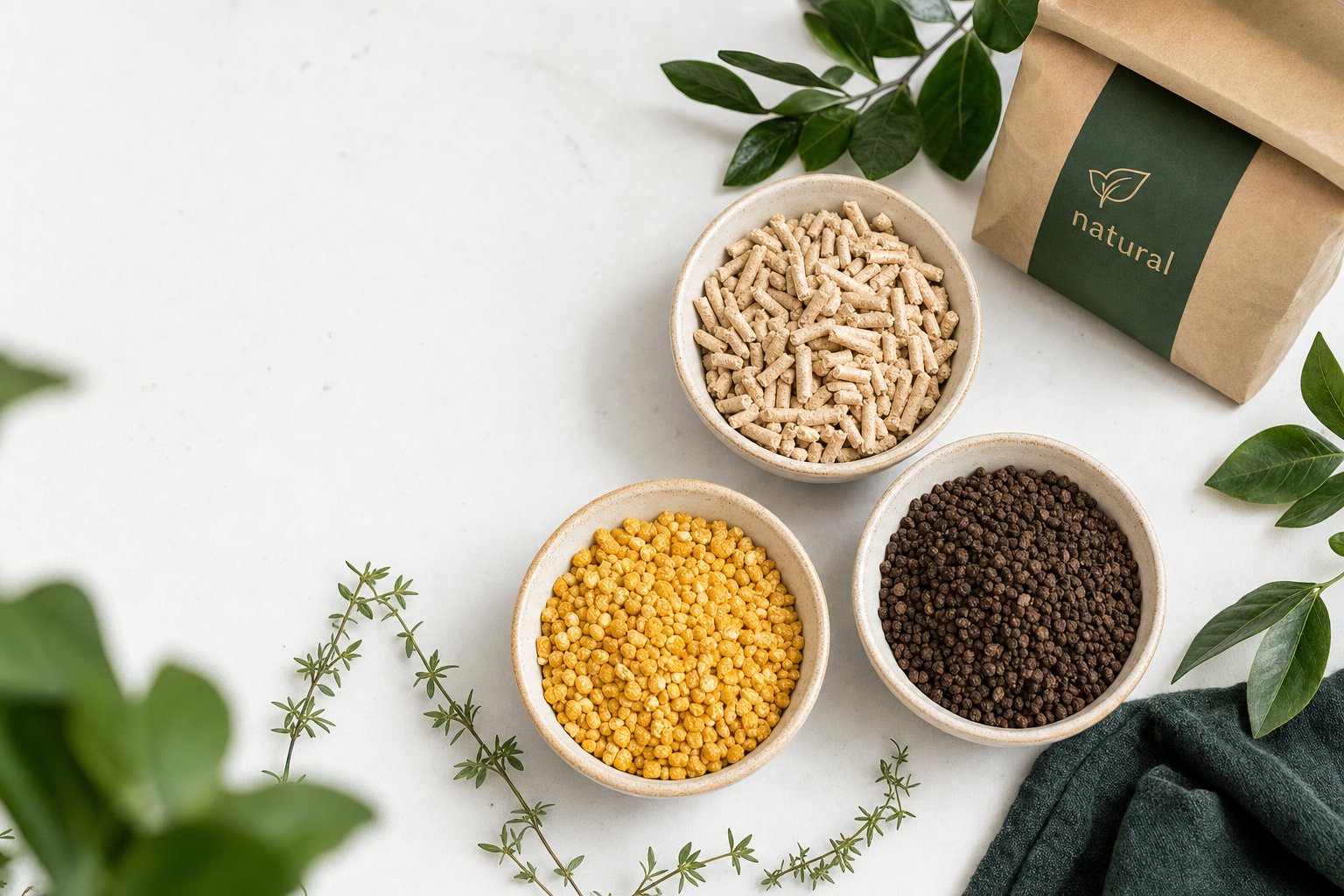
Eco Cat Litter — World's Best Cat Litter Clumping Corn Formula, ökocat Natural Wood Clumping Cat Litter, and Naturally Fresh Walnut-Based Clumping Cat Litter on natural wood and linen surfaces
Disclosure: GreenChoice is reader-supported. When you buy through links on our site, we may earn an affiliate commission at no extra cost to you. We only recommend products we've personally tested or thoroughly vetted for sustainability and quality.

This post may contain affiliate links. We earn a small commission on purchases at no cost to you. Learn more.

Switching your cat from clay litter to an eco alternative is the single highest-leverage sustainable choice you can make as a cat owner. Sodium bentonite clay is strip-mined, non-biodegradable, and generates roughly 200 pounds of landfill material per cat per year. The alternatives are real and work. The challenge is picking the right one for your cat’s preferences and your household’s odor control needs.

This roundup covers the six best eco cat litters available in 2026, ranked by odor control, clumping performance, dust level, and real-world cat acceptance rate.

What Makes a Cat Litter “Eco”?

The baseline requirement: no sodium bentonite clay. Beyond that, different eco litters use different materials and have different environmental profiles:

  • Corn (World’s Best): Agricultural byproduct, biodegradable, flushable in some jurisdictions
  • Wood fiber (ökocat): Reclaimed sawmill waste, biodegradable, not flushable
  • Walnut shell (Naturally Fresh): Byproduct of walnut processing, biodegradable
  • Paper (Yesterday’s News): Recycled newspaper, biodegradable, non-clumping
  • Grass (SmartCat): Harvested grass fiber, biodegradable
  • Tofu/soy fiber: Byproduct of tofu production, emerging category (not covered in depth here as availability is still limited)

All of these break down much faster than clay in landfill, and most can be composted for non-edible plants (not vegetable gardens — the Toxoplasma concern applies).


1. World’s Best Cat Litter: The Overall Best

Material: Whole-kernel corn
Clumping: Excellent (firm clumps, minimal crumble)
Odor control: Very good (days 1–3 strong, fades somewhat by day 4)
Dust: Low (not as low as ökocat)
Flushable: Yes (verify local codes)
Price: $38 / 28 lb

World’s Best earns its name in this specific category. The whole-kernel corn formula produces clumps that scoop cleanly, compacts well in the disposal bag, and doesn’t generate the chalky powder that lower-quality eco litters do. Odor control is driven by the natural absorbency of the corn structure — not synthetic fragrance — and it’s effective through 3 days between box cleanings in a single-cat household.

The flushable certification is a genuine environmental win when municipal infrastructure supports it. Flushing eliminates the plastic bag waste stream from litter disposal. If you’re in San Francisco, Portland, or other cities with advanced wastewater treatment and no explicit prohibition on cat waste flushing, World’s Best + flushing is the lowest-impact litter option available.

Cat acceptance: High. The corn granule texture is fine-to-medium and similar enough to sand that most clay-litter cats accept it without a full transition protocol (though the gradual mix method is still recommended).

What it doesn’t do well: The 28 lb bag releases a faint corn scent when you first open it. Most cats don’t notice; some finicky cats might. The scent dissipates quickly.


2. ökocat Natural Wood Clumping Litter: Best for Dust-Sensitive Cats

Material: Reclaimed wood fiber (sawmill waste)
Clumping: Good (softer clumps than clay — scoop more frequently)
Odor control: Excellent day 1-2, moderate day 3-4
Dust: Near-zero (99% dust-free — best in class)
Flushable: No
Price: $32 / 19 lb

Wood fiber absorbs ammonia at the molecular level — the wood compound binds to ammonia rather than just containing it. This is why ökocat’s odor control mechanism works differently from fragrance-based or clay-based litters: it’s genuinely absorbing the source of the odor rather than masking it.

The 99% dust-free claim is backed by the test methodology disclosed on their packaging. For cats with asthma, upper respiratory disease, or chronic sneezing, this is the most important spec in the category. Dust from clay litters is the primary trigger for litter-box-related respiratory symptoms in both cats and humans.

Cat acceptance: Medium. The wood fiber texture is coarser than clay. Some cats accept it without issue; others need the 3-week gradual transition. ökocat makes a Soft Step version (ultra-fine wood) for cats that reject the coarser standard formula.

What it doesn’t do well: Clumps are softer and more breakable than corn or clay. If you wait 2-3 days between scoopings, some clumps will have started to dissolve and become harder to scoop cleanly. Scoop daily with ökocat.


3. Naturally Fresh Walnut-Based Litter: Best Odor Control

Material: Ground walnut shells
Clumping: Excellent (very firm clumps, minimal waste on scooping)
Odor control: The strongest of the six (natural tannins are antibacterial)
Dust: Low
Flushable: No
Price: $28 / 26 lb (best value in this roundup per lb)

Walnut shell litter has the best odor control of any eco option because the tannins in walnut shells are naturally antibacterial — they suppress the bacteria that convert cat waste into ammonia. The result: odor control that holds through 4-5 days in a single-cat box, outperforming both corn and wood options.

The tradeoffs: the dark brown/gray color can cause some cats to refuse the box initially (cats have preferences about color contrast). The weight is high — the 26 lb bag is genuinely heavy. And the “dark litter” makes it harder to spot urine clumps against the litter background (the color contrast issue works against the owner, not just the cat).

Cat acceptance: Variable. The dark color is the primary rejection factor. If your cat is color-averse, start with 10% walnut / 90% current litter and extend the transition over a full month.


Material: Recycled newspaper
Clumping: None (absorbs into pellet, doesn’t clump)
Odor control: Moderate
Dust: None
Flushable: No
Price: $30 / 30 lb

Yesterday’s News occupies a specific niche: post-surgical cat care. Veterinarians routinely recommend paper pellet litter for cats recovering from spay/neuter procedures, declawing, or other surgeries where fine-particle litters could irritate incision sites. The pellets don’t stick to stitches or wounds.

For everyday use: it’s not the best option. The lack of clumping means you can’t spot-scoop — you have to change the entire box more frequently. Odor control is moderate at best.

Keep a bag on hand for veterinary post-care needs even if you don’t use it regularly. The price is reasonable and it solves a specific problem that no other eco litter addresses.


5. SmartCat All Natural Grass Litter: Easiest Transition

Material: Harvested grass fiber
Clumping: Good (firm enough for scooping)
Odor control: Good (not as strong as corn or walnut)
Dust: Low
Flushable: Check local codes
Price: $26 / 20 lb

SmartCat’s grass litter has the texture advantage: fine grain that feels the most similar to clay of any eco option. For cat owners whose primary challenge is getting a clay-loyal cat to accept any alternative, SmartCat is the path of least resistance.

Odor control is solid but not exceptional. It’s approximately equivalent to a mid-grade clay litter. If your clay litter was working and odor control was fine, SmartCat will match that experience while giving you the eco material benefit.

Cat acceptance: The highest of the six options. Very few clay-litter cats outright reject grass litter.


6. ökocat Soft Step: Best for Transitioning Texture-Averse Cats

Material: Ultra-fine wood fiber
Clumping: Good
Odor control: Moderate (finer particles = less wood surface area for absorption)
Dust: Very low
Flushable: No
Price: $18 / 8 lb

The Soft Step is a bridge product — specifically designed for cats that rejected coarser eco litters due to texture. The ultra-fine milling creates a powder-like consistency similar to fine-grain clay. The trade-off versus the standard ökocat formula is reduced odor control surface area.

Use case: you’ve tried World’s Best and your cat rejected it, you’ve tried standard ökocat and your cat rejected it, SmartCat is unavailable. Soft Step is the next attempt before giving up on eco litter entirely.


Which One to Start With?

One cat, normal usage: Start with World’s Best 28 lb bag.
Multi-cat household: World’s Best 28 lb bulk, or Naturally Fresh if odor control is a priority.
Respiratory-sensitive cat or owner: ökocat standard formula.
Post-surgery: Yesterday’s News (keep a bag regardless of primary litter choice).
Texture-averse clay cat: SmartCat grass, then work toward World’s Best after acceptance.

The gradual transition method (3 weeks of mixing) works for all of these options and prevents most cat rejection. Do not switch cold turkey — litter rejection leading to elimination outside the box is the most common failure mode, and it’s avoidable.

Our Top Picks

🌿

World's Best Cat Litter Clumping Corn Formula (28 lb)

4.6 / 5

The benchmark eco cat litter. Whole-kernel corn, zero synthetic fragrance, firm clumps that don't crumble, flushable (verify local codes). Odor control holds through day 3 in a single-cat box. The 28 lb bag is the value size — lasts 6–7 weeks for one cat. Transitioning from clay takes 2 weeks of mixing.
🌿

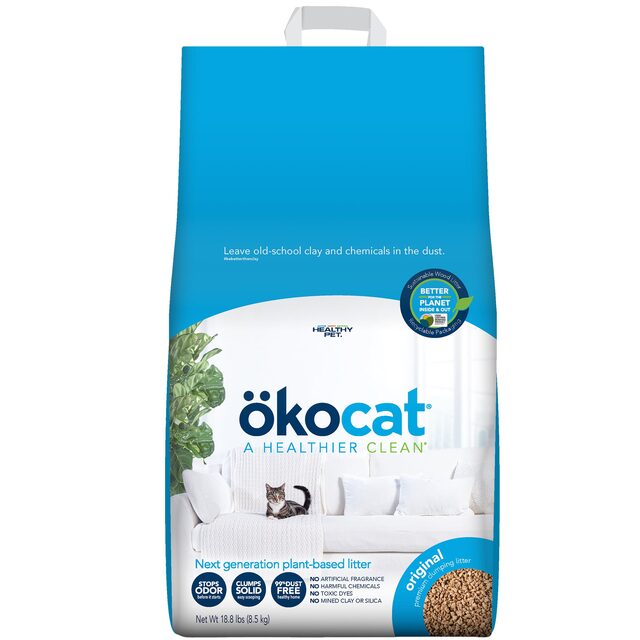
ökocat Natural Wood Clumping Cat Litter (19 lb)

4.4 / 5

Reclaimed wood fiber that absorbs ammonia at the molecular level rather than masking it. 99% dust-free (best in class for respiratory-sensitive cats). Clumps are softer than clay — scoop frequently. Odor control is excellent day 1-3, fades faster than corn by day 4.
🌿

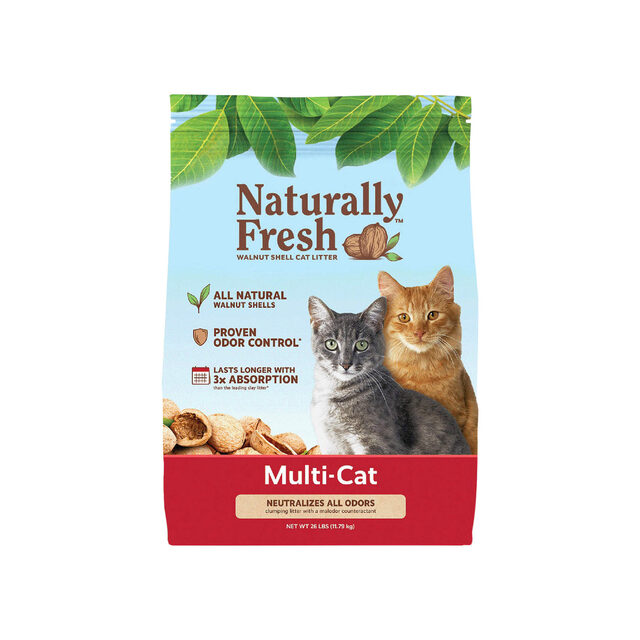
Naturally Fresh Walnut-Based Clumping Cat Litter (26 lb)

4.4 / 5

Ground walnut shells — byproduct of the walnut processing industry. Dark color (cats sometimes reject dark litter initially). Exceptional odor control: the walnut's tannins are naturally antibacterial. Clumps extremely well. Heaviest option in this roundup — the 26 lb bag is dense.
🌿

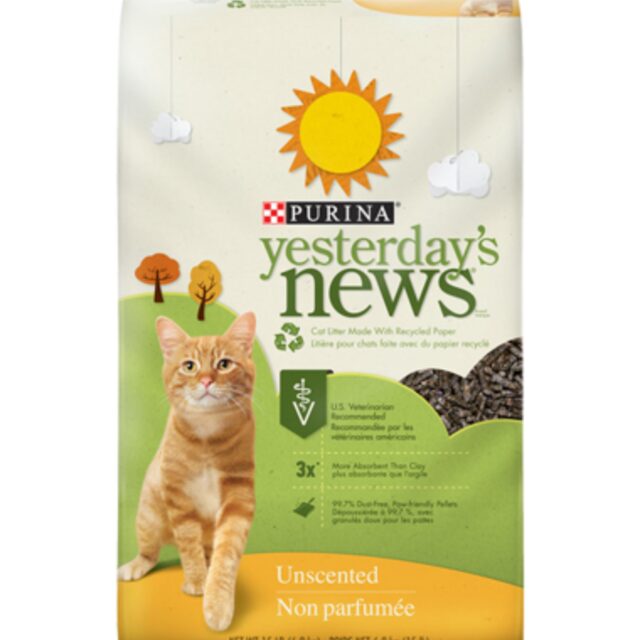
Yesterday's News Unscented Cat Litter (30 lb)

4.2 / 5

Recycled newspaper pellets — the classic paper litter. Doesn't clump, but absorbs liquid into the pellet core. Best for post-surgical cats (vet-recommended after declawing and spaying/neutering) where fine-particle litters are contraindicated. Zero dust. Not the everyday choice for odor control.

🌿

Ökocat Soft Step Wood Cat Litter (8 lb)

4.4 / 5

Ultra-fine wood fiber that feels similar to clay — the closest texture match for transitioning clay-litter cats. Less odor control than the standard ökocat formula (finer particle = less wood surface area). Worth the trade for cats that reject coarser eco litters.

🌿

SmartCat All Natural Clumping Grass Litter (20 lb)

4.3 / 5

Fine-grain grass litter that clumps firmly and has a lighter texture than clay. Cat acceptance rate is high because the texture is familiar. Odor control is decent; not as strong as corn or walnut. Lighter weight than clay — a plus for the 20 lb bag. Made in the USA.

Frequently Asked Questions

Why is standard clay cat litter bad for the environment?
Sodium bentonite clay (used in almost all clumping clay litters) is strip-mined — open-pit surface mining that disrupts ecosystems and creates runoff. The mining is concentrated in a few states (Wyoming, South Dakota). After use, clay litter is non-biodegradable: it goes to landfill where it remains essentially unchanged for centuries. A single cat generates approximately 200 pounds of used litter per year. At scale, this is a significant landfill contribution. Switching to a plant-based or reclaimed-material litter addresses both the sourcing and the disposal problem.
Will my cat accept eco litter after using clay?
Cat acceptance is the primary practical challenge in eco litter transition. The transition method that works: mix 75% old clay litter with 25% new eco litter for one week. Then 50/50 for one week. Then 25% clay / 75% eco. Then 100% eco. This gradual transition prevents the litter-box avoidance that some cats show when their litter changes suddenly. Texture-averse cats do best with finely milled eco litters (SmartCat grass, ökocat Soft Step) that feel more like clay.
Is World's Best Cat Litter actually flushable?
World's Best Cat Litter is certified flushable — the company backs this with testing at independent sewer and septic evaluation labs. However, some municipalities explicitly prohibit flushing cat waste regardless of litter type, because Toxoplasma gondii (a parasite in cat feces) can survive water treatment and reach marine environments. Check your local water authority's guidelines before flushing. In jurisdictions where it's permitted, flushing eliminates the litter bag waste stream entirely.
Which eco litter is best for multi-cat households?
World's Best Cat Litter is the top recommendation for multi-cat households: the corn formula's odor control holds longer between scoopings, the 28 lb bag is cost-efficient at scale, and the firm clumps mean less waste per scoop. For households where respiratory health is a priority (cats with asthma or upper respiratory issues), ökocat is the better choice — it's 99% dust-free where most other eco litters run 1-3% dust.