Energy-Efficient Window Treatments: Shades, Curtains and Fit
Compare cellular shades, curtains and exterior shading by heat loss, sun exposure, daylight and fit, with seasonal use and condensation guidance.
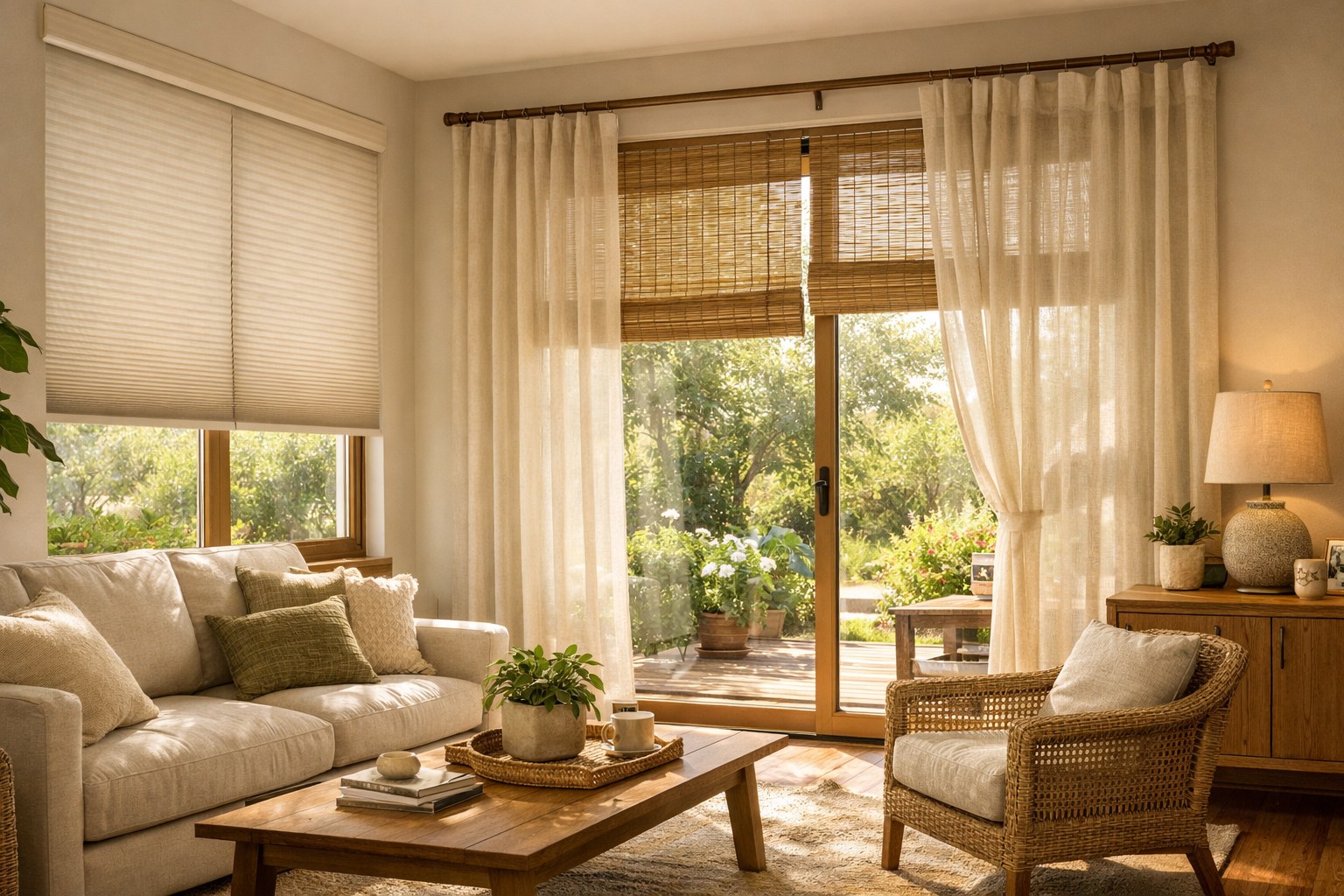
Featured Options Compared in This Guide
Full specs & notes ↓For winter heat loss, multilayer cellular shades deserve an early look. For a room that overheats in direct sun, consider exterior shading before focusing only on interior fabrics. For glare without a darkened room, compare adjustable blinds, sheer shades and view-preserving solar screens. These treatments solve different problems; one choice need not serve every window. PNNL window-attachment guide
Start by identifying when each room becomes uncomfortable and whether you want to preserve daylight, a view or useful winter sun. In spring, that can mean shading one room while admitting sunshine into another.
Match the treatment to the job
| Main need | What to compare | Important tradeoff |
|---|---|---|
| Reduce winter heat loss | Multilayer cellular shades | PNNL identifies these as one of the most effective interior insulating options. Lowered shades block the view, and condensation needs attention. |
| Privacy with some winter insulation | Curtains or Roman shades | Some models admit diffuse daylight, but they block the view while providing shade. Compare their energy performance separately from appearance. |
| Manage glare while retaining daylight | Adjustable blinds or sheer shades | Blinds offer adjustable combinations of shade and view; sheer shades can soften the view while controlling glare. |
| Reduce strong solar heat gain | Exterior roller shades or solar screens | They intercept sunlight outside. Screens can preserve a view but may block less heat than solid shading. |
| Provide darkness for sleep | Blackout cellular, roller or pleated shades | Specify light blocking and energy performance separately rather than treating them as the same requirement. |
| Apply fixed solar control | Compatible window film | Film is not adjustable, may reduce daylight and can increase winter heating needs. |
These comparisons follow PNNL’s treatment-selection guidance. They describe treatment types, not a performance ranking of particular products.
When exterior shading deserves priority
For a sun-exposed room where overheating is the main problem, exterior shading has a practical advantage: it blocks sunlight before it passes through the glass. Comparable interior shading must manage that energy after it has entered through the window, so exterior options are typically more effective at limiting solar heat gain. Product ratings still matter; placement alone does not establish a particular result. PNNL: interior and exterior attachments
Pay particular attention to east- and west-facing windows. Low-angle sunlight can bypass an awning or overhang, while vertical roller shades or screens can cover the window regardless of the sun’s angle. An awning may preserve much of the view, but a vertical treatment can supplement it when sunlight reaches beneath or around it. Interior treatments remain useful when exterior installation is impractical, and PNNL describes them as generally easier to add during a retrofit. PNNL shading guidance
Film is a different decision from an operable covering. PNNL considers it most appropriate in warm-to-hot climates and calls for compatibility with the existing window. Where winter solar warmth is valuable, weigh that potential heating penalty against summer benefits. For that separate purchase decision, see our solar-control window-film guide.
Read the climate rating that matches your problem
The Attachments Energy Rating Council (AERC) provides two principal climate ratings:
- Cool Climate: prioritize this when reducing cold-weather heat loss is the main goal.
- Warm Climate: prioritize this when preventing unwanted heat gain and reducing cooling demand matter most.
- Both ratings: compare both when the same window creates winter discomfort and summer overheating.
Higher ratings indicate better energy-improvement performance. PNNL explains the heat-loss versus heat-gain distinction, while AERC notes that different treatment categories have different maximum improvement values. Use proximity to the category maximum to compare products within a category; use the relevant climate rating to compare across categories. Treat these as product comparisons, not a forecast of your household bill. PNNL climate guidance; AERC label explanation
The supporting metrics help clarify tradeoffs. A lower U-factor indicates less heat loss. A lower solar heat gain coefficient (SHGC) indicates greater resistance to unwanted solar heat, while higher SHGC can support useful winter solar heating. Higher visual transmittance means more daylight passes through. Request the label that applies to the product configuration in your quote rather than relying on a general description such as “thermal.” AERC performance metrics
Change the operating schedule with the season
An operable treatment lets you choose between insulation, shade, daylight and solar warmth:
- During heating weather: open coverings when sun is shining on the window and useful warmth is wanted. Close them at night and on cloudy days to limit heat loss, subject to the moisture precautions below.
- During cooling weather: keep coverings closed during daytime heat. PNNL recommends opening them at night when outdoors is cooler than indoors.
- During spring and fall: base the choice on whether that room needs warmth or shade today, rather than using one unchanged schedule throughout the house.
These seasonal strategies follow PNNL’s operation guidance.
Automation is worth considering when shades otherwise stay in one position or the home is empty during changing sun exposure. It can apply seasonal controls without someone being present. For a motorized quote, ask about the power source, charging access, overrides and service arrangements. Where an AERC label provides an automation rating, compare it with the unautomated rating instead of assuming a particular savings increase from adding a motor. PNNL automation guidance; AERC automation labels
Watch the glass behind insulating shades
A closed interior insulating shade can slow airflow across the glass and leave the pane colder. That can allow condensation or frost to form even while the shade reduces heat loss. Concealed moisture is therefore a reason to adjust the operating schedule, not simply leave the shade down longer. PNNL wintertime performance guidance
If condensation appears, open the shade during the day so the window can dry. PNNL also suggests leaving the bottom rail about half an inch above the sill to permit some airflow along the pane. This is a moisture-management adjustment, not a universal ordering clearance.
If wet glass or sills keep returning, investigate moisture sources and window leaks. Oregon State University Extension recommends opening drapes for air circulation, repairing leaks and using exhaust fans vented outdoors near indoor moisture sources. A covering should not conceal an unresolved moisture problem. PNNL condensation measures; OSU Extension moisture checklist
Plan fit and compare complete quotes
Use a preliminary obstruction checklist for the supplier discussion: note handles, locks, projecting trim, recess depth, existing curtain hardware and how the window opens. These observations flag possible conflicts; they are not product-specific measuring or mounting instructions. Ask the supplier for the exact dimensions and clearances required for the chosen treatment. PNNL directs installation to follow manufacturer instructions and notes that some projects may need professional installation. PNNL selection and installation guidance
Hunter Douglas Duette is one custom-service example. The manufacturer describes cellular shades, an Architella option and several light-control and view configurations. Its local-expert process includes measurements, a quote and installation. Listed price factors include window size, fabric or material, control choice and optional features—not a single standard price. Hunter Douglas Duette
Whether comparing Duette, another custom treatment or a ready-made shade, give each supplier the same requirements:
- Window and mounting plan: who measures, who installs and how obstructions will be accommodated.
- Light and energy goals: the quoted fabric’s light-control option and the applicable climate rating, where available.
- Operation: manual or automated controls, including any power and installation work.
- Complete cost and upkeep: an itemized total, service terms and care instructions for the exact material.
Do not infer price or energy performance from the words “custom,” “ready-made” or “motorized” alone. Start with the windows causing the greatest discomfort, compare the complete proposals, and retain existing curtains or blinds where they already meet the room’s needs.
Sources
- Pacific Northwest National Laboratory: Window Attachments for Solar Control and Energy Efficiency — treatment comparisons, seasonal operation, automation, condensation, film compatibility and climate priorities.
- Attachments Energy Rating Council: Reading the Residential Label — climate ratings, category maxima, thermal and daylight metrics, and automation labels.
- Hunter Douglas: Duette Cellular Shades — product-family options, pricing factors and the local measurement-and-installation service.
- Oregon State University Extension: Mold Control—Home Inspection Checklist — moisture indicators, airflow, leak repair and ventilation.
Products Compared in This Guide
Energy-Efficient Window Treatments — Top-Spec Options
Compare current model specifications, material disclosures, and third-party certifications for energy efficient window treatments.
Certified Energy Efficient Window Treatments Alternatives
Check verified certification scope, replacement parts, and packaging details across energy-efficient home listings.