Sustainable Sneakers: Compare Materials, Fit and Care
Compare Allbirds Tree Runner Go and VEJA V-10 B-Mesh on disclosed materials, sizing guidance, washing instructions and everyday use.
Featured Options Compared in This Guide
Full specs & notes ↓For everyday spring walking and travel, start with the fit and cleaning routine you need—not a broad sustainability label. Allbirds Tree Runner Go and VEJA V-10 B-Mesh offer different material and care choices, but their manufacturer disclosures do not establish a lower-footprint winner.
Two material approaches, with practical trade-offs
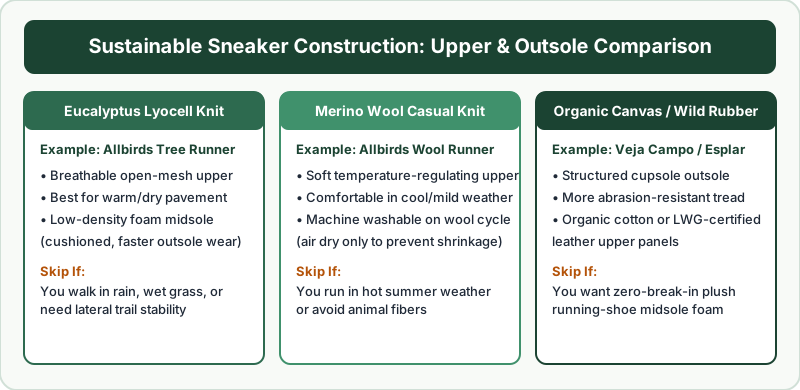
| Model compared | Manufacturer-disclosed construction | Reason to consider it | Important constraint |
|---|---|---|---|
| Allbirds Men’s Tree Runner Go, Natural Black/Blizzard Sole | TENCEL Lyocell blend upper; sugarcane-based SweetFoam midsole | You want a knit everyday shoe that permits machine washing | The other upper fibers and blend proportions are not specified; the page displays a final-sale warning |
| VEJA V-10 B-Mesh, White Natural Pierre, VX0102499 | B-Mesh fabric made from recycled polyester; suede panels; mixed-material outsole | You prefer a paneled sneaker and want component-level material details | This version contains animal-derived suede and is not vegan; machine washing is discouraged |
Allbirds Tree Runner Go: the machine-washable option
Allbirds presents Tree Runner Go as footwear for daily activities such as walking, travel and casual office outfits. It identifies a TENCEL Lyocell blend upper, a sugarcane-based SweetFoam midsole and castor-bean-oil-based insole foam. The upper disclosure does not identify the remaining fibers or their proportions. These plant-feedstock descriptions should not be treated as a complete composition statement or proof that every component is animal-free. Source: Allbirds
The clearest care advantage is permission to machine wash the shoes. Allbirds instructs owners to remove the insoles and wash those separately by hand. If machine washing is important to your routine, this is the more relevant option of the two—not evidence that it cleans better or lasts longer. Source: Allbirds care instructions
The Natural Black/Blizzard Sole page displays a final-sale warning excluding returns, cancellation and exchange. Confirm availability for your selected size and the purchase terms that apply before paying. That restriction matters especially if you do not already know how this model fits your feet. Source: Allbirds purchase terms
VEJA V-10 B-Mesh: recycled mesh, but also suede
For White Natural Pierre, product code VX0102499, VEJA lists both the B-Mesh fabric and lining as entirely recycled polyester. The panels are suede, while the laces are organic cotton. If avoiding animal materials is essential, exclude this specific version: its mesh construction does not make it vegan. The recycled percentage for the mesh also does not describe the entire shoe. Source: VEJA component list
VEJA discourages machine washing. Its instructions call for a soft brush with cold water and mild soap, then air drying in shade away from heat. Choose this version only if that hands-on cleaning routine suits you, particularly for the light-colored panels. Source: VEJA care instructions
Fit: different starting guidance, not a guaranteed result
The manufacturers give model-specific sizing advice:
- Allbirds Tree Runner Go: Allbirds says most customers can choose their usual size. Treat that as a starting point, not assurance of sufficient width, toe room or heel security. Allbirds fit guide
- VEJA V-10 B-Mesh: VEJA recommends the larger option when you are between two sizes. It describes the chart measurements as estimates of foot length, so do not treat them as exact internal shoe dimensions. VEJA size guide
Neither recommendation independently demonstrates how the shoe will fit you. Before buying, establish whether the seller’s return conditions allow an indoor try-on; do not assume the Allbirds final-sale listing does.
When a try-on is permitted, use your intended socks and any orthotic you normally wear. Walk at your usual pace, check for heel slipping or toes contacting the front, and assess width while standing. Notice any pressure from seams or panel edges rather than assuming painful spots will disappear with wear.
For running or technical trails, make a separate footwear decision. These material disclosures do not establish wet traction, waterproofing or terrain protection.
What the sustainability details actually tell you
Renewable inputs and synthetic components can appear in the same shoe. VEJA’s insole lists bio-based and recycled E.V.A. alongside rubber, organic cotton and unspecified ingredients. Its outsole combines Amazonian rubber, mineral silica, recycled rubber, synthetic rubber and an unspecified remainder. Those disclosures support a mixed-material description—not claims that the shoe is wholly natural, plastic-free or compostable. Source: VEJA construction details
Recycled-content certification is a separate question. Textile Exchange’s RCS and GRS address recycled materials and chain of custody; GRS adds social, environmental and chemical-processing requirements. Their scope should not be confused with comfort, waterproofing or end-of-life guarantees. Do not infer either certification simply from a recycled-polyester description. Source: Textile Exchange
For a practical choice, prioritize the requirement that would otherwise stop you wearing the shoes: machine washing favors the Allbirds option; a preference for paneled construction may favor VEJA if suede and brush cleaning are acceptable. Neither material story settles comfort, durability or overall environmental impact.
If your current sneakers still meet your needs, there is no need to replace them just to acquire a new material label. For an existing VEJA pair, the brand’s product page points to a cobbler repair and cleaning service; check location access and available work before making plans. For deciding whether you need another everyday pair at all, use the capsule wardrobe guide.
Where to browse
Prices and availability change. These search listings are a place to check the current product.
- Search Allbirds Tree Runner listings
- Search Allbirds Wool Runner listings
- Search Allbirds Tree Dasher listings
Sources
Products Compared in This Guide
Allbirds Tree Runner
Compare current manufacturer specifications, materials, and package options for Allbirds Tree Runner.
Allbirds Wool Runner
Compare current manufacturer specifications, materials, and package options for Allbirds Wool Runner.
Allbirds Tree Dasher
Compare current manufacturer specifications, materials, and package options for Allbirds Tree Dasher.