Organic Linen Shirts for Spring: Fit, Labels and Care
Choose an organic linen shirt for buttoned wear, layering or a casual tee. Compare fit, organic claims and care requirements before buying.
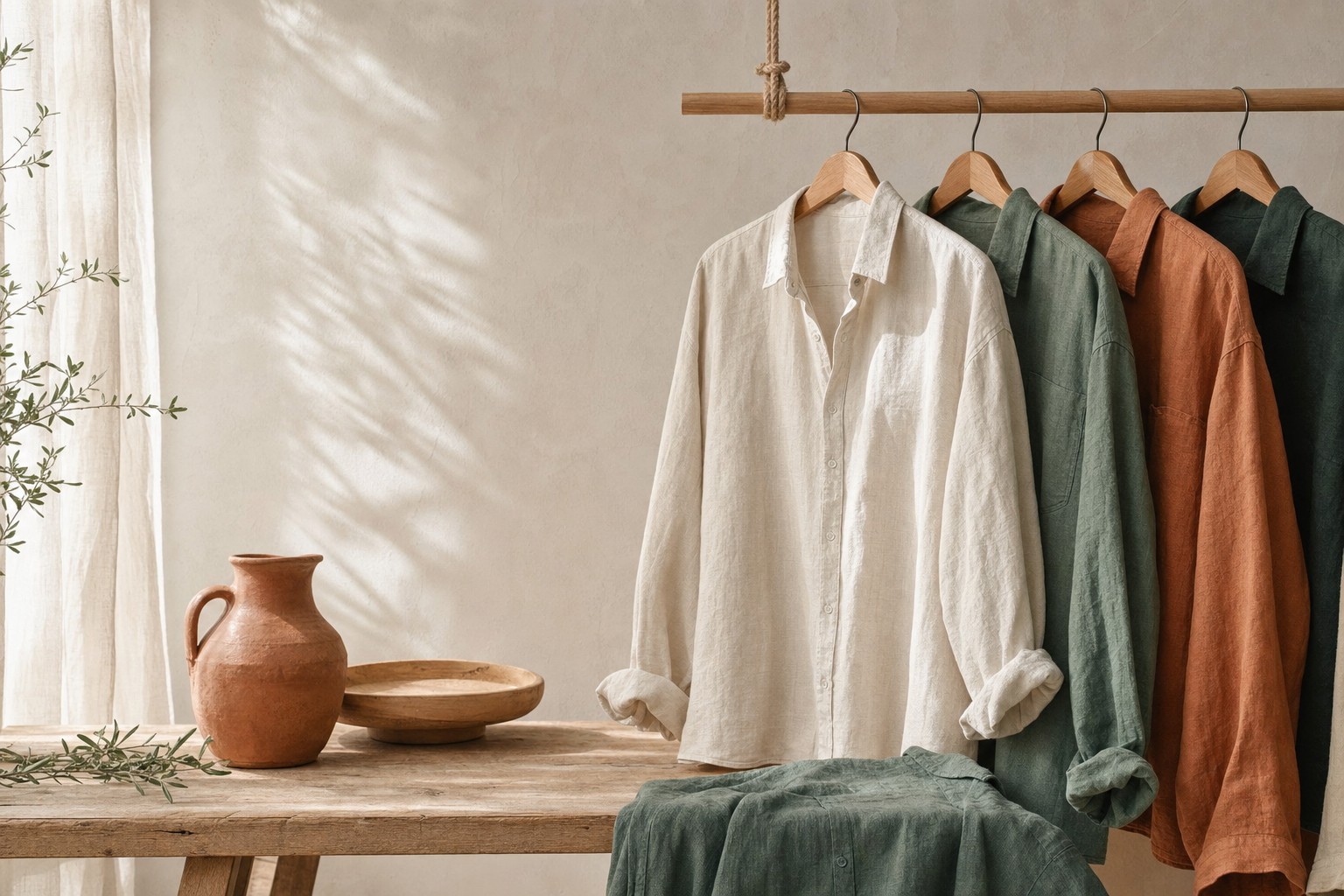
Featured Options Compared in This Guide
Full specs & notes ↓Choose an organic linen shirt for the outfit and laundry routine it needs to fit—not the organic wording alone. A button-front top, an open layering shirt and a pocket tee serve different wardrobe needs. Decide which job you need filled before comparing sizes or material claims.
If your current linen shirt still fits and serves that purpose, there is no need to replace it solely for a different label.
Button-front shirt or casual tee?
Use these checks to compare shirts you are considering. They are fit recommendations, not specifications for a particular model.
| How you want to wear it | What to check | Practical decision |
|---|---|---|
| A collared shirt worn buttoned | Sit down and reach forward with the buttons closed. Check for gaps at the chest and restriction across the back and upper arms. | If the closure pulls but a larger size feels wrong at the shoulders, try a different cut rather than accepting either compromise. |
| A button-front shirt worn open over another top | Try it over the actual layer you plan to wear. Check arm movement, sleeve clearance and where the hem falls. | Choose using that layered fit, rather than automatically sizing up. If you also want to wear it closed, repeat the buttoned checks. |
| A casual linen tee | Compare chest width, shoulder position, neckline and length with a tee you already like. Raise your arms to check coverage. | Choose for the fit you want from a standalone top; do not assume that a roomy body also gives you the neckline or sleeve shape you prefer. |
For online purchases, compare like-for-like measurements. Ask whether a size chart gives body measurements or measurements of the finished shirt. When measuring an existing garment, use the seller’s stated measuring method rather than comparing an unspecified chest figure with a flat width.
Check the shirt with your usual trousers, both tucked and untucked if you expect to wear it both ways. For coverage, try it with the undergarment or base layer you intend to use and assess it in daylight. If you want a standalone shirt, make adequate coverage a purchase condition rather than planning around an unwanted extra layer.
For a secondhand listing, request current garment measurements and clear photographs of the care and fiber-content labels. Use those photographs to read the labels, not to infer comfort or durability.
What the organic wording tells you
A claim about organic fibers is different from certification of the finished shirt. USDA’s textile guidance allows labels to identify specific certified organic fibers and their percentage when its conditions are met. The finished product must be certified under USDA organic regulations to carry the USDA organic seal. Source: USDA organic labeling guidance.
For example, Rawganique describes its pocket T-shirt as a unisex style made from 100% organic linen. That is a manufacturer’s material description. If finished-product certification matters to your purchase, ask which standard applies to the particular shirt and whether the claim concerns the fibers or the completed garment.
USDA also states that textiles meeting the Global Organic Textile Standard, or GOTS, may be sold as organic in the United States. That does not itself authorize use of the USDA organic seal. These are distinct labeling routes, so the absence of that seal alone does not settle whether a textile can be described as organic. Source: USDA textile-labeling section.
Make the material comparison explicit: if you want 100% organic linen, compare that stated composition rather than treating a linen blend as equivalent. If you are open to a blend, decide whether its disclosed composition meets your preference without assuming that the word organic describes every fiber.
Compare the whole care routine before buying
Read the drying instructions alongside the washing instructions. Under the U.S. FTC care-label rule, a washing instruction must address whether the garment is washed by hand or machine, while the drying instruction identifies machine drying or another method. Machine washing alone is not a direction to tumble dry. Source: FTC care-label rule, section 423.6.
These care terms can help you choose between otherwise suitable shirts; they are not instructions for every linen garment:
| If the garment’s instructions specify… | What that means for your routine |
|---|---|
| A gentle or delicate cycle | Use the reduced-agitation, shorter wash cycle described by that term, along with the stated water temperature. Changing temperature alone does not address the cycle instruction. |
| Flat drying | Lay the garment horizontally to dry. Before buying, decide whether you have suitable space for this step. |
| Line drying | Hang the damp garment on a line or bar, following any additional direction about shade or heat. Do not substitute this for flat drying. |
| A cool iron | Use the lowest iron setting, while observing any other restrictions on the label. Do not select a hotter setting merely because the shirt contains linen. |
The care-term meanings above come from Appendix A of the FTC rule.
One important detail: the FTC says a flat-drying instruction does not also need a separate warning against tumble drying. Follow the stated method rather than treating the absence of that warning as permission to use a dryer. Source: FTC, section 423.6(b)(1)(v).
If you rely on machine drying, prioritize shirts whose own instructions permit it. If you are willing to hand wash or dry flat, make room for those steps before buying. A shirt that suits your outfit but not your care routine is a poor match for regular use.
For other wardrobe options, see our hemp clothing guide and sustainable denim guide.
Sources
- Rawganique: organic-linen pocket T-shirt — manufacturer’s title-level material and style description.
- USDA Agricultural Marketing Service: Labeling Organic Products — textile-specific distinctions between organic-fiber claims, GOTS and USDA finished-product certification.
- Federal Trade Commission: Care Labeling Rule, 16 CFR Part 423 — section 423.6 and Appendix A on care instructions and terminology.
Products Compared in This Guide
Organic Linen Shirts for Spring — Top-Spec Options
Compare current model specifications, material disclosures, and third-party certifications for organic linen shirts.
Certified Organic Linen Shirts Alternatives
Check verified certification scope, replacement parts, and packaging details across ethical fashion listings.