Recycled Fabric for Clothing and Sewing: A Practical Materials Guide
Compare recycled cotton, wool and synthetic yardage by material source, content claims and sewing-project requirements before buying fabric.
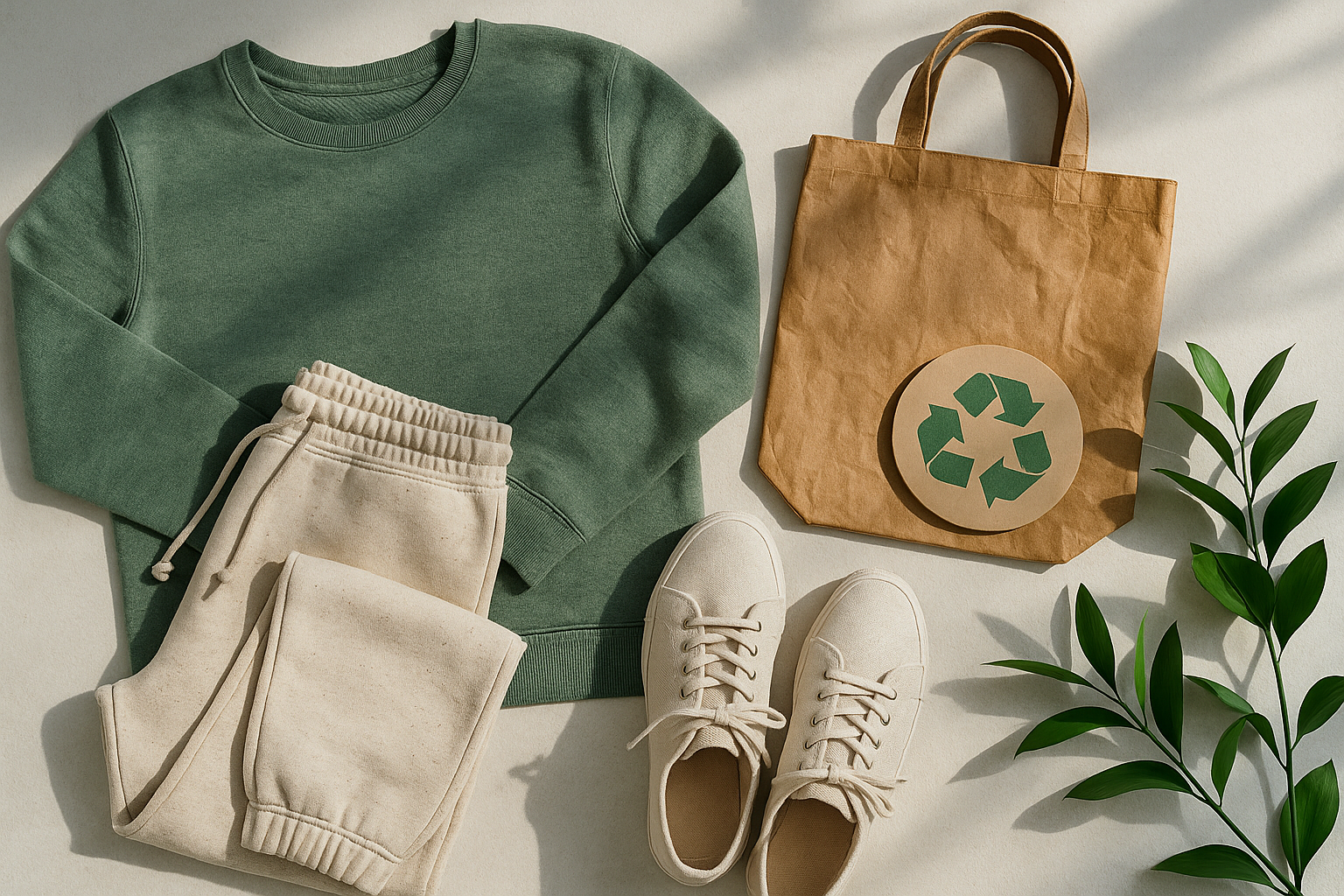
Featured Options Compared in This Guide
Full specs & notes ↓Choose fabric that meets your project’s requirements first, then compare the recycled content of suitable options. The highest recycled percentage is not, by itself, a reason to choose one roll over another.
For yardage, keep three things separate: the full fiber blend, the origin of the recovered material, and the finished fabric’s specifications. A content claim cannot answer all three questions.
What kind of recovered material are you buying?
Recycled cotton: consider the blend, not just the percentage
Recycled cotton can originate in manufacturing scraps or previously used textiles. CottonWorks describes mechanical recycling as the main route: material is sorted, shredded back toward fiber, and made into new yarn. Shredding can shorten and damage fibers, so blending with other fibers helps achieve the strength and durability needed for an intended application. CottonWorks explains these sourcing and processing considerations.
When comparing two recycled-cotton fabrics, look at the complete blend and fabric specification. Do not rank their finished strength solely by recycled percentage, or dismiss a blend simply because it includes other fibers.
Recycled wool: recycled does not necessarily mean previously worn
Under U.S. FTC guidance, recycled wool has been returned to fiber after being made into a woven, knitted or felted wool product; consumer use is not required. The FTC also recognizes that nylon may be added to wool for durability. A recycled-wool blend therefore deserves the same full-composition check as other fabrics. FTC textile and wool labeling guidance.
For a wool clothing project, compare the complete blend and the specified care requirements. Do not treat the words “recycled wool” as a washing instruction.
Recycled polyester and nylon: separate input from processing method
For yardage advertised as recycled polyester or recycled nylon, ask what material was recovered and how it was processed. If a listing describes material as bottle-derived, that identifies its claimed input—not its recycling technology.
GAO defines textile-to-textile recycling as converting textile waste into fibers for new textiles and describes both mechanical and chemical recycling methods. A bottle-origin claim is therefore different from a textile-to-textile claim, but the input description alone does not establish which processing method was used. GAO’s textile-waste report.
Surplus rolls and previously used cloth are different starting points
Unused excess inventory should not be confused with fabric recovered from something already used. GAO distinguishes textiles discarded before consumer sale from textiles discarded after use. Using intact cloth from either source is also different from breaking textile waste down to make new fibers. Ask about the cloth’s original composition separately from its history. GAO’s feedstock distinctions.
Match the pattern before comparing recycled percentages
Use the requirements of the particular pattern you intend to sew rather than a universal list of “best” recycled fabrics. These comparisons make the buying decision more concrete:
- For a T-shirt pattern that specifies jersey: compare fabrics that meet that construction requirement. A woven recycled-cotton fabric is not a confirmed substitute merely because its fiber name matches.
- For leggings with a stated stretch requirement: obtain corresponding stretch information for the candidate fabric. A spandex or elastane percentage describes composition by weight, not a measured stretch result. If the listing gives only the blend, ask for the missing specification rather than assuming a match. FTC guidance on fiber percentages and elastane naming.
- For a tote or a project using remnants: compare the available piece dimensions with the actual cutting layout. Make sure the pieces you need fit before choosing a remnant on recycled content or total quantity alone.
- For rainwear requiring waterproof material: do not accept a water-repellent description as equivalent. NMSU’s fabric-selection guide distinguishes a finish that repels water from waterproofing. A recycled-nylon percentage supplies neither specification. NMSU’s explanation of fabric finishes.
If a candidate fabric’s essential specifications remain unclear, choose another fabric or a different project rather than letting the recycled-content claim settle the decision.
Read the percentage and its scope together
For covered U.S. textiles, FTC guidance generally requires fiber percentages by weight and provides for separate disclosures when sections have different compositions. Some trim, structural linings and non-fiber parts are excluded from the main disclosure, so a fiber label is not necessarily a complete inventory of everything in a garment. FTC labeling guidance.
Apply that distinction when comparing listings:
- Fiber identity is not recycled content. “100% cotton” identifies the fiber but does not establish a recycled share.
- A partial recycled claim stays partial. In a hypothetical fabric explicitly described as 60% recycled cotton and 40% virgin cotton, the stated recycled share is 60%.
- A lining claim stays with the lining. It does not describe the shell. Do not average shell and lining percentages to calculate whole-garment recycled content without their respective fiber weights.
What RCS and GRS add
The Recycled Claim Standard and Global Recycled Standard provide third-party certification of recycled materials and chain of custody. GRS adds social, environmental and chemical-use requirements for processing. These standards address material claims and their supply chains; they do not replace your project’s fabric specifications. Textile Exchange’s RCS/GRS overview.
If certification is part of your purchase requirements, request documentation applicable to the fabric you are ordering rather than assuming a supplier’s certification covers every item it sells.
Use a swatch for selection—not as a performance certificate
A swatch can help you decide whether you like a fabric’s color, texture and feel. Treat that handling as an informal preference check, not a standardized assessment of stretch recovery, seam strength, waterproofing or long-term wear.
Before buying the full quantity:
- Compare usable width with the cutting layout. Record directional prints, nap and any matching requirements.
- Inspect the design’s alignment. A print that runs off-grain can complicate cutting and matching.
- Ask for preparation and care instructions. Do not interpret a shrinkage-control finish as a promise of no shrinkage.
NMSU’s home-furnishings guide supports these general fabric-selection cautions about width, direction, grain and shrinkage. It should not be treated as an apparel-fitting or garment-testing manual. NMSU fabric-selection guide.
For remnants, keep the dimensions and any known composition information together. The FTC permits certain remnants to be sold with unknown-content disclosures; a remnant’s availability does not guarantee that its fiber composition is known. FTC guidance on remnants.
What recycled content leaves unresolved
Recycling the next time around. Blends can help meet fabric requirements while presenting recycling challenges. CottonWorks flags sewing thread and small amounts of spandex as potential contamination concerns in recycled-cotton sourcing. GAO describes difficulties processing blends and the preprocessing needed to remove items such as buttons and zippers. Neither a recycled-content claim nor a simple-looking garment establishes a future recycling route. CottonWorks; GAO.
The environmental comparison. Textile Exchange’s cotton lifecycle study identifies electricity and transport as major drivers of recycled cotton’s impacts and cautions against simplistic rankings. A recycled percentage alone is not a carbon or water calculation for finished yardage. Textile Exchange’s cotton LCA overview.
Microfiber release. GAO reports that textiles can shed microplastic fibers across their life cycle. Do not interpret recycled content as a no-shedding claim. GAO’s discussion of microfiber pollution.
Keep composition details with useful offcuts, and ask your chosen textile collector what it accepts before sending scraps. Local collection and processing options matter alongside the material itself.
Shopping for finished garments instead of yardage? See the recycled apparel guide or the recycled activewear guide.
Sources
- CottonWorks: recycled cotton sourcing, processing and blending
- Federal Trade Commission: textile and wool labeling guidance
- U.S. Government Accountability Office: textile waste and recycling, GAO-25-107165
- New Mexico State University: selecting fabrics for home furnishings
- Textile Exchange: Recycled Claim Standard and Global Recycled Standard
- Textile Exchange: cotton lifecycle assessment overview
Products Compared in This Guide
Patagonia Torrentshell 3L Rain Jacket
A durable recycled nylon rain shell that makes sense if you need real weather protection, though it is more technical than most everyday jackets.
Girlfriend Collective Compressive High-Rise Legging
A strong choice for recycled polyester activewear with good compression, but it still needs careful washing to limit microfiber shedding.
prAna Stretch Zion Pant II
A practical travel and hiking pant using recycled nylon, best for buyers who want durability more than a soft natural-fiber feel.
Kunin Eco-Fi Classicfelt Felt Sheets
Affordable recycled PET felt for crafts and small sewing projects, though it is not the fabric to choose for breathable clothing.