Organic Gardening Buying Guide: What You Need and What Can Wait
Choose soil, containers, tools and fertilizer for your organic garden. Compare essential purchases, OMRI listings and when composting equipment can wait.
Featured Options Compared in This Guide
Full specs & notes ↓Start with the growing space, suitable soil or potting mix, water access and tools for the jobs you actually have. Buy fertilizer to meet a nutrient need, and buy pest protection for a crop and pest you can identify. A raised-bed kit, several bags of amendments and a composting appliance do not belong in every starter basket.
Before buying plants, assess sunlight. Maryland Extension recommends 6–8 hours of direct sun for warm-season vegetables such as tomatoes and peppers, compared with 3–5 hours for cool-season crops such as lettuce and spinach. Some containers need daily watering in hot, dry weather, so a convenient water source deserves priority over decorative accessories. Container gardening guidance.
Match the first purchase to the garden
| Your growing space | Arrange first | Purchases that can wait |
|---|---|---|
| Existing ground bed | Laboratory soil test, suitable crops, watering equipment and a tool for weeds | Lime, specialty amendments and fertilizer blends before the results arrive |
| New bed connected to the ground | Assessment of the underlying soil, required fill volume and a suitable soil-and-compost supply | A frame if you do not need containment or extra height; wholesale replacement of usable soil |
| Bed on paving | Adequate rooting depth, drainage and a fill suited to a hard-surface bed | A bulk topsoil order based on ground-bed advice |
| Patio pots | Crop-sized containers, drainage and airy growing medium | Gravel for the bottoms, extra fertilizer before accounting for nutrients already in the mix |
These priorities follow the different root environments described in Maryland Extension’s raised-bed and container guides, alongside Minnesota Extension’s soil-testing advice.
Spend on the right fill, in the right quantity
For a ground-connected bed, test the existing soil before deciding how much to replace or amend. A laboratory report can guide fertilizer and pH adjustments; Maryland Extension also recommends a lead test when establishing a raised bed for food crops. Ask the laboratory which tests are included rather than assuming a basic nutrient panel covers contaminants. Raised-bed soil guidance.
Calculate fill volume from the bed’s interior length, width and intended fill depth, using the same units for all three. Account for usable soil already present. Before a bulk purchase, ask the supplier for soil-test results, the material’s origin and details of mixing and storage. A bag labeled “organic soil” may contain bark, wood materials, compost or peat without containing mineral topsoil. The name alone does not tell you whether it suits the bed. Maryland Extension.
Beds on paving need a different approach. Maryland recommends equal volumes of compost and soilless growing mix for this situation. It specifies at least 8 inches of depth for leafy greens, beans and cucumbers, and 12–24 inches for peppers, tomatoes and squash. These beds can dry quickly and experience additional heat from surrounding hard surfaces. Choose the depth and fill before ordering the frame. Hard-surface bed guidance.
For ordinary pots, prioritize porosity and root space. Maryland lists minimum container volumes of 5 gallons for peppers and standard tomatoes, and 10 gallons for summer squash; larger plants may benefit from more room. Garden soil is generally too dense for these containers. Do not buy gravel to improve drainage: a bottom layer can worsen waterlogging while occupying root space. Container sizes and growing media.
Finished compost can be a substantial part of a container medium, but it is not maintenance-free. Maryland notes that compost-rich mixes need more frequent watering than mixes with peat or coir, and compost nutrients generally do not cover an entire vegetable-growing season. A prepared container mix is a practical starting choice when you do not want to formulate your own. Container compost guidance.
For frame planning, see the beginner raised-bed guide.
Choose a nutrient plan before choosing a fertilizer
A soil test can reveal that a bed needs one nutrient while already holding plenty of another. Minnesota Extension explains that compost and manure also contribute nutrients, including phosphorus. Count them as part of the feeding plan rather than automatically adding them alongside a complete fertilizer. Soil testing and nutrient decisions.
Three distinctions make fertilizer shopping more useful:
- Complete versus balanced: A complete fertilizer supplies nitrogen, phosphorus and potassium. A balanced fertilizer supplies them in roughly equal proportions. Neither description establishes that the blend matches your bed.
- General blend versus a specific nutrient: When phosphorus and potassium are already high, Maryland recommends nitrogen-only fertilizer if additional nitrogen is needed.
- Soluble versus granular: Soluble nutrients are readily available but can be used up or leach away more quickly. Granular products release nutrients over time; the specific formulation and directions still matter.
Crop needs differ too: tomatoes and leafy greens require more nitrogen than beans. Slow growth or pale leaves can also result from insufficient light, crowding or root problems, so adding fertilizer is not a reliable response to every struggling plant. Maryland Extension’s vegetable fertilizer guidance.
In containers, account for fertilizer already included in the growing mix. Maryland notes that manufacturers may add nutrients to support initial growth, while reused media needs replenishment. This is a reason to plan feeding, not to buy several overlapping products. Container growing media.
What Garden-tone’s directions illustrate
Espoma markets Garden-tone for herbs and vegetables. Its directions separate bed preparation, individual vegetable plants, potted plants and herbs. For container herbs, the manufacturer specifies half its general potted-plant rate; it also describes feeding herbs at planting or after a large harvest. It directs users to keep the fertilizer off the main stem and foliage. Those distinctions matter more than treating every plant as needing the same scoop or schedule. Espoma Garden-tone directions.
Consider it only if its nutrient analysis and application directions fit your growing system and nutrient plan. A vegetable fertilizer is not automatically necessary in a fertile ground bed, and organic fertilizer can still be overapplied. Maryland Extension.
If it fits your needs, this Amazon search for Espoma Garden-tone can help you browse listings. It is a search link, not a specific offer. We may earn a commission from qualifying purchases through it.
Use OMRI listings for their actual purpose
OMRI reviews inputs against established organic standards. Its product records identify permitted uses and restrictions; a product’s label may include uses that are outside the scope of its OMRI listing. Match both the company and product name, then read the certificate for the intended application. OMRI listing guidance.
The listing does not establish that your soil needs the input or guarantee its performance. OMRI expressly calls for care regarding people and environmental impacts and provides no product warranty. For certified producers, the organic certifying agent retains the final decision on product use. For a home gardener, the practical sequence is to establish the need, choose the input and then check its organic-use eligibility. OMRI.
Buy tools and protection for specific jobs
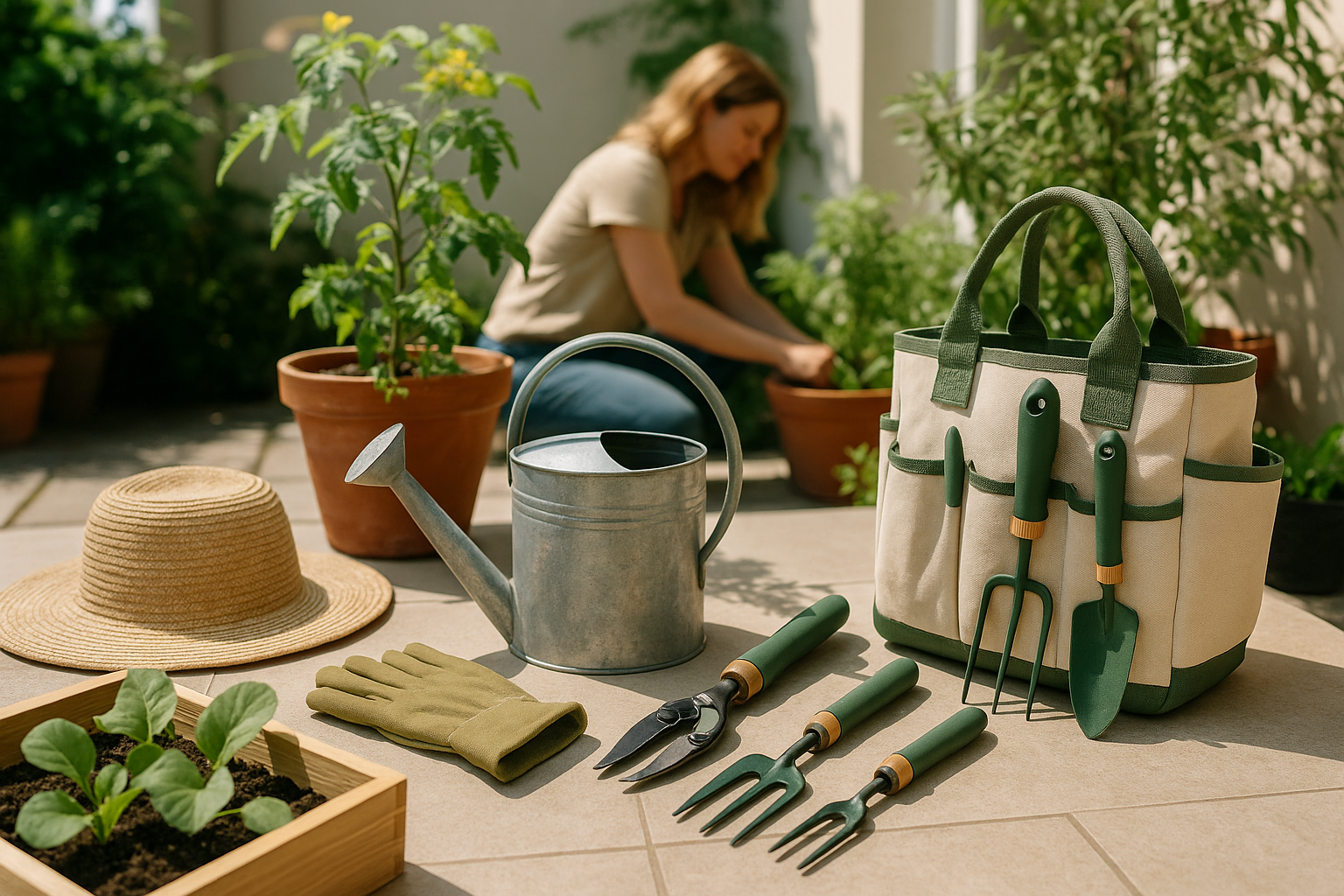
For a few pots, a trowel, gloves and a watering can are a sensible starting set. Add a garden fork when you need to loosen bed soil or turn compost; consider a hoe when open ground makes hand-weeding cumbersome. Try the handle and working position before purchasing a large matching tool set. Maryland describes loosening compacted bed soil with a fork or spade without flipping it over, while EPA uses a garden fork for turning compost. Bed preparation, compost maintenance.
For crop protection, distinguish cool-weather cover from summer insect exclusion. Row cover retains warmth and can exclude pests, but summer heat buildup is a drawback. Insect mesh is the more suitable option when pest exclusion is needed in hot weather; budget for supports and choose mesh openings that exclude the target insect. Both materials described by Maryland are synthetic, so neither should be assumed plastic-free. Weather and pest protection.
Install exclusion covers early, secure their edges and inspect beneath them: pests can already be present or enter through gaps. Crops harvested without insect pollination, such as leafy greens, can stay covered through harvest; other crops need a plan for pollinator access. Maryland Extension.
Leave pesticide purchases until you know the pest and whether treatment is needed. Insecticidal soap requires direct, thorough coverage of susceptible pests such as aphids. Btk targets leaf-feeding caterpillars, while Bti targets mosquitoes and fungus gnats. These are different tools, and an organic-gardening claim does not make them interchangeable. Confirm that the specific product is labeled for your crop and pest. UC IPM.
The garden pest-control guide covers this purchase decision in more detail.
Composting equipment can wait until you have a workable system
If your immediate goal is filling pots or amending a bed, buying finished compost avoids waiting for a home system to produce it. If your goal also includes recycling food scraps, choose equipment around available space, materials and maintenance.
A backyard pile or bin needs dry carbon-rich material, food or garden scraps, moisture and air. A worm bin can fit indoors but needs suitable composting worms, bedding and ongoing feeding. Where space is limited, a participating collection or drop-off program may let you begin with just a closed food-scrap container. EPA home composting guidance.
Do not buy a grinding-and-dehydrating appliance expecting ready-to-use compost. EPA distinguishes its dried food-scrap output from compost and says that material can go into a composting system. Confirm the receiving program accepts it before treating collection as the next step. For small-space options, see the apartment composting comparison. EPA.
Sources
- University of Maryland Extension: Growing vegetables in containers and salad tables
- University of Maryland Extension: Soil to fill raised beds
- University of Minnesota Extension: Soil testing for lawns and gardens
- University of Maryland Extension: Fertilizing vegetable gardens
- Espoma: Garden-tone directions
- OMRI: Product lists, restrictions and listing guidance
- University of Maryland Extension: Vegetable garden weather and pest protection
- UC IPM: Less toxic insecticides
- EPA: Composting at home
Products Compared in This Guide
Amazon search for Espoma Garden-tone
Compare current manufacturer specifications, materials, and package options for Amazon search for Espoma Garden-tone.
Espoma Organic Garden-tone All Purpose Plant Food
A reliable granular starter fertilizer that feeds steadily, though the bag smell and dusty texture are real.
Dr. Earth Home Grown Tomato, Vegetable & Herb Fertilizer
A strong vegetable-garden option with diverse meals and microbes, but it costs more than basic compost-based fertilizer.
Coast of Maine Stonington Blend Organic Growers Mix
Excellent for containers and raised beds when you want living soil, but the premium price makes it hard for large beds.
Frequently Asked Questions
Does OMRI Listed mean a fertilizer is harmless?
No. OMRI reviews products for specified uses under organic standards. Its listing does not guarantee product performance or remove health and environmental precautions.
Should I buy several organic fertilizers for the same bed?
Start with soil-test recommendations and crop needs. Compost also supplies nutrients, so combining it with several fertilizers can add phosphorus or potassium your soil already has.
Can I fill vegetable pots with garden soil?
Use a well-aerated container growing medium for ordinary vegetable pots. Garden soil can be too dense for drainage and root aeration in containers; a ground-connected raised bed has different fill requirements.