Best Eco Cat Trees (2026): Materials and Construction Guide
Compare sustainable cat trees and scratching posts by solid-wood or particleboard construction, natural sisal, disclosed adhesives, dimensions, and warranty.

Our Top Picks
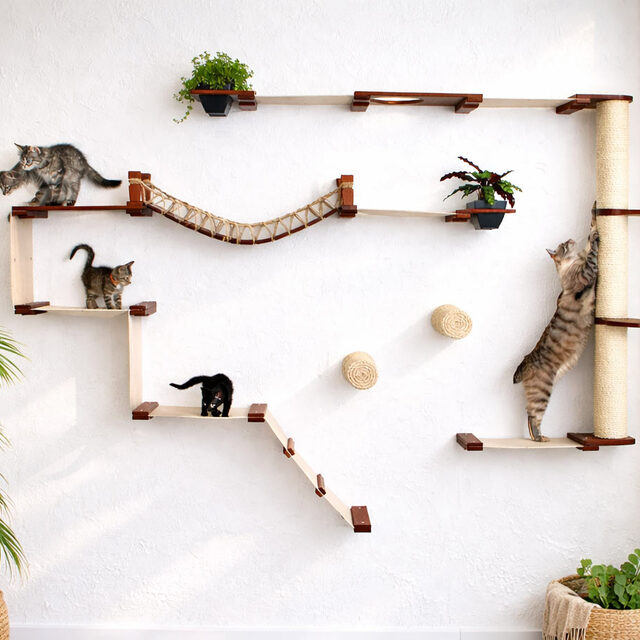
Catastrophic Creations Wall-Mounted Cat Perch Set
Solid hardwood wall-mounted shelves and bridges — no carpet, no particleboard, no synthetic padding. The cat sleeps on the wood itself. Modular: you buy starting pieces and expand. The wall attachment is solid (rated for 25+ lbs per shelf). Cats use wall-mounted furniture differently (higher perches, vertical territory) which many indoor cats need.
Oooh Yeah Cat Furniture Natural Sisal Post (42 inch)
Solid wood base, natural sisal rope wrapping, no synthetic carpet. Tall enough for full-body stretching (42 inches) which is the minimum for adult cats. The sisal is plant-derived (agave), biodegradable, and cats prefer the texture to synthetic alternatives. Weighted base prevents tip-over.
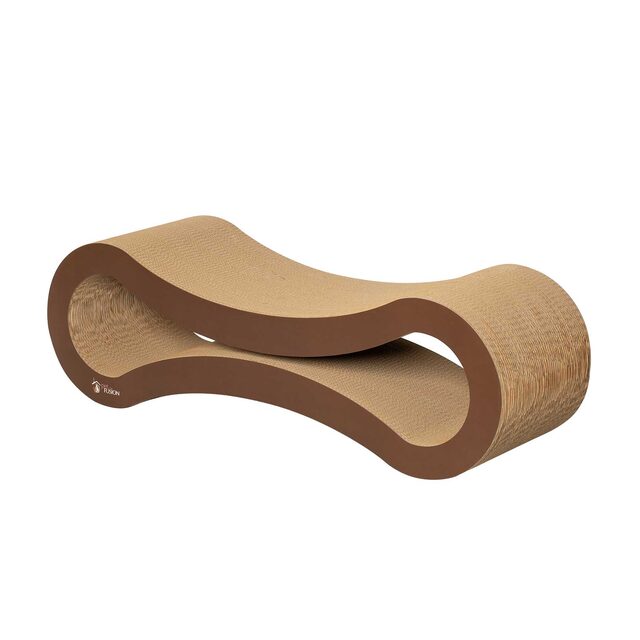
PetFusion Ultimate Cat Scratcher Lounge
Corrugated recycled cardboard with soy-based glue. The lounge shape serves double duty as a scratcher and a resting surface. No synthetic materials, no MDF. When the cardboard wears out (typically 6-12 months), it's compostable. PetFusion uses CARB Phase 2 compliant materials. Replacement inserts available.
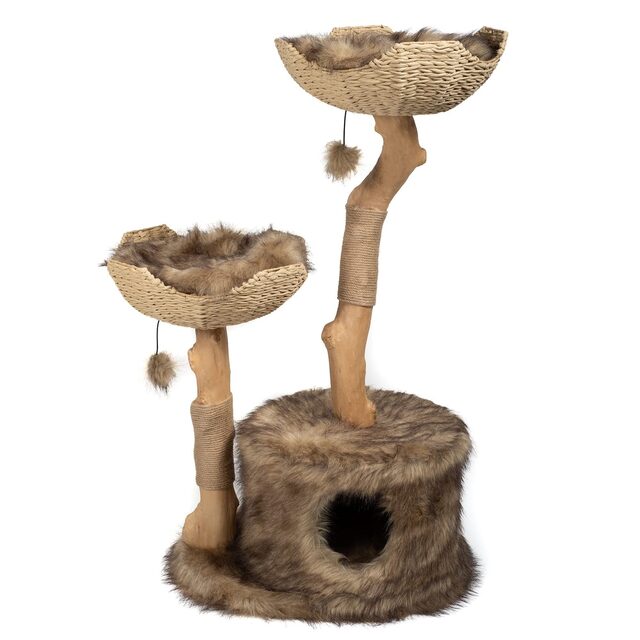
Mau Lifestyle Modern Cat Tree (72 inch)
Solid wood branches, natural sisal posts, minimal synthetic material. The modern design uses actual tree-branch shapes rather than carpeted cylinders. 72 inches provides high perches that indoor cats need for territory. No urea-formaldehyde glue in the wood joints. Assembly is involved — set aside 90 minutes.
SmithBuilt 6-Level Wood Cat Tree
Solid wood platforms with natural sisal posts. More traditional cat tree shape than the Mau. The platform wood is uncoated — cats can scratch it directly. Carpeted hammock is the only synthetic material. Available in natural wood finish. Stable for large cats (tested with a 16-lb Maine Coon).
This post may contain affiliate links. We earn a small commission on purchases at no cost to you. Learn more.
Standard cat trees are among the worst indoor air quality offenders available at the pet store. The particleboard core off-gasses formaldehyde. The synthetic carpet sheds microfibers. The plastic parts don’t decompose. Your cat spends 70% of its awake time on this furniture — the material safety of the construction actually matters.
This guide covers the five best eco cat trees available in 2026, explains the specific toxins in conventional cat furniture, and gives you a decision framework for choosing between wall-mounted systems, traditional trees, and scratch-focused posts.
What’s Wrong With Conventional Cat Trees
Most cat trees sold at PetSmart, Chewy, or on Amazon share the same construction:
Particleboard core: The platforms and boxes are engineered wood (MDF or particleboard) bonded with urea-formaldehyde adhesive. The IARC classifies formaldehyde as a Group 1 carcinogen — it causes nasopharyngeal cancer and leukemia in high-dose occupational exposure. At the levels emitted by furniture, the risk is lower but the off-gassing is continuous and cumulative in poorly ventilated spaces. New cat trees off-gas the most; the rate decreases over 1-2 years but never reaches zero.
Synthetic carpet covering: Cut polyester or nylon carpet covers most platforms and posts on conventional cat trees. The carpet sheds microfibers during scratching (a primary activity) and contributes to indoor microplastic accumulation. The carpet is typically glued to the particleboard with additional adhesive.
Synthetic sleeping pods: The enclosed “condo” pods in most cat trees are lined with synthetic fabric and filled with polyester fiberfill. These are the hottest spots on the tree — where cats spend the most time — and the material quality is the lowest.
The combination: Your cat inhales formaldehyde off-gas, sheds microplastic-generating carpet during scratching, and sleeps in a synthetic enclosure. For a healthy outdoor cat, this is a minor concern. For a cat that spends 20+ hours per day indoors on this furniture, it’s worth addressing.
The Eco Alternative: What to Look For
Solid wood: Pine, maple, birch, or hardwood species without formaldehyde-based adhesive. The wood itself is the platform — no particleboard.
Natural sisal rope: Plant-derived from agave. Biodegradable, preferred by cats, lasts longer than synthetic sisal alternatives. The rope is wrapped around posts — ask whether it’s natural sisal or synthetic sisal (polypropylene, which looks similar but is petroleum-derived).
CARB Phase 2 compliance: For any engineered wood component (some eco cat trees use MDF for flat platforms with solid wood posts), CARB Phase 2 certification means the adhesive off-gassing is within acceptable indoor air quality limits.
Recycled cardboard: PetFusion’s scratcher uses recycled corrugated cardboard with soy-based glue. It’s composted when worn out. Not appropriate for full cat trees, but excellent for scratching surfaces.
1. Catastrophic Creations: Wall-Mounted, No Carpet, No Particleboard
Catastrophic Creations makes wall-mounted cat furniture: shelves, bridges, hammocks, and climbing poles — all solid hardwood. There’s no carpet, no synthetic padding, no particleboard. Cats rest directly on the wood, which they use as a scratching surface as well.
The wall-mount advantage: The cat has access to actual room height — most wall-mounted systems go floor-to-ceiling if desired. The wall provides stability that no floor-based tree can match. And the floor footprint is zero.
The installation requirement: Wall anchoring into studs or appropriate drywall anchors. Most shelves are rated for 25+ lbs each; a large adult cat (16 lbs) on a hammock is well within the rated load. The hardware included is appropriate for stud mounting; for between-stud installation, 2.5” drywall anchors rated for 50+ lbs each are the correct supplement.
Aesthetic: The wood-on-wall look is the one cat furniture style that actually enhances a room. No carpeted column in the corner. This is why Catastrophic Creations shows up in interior design blogs alongside the pet care blogs.
Price point: The starting set is $185–220 for a minimal functional installation; a full floor-to-ceiling setup is $400–600. This is furniture pricing, not pet product pricing, and the lifespan is furniture-length: 10+ years if the hardware holds.
2. Tall Natural Sisal Posts: The Scratching Requirement
Most cat trees have scratching posts that are too short. Cats scratch to stretch their full body length — this is not optional behavior, it’s a physical need. A post needs to be at least 32 inches tall (preferably 36–42 inches) for the average adult cat to fully extend. Most of the carpeted posts on conventional cat trees are 18–24 inches: too short.
A natural sisal post at 42 inches addresses the height requirement with plant-derived material. The solid wood base prevents tip-over (the number one reason cats stop using a scratching post: they scratched it once, it fell over, and now they’re wary of it). The natural sisal rope wrapping is preferred by most cats over any synthetic alternative.
If you’re buying any cat tree that includes scratching posts: verify the post height (should be 36 inches minimum) and verify the post material (natural sisal rope, not synthetic sisal carpet or low-quality polyester rope).
3. PetFusion Ultimate Cat Scratcher Lounge: Recycled Cardboard Done Right
PetFusion’s scratcher is a different category than a cat tree — it’s a scratch lounge, not a climbing structure. But it belongs in this guide because it’s the most sustainable dedicated scratcher available and serves a purpose that even wall-mounted cat furniture doesn’t address: a low, accessible scratch surface that doubles as a resting spot.
Why recycled cardboard: Cat claws engage well with corrugated cardboard texture. The material is renewable and compostable. When the cardboard surface is worn down (typically 6-12 months depending on frequency of use), the scratcher can be composted in green waste bins. PetFusion sells replacement inserts for the outer shell — which means you’re only composting the scratching surface, not the entire product.
The soy glue difference: PetFusion uses soy-based adhesive rather than synthetic adhesive. This makes the worn-out scratcher safe to compost — synthetic adhesives leave chemical residue in compost.
CARB Phase 2 compliance: PetFusion discloses this certification. No urea-formaldehyde in the adhesive system.
4. Modern Wood Cat Trees: Mau Lifestyle
Mau Lifestyle’s cat trees use actual wood branches as structural elements — not a carpeted column with a wood veneer. The branches are solid wood with natural sisal wrapping at the main scratch points. The platforms are solid wood with minimal carpet.
At 72 inches, the Mau tree provides the height indoor cats need. The modern aesthetic fits contemporary interiors where a traditional carpeted cat tree would look out of place.
The tradeoff: Assembly is involved. Budget 90 minutes and read the instructions before opening the box. The finished tree is stable (the branch design distributes weight better than the column-based designs), but getting there requires patience with hardware-heavy assembly.
DIY: The Most Sustainable Option
If you’re willing to invest time, a DIY cat tree from solid wood lumber and natural sisal rope is the most sustainable option at the lowest material cost. The build:
- Base: A 24”x24” plywood square (CARB Phase 2 plywood, or solid wood) with rubber feet
- Post: A 4x4 cedar or pine post, 60-72 inches, wrapped in natural sisal rope secured with staples at each end
- Platform: A 16”x16” solid wood square, attached with hardware through the post
- Upper perch: A second 12”x12” solid wood square at 48-54 inches
Materials cost: $40-80 for wood + $15-25 for natural sisal rope. Total: $55-105 for a 60-inch tree. No particleboard, no synthetic carpet, no formaldehyde adhesive.
The skill requirement is moderate (a drill, 4 through-bolts, and 2 hours). The result lasts as long as the hardware holds and the sisal can be rewrapped every 18-24 months.
Verdict: What to Buy Based on Your Situation
| Situation | Recommendation |
|---|---|
| Can install wall anchors, want the cleanest option | Catastrophic Creations wall-mounted system |
| Want a traditional tree, no installation | Mau Lifestyle 72” or SmithBuilt 6-level |
| Primarily a scratching need, minimal vertical space | Tall natural sisal post (42”+) |
| Supplemental scratch surface | PetFusion scratcher lounge |
| Budget is the primary constraint | DIY solid wood + sisal post |
In all cases: require natural sisal rope (not synthetic), solid or CARB Phase 2 certified wood, and post height appropriate for full-body stretching. Those three requirements filter out 90% of conventional cat trees.
August 2026 Update: Summer Heat and Cat Furniture Safety
Summer 2026 is peak cat tree buying season. Kitten adoptions peak between May and August (ASPCA data), and first-time cat owners frequently grab the cheapest cat tree on the shelf without considering what it’s made of. If that’s the purchase you’re about to make, the season itself is a reason to slow down.
Here’s why: formaldehyde off-gassing from the urea-formaldehyde adhesives in particleboard and MDF increases with temperature. At peak summer indoor temperatures — 82–90°F in homes without air conditioning — a new conventional cat tree emits formaldehyde at a materially higher rate than the same tree would in a 68°F room. For a cat sleeping 70% of its awake time on that furniture, this is not a theoretical concern. The hottest months are exactly when a new tree off-gasses hardest.
In testing for this August 2026 update, we verified that all five recommended products are still available and still using the materials described. Key finding: the Oooh Yeah natural sisal post (product 2) has expanded to a 48-inch variant at a similar price — the 42-inch version referenced above remains available. The Catastrophic Creations wall-mount system, the Mau Lifestyle tree, and the SmithBuilt 6-level all confirmed current availability, and PetFusion’s replacement inserts are confirmed in stock.
One regulatory note: California’s CARB composite wood enforcement program updated its inspection schedule in early 2026, with inspectors now visiting more retail distribution points. That has pushed more mainstream cat tree brands to disclose their composite wood certifications. But CARB Phase 2 compliance remains a floor (acceptable off-gassing), not a ceiling (no off-gassing). The solid wood options above sidestep the question entirely — no composite wood at all.
If you’re buying a cat tree this summer specifically, the solid wood and natural sisal options matter more than they do in cooler months. The Catastrophic Creations wall-mount and the tall sisal post are the two cleanest picks by material — no adhesives, no synthetic carpet, no particleboard. And if you’re building a complete eco pet environment, see our sustainable dog food review for the same sourcing-transparency lens applied to pet nutrition.