GreenChoice
Green Tech & Transport

Off-Road Electric Bike Buying Guide (2026): Fit, Terrain, Law, and Safety

Choose an off-road e-bike by rider fit, handling, terrain, access rules, braking, service, and battery safety—not headline speed or range claims.

By GreenChoice
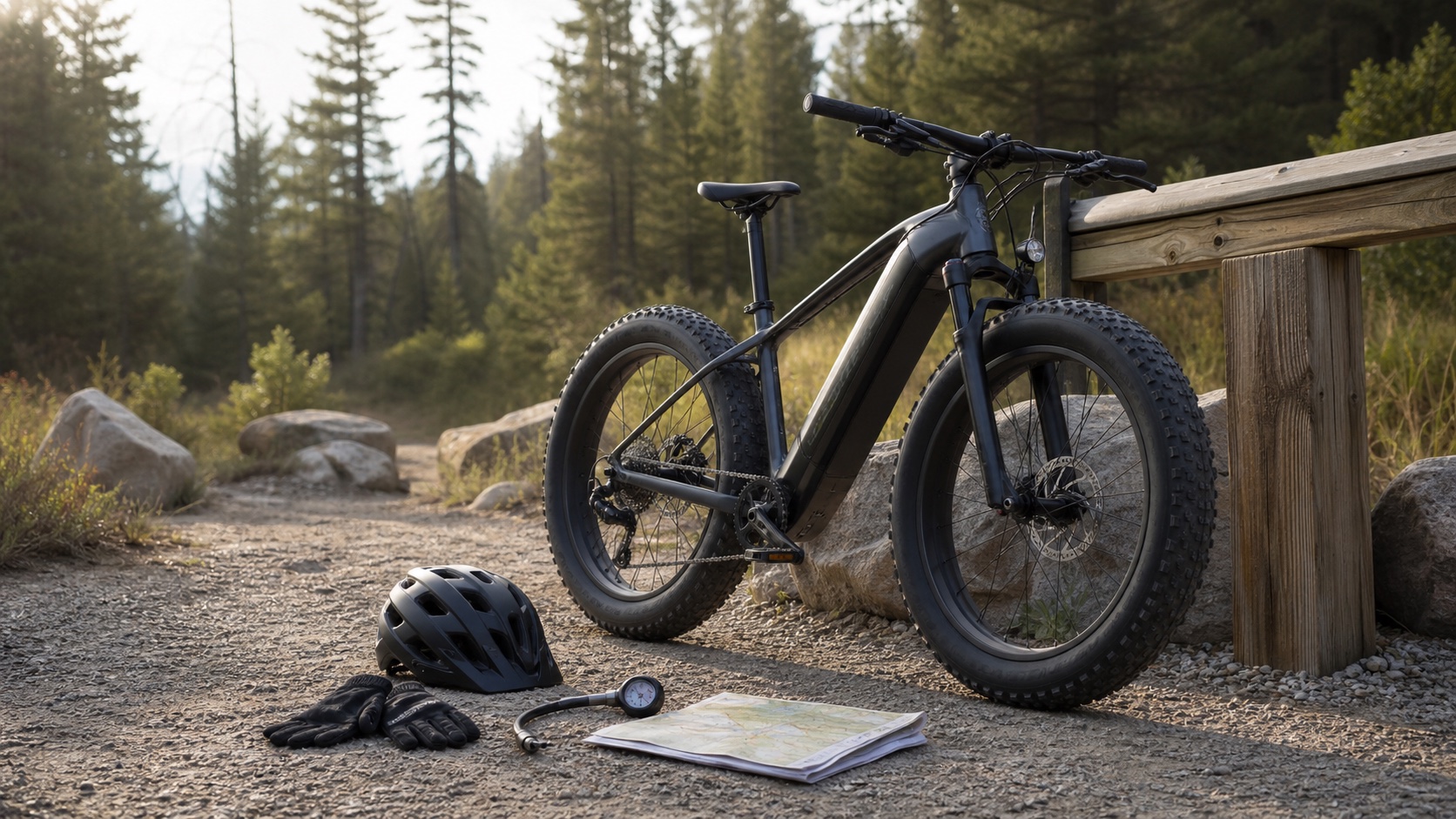
Fat-tire electric bicycle stopped on a broad unpaved trail beside a helmet and riding gloves
Disclosure: GreenChoice is reader-supported. When you buy through links on our site, we may earn an affiliate commission at no extra cost to you. Affiliate relationships do not determine our conclusions. Unless a page links to a dated testing record, its comparison is research-based and uses specifications, certifications, warranties, prices, and cited independent evidence—not GreenChoice hands-on testing.

This post may contain affiliate links. If you make a purchase through these links, we may earn a small commission at no extra cost to you. Learn more.

“Off-road electric bike” is a shopping category, not a trail-access permit and not a guarantee that a bicycle is ready for technical terrain. The label can cover everything from a comfort-oriented fat-tire bike for gravel roads to a purpose-built electric mountain bike. Those are different machines for different riders.

The useful buying order is:

  1. define the routes you may legally ride;
  2. confirm the bike fits your body and handling ability;
  3. match the frame, brakes, wheels, tires, and suspension to the terrain;
  4. verify the complete electrical system and charging plan;
  5. confirm assembly, service, parts, return, and warranty details; and
  6. only then compare convenience features.

This guide does not repeat volatile speed, range, or price claims. It also does not assume that an electric bike is environmentally superior simply because it has pedals and a battery. We are building a fit-and-use decision, not reviewing a bike we have not ridden.

For clothing, footwear, packs, and lower-impact buying habits around the same trips, pair this with our complete sustainable hiking and outdoor gear guide. If your real use is paved commuting rather than unpaved recreation, start with the urban commuter e-bike guide instead.

Start with the route, not the motor

Write down where you expect to ride during an ordinary month:

  • paved streets and multi-use paths;
  • maintained gravel roads;
  • washboard forest roads;
  • sand, snow, or loose two-track;
  • mellow dirt paths;
  • technical singletrack;
  • private land; or
  • roads or trails managed by a city, county, state, federal agency, or private association.

That list determines more than tire choice. It affects legal access, braking demand, visibility, repair needs, suspension, gearing, carrying capacity, and whether a heavy bike can be recovered after a flat or a fall.

An off-road-looking bicycle may be a poor match for technical singletrack. A mountain-bike-looking trail may prohibit motorized assistance. Settle both questions before comparing models.

A practical terrain matrix

Primary usePrioritiesCommon mismatch to avoid
Paved-to-gravel exploringPredictable fit, efficient tires, fenders, lights, serviceable brakesBuying very aggressive tires and extra weight for terrain you rarely ride
Maintained forest roadsStable handling, puncture plan, brake control, visible lightingTreating a remote road like a neighborhood ride with no repair or battery reserve
Sand or packed snowTire footprint, pressure range, temperature plan, corrosion careAssuming tire width guarantees grip or safe ice handling
Rough two-trackWheel durability, ground clearance, brake heat management, secured cargoLoading a rack without checking its separate limit and handling effect
Technical singletrackPurpose-built geometry, suspension control, braking, trail access, rider skillChoosing by motor headline or fat tires instead of complete-bike capability
Hunting or private-property utilityLegal land access, load placement, low-speed control, recovery planAssuming a heavy bike can always be lifted, pushed, or transported alone

“More rugged” is not a measurable specification. Name the surface and obstacle instead.

E-bike law in the United States is not one universal rule. Classification, permitted equipment, throttle use, helmet requirements, roadway access, and age rules can vary by state and locality. Trail access can be narrower still because the land manager may set route-specific rules.

Before buying:

  1. Identify the bike’s factory configuration and how it is labeled.
  2. Check current state and local e-bike rules on official government sources.
  3. Check the current land-manager page and map for every regular riding area.
  4. Read posted signs at the trailhead.
  5. Ask whether changing settings or hardware changes the bike’s legal classification or trail eligibility.

Do not rely on a seller’s “street legal” or “trail ready” phrase. A bicycle can be lawful to own yet prohibited on the route you want to ride.

The U.S. Consumer Product Safety Commission’s micromobility safety center also reminds riders that traffic laws, helmet requirements, and permitted riding locations differ among communities. For public land, the managing agency’s current rule is the one that matters.

“Off-road” can mean motorized access only

Some public roads and trails distinguish non-motorized bicycles from motorized vehicles or electric bicycles. Other systems authorize certain e-bike classes on selected routes. Rules can change by route, season, management plan, or emergency closure.

Build a list of legal routes before ordering. If the only nearby places that allow the bike are roads you do not enjoy, the specification sheet cannot fix the purchase.

Fit is a safety feature

E-bikes often carry more system weight than comparable unassisted bicycles. That makes awkward fit more consequential at a stop, on a cambered trail, or while turning around on a narrow path.

Check at least:

  • recommended rider-height range for the exact frame;
  • standover clearance in the shoes you ride in;
  • saddle-height range without exceeding insertion limits;
  • reach to the grips with relaxed shoulders and slightly bent elbows;
  • handlebar width and control reach;
  • brake-lever reach for your hands;
  • crank and pedal clearance;
  • your ability to start, stop, and dismount on uneven ground; and
  • your ability to move or lift the bike when the motor is unavailable.

A step-through frame can make mounting easier, but the frame label does not guarantee fit. A tall rider can still feel cramped; a shorter rider can still struggle with reach or weight distribution.

If you cannot test the exact model, compare its published geometry with a bicycle that already fits you. Overall length and wheel size are not enough. Reach, stack, seat-tube geometry, standover, and cockpit adjustment tell more.

Include transport and storage in the fit test

Measure the route into your storage area. Count steps. Measure doors, turns, elevator space, rack capacity, hitch clearance, and vehicle payload limits. Remove the battery only if the manufacturer permits it and you can safely handle and secure both pieces.

Ask yourself:

  • Can I load it onto my rack without twisting or overreaching?
  • Is the rack approved for the bike’s actual weight and tire size?
  • Can I turn it around in the garage or apartment?
  • Can I push it uphill if electrical assist stops?
  • Can I repair or transport it from the farthest planned route?

A bike that fits your inseam but not your life still does not fit.

Motor headlines do not describe trail handling

Motor output and torque claims attract attention, but handling depends on the complete system: controller tuning, pedal-assist response, gearing, wheel traction, weight distribution, frame geometry, and rider input.

For loose or technical terrain, ask how assistance begins and ends:

  • Does power arrive predictably when you begin pedaling?
  • Can you select a low assistance level for narrow or slippery sections?
  • Does assistance continue after you stop pedaling, and for how long?
  • Is throttle behavior permitted on your intended routes?
  • Can the controls be reached without changing your grip?
  • Does walk-assist operation make sense for the bike’s weight and terrain?

Sudden assistance can upset traction or line choice. Maximum output is less useful than controllable output.

Do not modify speed, power, throttle, controller, or class settings without understanding the safety, warranty, insurance, and legal consequences. A setting change can affect where the bike may be ridden.

Battery capacity is not a range promise

Battery capacity is commonly expressed in watt-hours. When voltage and amp-hours are both published, multiplying them gives a rough nominal watt-hour figure:

volts × amp-hours = watt-hours

That helps compare stored energy. It does not tell you how far the bike will go on your route.

Real consumption changes with:

  • rider, cargo, and bike weight;
  • climbing and repeated acceleration;
  • soft or loose surfaces;
  • tire pressure and tread;
  • wind and temperature;
  • assistance level and throttle use;
  • motor and controller behavior;
  • stops, starts, and route speed;
  • battery age and condition; and
  • time spent below an efficient cadence.

Plan the first rides as tests. Use shorter loops, note battery use at known landmarks, and keep a return reserve. Do not plan a remote route around the top of a seller’s range statement.

Before buying, also ask whether the exact replacement battery and charger are documented, whether the connectors and mounting system are model-specific, and how replacements are obtained. Do not use a look-alike battery or a “universal” charger.

Verify electrical-system certification on the exact model

UL 2849 addresses an e-bike’s electrical system—including the battery, charger, drive system, and their interaction—as a system. That is different from seeing a safety mark on one cell or hearing that a battery alone was tested.

The CPSC has urged manufacturers and importers to comply with applicable consensus standards, including UL 2849 for e-bikes. UL Solutions explains its e-bike system testing here.

Ask the seller:

  • Which nationally recognized testing laboratory certified the exact model?
  • What model identifier appears in the certification listing?
  • Does the listing cover the bike, supplied battery, and supplied charger as a system?
  • Does the label on the delivered bike match the listing?
  • Are alternate battery options or chargers covered by that same certification?

“Built to the standard,” “uses UL cells,” and “UL-compliant battery” are not interchangeable with exact-model system certification.

Certification reduces a category of electrical risk; it does not make charging careless, eliminate recalls, or guarantee mechanical quality. Check the CPSC recall database and the manufacturer’s current notices before and after purchase.

Burchda as a retailer and brand option

Burchda is one current brand option for shoppers comparing fat-tire and off-road-oriented e-bikes. We have not independently tested its bikes, certification records, assembly process, or policy administration, so the statements below are attributed to the company rather than presented as GreenChoice findings.

If a Burchda bike makes your shortlist, request or locate the exact certification record before ordering. Then save the model page, policy pages, warranty, assembly manual, and order terms that apply on the purchase date. A site-wide FAQ is a starting point; the exact model and transaction documents should control your decision.

We are intentionally not repeating current Burchda price, speed, or range claims. Those details are volatile and route-dependent, and none substitutes for fit, access, braking, or service.

“85% assembled” is not a ride-ready standard

An assembly percentage does not identify which safety-critical steps remain or whether completed factory steps were checked after shipping.

Depending on the model, final work may include:

  • orienting and securing the handlebar and stem;
  • installing or checking the front wheel and axle;
  • installing pedals on the correct sides and threads;
  • setting saddle height within insertion limits;
  • checking brake caliper alignment and lever feel;
  • verifying rotor, axle, crank, rack, and cockpit fasteners;
  • inspecting tires, rims, spokes, and pressure;
  • checking derailleur adjustment and chain routing;
  • seating and locking the battery;
  • confirming cables are not stretched, pinched, or rubbing;
  • testing lights, cutoff switches, display, assist, and throttle where fitted; and
  • performing a low-speed brake and handling test away from traffic.

Use the exact manual and its torque values. “Tight enough” is not a torque specification, and the left pedal is not threaded like the right.

If you do not already know how to inspect an e-bike, arrange a qualified bicycle mechanic before the first serious ride. Ask before ordering whether a local shop will assemble and service a direct-to-consumer model; some shops limit the electrical systems they handle.

Brakes: evaluate control and service, not just type

An off-road e-bike asks the brakes to manage the bicycle, rider, cargo, repeated descents, and variable traction. Brake labels alone do not tell you whether the system is appropriate.

Compare:

  • lever reach and modulation for your hands;
  • rotor size and model-specific compatibility;
  • pad type and local replacement availability;
  • hose or cable routing;
  • heat management for expected descents;
  • cutoff-switch behavior if used;
  • whether the local shop stocks compatible wear parts; and
  • the inspection and bed-in procedure.

Hydraulic brakes can offer strong, consistent control, while mechanical systems can be simpler for some owners to adjust. Either can be a mismatch if poorly sized, assembled, maintained, or controlled.

On the first rides, practice stops on predictable surfaces at low assistance. Learn how the bike behaves with the battery installed, with normal cargo, and on a gentle descent before committing to loose or steep terrain.

Suspension: travel numbers are only the beginning

Suspension helps keep wheels tracking uneven ground and reduces impacts, but a fork or rear shock adds no value if it is poorly matched, incorrectly set, or impossible to service.

Ask:

  • Is the component intended for the bike’s weight and use?
  • Can spring pressure or preload be adjusted for the rider?
  • Is rebound adjustable and documented?
  • Are seals, bushings, and service parts available?
  • What is the service interval?
  • Does the frame geometry remain appropriate through the suspension travel?
  • Are rack and cargo mounts compatible with suspension movement?

A suspension-shaped fork and a purpose-built trail fork may look similar in a listing. Find the component model and service documentation.

For maintained gravel and pavement, a simpler rigid design with appropriate tires may be easier to maintain. Buy suspension for a route need, not for the photograph.

Tires and wheels: match the surface and the repair plan

Fat tires can offer a larger contact patch and allow pressure adjustment for some soft or rough surfaces. They also do not repeal physics. Wet roots, ice, loose rock, deep mud, and side slopes still demand careful speed, line choice, and rider skill.

Check:

  • tire size printed on the exact model;
  • tread pattern for your primary surface;
  • manufacturer pressure range;
  • rim and spoke specifications;
  • axle type and removal procedure;
  • puncture protection and tube availability;
  • whether the tire can be serviced on your route;
  • wheel and tire clearance with mud or snow; and
  • replacement availability in your area.

Practice removing the wheel or repairing a puncture at home. Know whether motor wiring, torque hardware, or special tools complicate a roadside repair.

Tire pressure is a handling setting, not just a comfort setting. Stay within the tire and rim limits, adjust deliberately, and inspect after rim strikes or hard impacts.

Cargo changes the bike

A rack rating, frame payload, and trailer limit may be separate numbers. Determine whether the published total includes the rider, battery, accessories, and cargo.

Keep loads low, centered, and secured away from wheels, brakes, suspension, and moving cables. Then test:

  • low-speed steering;
  • standing starts;
  • braking distance and lever effort;
  • hill starts;
  • kickstand stability;
  • dismounting on uneven ground; and
  • the effect of cargo on lights and reflectors.

Do not use a passenger seat or child-carrying setup unless the bicycle and exact accessory are explicitly designed and approved for it. An available rear rack is not automatically a passenger system.

If family transportation is the real job, our cargo e-bike guide covers passenger systems, storage, and everyday hauling as a separate decision.

Battery charging and storage are part of ownership

The CPSC advises consumers to use the supplied charger, remain present while charging, never charge while sleeping, use only an approved replacement battery, follow manufacturer instructions, and unplug when charging is complete. Its current charging-safety guidance is worth reading before the bike enters your home.

Build a charging location that:

  • does not block an exit;
  • is away from combustible clutter and excessive heat;
  • keeps the battery and charger dry;
  • allows you to see and unplug the equipment;
  • uses the manufacturer-supplied or specifically approved charger;
  • protects cords and connectors from damage; and
  • follows the manual’s temperature and storage limits.

Stop using a battery or charger that is damaged, swollen, unusually hot, leaking, making unusual sounds, or involved in a crash until the manufacturer or a qualified service provider advises what to do. Do not open, rebuild, or repurpose a pack yourself.

Never place a lithium-ion e-bike battery in household trash or ordinary curbside recycling. Follow the manufacturer’s instructions and your local household hazardous-waste or battery-recycling program.

Serviceability can matter more than one extra feature

Before buying a direct-to-consumer e-bike, call likely local shops and ask specific questions:

  • Will you perform final assembly and a safety inspection?
  • Will you service the bicycle’s mechanical components?
  • Will you diagnose this brand’s electrical system?
  • Can you obtain compatible brake pads, rotors, derailleur parts, tires, spokes, display, controller, battery, and charger?
  • What work must go back to the seller?
  • How is a warranty diagnosis documented?

Also ask the seller:

  • Where are parts shipped from?
  • Which parts are owner-replaceable?
  • Are service manuals and wiring diagrams available?
  • Does opening a compartment or using a third-party shop affect coverage?
  • Who pays diagnostic labor, shipping, and reinstall labor during a claim?

A screen, extra mode, or accessory bundle will not compensate for a bike that cannot be repaired.

The environmental question needs an honest answer

An electric bike has a battery, electronics, mined materials, manufacturing impacts, packaging, and an eventual end-of-life problem. Riding it off road can also affect soil, vegetation, wildlife, and relationships with other trail users.

It may be a practical lower-impact choice when it replaces higher-impact trips and is used for years. It may be a poor environmental purchase when it duplicates a working bicycle, is ridden only a few times, damages prohibited trails, or becomes unrepairable after one component fails.

Ask:

  • Which trips will this actually replace?
  • Will I use it often enough to justify another vehicle?
  • Can the battery, charger, tires, brakes, and electronics be replaced?
  • Is there a local repair path?
  • Can I ride legal, durable routes without widening trails or cutting switchbacks?
  • How will the battery be handled at end of life?

No brand name, motor type, or “eco” adjective answers those questions for you.

A pre-order comparison sheet

Fill every row for each exact model:

Decision fieldBike ABike BBike C
Intended legal routes verified
Factory class/configuration
Rider-height and geometry fit
Bike weight and transport plan
Rider / cargo / rack limits
Brake system and local pads
Fork/shock model and service path
Tire, tube, rim, and axle details
Battery watt-hours
Exact-model UL 2849 record
Supplied charger and replacement path
Remaining assembly steps
Local mechanical service
Local electrical diagnosis
Current return conditions and fees
Warranty coverage and exclusions
Replacement battery/electronics path

Blank cells expose risk faster than another hour of promotional videos.

Red flags before buying

Pause when:

  • “off-road” is the only evidence of trail capability;
  • a tire width is treated as proof of mountain-bike suitability;
  • the seller cannot identify the exact UL 2849 listing;
  • certification language covers cells or a battery but not the complete bike;
  • range is presented without test conditions;
  • legal access is reduced to a broad “street legal” claim;
  • an assembly percentage replaces a checklist and torque specifications;
  • the replacement battery or charger is undocumented;
  • local shops will not service the electrical system;
  • return terms do not explain opened, assembled, or ridden bikes;
  • the frame, rack, and total-load limits are unclear; or
  • the bike’s weight exceeds your rack, vehicle, storage, or recovery plan.

The right answer may still be “buy it,” but not until the blank is resolved.

Final ride-ready checklist

Before the first real trail or road ride:

  • Confirm the route currently permits your exact e-bike configuration
  • Read the complete owner and charging manuals
  • Verify exact-model electrical-system certification
  • Complete assembly using the specified torque values
  • Inspect frame, fork, wheels, axles, tires, cockpit, cranks, pedals, and rack
  • Check brake alignment, lever feel, pad contact, and cutoff behavior
  • Confirm battery and charger are undamaged and properly matched
  • Set saddle, lever reach, and controls for the rider
  • Wear a correctly fitted bicycle helmet and route-appropriate protective gear
  • Carry a repair and communication plan appropriate to the route
  • Practice starts, turns, and braking at low speed
  • Begin with a short loop and preserve battery reserve
  • Ride within sight, traction, skill, and posted access limits

Then keep inspecting. Shipping settles parts, new brakes bed in, tires lose pressure, and rough surfaces loosen neglected hardware.

Return to the sustainable hiking and outdoor gear pillar for the rest of a durable trail kit. For mostly paved trips, compare the tradeoffs in the urban commuter e-bike guide. For passengers and errands, use the cargo e-bike guide.

The bottom line: choose the route, fit, complete-bike capability, legal access, electrical-system verification, and service plan before you choose the logo on the downtube.

Frequently Asked Questions

Are off-road electric bikes legal on every trail?
No. Access depends on the bike's configuration and classification, state and local law, the land manager, and the specific road or trail. A route that allows conventional mountain bikes may still prohibit e-bikes. Check the current official map, posted signs, and land-manager rules before each ride.
Does a fat tire make an e-bike suitable for technical mountain-bike trails?
Not by itself. Tire volume can help on some loose or soft surfaces, but it does not establish frame strength, suspension control, braking, geometry, wheel durability, or rider skill. Match the complete bike and your experience to the terrain rather than treating tire width as an off-road certification.
What does UL 2849 certification cover?
UL 2849 addresses the electrical system of an e-bike as a system, including the battery, charger, drive system, and their interactions. Ask for certification that applies to the exact bike model and verify the certifying laboratory or listing; do not assume a battery-only mark covers the complete bike.
How should I estimate real e-bike range?
Use battery watt-hours as a capacity comparison, then plan conservatively around rider and cargo weight, terrain, surface, tire pressure, temperature, wind, assist use, stops, and battery condition. A seller's range claim is not a guarantee for your route, so build in a return reserve and shorten the first rides.
Is an e-bike that arrives 85% assembled ready to ride?
No. An assembly percentage is a seller description, not a safety inspection. The remaining work and checks may include the handlebar and stem, front wheel or axle, pedals, brakes, shifting, fastener torque, tire pressure, battery seating, lights, and a low-speed function test. Use a qualified bicycle mechanic if you are uncertain.
What should I verify before buying a Burchda e-bike?
Burchda currently makes site-wide statements about UL 2849 certification, partial assembly, and quality-related returns, but terms and model details can change. Verify the exact model's certification record, fit, legal configuration, assembly steps, weight limits, return eligibility and fees, warranty, replacement battery and charger path, and local service options before ordering.