Family Cargo E-Bikes: Choosing Seats, Passenger Gear, and Fit
Compare Tern GSD Gen 3 passenger setups and Urban Arrow FamilyNext restraints, age guidance, and accessory fit before a family cargo-bike purchase.
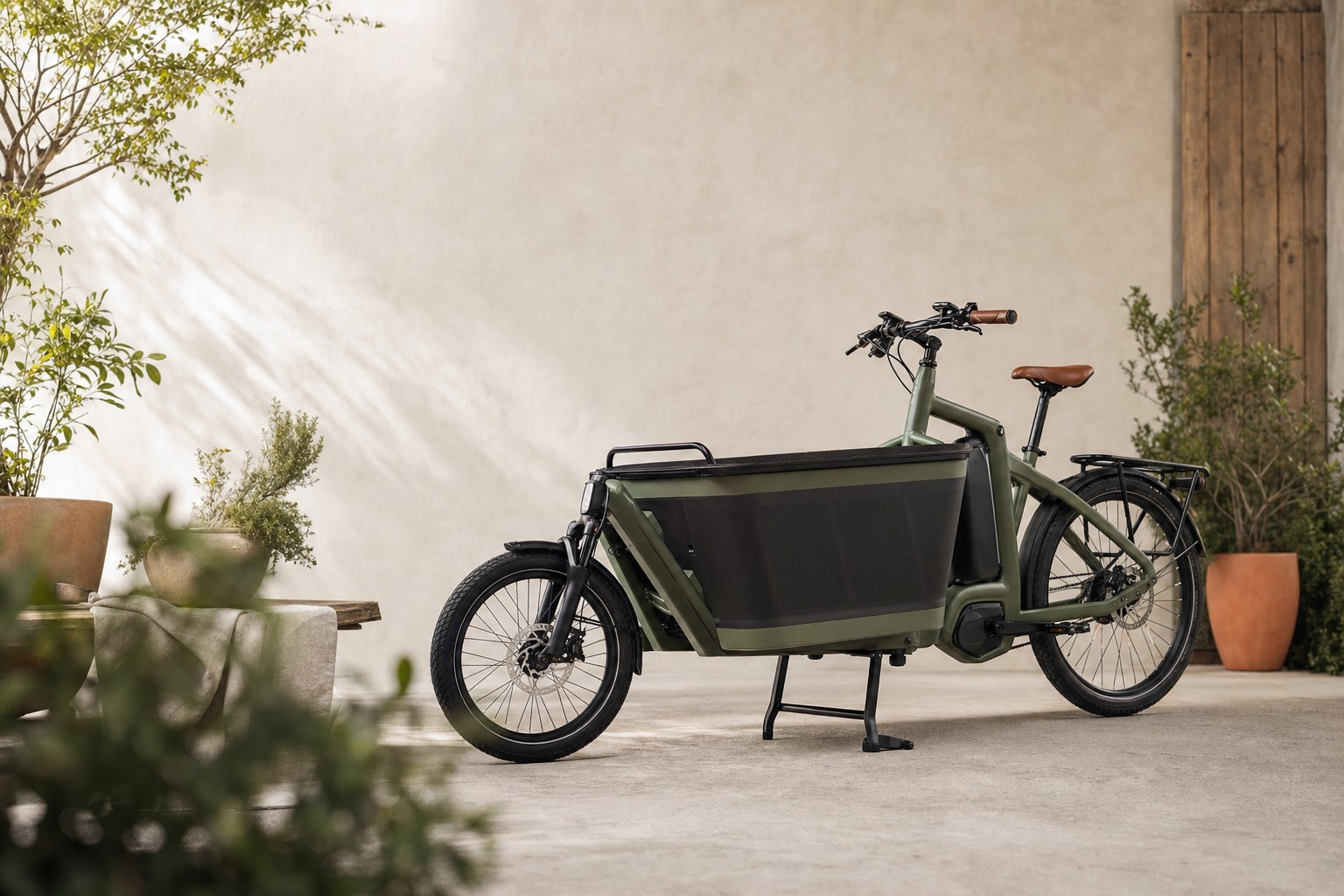
Featured Options Compared in This Guide
Full specs & notes ↓Choose the passenger arrangement before choosing the cargo e-bike. Two children in child seats, a younger child with a bigger sibling, and an adult passenger need different equipment. A high load rating does not establish that a particular seating arrangement is appropriate.
The Tern GSD Gen 3 uses rear passenger seating; the Urban Arrow FamilyNext carries children in a front box. The useful comparison is how the complete setup accommodates your children now—and what must change as they grow. For broader transport planning, see the separate cargo e-bike guide for car-free families.
Tern GSD Gen 3: build the complete passenger system
Tern requires five passenger-system functions: a suitable seat, something for passengers to hold, supports for their feet, protection between their legs and the wheel, and a wide double-leg stand. The GSD Gen 3 already has an integrated wheel guard and an Atlas Lockstand. That does not eliminate the need for appropriate seating, handholds, and foot support. Tern passenger guide.
For common family arrangements, Tern distinguishes these setups:
| Your passengers | Manufacturer-described arrangement |
|---|---|
| One or two children who need child seats | One compatible child seat per child, following the seat manufacturer’s age and weight guidance. Each seat must include the required harness, supports, and protection. |
| One child in a child seat and one bigger child who has outgrown it and can sit unaided | Put the compatible child seat at the rear. At the front, use a Clubhouse Seat Pad or compatible Junior child seat, with Clubhouse handholds and Stow Decks. |
| One or two bigger children who have outgrown child seats and can sit unaided | Use Clubhouse Seat Pads with a Clubhouse Backrest, Clubhouse handholds, and Stow Decks. |
These are Gen 3 configurations, not instructions for every GSD generation. Tern also provides separate arrangements for older children and adult passengers, and cautions that maturity and physical development vary. Do not move a child to simpler seating just because space is getting tight. Tern passenger configurations.
Confirm the seat version, not just its name. Tern warns that third-party manufacturers may change a seat’s design without renaming it. Ask the dealer or seat manufacturer to identify the exact compatible version and mounting arrangement, including any conflicts with panniers or weather equipment. Tern compatibility caution.
Keep two weight calculations separate. Tern lists a 210 kg maximum gross vehicle weight, counting the bicycle, batteries, rider, passengers, accessories, and cargo, and a 100 kg rear-rack limit. Check the complete bicycle load as well as everything carried on the rack; neither limit overrides a lower child-seat or accessory limit. Tern GSD Gen 3 FAQ.
Urban Arrow FamilyNext: check restraint fit, not just box space
The FamilyNext offers a front passenger box, an integrated suspension fork, and a redesigned entry. If you prefer loading children ahead of the rider, try that arrangement with the intended seats and restraints installed. Check whether you can reach the buckles, help each child enter, and place school bags without obstructing seating. The empty box alone is not a useful fit demonstration. Urban Arrow FamilyNext.
The bench and seatbelt have different stated capacities
Urban Arrow says the standard bench can carry 100 kg, while the 36 kg label refers to the maximum weight to which the seatbelt was tested. Those figures describe different things. Do not treat the bench’s capacity as permission for a 100 kg passenger to use that restraint. Ask the dealer to explain the applicable seating and restraint limits for each child using the bike’s manual and labels. If the instructions remain unclear, seek clarification from Urban Arrow before carrying that passenger. Urban Arrow’s bench and seatbelt explanation.
Three months is not automatic clearance
Urban Arrow recommends not transporting children before 3 months (12 weeks). It also says suitability depends on the child’s weight and size and the bike’s configuration. Reaching that age therefore does not establish that every child can use every FamilyNext seating arrangement. Follow the applicable child-seat instructions and local requirements rather than treating age as the only condition. Urban Arrow’s child-age guidance.
Accessory generation matters here, too. Urban Arrow lists FamilyNext-specific versions of its baby-seat adapter, extra bench, Raincover Plus, and box cover because the front frame changed. Do not assume those box accessories transfer from an earlier Family. For a baby, ask the dealer to identify the supported seat-and-adapter combination; the availability of an adapter alone does not settle suitability. Urban Arrow accessory compatibility.
Take a passenger-specific checklist to the dealer
Record each child’s age, height, weight, ability to remain seated unaided, and current child-seat fit. Then ask for a demonstration of the complete proposed setup:
- Seating and restraints: Can each child use the intended seat and harness within its instructions, without borrowing space from a sibling?
- Hands and feet: Where will each passenger hold on and rest their feet? Where do coat hems and bag straps sit relative to moving parts?
- Loading: How will the adult steady the bike while children enter and leave? Ask the dealer to demonstrate stand operation before trying it with passengers.
- Daily luggage: Fit the intended panniers, bags, and rain equipment alongside the passenger gear, rather than evaluating each accessory separately.
- Growth: What equipment must change when a child outgrows the current seat, and will the sibling’s position still work?
Tern advises approved helmets for both rider and passengers, compliance with local passenger and equipment rules, and never leaving children unattended on the bike—even when it is on its kickstand. Tern passenger reminders.
Practice with load before the school run
Tern recommends getting accustomed to loaded handling in a safe area and adding weight gradually before carrying passengers or cargo. Its FAQ also suggests a dealer test ride with different loads and setup guidance. Tern loaded-riding guidance.
For your dealer session, a useful practical checklist is starting, controlled stopping, turning, dismounting, and pushing the bike. Ask the dealer to help select an assistance level and secure practice loads. These are suggested session topics, not a manufacturer-prescribed training sequence. Resolve any difficulty managing the load before introducing children.
For two children still using child seats, start by demonstrating the GSD’s documented two-seat arrangement. If front-box access is your priority, demonstrate the FamilyNext with each child’s actual restraint setup. Choose on the basis of that complete arrangement—not an empty-bike ride, an accessory photograph, or the largest capacity number.
Sources
- Tern: Carrying Passengers on the GSD Gen 3 — passenger-system requirements, seating configurations, compatibility cautions, helmets, and supervision.
- Tern: Frequently Asked Questions About GSD Gen 3 — load limits and practice with gradually increased weight.
- Urban Arrow: FamilyNext — box features, accessory compatibility, bench and seatbelt distinctions, and child-age guidance.
Products Compared in This Guide
Family Cargo E-Bikes — Top-Spec Options
Compare current model specifications, material disclosures, and third-party certifications for top electric cargo bikes for eco friendly families.
Certified Top Electric Cargo Bikes For Eco Friendly Families Alternatives
Check verified certification scope, replacement parts, and packaging details across green tech & transport listings.
Frequently Asked Questions
Can any cargo e-bike carry two children?
No. The bicycle, seats, and passenger equipment must support that arrangement. A rack load rating alone does not establish passenger suitability.
What equipment does a Tern GSD Gen 3 need for passengers?
Tern requires seating, a handhold, foot support, foot and leg protection, and a double kickstand. The GSD Gen 3 includes wheel protection and an Atlas Lockstand; the remaining equipment depends on the passengers.
Is there one minimum age for children on cargo e-bikes?
Age alone does not establish suitability. Urban Arrow recommends not transporting children before 3 months (12 weeks), but reaching that age is not automatic clearance. Size, weight, the bike configuration, child-seat instructions, and local rules still matter.