Goal Zero Yeti 1500X Review: Charging, Battery Life and Expansion
Compare the Yeti 1500X's charging options, battery cycle rating and Tank expansion, with key warranty differences for open-box buyers.
Featured Options Compared in This Guide
Full specs & notes ↓The Goal Zero Yeti 1500X makes the strongest case for owners keeping a compatible Yeti X system. Its 1,516Wh battery and 2,000W AC output offer useful capacity for selected backup loads, but buying one requires attention to the charger, expansion components and purchase terms. Goal Zero’s standard listing showed the station as no longer available on September 5, 2026, making the separate open-box offer particularly relevant. Source: Goal Zero Yeti 1500X.
For a new system, weigh its larger battery against alternatives with faster wall charging and higher published cycle ratings. For an existing system, start with whether your station still runs the equipment you need for long enough.
Capacity, output and carrying weight
Goal Zero’s standard product specifications list:
| Specification | Manufacturer listing |
|---|---|
| Battery | 1,516Wh; lithium-ion NMC |
| AC output | 2,000W total; 3,500W surge |
| AC waveform and voltage | Pure sine wave; 120V |
| Weight | 45.64lb / 20.7kg |
| High Power charging input | 14–50V; up to 50A; 600W maximum |
| 8mm charging input | 14–50V; up to 10A; 150W maximum |
| USB-C PD | Up to 60W |
| Operating temperature | 32–104°F / 0–40°C |
The output rating answers whether a load fits; the battery capacity helps estimate how long it can run. Dividing 1,516Wh by a steady 2,000W gives about 46 minutes before conversion losses. That is arithmetic using the rated capacity, not a measured runtime.
For a refrigerator, measure energy use over a representative day and check startup demand separately. A steady-load calculation cannot capture its cycling behavior. Goal Zero also cautions that some appliances’ surges can exceed what the inverter handles, even when their running power fits. Source: Goal Zero compatibility FAQ.
At 45.64lb, consider how often you will lift the station into a vehicle or move it between rooms. For phones and compatible laptops, the USB ports may be more convenient than using wall adapters; Goal Zero explains that powering an AC adapter introduces additional conversion stages. The 60W USB-C PD limit still needs to match your device’s requirements. Source: Goal Zero ports and FAQ.
The included charger needs a long stop
Goal Zero publishes these estimates for charging from empty to full:
| Wall power supply | Included or optional | Estimated recharge |
|---|---|---|
| 120W | Standard box contents | 14 hours |
| 230W | Separate purchase | 7 hours |
| 600W | Separate purchase | 3 hours |
Source: Goal Zero detailed recharge table.
The included supply can suit a station that stays plugged in between occasional uses. Fourteen hours is more restrictive when you need a full recharge during a brief campsite stop or between outages. Compare the station and the charger you need as one purchase; do not assume an older-stock or secondhand offer includes the faster supply.
Vehicle charging also calls for the specified accessory. Goal Zero identifies its Yeti Lithium 12V Car Charging Cable and warns that using a regular charging cable from a 12V source can damage the unit. Source: Goal Zero vehicle-charging guidance.
Solar charging: two different estimates for 200W
Goal Zero’s detailed recharge table estimates 9–18 sunlight hours with its listed 200W panels. Elsewhere on the same page, the 200W panel group gives 12–24 hours. These manufacturer estimates conflict; neither should be treated as a guaranteed schedule. The page also explains that panel ratings assume favorable sunlight, temperature and positioning, before cable losses. Source: Goal Zero solar charging sections.
For trip planning, allow room for the longer estimate and interruptions in useful sunlight. A recharge measured in sunlight hours may extend across multiple days. If you must replace substantial energy every day, assess the panel setup alongside daily consumption instead of relying on the station’s 600W charging ceiling.
The connection matters too: the High Power input is rated for up to 600W, while the 8mm input is rated for up to 150W. Both list a 14–50V range. Select a compatible panel-and-cable arrangement within the relevant input limits; an adapter does not increase a port’s rating. Source: Goal Zero input specifications.
Battery endurance versus a smaller LFP alternative
Goal Zero rates the NMC battery for 500 full cycles to 80% capacity, specifying a 1C discharge rate and 25°C test temperature. This describes retained capacity under those conditions, rather than failure after the next cycle or a promised lifespan in years. Goal Zero separately instructs owners to recharge every three to six months during storage. Source: Goal Zero battery details.
For comparison, EcoFlow describes the base DELTA 2 as approximately 1kWh, with LFP chemistry and 3,000-plus full cycles to 80% capacity. Its page also lists 1,800W output and an 80-minute full AC recharge. Source: EcoFlow DELTA 2.
The Yeti therefore offers more nominal energy and higher continuous AC output than that base model, while the DELTA 2 has a substantially higher published cycle rating and shorter advertised wall-recharge time. Those differences favor different uses: occasional backup buyers may prioritize energy per charge, while frequent users may place more weight on cycling and recharge speed. These are manufacturer specifications, not a controlled comparison of usable energy or long-term reliability.
The DELTA 2 review provides a separate look at that model.
Tank expansion adds a different battery system
Goal Zero identifies the Yeti Link Expansion Module V3 and Tank Expansion Battery V3 as an expansion route for the 1500X. Each Tank adds a listed 1,200Wh of lead-acid storage, and the Link module is a separate component. This is a different arrangement from adding another 1,516Wh NMC pack. Source: Goal Zero Link and Tank V3.
Charging the expanded system deserves its own planning. Goal Zero lists 11 hours to reach 80% for its 2,400Wh expansion package and 22 hours for its 4,800Wh package. Those figures have a different endpoint from the station’s empty-to-full recharge table, so they should not be compared as equivalent charging tests. Source: Goal Zero expansion packages.
For an owner with compatible components, expansion may help meet a longer backup target. Before buying into it from scratch, total the station, Link module, Tanks and charging accessories, then consider the space the separate components will occupy. Use the exact V3 compatibility listing when selecting parts; similar product names alone are insufficient.
Open-box terms change the buying decision
The two-year warranty belongs to the standard product-page listing. Goal Zero’s open-box 1500X page specifies six months of warranty coverage and a final sale, with no returns or exchanges. The Link and Tank collection repeats those open-box terms. Sources: standard listing, open-box listing, expansion collection.
The open-box page also displays broader warranty and money-back badges, but its offer-specific description and specifications give the shorter coverage. Base your decision on the explicit open-box terms and resolve any discrepancy before purchase.
Goal Zero says its open-box stock can include unused returns, packaging-defect items and units used for demonstrations or photography. It describes them as functionally checked, but that description does not provide an individual unit’s measured remaining capacity or cycle history. Source: Goal Zero open-box description.
Choose the 1500X when its capacity, actual charger and compatible accessories fit a defined backup or travel need—and the purchase terms are acceptable. If you are starting without existing Yeti equipment, compare complete setups in the EcoFlow, Jackery and Goal Zero comparison before committing to expansion hardware.
Sources
Products Compared in This Guide
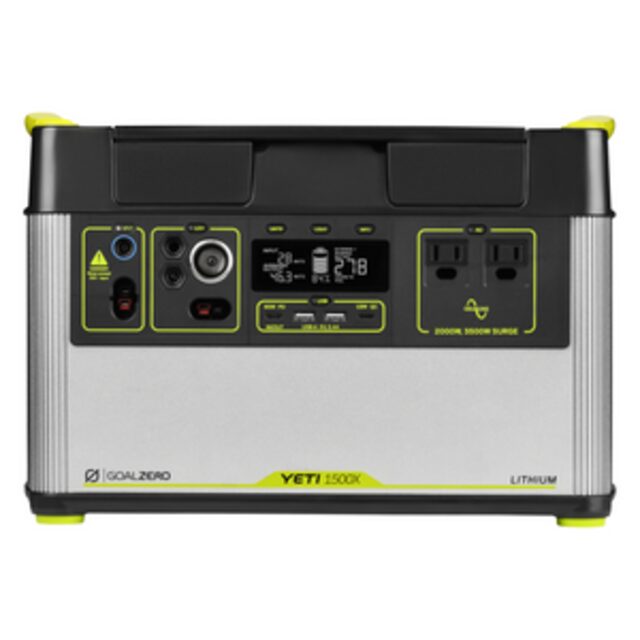
Goal Zero Yeti 1500X
The premium portable power station with the best ecosystem and app in the category. 1,516Wh, 2,000W output, Goal Zero Tank expansion capability. The NMC battery limits cycle life—plan for occasional use, not daily cycling.
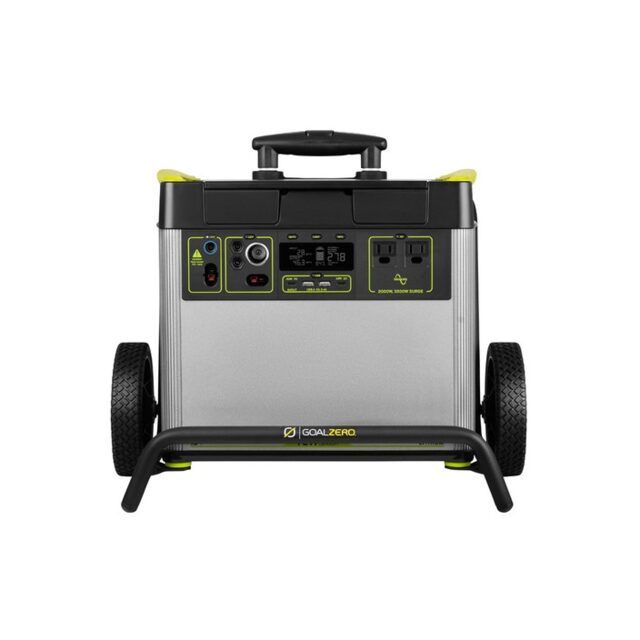
Goal Zero Yeti 3000X
Double the capacity for $1,200 more. If the 1500X is right for you on features, the 3000X is the right size for serious emergency prep or extended use. Same NMC caveat applies.
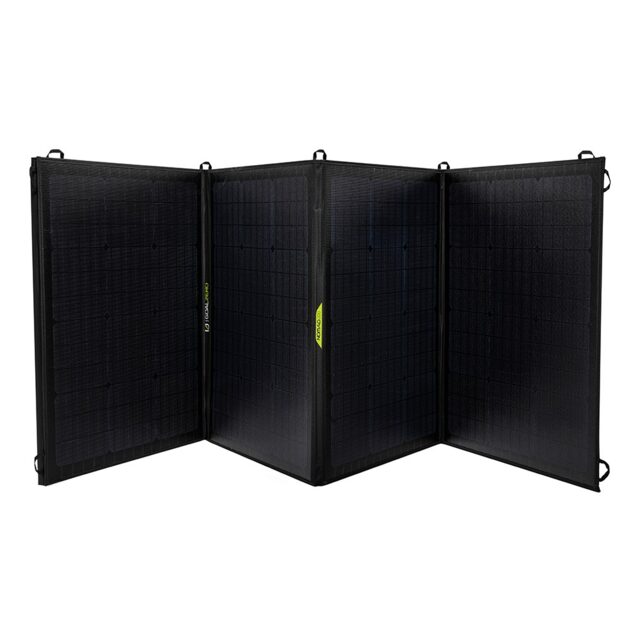
Goal Zero Nomad 200 Solar Panel
Goal Zero's flagship portable panel, matched to Yeti stations via direct connector. The quality is high; the price is premium relative to third-party 200W options like Renogy or EcoFlow panels.
Frequently Asked Questions
How fast does the Yeti 1500X charge from a wall outlet?
Goal Zero estimates a full recharge in 14 hours with the included 120W supply, seven hours with the optional 230W supply, or three hours with the optional 600W supply. Confirm which charger comes with the offer.
Does the open-box Yeti 1500X have a two-year warranty?
The standard product page lists two years. Goal Zero's open-box listing instead specifies six months and final-sale terms with no returns or exchanges.
Does a Yeti Tank add another 1,516Wh lithium battery?
No. Goal Zero lists each Tank V3 as a 1,200Wh lead-acid expansion battery that connects through a compatible Yeti Link module, sold separately.
Does the battery stop working after 500 cycles?
The rating describes capacity retention: 500 full cycles to 80% capacity under Goal Zero's stated test conditions. It is not a specified shutdown point or a guarantee of a particular number of years.