Featured Options Compared in This Guide
Full specs & notes ↓Choose a cleaner for the material, the mess, and the ingredients you need to avoid. A fragrance preference will not tell you whether a spray belongs on wood flooring, and a refill format will not tell you whether it can disinfect. Those are separate purchasing decisions.
Start with the jobs your household actually has: handwashing dishes, wiping counters, removing bathroom buildup, washing clothes, and caring for floors. Keep an existing suitable cleaner where it fits; add a specialty product only for a specific unmet need.
Kitchen: compare dish formulas, then account for the countertop
Free & Clear dish liquids have different preservatives
Seventh Generation says its Free & Clear dish liquid contains neither fragrance nor dyes. ECOS describes its Free & Clear dish formula as scent-free and separately states that it is made without dyes. Those descriptions address scent and color; both manufacturers also disclose preservatives. Seventh Generation dish liquid, ECOS dish soap.
| Hand dish liquid | Listed cleaning agents | Listed preservatives |
|---|---|---|
| Seventh Generation Dish Soap – Free & Clear | Sodium lauryl sulfate, lauramine oxide, decyl glucoside | Benzisothiazolinone, methylisothiazolinone |
| ECOS Dish Soap – Free & Clear | Sodium coco-sulfate, cocamidopropylamine oxide, lauramine oxide, coco betaine | Phenoxyethanol, ethylhexylglycerin |
Ingredient sources: Seventh Generation and ECOS.
If you need to avoid methylisothiazolinone or benzisothiazolinone, the listed Seventh Generation formula does not meet that requirement; neither ingredient appears in the ECOS dish-soap list. If you need to avoid phenoxyethanol, the ECOS formula does not meet that requirement. This comparison helps match an ingredient restriction; it does not establish which product is safer for everyone or better at removing grease.
For handwashing, ECOS directs users to put a small amount, approximately the size of a quarter, on a sponge and use more for greasy dishes. Seventh Generation specifically excludes its hand dish liquid from automatic dishwashers. Choose the product for the wash method before comparing bottle size. ECOS directions, Seventh Generation directions.
For more on this task, see the dish-soap guide.
Stone counters: distinguish residue from surface damage
For natural stone, the Natural Stone Institute recommends a neutral cleaner, stone soap, or mild liquid dishwashing detergent diluted in warm water. Rinse thoroughly and dry with a soft cloth. Too much soap can leave streaks or a film, so adding more cleaner is a poor first response to a streaky counter. Natural Stone Institute care guidance.
Avoid vinegar and lemon cleaners on natural stone. Acid can etch or dull calcareous stone, and the Institute also discourages acidic cleaners on siliceous stone because it may contain acid-sensitive minerals. Abrasive powders can scratch some stones. Sealing improves stain resistance without making the surface stain-proof. Natural Stone Institute.
The practical distinction is between material sitting on the counter and damage to its finish. For acid etching, the Institute recommends contacting a stone dealer or professional restorer about refinishing or repolishing. Repeated scrubbing is not a substitute for that repair. Natural Stone Institute stain and etching guidance.
Bathroom: match scrubbing to the finish
An abrasive powder and a cleaning spray are different tools. Bon Ami’s powder instructions call for wetting an appropriate hard surface, applying the powder, rubbing with a wet sponge or cloth, and rinsing. For fiberglass, imitation marble, plastic, and glossy or polished finishes, the manufacturer specifies testing a hidden spot first, applying the powder to a wet sponge, and rubbing gently with ample water. Bon Ami application directions.
A powder is an option when the fixture’s care instructions permit abrasive cleaning. On natural stone, the Institute’s warning about scratching remains relevant even when a cleanser has broad kitchen-and-bathroom uses. Let the finish determine whether scrubbing is appropriate. Natural Stone Institute.
For stone showers, using a squeegee after each use can reduce soap-scum accumulation. The Institute recommends a non-acidic remover for existing soap scum and warns that mixing ammonia with bleach produces toxic gas. Natural Stone Institute bathroom care.
Recurring mold requires moisture control
EPA recommends repairing leaks and other water problems, washing mold from hard surfaces with detergent and water, and drying the surfaces completely. Moldy porous materials, such as carpet or ceiling tiles, may need removal because growth can extend into spaces that cannot be fully cleaned. Clean and dry affected surfaces before painting or caulking. EPA mold cleanup guidance.
The next step depends on the situation:
- A small area: EPA says householders can usually handle an area under about 10 square feet themselves, subject to its cleanup precautions and exceptions. Read its exposure and protective-equipment guidance before starting.
- More extensive growth or substantial water damage: Consult the remediation guidance linked from EPA’s cleanup page.
- Sewage or other contaminated water: Use a professional experienced in cleaning and repairing affected buildings.
- Suspected mold in the HVAC system: EPA advises against running the system because it could distribute mold through the building; consult its linked duct guidance before taking further action.
- Health concerns: Consult a health professional before cleanup.
These distinctions come from EPA’s household mold guidance. For bathroom mold that returns, EPA recommends improving ventilation and cleaning more often. A different cleaner alone does not resolve an ongoing moisture source.
See also the bathroom-cleaning guide.
Laundry: the dish-soap comparison does not carry over
Free & Clear laundry liquids can have different enzymes and preservatives from the same brands’ dish soaps. Compare the laundry formula independently.
| Laundry liquid | Enzymes in the ingredient list | Listed preservatives | Manufacturer’s dose |
|---|---|---|---|
| Seventh Generation Liquid Laundry Detergent – Free & Clear | Protease, amylase, and mannanase blends | Benzisothiazolinone, methylisothiazolinone | 44 mL for medium loads; 65 mL for larger or heavily soiled loads |
| ECOS Hypoallergenic Laundry Detergent – Free & Clear | None listed | Phenoxyethanol, methylisothiazolinone | One ounce for HE loads; two ounces for standard loads |
Sources: Seventh Generation laundry ingredients and directions, ECOS laundry ingredients and directions.
Both laundry formulas list methylisothiazolinone. Someone choosing ECOS dish soap to avoid that ingredient would need a different laundry choice from the two shown here. If your preference is a detergent without listed enzymes, the ECOS formula shown fits that criterion. Its page also identifies a separate Free & Clear detergent with enzymes, so the full product name matters. The ingredient lists alone do not establish a stain-removal winner. ECOS, Seventh Generation.
Both manufacturers instruct users to follow garment-care directions. Measure for the product, washer, and load rather than carrying over another detergent’s cap measurement. ECOS also describes applying a few drops directly to a difficult stain, rubbing them in, and putting the garment straight into the machine. Use that method only where the garment’s care requirements permit it. ECOS laundry directions, Seventh Generation laundry directions.
For cost comparisons, divide bottle volume by the dose you will actually use, then divide purchase cost by that number of loads. A larger bottle or smaller stated dose alone does not establish better value or equal cleaning performance.
Continue with the laundry-cleaning guide or fragrance-free detergent guide.
Wood floors: choose for the finish
The National Wood Flooring Association recommends sweeping, dust mopping, or vacuuming with the bare-floor setting. Wipe up spills promptly with a dry or slightly damp cloth. It advises against wet and steam mops because repeated use can damage the wood and finish, and recommends a cleaner made for the particular finish. Your flooring professional can recommend one. NWFA maintenance guidance.
This is a useful limit on buying one spray for everything. Blueland says its Multi-Surface Cleaner is not intended for general floor cleaning, although it permits spot cleaning on sealed floors. That spot-cleaning allowance does not make it a routine whole-floor cleaner. Blueland spray FAQ.
If the floor remains dull after appropriate cleaning, stronger detergent may not address the problem. NWFA identifies recoating—applying another coat of finish—as a way to renew wood floors over time. Discuss the finish with a flooring professional before treating persistent dullness as dirt. NWFA.
See the floor-cleaning guide.
Refills: choose a preparation routine and a suitable formula
Branch Basics uses a liquid concentrate with task-specific dilutions. Blueland uses separate tablets for its Multi-Surface, Bathroom, and Glass + Mirror sprays. The practical choice is whether you prefer measuring liquid or keeping a dedicated tablet refill for each task.
| Task or decision | Branch Basics The Concentrate | Blueland spray tablets |
|---|---|---|
| Preparing a bottle | Add water and concentrate using the task’s fill lines or dilution ratio | Add a tablet to warm water; let it dissolve completely before fitting the nozzle |
| All-purpose cleaning | One part concentrate with 11 parts water | Multi-Surface tablet |
| Bathroom cleaning | One part concentrate with five parts water | Bathroom tablet |
| Glass cleaning | One drop of concentrate in 24 ounces of distilled water | Glass + Mirror tablet |
| Using your own bottle | Measure according to the intended task and bottle size | Instructions specify 24 ounces of warm water per tablet |
Preparation sources: Branch Basics dilution directions, Blueland spray instructions.
Fragrance availability can settle the decision before refill format does. Blueland lists its Multi-Surface and Bathroom sprays as scented-only options and its Glass + Mirror cleaner as Free & Clear. If avoiding added scent is a requirement, those two scented sprays do not fit it. The glass cleaner’s fragrance option does not establish that it can take over the other sprays’ jobs. Blueland fragrance options, Blueland intended surfaces.
Compare refill costs for the same task and finished volume. Branch Basics specifies two ounces of concentrate for a 24-ounce all-purpose bottle and four ounces for a bathroom bottle of that size. The bathroom refill therefore consumes twice as much concentrate. Include bottle and delivery costs and use the purchase terms you intend to keep, whether one-time or subscription. Branch Basics bottle-size directions.
Finally, Branch Basics states that The Concentrate is not a disinfectant, sanitizer, or antibacterial soap. Its cleaning dilutions should not be treated as disinfection instructions. Branch Basics FAQ.
For a closer comparison of the refill routines, see Branch Basics vs. Blueland.
Put the next purchase to a specific job
A useful shopping list might be a hand dish liquid that meets your ingredient restrictions, a laundry detergent with a dose suited to your washer, and a cleaner recommended for your wood finish. Add an abrasive only where the surface permits it. Choose a refill system after deciding which tasks and fragrance options it needs to cover.
The aim is a workable routine: appropriate cleaning methods, measured amounts, and products that each have a clear purpose.
Sources
- Natural Stone Institute: Care and cleaning of natural stone
- Seventh Generation: Dish Soap – Free & Clear
- ECOS: Dish Soap – Free & Clear
- Bon Ami: How to use Powder Cleanser
- EPA: Mold Cleanup in Your Home
- Seventh Generation: Liquid Laundry Detergent – Free & Clear
- ECOS: Hypoallergenic Laundry Detergent – Free & Clear
- National Wood Flooring Association: Maintenance
- Branch Basics: The Concentrate
- Blueland: Spray Cleaners FAQ
- Blueland: Unscented options
Products Compared in This Guide
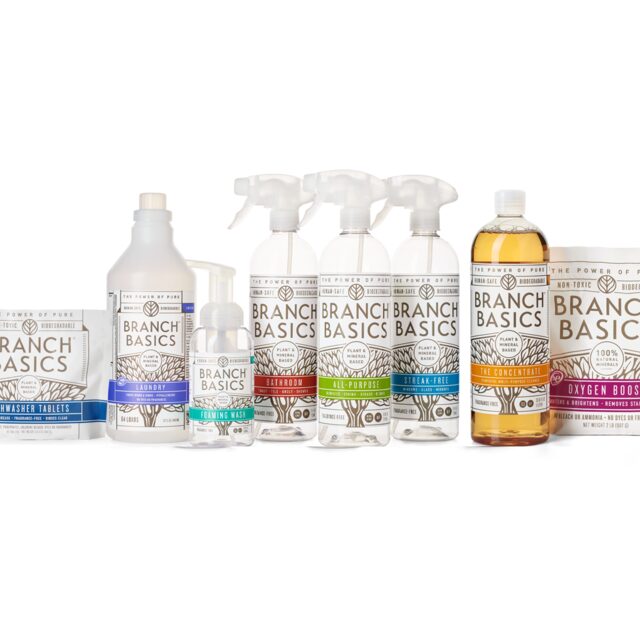
Branch Basics Starter Kit
One concentrate, 5 dilutions, replaces 6 products. The all-purpose formula is legitimately strong on grease. Math works out to cheaper per use than most conventional cleaners after month 3.
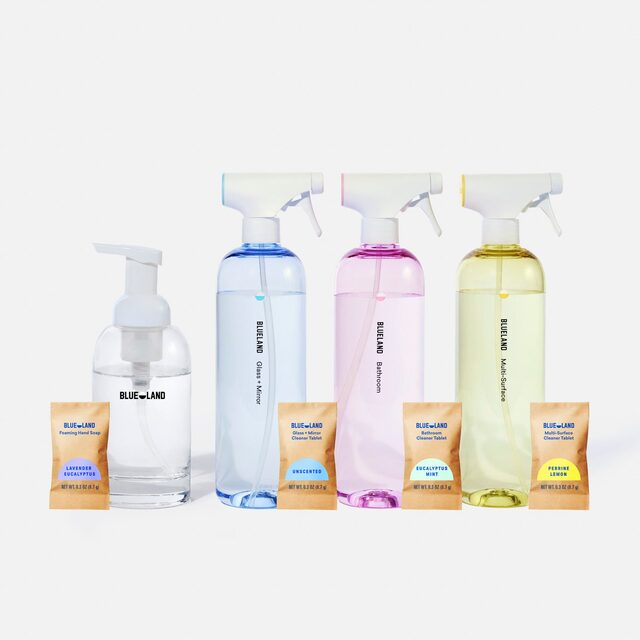
Blueland Clean Essentials Kit
Tablet-and-bottle system. Dissolve tablets in water in reusable bottles. Multi-surface, glass, and bathroom formulas covered. Good for households that want the simplest possible swap.
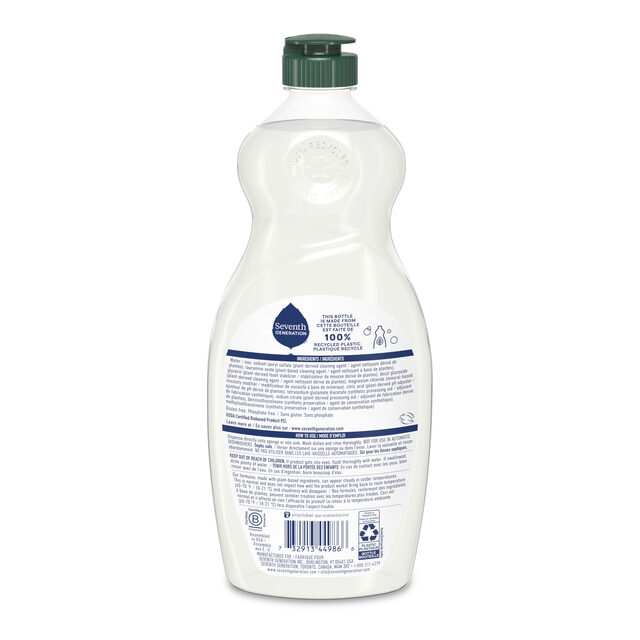
Seventh Generation Free & Clear Dish Liquid
No dyes, no fragrance, EWG A-rated. Cuts grease adequately. Best price-to-performance ratio for fragrance-free dish soap without going concentrate.
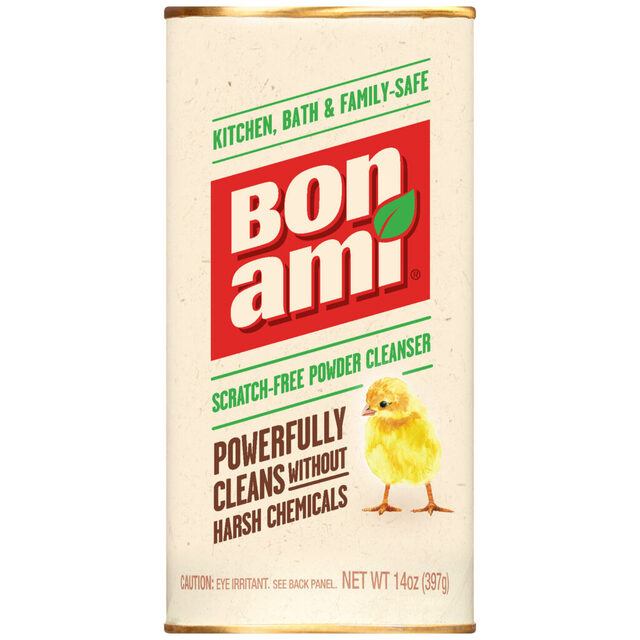
Bon Ami Powder Cleanser
No bleach, no fragrance, no phosphates. Calcite abrasive, not silica. Works on sinks, tubs, and tile without scratching. The low-tech best choice for bathroom scrubbing.
Frequently Asked Questions
Does Free & Clear mean preservative-free?
No. Seventh Generation Free & Clear dish liquid lists benzisothiazolinone and methylisothiazolinone. ECOS Free & Clear dish soap lists phenoxyethanol and ethylhexylglycerin. Match the specific formula to the ingredients you need to avoid.
Can I use vinegar to clean natural stone?
The Natural Stone Institute advises against acidic cleaners on natural stone. It recommends a neutral cleaner, stone soap, or mild liquid dishwashing detergent with warm water, followed by thorough rinsing and drying.
Can Branch Basics replace a disinfectant?
Branch Basics states that The Concentrate is not a disinfectant, sanitizer, or antibacterial soap. Its cleaning directions do not establish a disinfection method.
Are cleaning concentrates always cheaper?
Compare costs for the same task and finished volume, including bottles and delivery. Branch Basics' bathroom dilution uses twice as much concentrate as its all-purpose dilution for an equal-volume refill.