DIY Cleaning Recipes: Useful Soap Dilutions and Mixing Mistakes
Practical castile soap recipes for surfaces and handwashing dishes, plus batch sizes, hard-water advice, stone care, and mixing precautions.
Featured Options Compared in This Guide
Full specs & notes ↓Start with two ingredients: the specified soap and water. For everyday surface cleaning and dishes washed by hand, a few manufacturer-published dilutions offer a practical starting point. Choose the recipe by the job and make only as much as you expect to use soon.
These recipes use Dr. Bronner’s Pure-Castile Liquid Soap. The amounts are specific to that product, rather than interchangeable directions for other soaps or concentrates. Use them for cleaning; this guide does not present them as sanitizing or disinfecting treatments.
One surface dilution, two batch sizes
Dr. Bronner’s gives the same proportions for its all-purpose spray and stovetop cleaner when measured in US cups: 1/4 cup soap with 4 cups water. Its stovetop method is to spray, scrub, and finish with a damp cloth. The company describes its dilutions as starting points, with adjustments potentially needed for dirt or hard water. Dr. Bronner’s dilution guide
| Batch | Soap | Water | When to choose it |
|---|---|---|---|
| Manufacturer’s full batch | 1/4 cup | 4 US cups | When you expect to use the mixture regularly |
| Half batch, using the same ratio | 2 tablespoons | 2 US cups | When a full batch would sit unused |
For a stovetop, follow the appliance’s cleaning instructions before using the dilution. For painted cabinets, coated surfaces, or unfamiliar finishes, the practical recommendation is to consult the surface maker’s care directions and try an inconspicuous area first. A general soap recipe cannot settle every finish-specific question.
Natural stone needs a separate choice, described below; do not treat the all-purpose recipe as a universal countertop formula.
Handwashing dishes: bottle, sink, or one pot
A premixed bottle is useful if you prefer applying soap to a brush. Washing a full sink or a single pot does not require keeping diluted soap between uses.
| Method | Manufacturer’s amount | Practical use |
|---|---|---|
| Prediluted bottle | 1 part soap with 10 parts water | Apply to a scrub brush and scrub dishes |
| Large sink of water | 1–2 tablespoons soap | Mix for the current washing session |
| One pot | A small squirt, with more if needed | Apply during washing without preparing a stored batch |
For a small bottle, 1 tablespoon soap plus 10 tablespoons water preserves the published ratio. Here, “10 parts water” means water added to the soap, not the total finished volume. Rinse dishes after washing.
In hard water, Dr. Bronner’s recommends drying dishes by hand to avoid water spots. If that extra step does not suit your routine, consider a different handwashing product; the spotting advice alone does not establish that another detergent will perform better. Dr. Bronner’s handwashing directions
Make batches you can use promptly
Dr. Bronner’s explains that adding water also dilutes the preservative, shortening shelf life. It recommends using a prediluted mixture within a couple of weeks or making smaller batches. Treat that as guidance for this soap, not a storage rule for all homemade cleaners. Manufacturer storage guidance
A useful habit is to label each batch with the soap, dilution, and mixing date. If you rarely use a surface spray, choose the half batch; for occasional dishwashing, use the sink or single-pot method.
As a precaution, keep these recipes free of added essential oils. Tea tree oil is optional in the manufacturer’s all-purpose recipe, so it is unnecessary for reproducing the soap-and-water dilution. Do not use that optional addition as a reason to extend storage or treat the mixture as a disinfectant.
Store cleaners high up, out of children’s reach and sight. Poison Control also recommends ventilation, gloves, following product instructions, and keeping spray nozzles pointed away from your face. Poison Control’s cleaning-spray precautions
Vinegar and stone require different decisions
Vinegar’s familiarity in the kitchen does not make every cleaning use appropriate. Poison Control reports that US white distilled vinegar typically contains 4–7% acetic acid and explains that both concentration and dose affect toxicity. Its article also describes injuries involving vinegar at relatively low concentrations, including prolonged skin exposure. Never mix vinegar with chlorine bleach: the combination releases irritating chlorine gas. Poison Control on vinegar
For natural stone, the Natural Stone Institute recommends a neutral cleaner, stone soap, or mild liquid dishwashing detergent with warm water. Follow the chosen product’s amount, rinse thoroughly, and dry with a soft cloth. Excess cleaner can leave film or streaks, so adding more soap is not automatically a useful response to a dull-looking surface. Natural Stone Institute care guidance
Vinegar and other acidic cleaners can dull or etch calcareous stone. The institute also advises against acidic cleaners on siliceous stone because it may contain acid-sensitive minerals. Abrasive cleaning powders can scratch some stones. For stone in wet areas, using a squeegee after each use can help minimize soap scum. Natural Stone Institute cleaning precautions
For scale on a faucet or shower door, the editorial recommendation is to use the fixture or glass manufacturer’s approved cleaning method, including any directions for surrounding materials. Avoid choosing an improvised soak duration without that guidance. Mineral-deposit removers themselves may contain corrosive ingredients, according to Poison Control.
Keep mixing out of the routine
Poison Control advises against mixing cleaning products. Apply that rule here by keeping the soap dilutions to soap and water, without adding vinegar, peroxide, bleach, or another cleaner. Do not improvise a vinegar-and-peroxide disinfection routine. Cleaning-spray precautions
Leave baking-soda-and-vinegar combinations out of this small recipe set as well. Choose the documented method for the actual job rather than adding another mixture.
For automatic dishwashers, washing machines, and specialty floor finishes, consult the applicable manufacturer’s cleaning instructions before selecting a product or dilution. The surface and handwashing recipes above are not appliance recipes. If your task calls for disinfection, choose a product with directions for that task and follow them instead of adapting these soap mixtures.
For help organizing products around separate household jobs, see the household cleaning guide.
Sources
Products Compared in This Guide
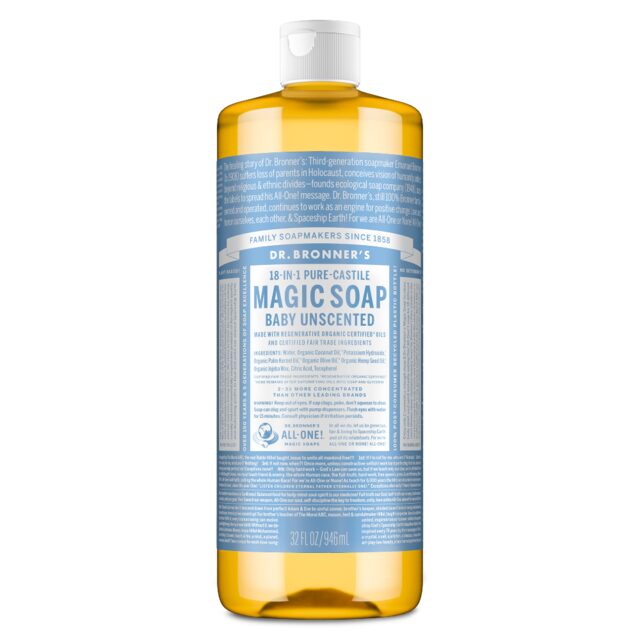
Dr. Bronner's Pure Castile Soap (Unscented)
The base ingredient for many DIY cleaning formulas. Plant-based, EWG-A, highly concentrated. 4 oz of castile soap + water makes a full bottle of general-purpose cleaner.
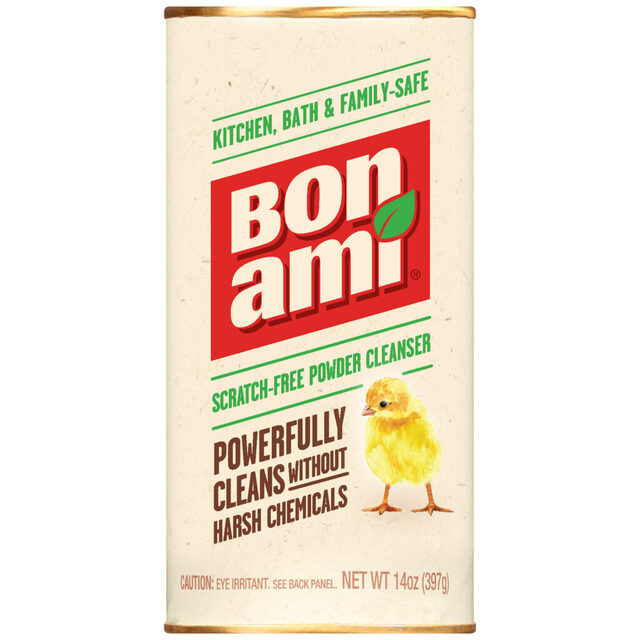
Bon Ami Powder Cleanser
The non-DIY alternative to baking soda paste for scrubbing — EWG-A, no bleach, genuinely effective on sinks and tubs. Sometimes the ready-made formula beats the DIY version.
Frequently Asked Questions
How long should I keep diluted castile soap?
Dr. Bronner's recommends using its prediluted soap within a couple of weeks or making smaller batches. Dilution also dilutes the preservative and reduces shelf life. This guidance is specific to its soap.
Do these recipes need essential oils?
No. The manufacturer lists tea tree oil as optional for its all-purpose spray. As a precaution, leave it out of these simple soap-and-water recipes; do not assign the mixture disinfectant performance or a longer storage period because oil was added.
What if handwashed dishes get water spots?
Dr. Bronner's recommends drying dishes by hand to avoid water spots in hard water. Its handwashing directions also offer a sink dilution or a small squirt for one pot, so a stored bottle is optional.