Bathroom Cleaning: Soap Scum, Scale, Grout, and Surface Care
Compare Bon Ami powder and Blueland Bathroom spray, with practical guidance for stone, soap scum, hard-water marks, grout, and mold.
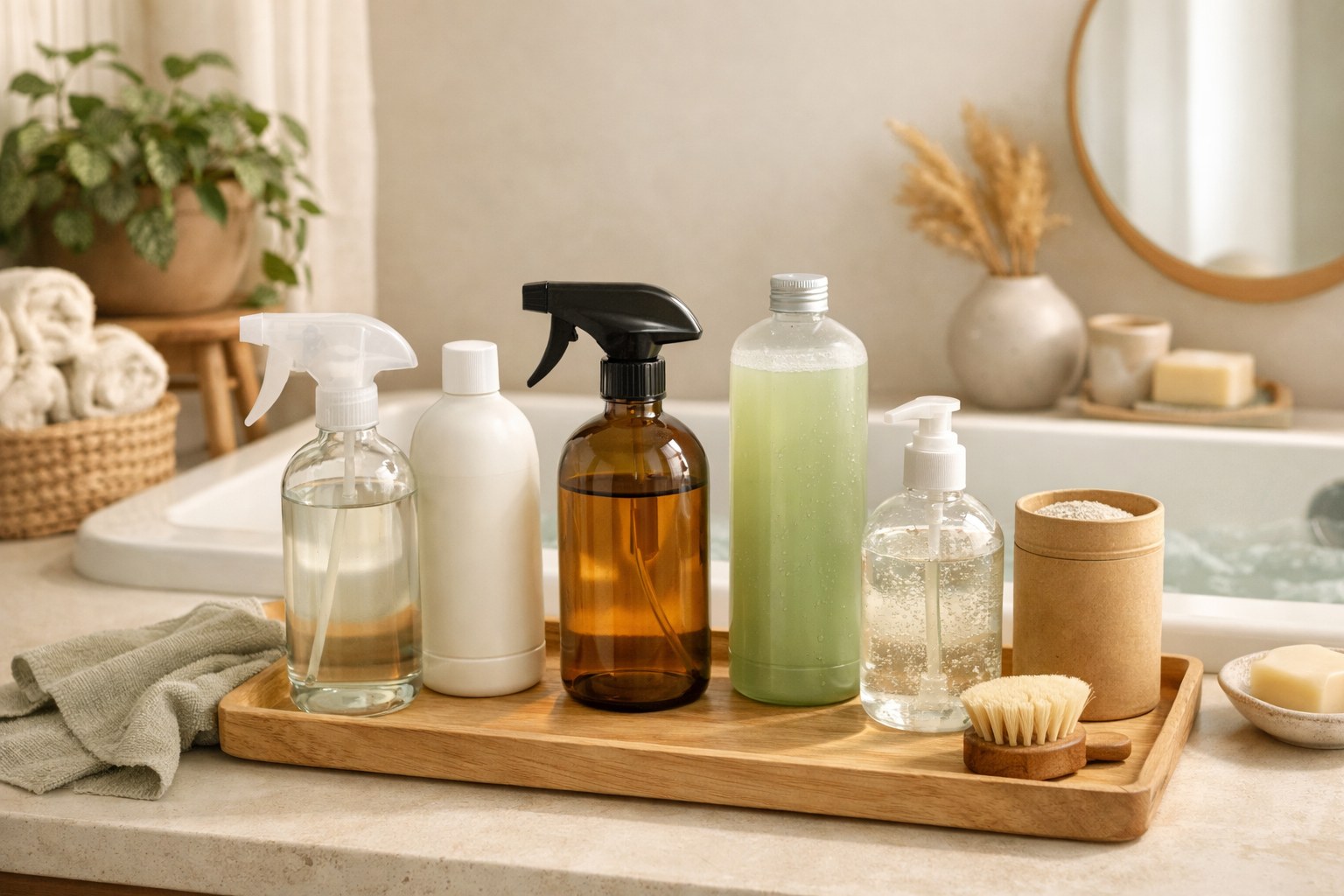
Featured Options Compared in This Guide
Full specs & notes ↓Choose a bathroom cleaner for both the problem and the surface beneath it. A powder for rubbing away stains, a tablet-made spray, and a stone-compatible soap-scum remover serve different purposes. Recurring mold also needs moisture control—not just another cleaning product.
Before starting, identify the tub, tile, countertop, and fixture materials separately. A recommendation for stone does not automatically apply to the faucet beside it.
Bon Ami vs. Blueland Bathroom: choose the cleaning method
| Decision | Bon Ami Powder Cleanser | Blueland Bathroom spray |
|---|---|---|
| Format | Abrasive powder used with water and a sponge or cloth | Tablet dissolved in water to make a spray |
| Preparation and use | Wet the surface, add powder, rub with a wet sponge or cloth, then rinse | Dissolve one tablet completely in 24 ounces of warm water before attaching the nozzle |
| Manufacturer-listed bathroom surfaces | Hard surfaces including sinks, tubs, and tile; separate precautions apply to delicate surfaces | Tubs, sealed tile, sealed stone, and shower surfaces |
| Practical fit | A task where rubbing and rinsing are appropriate | A fixed-dose spray routine, provided a scented cleaner suits you |
Sources: Bon Ami use instructions, Blueland spray instructions, and Blueland fragrance options.
When the powder makes sense
Bon Ami lists limestone, feldspar, sodium carbonate, sodium bicarbonate, and a surfactant. It is therefore more than baking soda alone. The manufacturer describes limestone and feldspar as its abrasive ingredients and lists bathroom stain removal and white-grout cleaning among its uses. Those are cleaning uses; they should not be read as proof of disinfection. Bon Ami product information.
For fiberglass, polished or glossy surfaces, imitation marble, and plastic, Bon Ami gives a more cautious method: test a hidden spot, put the powder on a wet sponge, use ample water, rub gently, and rinse. That is not blanket permission to scrub any bathroom finish. If your fixture’s care instructions exclude abrasive powders, choose a different method. Bon Ami use instructions.
When the tablet spray makes sense
Blueland offers a premeasured way to prepare a bathroom spray. Its directions also allow your own bottle with 24 ounces of warm water, so the branded bottle is not required by those instructions. Let the tablet dissolve fully before fitting the spray nozzle. Blueland spray instructions.
The important limitation for fragrance avoidance is straightforward: Blueland lists its Bathroom spray as available only in scented versions. It is not the choice for a routine intended to exclude added fragrance. Blueland fragrance options.
For another related comparison, see Branch Basics vs. Blueland.
Soap scum on stone: take the non-acidic route
For routine natural-stone cleaning, the Natural Stone Institute recommends a neutral cleaner, stone soap, or mild liquid dish detergent with warm water. Use a soft cloth, rinse thoroughly, and dry. On stone, excessive cleaner concentration can leave film and streaks; using more is not necessarily an improvement. Natural Stone Institute care guide.
For soap scum specifically, the Institute recommends a non-acidic soap-scum remover and suggests squeegeeing wet areas after use to reduce accumulation. It also describes ammonia cleaning but warns that frequent or excessive use can dull some stones. Never mix ammonia and bleach; the Institute warns that the combination produces toxic gas. Stone bathroom care and cleaning warnings.
Avoid vinegar, lemon, and other acidic cleaners on calcium-carbonate-based stone because they can dull or etch it. The Institute also advises against acidic cleaners on siliceous stone, which may contain acid-sensitive minerals. Abrasive powders and creams can scratch certain stones. Sealing increases stain resistance; it does not make stone stain-proof. Natural Stone Institute care guide.
For a stone shower, this makes a non-acidic cleaning approach a more useful starting point than assuming either a kitchen acid recipe or an abrasive powder is suitable.
Hard-water marks: keep the method specific to the material
For surface hard-water spots and rings on natural stone, the Natural Stone Institute lists buffing with dry 0000 steel wool. Treat that as stone-specific guidance, not a method to transfer to plated faucets, acrylic tubs, or coated shower glass. Ask your stone supplier whether it fits your particular stone and finish. Natural Stone Institute: water spots and rings.
White powder on a new stone installation may instead be efflorescence: mineral salts carried from below the surface and left behind when water evaporates. The Institute recommends dust-mopping or vacuuming that powder on new installations rather than repeatedly wetting it. If it persists, contact the installer about the moisture source. Natural Stone Institute: efflorescence.
For scale on a faucet or another non-stone fixture, use that fixture’s maintenance instructions to select the treatment. Do not extend the stone methods above to an unidentified finish, or assume that a cleaner suitable for a faucet is also suitable for adjacent stone.
Grout and mold: distinguish cleaning from moisture repair
Bon Ami’s white-grout use is a cleaning recommendation, not a mold-remediation plan. If mold is present, EPA recommends scrubbing hard surfaces with detergent and water, then drying completely. Fix plumbing leaks and other water problems rather than relying on surface cleaning alone. Bon Ami listed uses and EPA mold cleanup guidance.
For mold that returns in a shower, EPA advises increasing ventilation—such as running a fan or opening a window—and cleaning more frequently. Do not paint or caulk over moldy surfaces. Absorbent materials may need removal because mold can be difficult or impossible to clean out completely. Staining may remain even after cleanup, so appearance alone is not a reliable measure of the work needed. EPA mold cleanup guidance.
EPA says occupants can handle many mold problems smaller than about 10 square feet, but that is not a universal do-it-yourself threshold. Larger areas or substantial water damage need additional guidance. Sewage or other contaminated-water damage calls for an experienced professional; health concerns should be discussed with a health professional before cleanup. If you suspect mold contamination in the HVAC system, EPA says not to run it because it could spread mold. EPA: deciding who should clean up mold.
Sources
Products Compared in This Guide
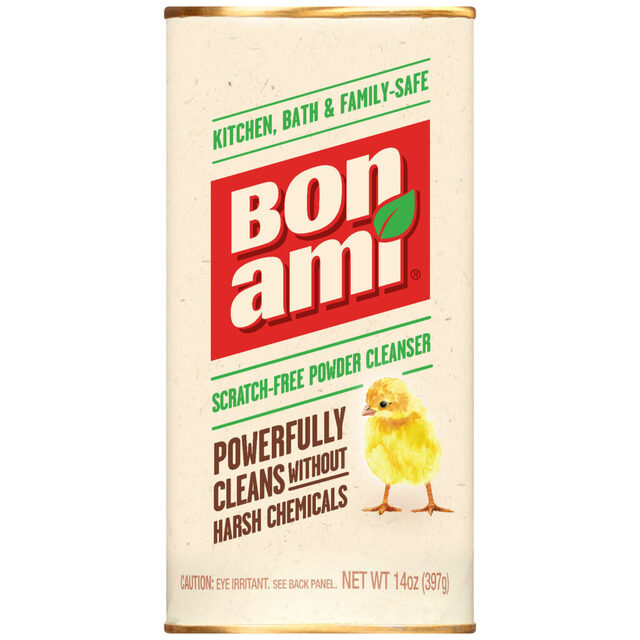
Bon Ami Powder Cleanser
Calcite abrasive, no bleach, no fragrance, no phosphates. EWG-A. Works on sinks, tubs, tile, and toilet bowls without scratching. The go-to powder for bathroom scrubbing.
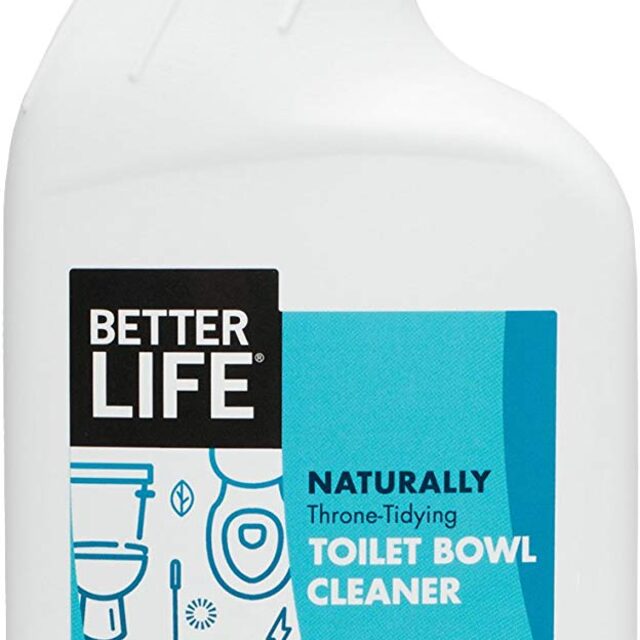
Better Life Natural Toilet Bowl Cleaner
EWG-A, plant-based acids, no bleach. Tea tree oil and essential botanical acids handle routine toilet rings. Squeeze under rim, let dwell 5 minutes, brush. Effective without fumes.
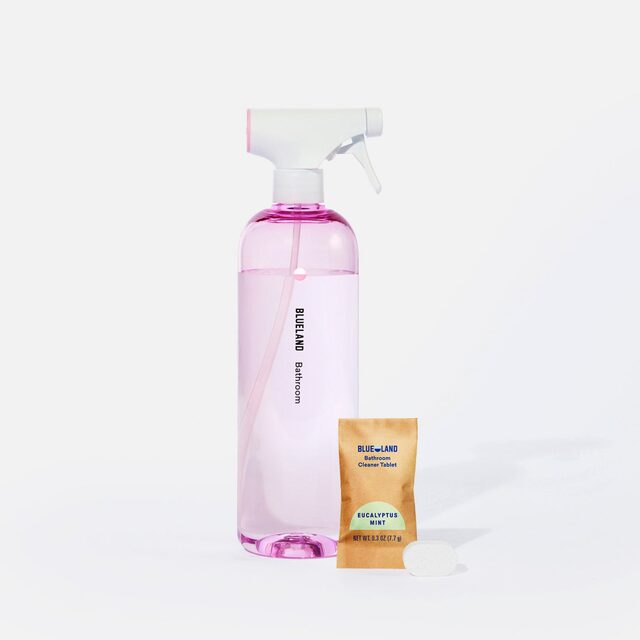
Blueland Bathroom Cleaner Tablets
EWG-A tablet-and-bottle system. Dissolve tablet in reusable bottle, spray tile and surfaces. Good for routine maintenance. Citric acid component helps with light hard water deposits.
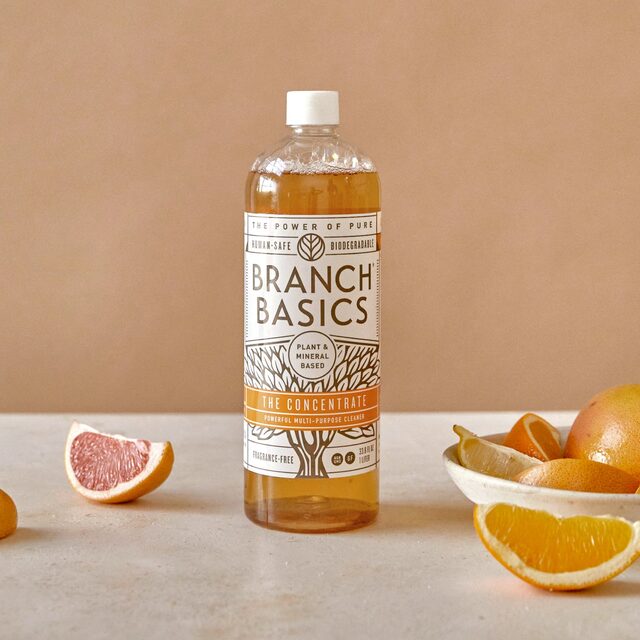
Branch Basics Bathroom Concentrate
The bathroom dilution ratio (more concentrated than all-purpose) handles soap scum and surface cleaning without synthetic fragrance or harsh solvents. Part of the Branch Basics concentrate system.
Frequently Asked Questions
Can I use vinegar on a stone shower?
Avoid vinegar for natural-stone cleaning. The Natural Stone Institute warns that acids can etch calcium-carbonate-based stone and also advises against acidic cleaners on siliceous stone, which may contain acid-sensitive minerals. It recommends a non-acidic remover for stone soap scum.
What should I do about bathroom mold that keeps returning?
EPA recommends scrubbing mold from hard surfaces with detergent and water, then drying thoroughly. Repair leaks and increase bathroom ventilation. Larger affected areas, substantial water damage, contaminated water, or health concerns require additional guidance or professional help.