Plant-Based Dish Soap: Fragrance-Free Liquids and Castile Compared
Compare Seventh Generation, ECOS, and Dr. Bronner's for hand dishwashing by disclosed ingredients, dispensing directions, dilution storage, and water spots.
Featured Options Compared in This Guide
Full specs & notes ↓Seventh Generation Free & Clear and ECOS Free & Clear suit a direct-from-the-bottle dishwashing routine. Dr. Bronner’s Pure-Castile liquid soap offers a dilution-based option if you already use castile soap at home. The useful differences are their disclosed ingredients, application directions, and the preparation involved—not a demonstrated winner for grease removal.
Compare the formulas and dispensing methods
| Option | Disclosed ingredients or formulation | How it fits a dishwashing routine |
|---|---|---|
| Seventh Generation Dish Soap — Free & Clear | No fragrances or dyes; sodium lauryl sulfate, lauramine oxide, and decyl glucoside cleaning agents; benzisothiazolinone and methylisothiazolinone preservatives | Dispenses by lightly squeezing the bottle; no premixing step appears in its directions |
| ECOS Dish Soap — Free & Clear | Scent-free; sodium coco-sulfate, cocamidopropylamine oxide, lauramine oxide, and coco betaine surfactants; phenoxyethanol and ethylhexylglycerin preservatives | Applied directly to a sponge, with an initial amount and an adjustment for heavy grease |
| Dr. Bronner’s Pure-Castile liquid soap, available unscented | The brand describes its castile soap as containing no synthetic detergents; its dishwashing guide provides dilution directions | Offers a prediluted brush application or soap added directly to a sink of water |
Sources: Seventh Generation ingredients and directions, ECOS ingredients and directions, and Dr. Bronner’s dilution guide.
The two dedicated liquids have different preservative systems. If you need to exclude a particular ingredient, that distinction gives you a concrete way to narrow the choice. It does not establish that either formula is universally gentler.
“Plant-based” also does not mean preservative-free: Seventh Generation explicitly identifies its two preservatives as synthetic. ECOS lists preservatives alongside its plant-derived surfactants. Neither ingredient list alone establishes faster cleaning or fewer rinses. Seventh Generation disclosure, ECOS disclosure.
Match the dose to the application
For a sponge routine, ECOS gives the clearest initial dose: put a quarter-sized drop on the sponge and increase the amount for heavy grease. Seventh Generation directs a light squeeze of its bottle without specifying a measured dishwashing dose. It explicitly says this liquid is not for automatic dishwashers. ECOS directions, Seventh Generation directions.
For Dr. Bronner’s liquid castile soap, the manufacturer offers these starting points, not exact requirements:
- Brush application: combine one part soap with ten parts water, then squirt the mixture onto a scrub brush.
- Sink washing: add 1–2 tablespoons of soap to a large sink of water.
- One pot: use a small squirt, adding more if needed.
Predilution reduces shelf life. Beside these directions, the manufacturer advises using a prepared mixture within a couple of weeks or making smaller batches. If you wash dishes only occasionally, adding soap to the sink when needed avoids keeping a separate bottle of diluted solution. The guide allows adjustment for dirtier items or harder water. Dr. Bronner’s dilution and storage guidance.
Hard water: account for hand drying
Dr. Bronner’s dishwashing directions recommend drying dishes by hand to avoid water spots in hard-water conditions. If you usually leave dishes on a rack, consider whether you want to add that step when choosing castile soap. Dr. Bronner’s dishwashing guide.
ECOS identifies tetrasodium glutamate diacetate as a water-softening ingredient. That disclosure does not establish spot-free dishes or a hard-water performance advantage over the other options. Choose based on the documented formula and routine rather than treating one ingredient as a comparative test result. ECOS ingredient list.
Which option fits your kitchen?
Choose between Seventh Generation and ECOS if you want to dispense dish liquid without preparing a dilution. Their preservative differences are useful when you have a specific ingredient exclusion; ECOS also provides a more explicit sponge-dosing instruction.
Consider Dr. Bronner’s if you already keep its liquid castile soap and are comfortable measuring it. Decide between a small prepared batch and sink dilution according to how often you wash, and account for the manufacturer’s hand-drying advice in hard water.
For a cost comparison, track how much concentrate or bottled liquid you actually use over a typical week. A larger volume of diluted solution is not, by itself, evidence of more washes or better value.
For more help interpreting ingredient disclosures, see how to read cleaning labels.
Where to browse
Prices and availability change. These search listings are a place to check the current product.
Sources
Products Compared in This Guide
Plant-based dish soap
Compare current manufacturer specifications, materials, and package options for Plant-based dish soap.
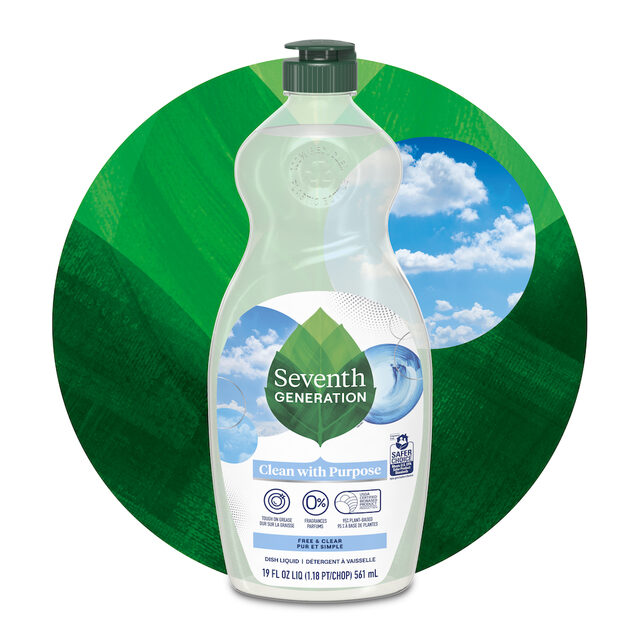
Seventh Generation Free & Clear Dish Liquid
EWG-A, no fragrance, no dyes. Plant-based surfactants rinse completely clean. The benchmark for fragrance-free dish soap — adequate grease performance, excellent rinse-clean behavior.
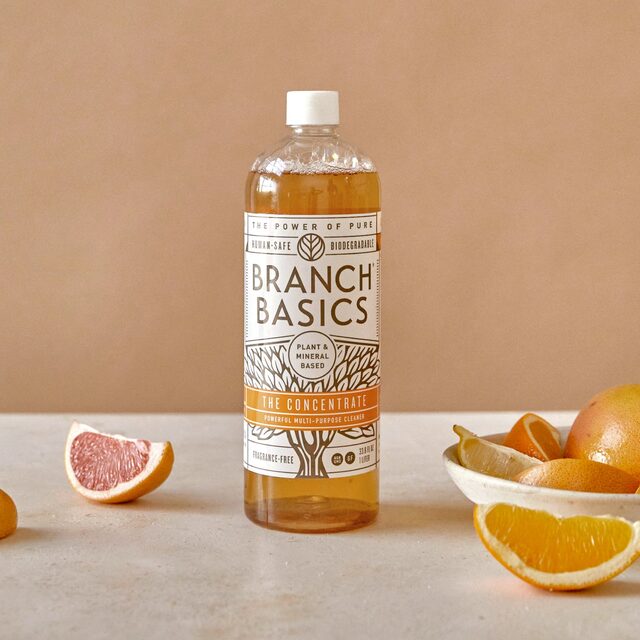
Branch Basics Dish Soap (from concentrate)
The dish dilution ratio of Branch Basics concentrate is the strongest grease-cutter in the non-toxic category. No residue, no fragrance. Part of the Branch Basics system.
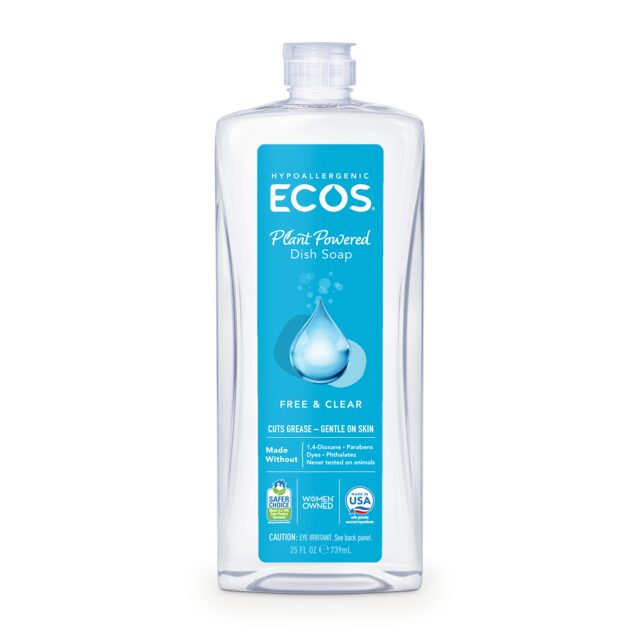
ECOS Dish Soap (Fragrance-Free)
EWG-A, plant-based, fragrance-free variant available. Good everyday performer, rinses clean. The free & clear version has no essential oils — the right choice for fragrance-sensitive households.
Frequently Asked Questions
Can I use Seventh Generation Free & Clear hand dish soap in a dishwasher?
No. Seventh Generation explicitly excludes automatic dishwasher use for this hand dish liquid.
Does plant-based mean preservative-free?
No. Seventh Generation lists plant-derived cleaning agents alongside benzisothiazolinone and methylisothiazolinone. ECOS lists phenoxyethanol and ethylhexylglycerin as preservatives.
How long should I keep prediluted Dr. Bronner's dish soap?
The manufacturer's dilution guide recommends using the mixture within a couple of weeks or preparing smaller batches because predilution reduces shelf life. Its dilution amounts are starting points, not exact requirements.