Cleaning Around Children and Pets: Washing, Ingredients, and Storage
Choose cleaning methods for feeding items, washable bedding, and shared surfaces, with guidance on fragrance, spray exposure, dosing, and storage.
Featured Options Compared in This Guide
Full specs & notes ↓Choose the cleaning method by the item and the task. Feeding items, washable blankets, and shared floors call for different decisions. A preference for fragrance-free products can narrow a purchase, but it does not establish suitability for a particular surface.
Feeding items: hand washing or dishwasher?
For a removable high-chair tray, child’s cup, or pet bowl, start with the item’s care instructions. Establish whether it permits hand washing, machine washing, or both before choosing a detergent.
Seventh Generation’s Dish Soap – Free & Clear is a dishwashing liquid that the manufacturer explicitly says must not go in an automatic dishwasher. The company also states that its dishwashing products can clean baby bottles. That is a cleaning claim; it does not supply a bottle-sanitizing procedure. Seventh Generation ingredients and directions
For a high-chair tray, use these two questions to make the choice:
- How does the tray manufacturer instruct you to wash it? Check the removable tray separately from the chair, straps, and cushions.
- Does the cleaner provide directions for the intended use? If food-contact use or rinsing instructions are unclear, ask the manufacturer before applying it to the eating surface.
Do not infer that a general counter spray belongs on a feeding tray just because both surfaces are hard. Poison Control advises reading cleaner labels, following use instructions, and checking warnings. Poison Control
Washable bedding: match the dose to the machine
For a child’s blanket or removable pet-bed cover, check the textile’s care instructions before selecting the cycle. Treat the cover and filling as separate care decisions: look for instructions for each before putting either into the washer.
ECOS Hypoallergenic Laundry Detergent – Free & Clear has no added dyes or fragrances. Its directions specify one ounce for a high-efficiency load and two ounces for a standard load, alongside following garment care instructions. Choose the stated dose for your machine type instead of using the same amount automatically. For a difficult stain, ECOS instructs users to apply a few drops, rub them into the stain, and put the item directly into the washing machine. ECOS ingredients and dosing
The standard liquid’s published ingredient list contains no enzymes. ECOS separately lists a product named Hypoallergenic Laundry Detergent with Enzymes – Free & Clear. If you are choosing by ingredients, match the full name rather than relying on “Free & Clear” alone. ECOS product information
Fragrance-free and preservative-free are different choices
These two liquids serve different purposes. Their shared lack of added fragrance does not make them interchangeable.
| Product | Cleaning task | Preservatives on the published ingredient list |
|---|---|---|
| Seventh Generation Dish Soap – Free & Clear | Hand dishwashing; excluded from automatic dishwashers | Benzisothiazolinone and methylisothiazolinone |
| ECOS Hypoallergenic Laundry Detergent – Free & Clear | Laundry | Phenoxyethanol and methylisothiazolinone |
Sources: Seventh Generation and ECOS.
If your priority is avoiding added scent, both manufacturers disclose formulas that meet that preference. If you need to avoid methylisothiazolinone, both published lists include it. For another ingredient restriction, compare the complete formula with the ingredient you need to avoid; the product name alone cannot answer that question.
Shared surfaces: account for spray exposure
Poison Control describes multi-surface cleaners as intended for hard, nonporous surfaces, including counters and sinks. Do not extend that description to upholstered pet beds, soft play mats, or every floor finish. For floors, pair the finish’s care instructions with the cleaner’s stated uses; see the floor-cleaner guide for related reading. Poison Control
As a practical precaution, plan spray cleaning while children and pets are elsewhere so you can finish the product’s directions before returning the space to use. Poison Control recommends ventilation, gloves to reduce skin exposure, and aiming the nozzle at the cleaning surface and away from your face. It explains that cleaning sprays can irritate eyes, skin, and airways, and that people with asthma or other existing respiratory conditions may be more susceptible to respiratory effects. Poison Control spray precautions
A fragrance preference addresses scent; it does not replace these handling precautions.
Finish by putting the cleaner away
Make returning the bottle to storage part of the cleaning task. Poison Control recommends keeping multi-purpose cleaners high up, out of children’s sight and reach, and advises against mixing cleaning products. If an interruption takes you away from the task, put the cleaner away before leaving it unattended. Poison Control prevention advice
For a suspected human exposure in the United States, call 1-800-222-1222 or access online help through Poison Control. Seek exposure-specific guidance instead of judging the situation by a product’s scent or marketing name.
Sources
Products Compared in This Guide
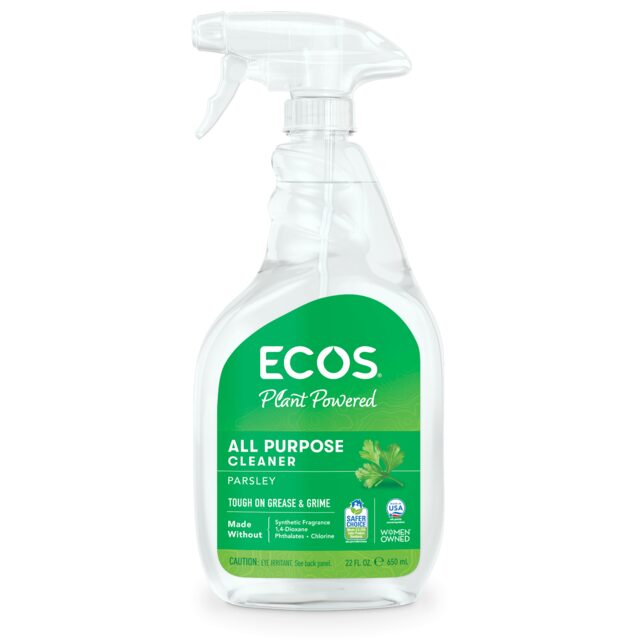
ECOS All-Purpose Cleaner (Hypoallergenic)
EWG-A, specifically formulated without known allergens or skin sensitizers. No fragrance. Works on every hard surface, floors, and walls. The reliable daily-use option in households with young children or chemically sensitive family members.
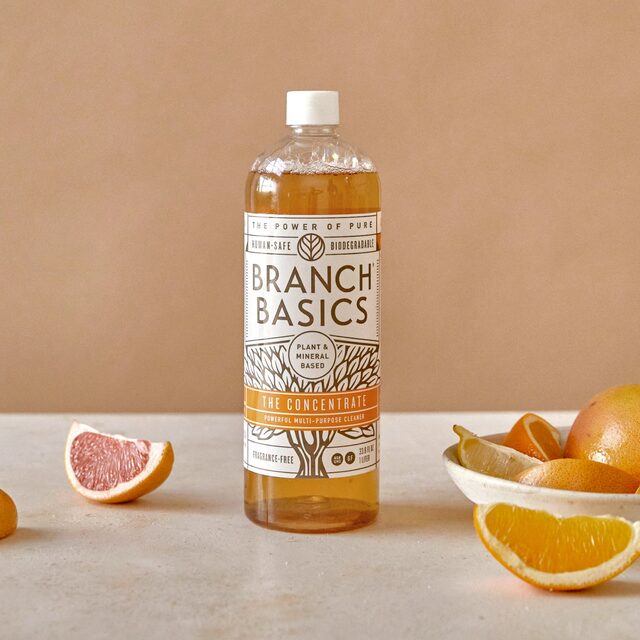
Branch Basics All-Purpose
EWG-A, certified by multiple third-party safety reviewers. Branch Basics explicitly markets to households with infants and children — the formula passed their safety review for high-contact surface cleaning. No fragrance, no synthetic additives.
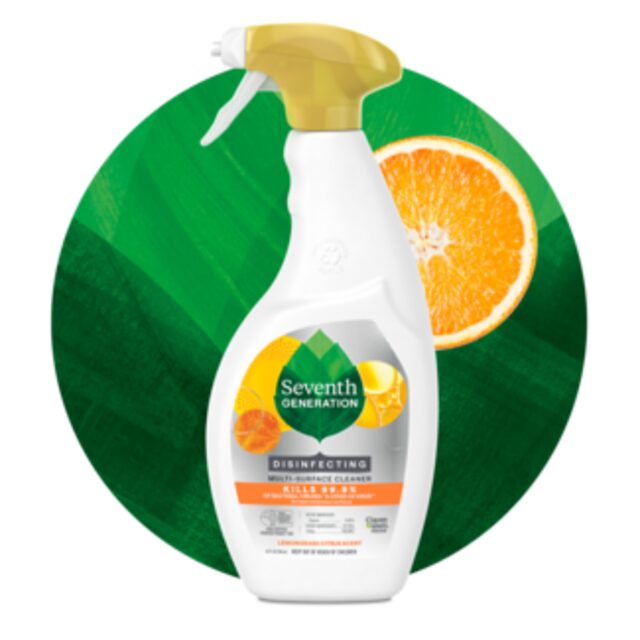
Seventh Generation Disinfecting Spray (Thymol)
The only EWG-A product that's also EPA-registered as a disinfectant. Keep one bottle for targeted disinfection — post-illness, after stomach bugs, potty training cleanup. Not for daily use.
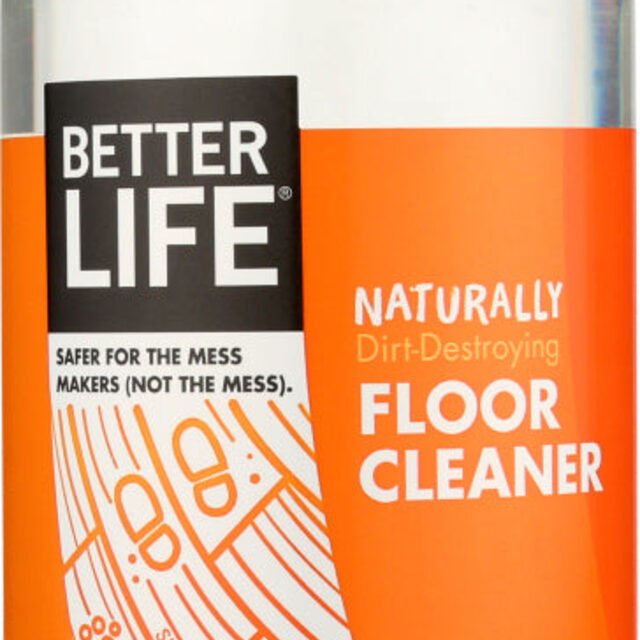
Better Life Floor Cleaner
EWG-A, plant-based, specifically designed for household floors with kids and pets in mind. No fragrance options available. Good for routine mopping on tile, hardwood, and laminate.
Frequently Asked Questions
Can Seventh Generation Free & Clear dish soap go in the dishwasher?
No. Seventh Generation explicitly excludes automatic-dishwasher use for this dishwashing liquid. Use a dishwasher detergent when the feeding item's care instructions permit machine washing.
Does Free & Clear mean preservative-free?
No. The Seventh Generation dish liquid and ECOS laundry liquid discussed here both list preservatives, despite having no added fragrance or dyes.
How should I choose a cleaner for a high-chair tray?
Start with the tray's care instructions and the cleaner's directions for the intended use. If food-contact use or rinsing instructions are unclear, ask the manufacturer before using the cleaner on the tray.