Organic Pest Control: Prevention, Physical Methods and Trade-Offs
Manage aphids, spider mites and fungus gnats with watering changes, physical controls and natural enemies. Understand the limits of organic pesticides.
Featured Options Compared in This Guide
Full specs & notes ↓This article contains affiliate links. Purchases through them may earn us a commission at no extra cost to you.
If your goal is garden pest control without applying pesticides, start with the affected plant and the pest’s life stage. Aphids on a sturdy shoot may be dislodged with water. Spider mite damage calls for checking leaf undersides and addressing water stress. Fungus gnats require attention to moist growing media, even when the adults are the most noticeable nuisance.
“Without chemicals” is an everyday description, not a scientific category. Here, it means prioritizing methods that do not require pesticide applications. Neem, insecticidal soap, diatomaceous earth and Bt are pesticides when used for pest control, even when naturally derived or permitted in some organic growing systems. Clemson Extension recommends prevention and nonchemical methods before considering these treatments.
Match the first response to the pest
| What you find | First response without pesticides | Main limitation |
|---|---|---|
| Aphid clusters on accessible shoots | Observe natural enemies; rinse sturdy plants or prune a few heavily infested tips | Curled leaves can shelter aphids; seedlings tolerate less damage |
| Leaf stippling with live spider mites underneath | Wash leaf undersides and correct drought stress | Existing discoloration does not establish whether mites are still present |
| Fungus gnat adults around potting mix | Reduce excess moisture, remove debris and monitor adults with yellow cards | Cards do not treat larvae in the growing media |
These choices follow UC IPM’s aphid and spider mite guidance, and UConn’s greenhouse fungus gnat guidance. UConn addresses commercial production; its observations about moisture and pest stages are useful for understanding container problems, but its treatment programs are not household application schedules.
Aphids: decide whether intervention is needed
Inspect growing tips and turn leaves over. Look alongside the aphids for lady beetle and lacewing larvae, hoverfly larvae, and swollen, discolored aphid bodies left by parasitic wasps. Natural enemies can suppress colonies, and established plants often tolerate modest feeding. There is no single aphid count that determines when every plant needs treatment. UC IPM
For a sturdy plant with exposed colonies, use plain water first. Direct the stream at the occupied shoots and leaf undersides. UC IPM notes that most dislodged aphids cannot return to the plant. Work early enough for foliage to dry, and adjust the force to avoid damaging tender growth.
For a few tightly curled, infested tips, selective pruning may be more useful. Contact sprays cannot reliably reach aphids protected inside distorted foliage. Remove localized infestations without stripping the plant unnecessarily. Check again for live colonies and damage to new growth. UC IPM recommends inspecting at least twice weekly during rapid plant growth. Aphid management
Two preventive choices matter:
- Avoid excess nitrogen. High nitrogen levels favor aphid reproduction; using an organic fertilizer does not remove the need to control the amount applied.
- Check whether ants are tending colonies. Ants can defend aphids against predators. Where possible, remove access routes such as branches touching neighboring structures rather than repeatedly treating the aphids alone.
Inspect transplants before adding them to your garden. For vulnerable vegetable seedlings, protective covers are another option described by UC IPM.
Spider mites: correct water stress without soaking the pots
Spider mites commonly cause pale stippling, sometimes followed by bronzing, yellowing and webbing. Confirm that mites are present before acting: inspect leaf undersides with a hand lens, or tap a leaf over white paper and examine the moving specks. Old damage may remain after the mites have gone. UC IPM
Hot, dusty conditions and water stress favor serious mite problems. Keep plants adequately watered and reduce dust where practical. This does not mean keeping every container continuously wet: root-zone watering should meet the plant’s needs, while a directed foliage rinse addresses mites on leaves.
Regular water sprays can reduce mite numbers in small gardens. Reach the undersides rather than only wetting the top of the canopy. Reinspect for live mites and fresh injury instead of expecting damaged leaves to become unmarked. UC IPM’s spider mite management guidance
Avoid reflexively applying a general insect killer. Some broad-spectrum insecticides kill mite predators and can trigger worse outbreaks. Preserving resident predatory mites and other natural enemies is part of control, not merely an added wildlife benefit.
Fungus gnats: separate adult monitoring from larval control
Fungus gnat larvae feed on fungi and decaying material, but they can also injure roots. Seedlings and young plants are particularly vulnerable. Adults around pots are a reason to investigate the growing media; they do not by themselves establish how much root damage is occurring. UConn Extension
Start by correcting excess watering and drainage problems, removing decaying plant debris and spilled growing media, and keeping stored potting mix dry. Avoid forcing a moisture-loving plant or seedling to wilt in pursuit of a fixed drying depth. The practical objective is to remove unnecessary persistent moisture while meeting the plant’s needs.
For adult monitoring, UConn recommends yellow sticky cards positioned horizontally at the media surface, checked and replaced weekly. Keep placement consistent so successive catches are easier to compare. A card catching adults does not demonstrate that larvae have been controlled.
If you need cards, search Amazon for yellow sticky traps. This is an affiliate search link, not a recommendation for a particular listing.
Skip diatomaceous earth as a routine fungus gnat soil covering. UConn reports that it does not prevent females from laying eggs; cracks can provide sites for egg laying and pupation. Its greenhouse guidance also identifies Steinernema feltiae nematodes as a biological option against larvae. However, live biological controls require suitable moisture, handling and application conditions. A plan based on drying the media must be reconsidered if introducing an organism that needs it moist. UConn Extension
Companion planting: choose a specific purpose
Companion planting can support natural enemies or interfere with pest host-finding, but a familiar plant pairing is not a guarantee of control.
University of Minnesota Extension describes studies in which basil and marigolds reduced thrips on tomatoes. It also reports research supporting nasturtiums for reducing squash bug populations. Those findings do not establish that nasturtiums universally draw aphids away from vegetables or that one marigold protects an entire container.
For a small balcony, a practical choice is to grow a companion you also want to harvest or enjoy, while continuing to inspect the crop. Flowering plants can provide food for adult hoverflies, whose larvae consume aphids. Supporting this habitat offers a broader purpose than buying a plant solely for a promised repellent effect. UMN Extension
Purchased lady beetles are not a dependable substitute for resident predators. UC IPM reports that releases may provide temporary aphid control, but most beetles disperse within days. For planting ideas, see the balcony pollinator garden guide.
If you decide to use an organic pesticide
A persistent infestation may lead you to accept a targeted pesticide application. Choose it for the pest and plant involved, with a clear understanding of what it can reach.
Insecticidal soap versus neem oil
Commercial insecticidal soap is an option for exposed, soft-bodied pests such as aphids and mites. It requires direct contact and provides little lasting protection. Clemson advises against homemade soap recipes because they are more likely to damage plants. Clemson Extension
Neem formulations differ. Clarified hydrophobic neem extract generally contains little azadirachtin and works primarily through contact and related effects. Concentrated azadirachtin products instead interfere with immature insect development and feeding. They are not interchangeable formulations with a universal mixing recipe. Clemson Extension
For either soap or oil, coverage of the actual infestation matters more than spraying every plant. Both can injure sensitive foliage or water-stressed plants, particularly in heat. Test a small area before broader use. They can also kill natural enemies directly hit by the spray. Evening application can reduce pollinator exposure, but does not establish that a treatment is harmless by morning. Follow the formulation’s crop, mixing, harvest and pollinator restrictions. UC IPM and Clemson Extension
If this approach fits your situation, search Amazon for insecticidal soap. The search is an affiliate link; ready-to-use sprays avoid measuring a concentrate, while concentrates require accurate dilution.
Btk versus Bti
Btk acts against susceptible butterfly and moth larvae that eat treated material. It does not kill every caterpillar under every condition, but it can affect non-target caterpillars. Avoid treating host foliage where you intend to support them.
Bti targets a different group, including fungus gnat larvae. It does not replace adult monitoring or moisture management, and it remains a pesticide rather than a pesticide-free method. Neither strain warrants a claim of universal safety for other organisms: exposure, formulation and application site matter. NPIC’s Bt fact sheet
Diatomaceous earth has a narrower role
DE absorbs protective oils and fats from insect surfaces, causing dehydration. It works while dry and undisturbed, making frequently watered container surfaces a poor fit. Dust can irritate the respiratory tract and eyes; a food-grade description is not an assurance that breathing it is harmless. NPIC
Clemson also cautions that DE can harm honeybees and should be kept off flowering crops. Use a pesticide product labeled for the intended pest and site, rather than treating DE as an all-purpose garden powder. Clemson Extension
For broader container care and watering decisions, see the Complete Apartment Garden Guide.
Sources
Products Compared in This Guide
Yellow sticky traps
Compare current manufacturer specifications, materials, and package options for Yellow sticky traps.
Insecticidal soap
Compare current manufacturer specifications, materials, and package options for Insecticidal soap.
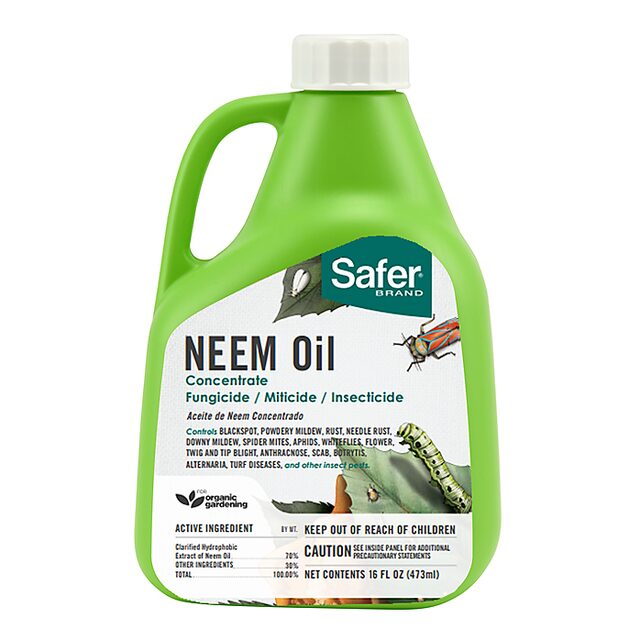
EarthHero Safer Brand Neem Oil Concentrate
Cold-pressed neem oil — the standard organic broad-spectrum insecticide and fungicide. Mix 1 oz neem + 1 tsp mild dish soap per quart water. The azadirachtin compound disrupts insect hormone function, preventing molting. Apply at evening to avoid harming foraging bees. Effective against aphids, spider mites, whiteflies, and fungal issues (powdery mildew, black spot) at diluted rates.
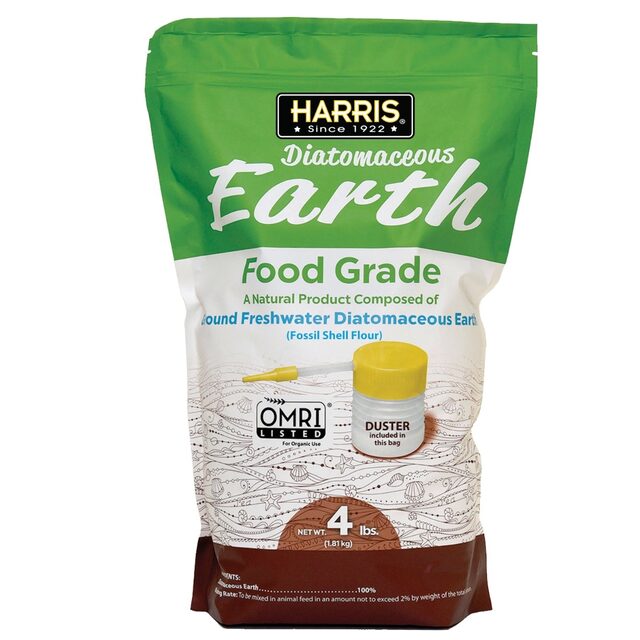
EarthHero Diatomaceous Earth (Food Grade, 4 lb)
Fossilized diatom shells that mechanically damage the exoskeletons of crawling insects — they desiccate and die. Non-toxic to mammals. Effective against fungus gnats (surface application), slugs, earwigs, pill bugs, and crawling beetles. Reapply after watering or rain. Food-grade DE is safe for use around food crops and pets.
Frequently Asked Questions
Can I manage garden pests without applying pesticides?
Often, especially with limited aphid or spider mite infestations. Water sprays, selective pruning, suitable watering and protection of natural enemies can reduce the need for treatment. Results depend on the pest, plant and severity; see [UC IPM’s aphid guidance](https://ipm.ucanr.edu/home-and-landscape/aphids/).
How many aphids can a plant tolerate?
There is no useful universal count per shoot. Established plants often tolerate light to moderate feeding, while seedlings are more vulnerable. Consider new growth, leaf distortion, population changes and predators rather than a fixed number. [UC IPM](https://ipm.ucanr.edu/home-and-landscape/aphids/) explains these differences.
Will diatomaceous earth stop fungus gnats in pots?
Do not rely on it as a soil barrier. [UConn Extension](https://ipm.cahnr.uconn.edu/managing-fungus-gnats-in-the-greenhouse-2/) reports that a diatomaceous earth surface layer does not prevent egg laying. Moisture management and monitoring address different parts of the problem.
Are Btk and Bti interchangeable?
No. Btk targets susceptible moth and butterfly caterpillars; Bti targets immature mosquitoes, certain flies and gnats. Both are pesticides, and the formulation and intended use matter. [NPIC’s Bt fact sheet](https://npic.orst.edu/factsheets/btgen.html) explains the distinction.