A Native Pollinator Garden for a Balcony or Small Yard
Choose regionally native flowers for a balcony or small yard, with practical comparisons of bloom seasons, plant size, containers, and nesting habitat.
Featured Options Compared in This Guide
Full specs & notes ↓Start with regionally native flowers that fit your available light and mature planting space, then add plants that bloom at different times. Even a few balcony containers can contribute habitat, according to Xerces’ home pollinator gardening guidance. You can begin with pots or a small garden bed without buying a bee hotel.
Treat flowers as one part of the plan. Pollinators also need resources for nesting, overwintering, and immature life stages. A small yard may offer room for leaves, stems, and undisturbed ground; a balcony can concentrate on flowering plants and any suitable stems you can retain.
Match the planting to your actual space
Start with the Xerces regional native plant lists. They distinguish plants that supply nectar and pollen from those that support caterpillars, specialist bees, or nesting. A broad North American origin is not enough to establish that a plant is native where you live; a local native plant society can help narrow the choice.
Before shopping, record direct sunlight, the space plants can occupy at maturity, and how you will reach each pot to water it. On a balcony, account for doors, walking space, wind, and building requirements before choosing large containers. Maryland Extension notes that tall plants in small, lightweight pots can topple and that filled containers can be heavy. Container roots also have limited access to water, so a native plant’s drought tolerance does not remove the need to monitor its pot. Container growing guidance.
For a small yard, a defined bed edge or path can make retained stems and informal plant growth look intentional. Xerces recommends these visible signs of care and advises checking local rules on plant height and selection. Small-space habitat guidance.
Three seasonal roles: an eastern-US example
These plants illustrate how to spread flowering across the season where their native ranges and your growing conditions overlap. They are not a universal balcony planting kit. Mature dimensions describe the plants, not minimum pot sizes, and the sequence does not guarantee uninterrupted bloom.
| Seasonal role | Plant and growing conditions | Decision for a small space |
|---|---|---|
| Spring | Eastern columbine, Aquilegia canadensis, prefers partial shade and moist, well-drained conditions. It tolerates more sun with adequate moisture. | Allow for plants up to about 3 feet tall and 1.5 feet wide. Give it the shadier position rather than treating it like a dry, sunny-border plant. |
| Late spring into summer | Threadleaf coreopsis, Anacis verticillata, grows in sun to partial shade with good drainage. NC State describes flowering from May to July. | Its description allows for a clump about 2–3 feet tall with a similar spread. Rich or overly moist conditions can encourage weak, flopping stems. |
| Late summer into fall | Aromatic aster, Symphyotrichum oblongifolium, needs full sun and well-drained conditions. Its flowering can continue until the first frost. | Allow for a mature mound up to about 3 feet tall and wide. It may fit a small bed better than a narrow balcony passage. |
Sources: NC State’s eastern columbine, threadleaf coreopsis, and aromatic aster profiles. Threadleaf coreopsis may still be sold as Coreopsis verticillata, which NC State lists as its previous name.
Separate containers make sense for this example because columbine’s moisture preference differs from coreopsis’ tolerance of leaner, drier conditions. In a bed, place each plant where drainage and exposure suit it. On a shaded balcony, replace the sun-demanding roles with locally suitable shade plants rather than forcing the entire sequence into the same conditions.
Use the seasonal roles to choose your next addition: if your existing pots flower only in spring, prioritize a suitable later-flowering native. Record actual bloom periods so a midsummer gap becomes a specific planting decision.
Straight species, compact cultivars, or seeds?
A straight species is a useful starting choice when supporting pollinator diversity is the priority. Oregon State research comparing Pacific Northwest native plants with selected cultivars found differences in floral traits and bee communities; cultivars often supported a narrower range of bee types. Less-modified cultivars sometimes retained benefits closer to their wild counterparts. These findings support a preference, not a verdict on every cultivar or on the eastern plants above. OSU study summary.
Compactness can still solve a real balcony problem. NC State lists eastern columbine ‘Little Lanterns’ at about 10 inches tall. That supports choosing it for reduced height; it does not establish equal pollinator value to the straight species. If the full-size plant will obstruct your space, consider either a smaller locally native species or a compact cultivar with that uncertainty in mind. Columbine profile.
Seeds also involve timing tradeoffs. NC State says eastern columbine seedlings flower in their second year, while threadleaf coreopsis seeds can be sown in late fall or spring without cold treatment. Do not give every native wildflower the same germination schedule. If you want flowers soon, ask whether nursery plants are at flowering maturity. Columbine and coreopsis.
Ask how nursery plants were grown
A native plant label does not establish pesticide history. Xerces reports that nursery plants, including those marketed for pollinators, can carry pesticide residues. Its recommendations include seeking USDA certified organic plants and seeds, avoiding neonicotinoids and similar systemic insecticides, and asking about the grower’s pest-management practices. Nursery plant guidance.
Ask which insecticides were used on the plants you intend to buy and whether the retailer can obtain that information from its grower. If the answer is unknown, compare another supplier or consider growing from seed. Certification and treatment history are purchasing information, not guarantees that every insect interaction will be harmless.
Make containers work for the flowers
Maryland Extension’s guide focuses on vegetables and herbs, but its container principles help with the physical setup here:
- Provide drainage and root room. Choose a container that accommodates roots and supports mature top growth. Adding gravel beneath the mix does not improve drainage and takes away root space.
- Match material to your watering routine. Porous containers tend to dry faster than nonporous ones. This matters when choosing between a moisture-preferring columbine and plants that tolerate drier conditions.
- Use an airy container mix. Avoid filling ordinary pots with dense garden soil or packing the mix tightly.
- Water according to moisture. Feel below the surface before watering. When watering is needed, moisten the root zone thoroughly and let excess water drain. Empty saucers regularly, including those used to protect a downstairs neighbor’s balcony.
Maryland Extension container guidance.
Existing herbs can contribute while the native planting develops. Allowing some rosemary or thyme to flower supplies additional forage, as Xerces suggests. Keep those flowering stems separate from the portions you routinely harvest.
Leave room for the insects’ next life stage
Inspect leaf damage before removing insects or reaching for a treatment. Caterpillars eating a host plant may be using exactly the resource you intended to provide. Xerces encourages tolerating some feeding and addressing pest problems through nonchemical methods. For help assessing damage, see the garden pest-management guide.
In a small yard, retain suitable leaves, stems, or undisturbed ground where they fit the layout. For aromatic aster specifically, NC State recommends leaving dead stems cut to 12–24 inches and allowing them to break down naturally because native bees use the hollow stems. Plan that standing-stem space when positioning the plant. Aromatic aster profile.
A bee hotel adds upkeep. Xerces warns that artificial nests need cleaning to limit disease buildup; choose one only if you are prepared to manage it. Tunnel nests for native bees.
Keep flowers accessible without crowding doorways or forcing people to brush past insects. Foraging bees generally focus on gathering food, but stings remain possible. Give insects space and avoid grabbing or swatting them, as Xerces advises.
Sources
- Xerces Society: Pollinator gardening at home
- Xerces Society: Regional native plant lists
- Xerces Society: Nursery plant guidance
- Xerces Society: Tunnel nests for native bees
- NC State Extension: Eastern columbine
- NC State Extension: Threadleaf coreopsis
- NC State Extension: Aromatic aster
- Oregon State Extension: Native plants and cultivar effects on bees
- University of Maryland Extension: Growing in containers
Products Compared in This Guide
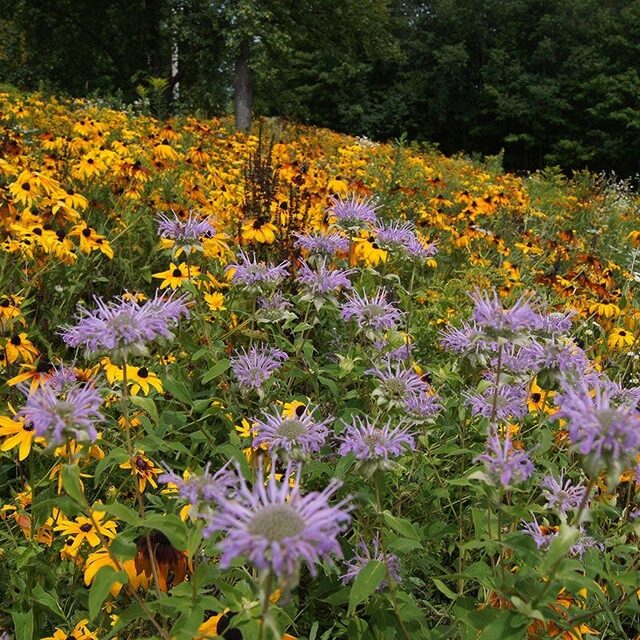
American Meadows Native Wildflower Seed Mix (1/4 lb)
Regional-specific native mixes (Northeast, Southeast, Midwest, Pacific NW, etc.). Contains species-form natives, not cultivars — the distinction matters for pollinator value. Instructions include container-growing notes. For balcony use, direct-sow in 10-inch deep containers with any well-draining potting mix.
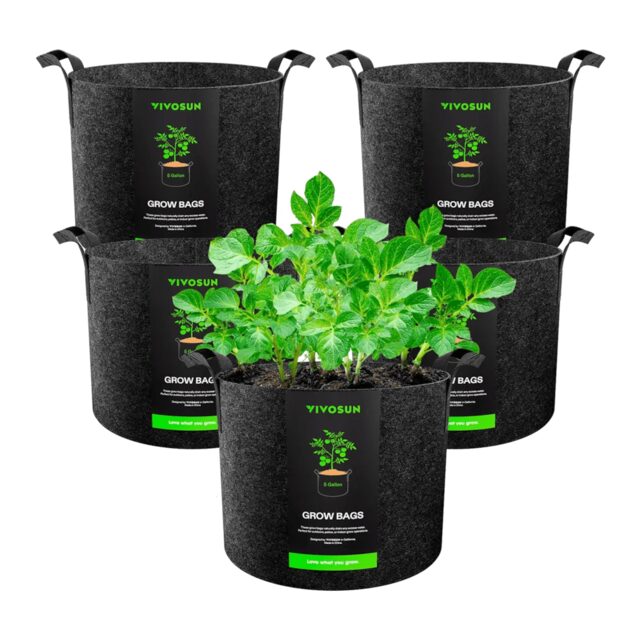
EarthHero Seedling Grow Bag (5-gal, 5-pack)
Recycled fabric grow bags — root air-pruning prevents the circling roots that limit flowering performance. Air pruning is real: plants grown in fabric containers develop denser, more fibrous root systems that support better flowering. The 5-gal size is ideal for native perennials and most wildflowers. Folds flat for storage.
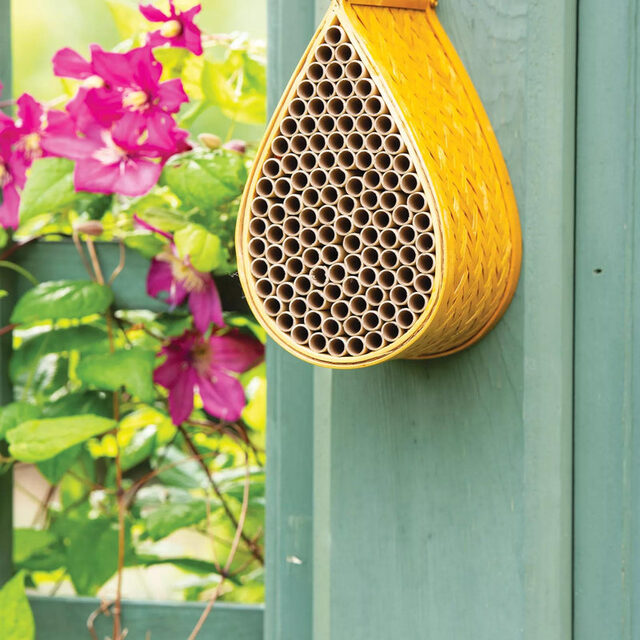
EarthHero Tierra Garden Fermob Bee House
Nesting habitat for native mason bees and leafcutter bees — solitary bees that are significantly more effective pollinators per individual than honeybees. Tubes are paper-lined (replaceable) to reduce disease carryover between seasons. Hang 4–6 feet off the ground, south or east facing, near your flowering containers. Clean and replace tubes annually in late fall.
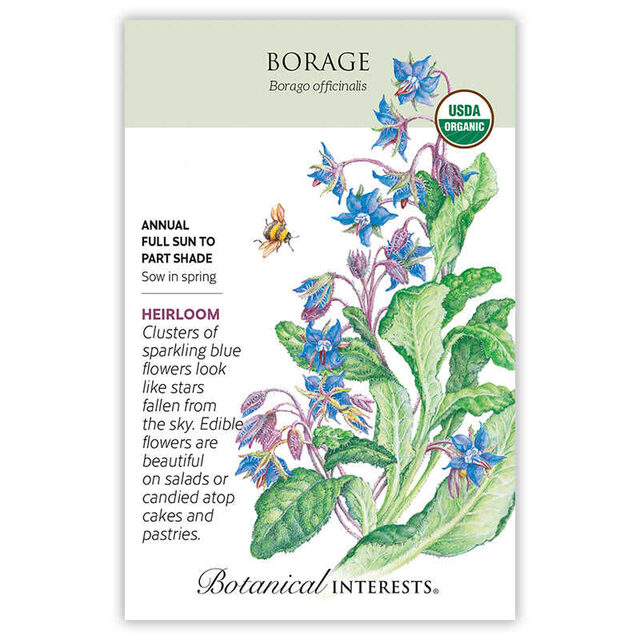
Eartheasy Borage Seeds (Organic)
One of the highest-value single plants you can grow for pollinators — borage flowers continuously from early summer to frost, attracting bumblebees, honeybees, and mason bees. Edible flowers (cucumber flavor) and leaves. Self-seeds prolifically in mild climates. Direct sow in a 5-gallon container; grows 18–24 inches tall.
Frequently Asked Questions
Can a few balcony pots help pollinators?
Yes. Xerces identifies balcony containers as an opportunity to provide pollinator habitat. Flowering pots can offer food, while nesting and overwintering resources require separate consideration.
Should I choose straight native species or cultivars?
Start with regionally native straight species when they fit your space. An Oregon State study found that cultivar changes could affect floral resources and bee communities, but results varied. A compact cultivar can address a space constraint without proving equivalent pollinator benefits.
Do I need a bee hotel?
No. Flowers can provide forage without an artificial nest. Bee hotels require maintenance: Xerces warns that keeping artificial nests clean matters for limiting disease buildup.