Bakuchiol vs. Retinol: What the Evidence Can Tell You
Compare bakuchiol and retinol for visible skin aging, understand the limits of the clinical trial, and choose a routine without pregnancy-safety assumptions.
Featured Options Compared in This Guide
Full specs & notes ↓Bakuchiol is a plausible option if you want to address visible skin aging and find retinol irritating, but the evidence does not make it an equivalent replacement for every retinoid. If your main problem is dryness or stinging, begin with a moisturizer and a routine your skin tolerates. An additional active may not be necessary.
Retinol belongs to the vitamin A family of retinoids. Bakuchiol is a different compound. Calling a product a “plant retinol” can obscure that distinction, especially when the package also contains a retinoid.
What the comparison trial actually found
The frequently cited study is by Dhaliwal and colleagues, published in the British Journal of Dermatology in 2019. It enrolled 44 participants for 12 weeks: one group used 0.5% bakuchiol cream twice daily, and the other used 0.5% retinol cream once daily. Both groups improved in wrinkle surface area and hyperpigmentation; the researchers found no statistically significant difference between groups. Retinol users reported more scaling and stinging. Read the published study abstract.
That is encouraging evidence, with practical limits:
- The comparison used different application frequencies. It does not answer what happens with equal-frequency use.
- A small, short study cannot establish that two treatments are interchangeable over years.
- The results concern the studied creams. A bottle with an undisclosed amount of bakuchiol is not the same formulation.
- The trial is about facial photoaging, not a substitute for evidence on acne treatment or use during pregnancy.
“No significant difference” also does not prove that every person gets the same result. Use the study as a reason to consider bakuchiol, rather than a guarantee attached to the ingredient name.
Match the ingredient to the job
| Your priority | A sensible starting point | What to keep in mind |
|---|---|---|
| Fine lines or uneven tone, with good tolerance of actives | Discuss a retinol or other retinoid with a dermatologist | Strength, formulation, and application frequency affect tolerance |
| Visible aging concerns after irritation with retinol | Consider a formulated bakuchiol product | The evidence is smaller; it can still irritate |
| Dryness without a specific treatment goal | Moisturizer; optionally a simple face oil | More actives do not necessarily add value |
| Acne requiring treatment | An acne treatment plan | A cosmetic bakuchiol serum is not an established replacement for an acne medicine |
| Pregnancy or breastfeeding | Review the routine with your clinician | Do not infer safety from “natural” or “retinol alternative” |
The AAD’s retinoid guide distinguishes cosmetic retinol from prescription and over-the-counter acne retinoids. It recommends starting cautiously because irritation is possible. There is no useful universal multiplier that tells you one retinal product will work a fixed number of times better than a retinol product.
Pregnancy is a separate question
The AAD advises avoiding retinoids during pregnancy. Bakuchiol’s different chemistry does not, by itself, supply pregnancy-safety evidence. The aging study above cannot establish that safety, and a product may combine bakuchiol with retinol or other actives. Bring the complete ingredient list to your prenatal clinician. Ask separately about breastfeeding rather than treating the two situations as identical. AAD pregnancy skincare guidance.
How to choose a formula and introduce it
Look for the actual active ingredient name, any disclosed concentration, the full ingredient list, and clear directions. If avoiding retinoids, check for retinol and retinal rather than relying on the product’s headline. Fragrance-free can be a useful preference for reactive skin, but it cannot promise tolerance.
Introduce one new product at a time. Follow its directions rather than automatically copying the trial’s twice-daily schedule. For a home tolerance check, the AAD recommends testing skincare on a small area twice daily for seven to ten days; rinse off rinse-off products as directed. This differs from medical allergy patch testing. Stop a product that causes a reaction. AAD product-testing advice.
Keep daytime sun protection in the routine. Neither bakuchiol nor a face oil replaces sunscreen, clothing, or shade. For ingredient-specific comparisons, see serums versus face oils; for a simpler starting routine, see vegan skincare for sensitive skin.
Sources
Products Compared in This Guide
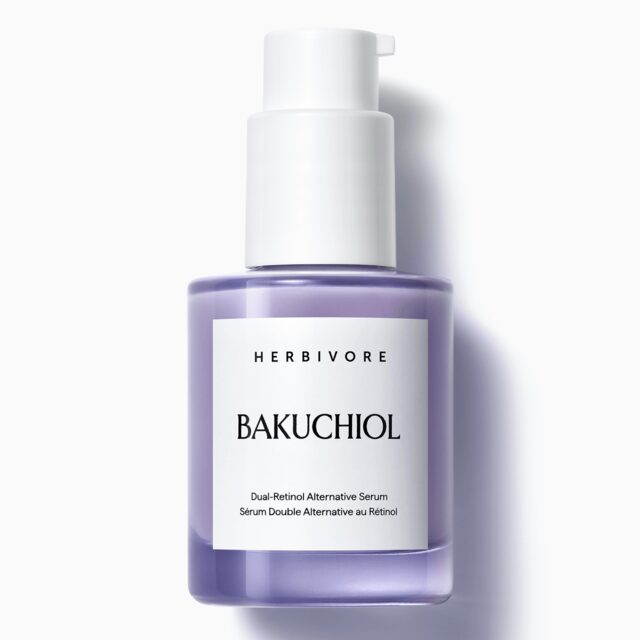
Herbivore Bakuchiol Retinol Alternative Serum
2% bakuchiol in squalane base. Lightweight, absorbs fast, no irritation. EWG score 1-2. Best for first-time bakuchiol users who want a clean entry point.
ILIA Bright Start Retinoid+ Activating Serum
Encapsulated retinoid plus bakuchiol in a clean base. The hybrid approach: retinoid efficacy with bakuchiol's soothing buffer. Clean formulation; ILIA's flagship anti-aging product.
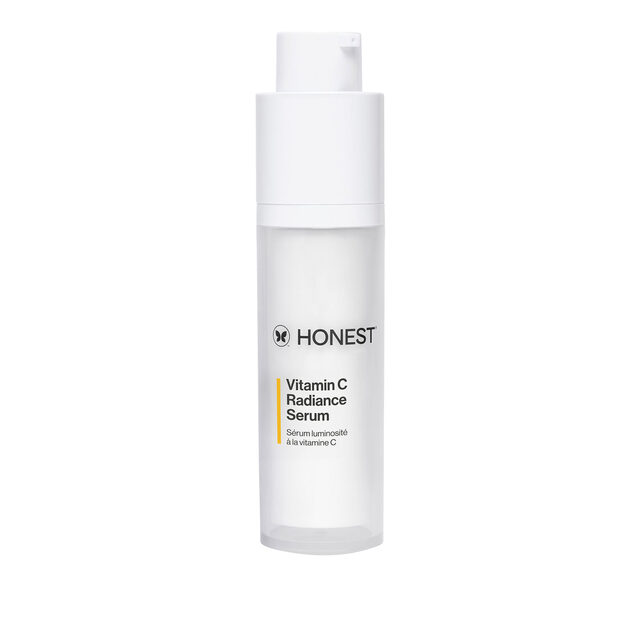
The Honest Company Vitamin C Radiance Serum
15% vitamin C (ascorbic acid) plus niacinamide. Not a direct retinol replacement but works as a daytime brightening complement to a nighttime bakuchiol routine. MADE SAFE certified.
Biossance Squalane + Phyto-Retinol Serum
Bakuchiol paired with sugarcane-derived squalane. Biossance's clean credential is strong; the squalane base makes this suitable for even reactive skin types.
Frequently Asked Questions
Is bakuchiol as effective as retinol?
One small 12-week trial found improvements in wrinkles and pigmentation with both ingredients, with no statistically significant difference between groups. Different application frequencies and the short study duration mean this does not establish that all bakuchiol products equal all retinoids.
Is bakuchiol safe during pregnancy?
The facial-aging trial does not establish pregnancy safety. Do not assume that a botanical retinol alternative is safe during pregnancy or breastfeeding; discuss the specific formula with your clinician. The American Academy of Dermatology advises avoiding retinoids during pregnancy.
Does the trial support every bakuchiol serum?
No. It studied a 0.5% bakuchiol cream with a specific application schedule. A serum with an undisclosed concentration or a different formula cannot automatically claim the same results.