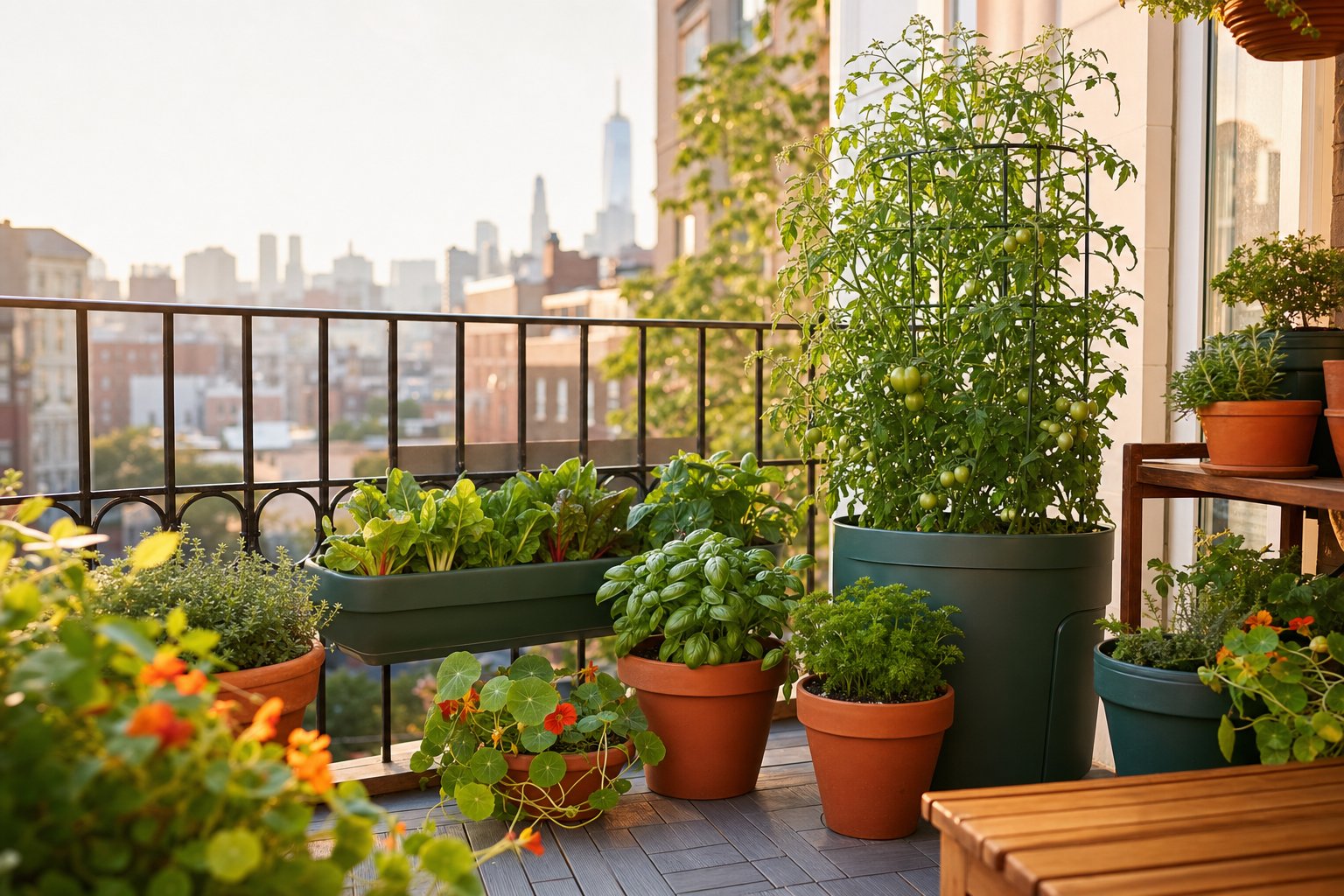
Featured Options Compared in This Guide
Full specs & notes ↓This article contains affiliate search links. If you buy through them, we may earn a commission at no extra cost to you.
An apartment garden starts with the space you can maintain: enough light for the crop, room for its container and mature growth, and a workable route for water going in and draining out. Begin with a few plants you want to harvest, then expand once their care fits your routine.
University of Maryland Extension recommends starting small and looking for bush or dwarf vegetable varieties. It also warns that hot, dry weather can make daily container watering necessary. Those two points are more useful for a first garden than buying a large collection of planters. Source: Maryland Extension
Match the garden to the light you actually have
Observe the proposed planting spot at intervals through the day. Record when direct sunlight reaches it and when neighboring buildings, balcony ceilings or walls shade it. A bright apartment and a sunny growing position are different things.
Maryland Extension gives these outdoor container-growing targets:
| Light at the planting position | Crops to consider | Planning decision |
|---|---|---|
| 3–5 hours of direct sun | Cool-season crops such as lettuce, spinach and Asian greens | Start with a small greens planting suited to the local season |
| 6–8 hours of direct sun | Warm-season crops such as tomatoes, peppers, eggplant and squash | Reserve room for the mature plant and any support it requires |
| Less direct sun than these ranges | Neither group meets the cited light guidance | Try a brighter location before committing to a vegetable setup |
Southern and western exposures generally run sunnier and warmer; northern and eastern exposures tend to be cooler and shadier. Reflected heat from brick and concrete also matters. Use the conditions at the pots to make the decision, rather than the balcony’s direction alone. Source: Maryland Extension
For an indoor garden, include the growing location and any lighting equipment in the plan before purchasing seeds. An indoor seed tray is only the starting space; the plants also need somewhere suitable to grow afterward.
Plan floor space, filled weight and drainage together
Sketch the containers at their actual dimensions. Leave access to the door, the watering point and the back of each planter. Include plant supports and mature foliage in the sketch rather than counting only the pots’ footprints.
Filled containers can be much heavier than their empty shells suggest. Maryland Extension notes that a 20-inch-diameter container with moist growing medium and plants can weigh 100 pounds. That example is a reason to establish your building’s permitted loading before adding large planters; it is not a balcony load allowance. Ask property management for site-specific guidance rather than assuming a universal weight limit or a suitable placement near a wall. Source: Maryland Extension
Make the drainage route equally concrete: where will excess water collect, how will you empty it, and can it reach a neighbor’s space? Maryland Extension recommends saucers or self-watering containers to help prevent staining beneath pots. Check the particular planter’s outlets and overflow arrangement before relying on it for water containment. Source: Maryland Extension
Ordinary pots or a reservoir planter?
| Choice | What you will manage | When to consider it |
|---|---|---|
| Pot with drainage and a saucer | Watering individual pots and handling collected drainage | You want separate containers that can be arranged around the available light |
| Reservoir planter | Reservoir level, the specified growing medium and overflow | You prefer checking a shared water supply within the planter |
| Containers with a trellis | The pots plus support placement and access | You want climbing growth without replacing the root containers with wall pockets |
A reservoir is a maintenance feature, not a promise of a week without attention. Garden Patch describes its GrowBox as having a four-gallon reservoir and says refill frequency increases as plants become larger and bear fruit. Its approximate schedule should not be treated as a guarantee for another planter or your growing conditions. Source: Garden Patch FAQ
For that specific system, the manufacturer calls for a light, spongy container potting mix and advises against heavy, dense potting soil. It also uses a supplied fertilizer patch. Follow the chosen system’s medium and feeding instructions instead of combining several fertilizer routines by default. Source: Garden Patch FAQ
Container depth alone is not a complete buying specification. Match the variety’s growing-space instructions to the planter’s usable volume and dimensions, then include room for watering and support. A compact plant label does not make every small pot suitable.
When growing upward makes sense
Treat vertical growing as a layout option. On your sketch, mark how you would water and harvest every planting position. For a tower against a wall, observe light on both sides. For wall-mounted containers, establish the allowed attachment method and drainage route before buying.
If a tall arrangement leaves lower plants inaccessible or blocks your route outside, fewer ordinary pots may be the more workable garden. The balcony container setup guide and vertical gardening guide cover these layouts separately.
Choose seeds or transplants by the garden’s final capacity
Count the mature plants your space can accommodate before deciding how many seeds to start. For a first garden with only a few planting positions, buying transplants is a reasonable way to avoid dedicating indoor space to propagation. Starting seeds makes more sense when you want particular varieties and can provide both a starting area and a destination for the seedlings.
A full propagation tray can occupy a substantial portion of an apartment shelf. Bootstrap Farmer lists its 50-cell insert at 21¼ by 11¼ by 2¼ inches, with cells measuring 1¾ by 1¾ inches. It says the insert fits standard 1020 flats and has drainage holes suitable for bottom watering. These are useful fit details; they do not establish that a flat, dome or heat mat is included. Source: Bootstrap Farmer
Before ordering, measure the shelf and confirm the complete setup’s contents. If your garden has only a handful of planting positions, consider whether smaller containers you already own would serve the purpose. Use crop-specific sowing instructions and local planting dates rather than one germination temperature or start date for every vegetable.
If a full insert suits your plan, search Amazon for Bootstrap Farmer 50-cell seed trays. This is a search link, not a confirmed listing or bundle. For more planning detail, see the seed-starting guide.
Make watering convenient before adding more plants
Carry water from your sink to the proposed garden before filling the containers. This simple rehearsal helps reveal awkward doors, a can that will not fit under the tap, or a layout requiring repeated reaching over plants.
Choose watering-can capacity around that route. Haws’ indoor guide lists capacities of 0.6, 1 and 2.25 litres. It describes smaller cans as easier to maneuver and larger ones as reducing refills, while noting that larger cans may fit poorly under low taps. The same guide distinguishes an open spout for watering into pots from a rose attachment for a gentler spray over seeds and seedlings. Source: Haws
A can you can fill and carry comfortably is a better starting criterion than an assumed material lifespan. If you need one, search Amazon for Haws watering cans, then compare the actual model’s capacity, spout and included attachments.
During hot, dry weather, make time to check the garden daily; some containers may need water that often. Track how quickly each pot or reservoir uses water before planning time away. Source: Maryland Extension
Rain collection is an optional addition
For renters, a usable downspout does not by itself establish permission to install a barrel. Resolve property permission, local collection rules, filled weight and overflow before including rain storage in the garden plan.
Colorado illustrates why the details matter. Colorado State University Extension explains that the allowance under HB16-1005 applies to single-family homes and multifamily properties with four or fewer units. It permits up to two barrels totaling no more than 110 gallons, collecting rooftop downspout water for outdoor use on the same property. That allowance does not automatically cover a larger apartment building. Source: CSU Extension
CSU also describes mosquito exclusion and rooftop contamination concerns. Use a suitable covered collection system, and do not treat untreated roof runoff as drinking water. For a renter-focused discussion, see rain barrels for renters.
Choose a food-scrap destination before buying equipment
An apartment garden does not need to process all of your household food waste. Choose the route that fits both your space and the amount of ongoing care you want to provide.
| Route | What it requires | What happens to the scraps |
|---|---|---|
| Municipal or community collection | Storage space and an available service or drop-off location | An outside composting program handles accepted material |
| Worm composting | A suitable bin, bedding, composting worms and regular care | Worms produce vermicompost for use as a soil amendment |
| Grinding and dehydrating appliance | Counter space, electricity and a destination for the output | Scraps become a dried mixture that still needs composting |
EPA makes the last distinction explicit: residential grinding and dehydrating appliances do not produce finished compost. Do not treat a dry, crumbly appearance as proof that the output is ready to mix into your vegetable containers. Source: EPA
For a worm bin, EPA recommends keeping the bin at 59–77°F, covering food with bedding and waiting until scraps have been eaten before adding more. Its feeding guidance excludes meat, dairy, greasy food and pet waste. An exposed balcony may be less manageable than an indoor location if its temperature is difficult to control. Source: EPA
Collection is a practical option when you have no suitable processing space. EPA suggests keeping scraps in a closed container on a counter, under a sink, or in a refrigerator or freezer before composting. Confirm what your receiving program accepts. See the apartment composting guide for a closer look at equipment choices.
Use finished compost without adding a brewing project
EPA identifies finished compost as suitable for container gardens and window boxes and notes its benefits for moisture and nutrient retention. That does not establish one amendment percentage or monthly feeding schedule for every container. Keep additions compatible with your existing growing medium and planter instructions. Source: EPA
Compost tea is not a necessary part of this setup. Illinois Extension reports inconsistent disease-control benefits and raises concerns about encouraging harmful bacteria, including when tea is aerated. Its practical recommendation is to use compost directly around plants instead of brewing it for spraying. Skip a brewer purchase as a default container-garden expense. Source: Illinois Extension
Add tools and specialized planting only when there is a job for them
Start with a way to water, something suitable for transplanting, and labels. Add tools when a recurring task justifies the storage space.
A hand fork, for example, can help remove old plants or mix material during a container reset. DeWit describes those uses for its large X-treme fork and specifies forged, hardened boron steel with a 14-centimetre ash handle. Those details describe one model; they do not establish that every balcony needs it or that it will outlast all alternatives. Source: DeWit
For the rest of the garden, keep room in the plan for your actual priorities:
- If flowers and visiting insects are a priority, reserve planting positions and use the native pollinator balcony guide to develop a location-specific plan.
- If plants develop damage, identify the problem before buying a treatment. The garden pest-control guide is a separate next step.
- If you gain access to a shared yard, consider a beginner raised-bed setup as a new site plan, including permission and access.
For your first season, write down the chosen crops, where they will grow, how you will water them and where scraps will go. Buy only what that plan requires. Expand when you have both suitable growing space and time to care for it.
Sources
- University of Maryland Extension: Growing Vegetables in Containers
- Garden Patch: GrowBox FAQ
- Bootstrap Farmer: 50 Cell Seed Planting Trays
- Haws: Indoor Watering Cans
- DeWit: Large X-treme Hand Fork
- EPA: Composting at Home
- Illinois Extension: Compost Tea—Miracle Product or Snake Oil?
- Colorado State University Extension: Rainwater Collection in Colorado
Products Compared in This Guide
Bootstrap Farmer 50-cell seed trays
Compare current manufacturer specifications, materials, and package options for Bootstrap Farmer 50-cell seed trays.
Haws watering cans
Compare current manufacturer specifications, materials, and package options for Haws watering cans.
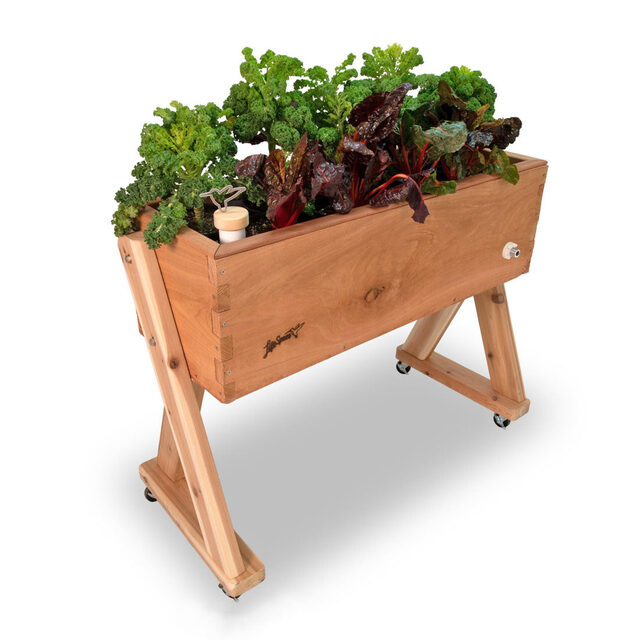
Eartheasy GrowBox Self-Watering Planter (15-gal)
Sub-irrigation reservoir handles 3–5 days of watering automatically. The wicking mat draws moisture from below, which means consistent soil moisture without waterlogging. Ideal for tomatoes, peppers, and herbs on a balcony. Made from recycled polypropylene. No drainage holes in the reservoir means no staining balcony surfaces.
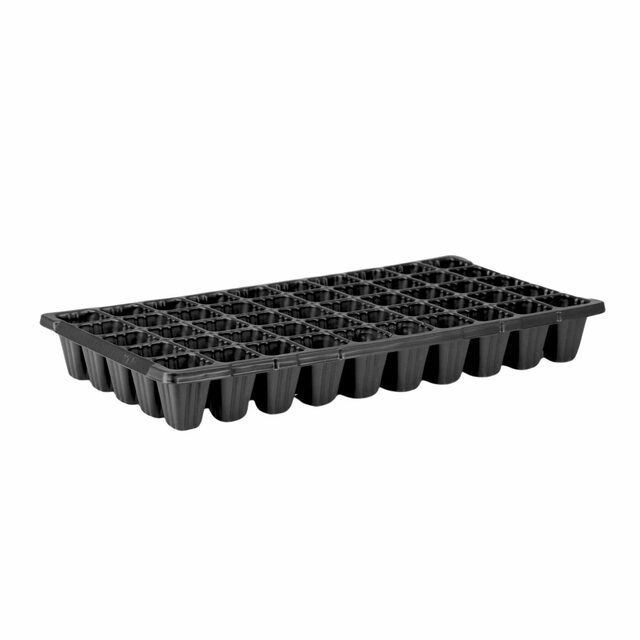
Bootstrap Farmer 50-Cell Seed Starting Tray (5-pack)
Thick 1020 trays that flex without cracking after 3–4 seasons. The 50-cell size is the right balance between cell depth (roots don't spiral) and fitting a standard heat mat. Bootstrap Farmer's trays have thicker walls than the thin-sheet competition — they don't buckle when wet.
Frequently Asked Questions
Can I grow vegetables on a north-facing balcony?
Measure direct sunlight at the planting location rather than relying on its compass direction. University of Maryland Extension recommends 3–5 hours of direct sun for cool-season crops such as lettuce and spinach, and 6–8 hours for warm-season crops such as tomatoes and peppers. Indirect brightness is not the same as direct sun.
Will a self-watering planter handle a vacation?
Do not assume a fixed number of unattended days. Garden Patch says its GrowBox may need refilling more often as plants mature and fruit. Track reservoir use with your own plants and arrange watering help if necessary.
Do countertop food-scrap appliances make finished compost?
EPA distinguishes grinding and dehydrating appliances from composting systems: their dried scraps still need composting. Choose a destination for that material before buying an appliance.