Fragrance-Free Skincare: Labels, Products, and a Simple Routine
Learn fragrance-free versus unscented, compare a basic cleanser and moisturizer, and introduce skincare without confusing a home trial with allergy testing.
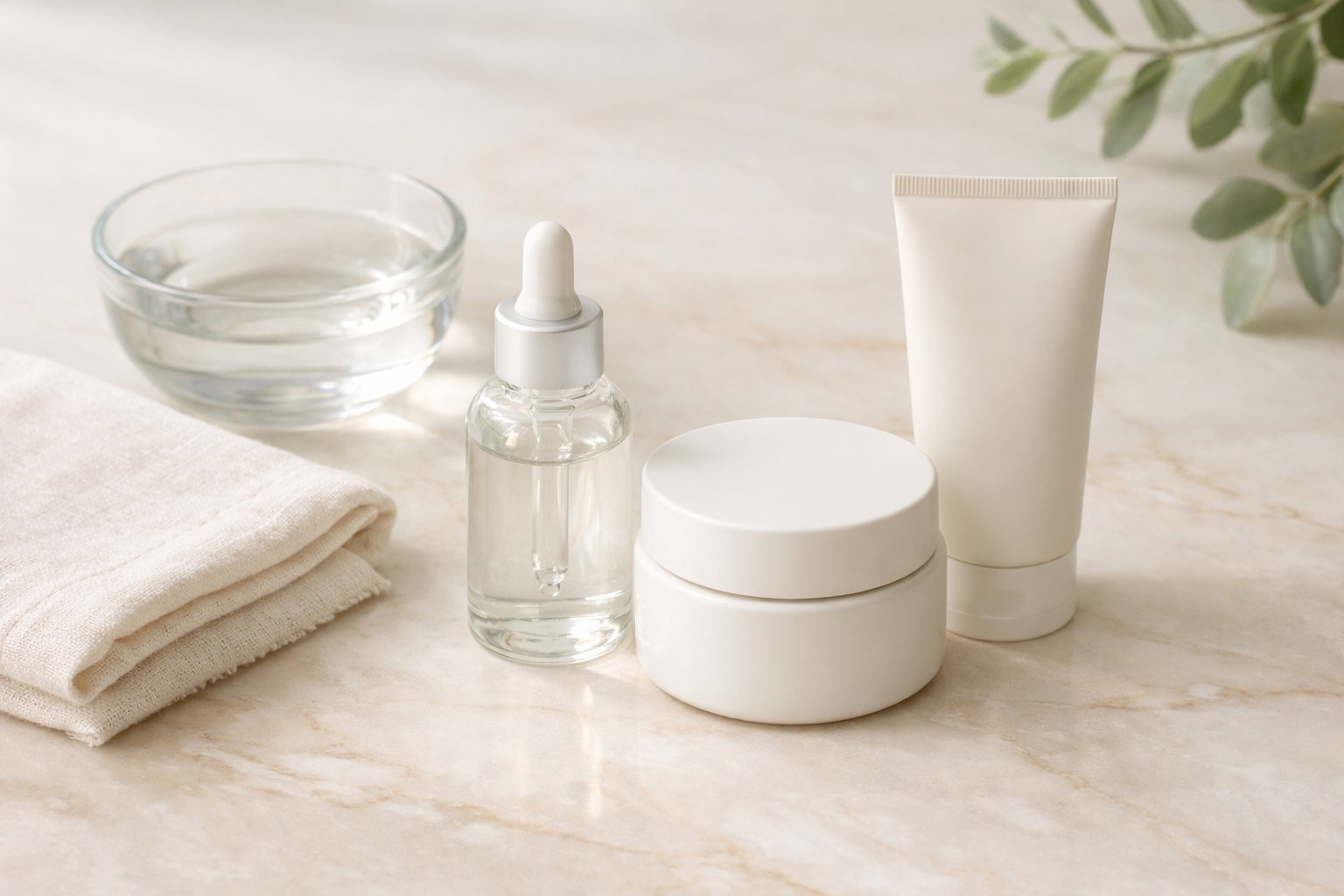
Featured Options Compared in This Guide
Full specs & notes ↓Start a fragrance-free routine with a cleanser, moisturizer, and sunscreen you can tolerate. Keep products that already meet your needs rather than replacing the whole routine at once. Fragrance avoidance is particularly relevant when fragrance triggers your skin symptoms; it is not a guaranteed treatment for acne, headaches, eczema, or facial redness.
Fragrance-free and unscented mean different things
The FDA explains that an unscented cosmetic can contain fragrance that masks the smell of other ingredients. Fragrance mixtures may also be declared collectively as “fragrance” on U.S. cosmetic labels. A product can have an ingredient smell without added perfume, so sniffing a bottle is not a reliable label check. FDA: Fragrances in Cosmetics.
Look for an explicit fragrance-free statement, then read the ingredients. “For sensitive skin,” “botanical,” and “naturally scented” do not mean the same thing. Essential oils can contain fragrance-related ingredients too. The AAD’s product-testing guidance specifically cautions that unscented and botanical products may still contain them.
If you have a diagnosed allergy, use the avoidance list your clinician gives you. A single keyword search for “parfum” may miss the specific ingredient you need to avoid.
Two concrete starting products
These examples have published ingredient lists; they are not prescriptions or promises of tolerance.
Vanicream Gentle Facial Cleanser is a soap-free wash containing glycerin, coco-glucoside and sodium cocoyl glycinate. The brand describes it as intended for dry, sensitive skin and formulated without botanical extracts or essential oils. Its directions are to apply to wet skin, lather, rinse and pat dry. It is a practical starting comparison if you want a conventional rinse-off cleanser without scent-focused ingredients. Manufacturer’s formula and directions.
Vanicream Moisturizing Cream is a richer option for face or body, with petrolatum, sorbitol and cetearyl alcohol in the listed formula. The manufacturer explicitly says it contains neither fragrance nor masking fragrance. It also states that this cream does not contain ceramides; do not confuse it with the brand’s Daily Facial Moisturizer. Choose it when a cream fits your dryness needs, rather than assuming every product from the same brand has the same texture or ingredients. Manufacturer’s cream details.
A fragrance-free formula can still contain something you personally react to. Buy a manageable size first. A larger pump may reduce repeat packaging purchases, but only if you finish it.
Keep the routine small
In the morning, cleanse if needed, moisturize, and use sun protection. In the evening, remove makeup and sunscreen with a suitable cleanser and moisturize. Add optional serums only when you can name the concern you want them to address.
For sunscreen, compare broad-spectrum SPF 30 or higher and water resistance, as recommended by the American Academy of Dermatology. Fragrance-free is an additional preference, not a substitute for protection. Our mineral sunscreen guide explains tint and activity fit.
Introducing one new product at a time makes changes easier to interpret. Keep brief notes on what you used and any symptoms. Do not stop prescribed treatment to make the routine simpler without discussing it with your clinician.
Test a new product without diagnosing yourself
For ordinary skincare, AAD suggests trying the normal amount on a small area, such as the inner arm, twice daily for seven to ten days. Keep rinse-off products on only for the instructed contact time. Follow a product’s specific test directions where they differ, especially for treatments. Wash off and stop using a product that causes a reaction. AAD instructions.
This kind of home use check cannot identify an allergen or guarantee that a product will never cause a problem. Persistent or recurrent reactions are a reason to see a dermatologist; medical patch testing serves a different purpose. Do not deliberately restart a product that caused a significant reaction to “confirm” the cause.
Extend the change only where it helps
Body lotion, hand wash, shampoo and laundry products can also be fragranced. If these are relevant to your symptoms or preferences, choose replacements individually. Choose fragrance-free laundry products if needed and follow garment care labels.
For your next body-care purchase, compare body bars and their packaging separately from fragrance claims. A paper wrapper does not establish skin compatibility.
Sources
Products Compared in This Guide
Fragrance-Free Skincare — Top-Spec Options
Compare current model specifications, material disclosures, and third-party certifications for fragrance free skincare i cut parfum for 90 days.
Certified Fragrance Free Skincare I Cut Parfum For 90 Days Alternatives
Check verified certification scope, replacement parts, and packaging details across clean beauty listings.