Paraben-Free Foundation: Choosing Coverage for Acne-Prone Skin
Compare paraben-free powder, liquid foundation and skin tint, while separating preservative preferences from acne, fragrance and sunscreen needs.
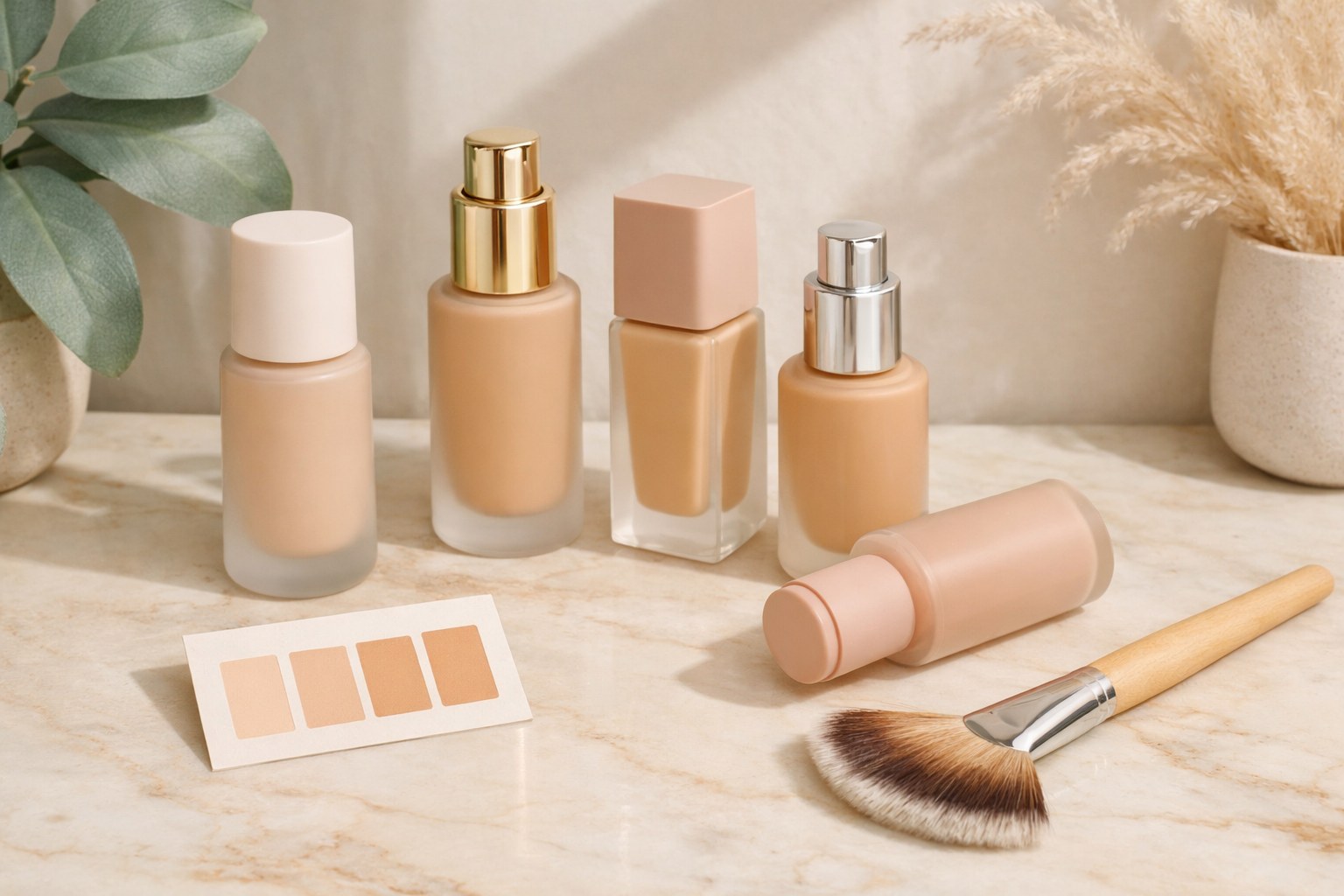
Featured Options Compared in This Guide
Full specs & notes ↓For acne-prone skin, a finished product’s non-comedogenic claim and your response to the formula are more useful than “paraben-free” alone. Choose the coverage and finish you need, avoid ingredients you know cause problems for you, and remove makeup consistently. A powder is not automatically safer than a liquid, and a silicone-free formula is not automatically less likely to cause breakouts.
Parabens are preservatives, not a category of pore-clogging oils. FDA explains that preservatives help prevent harmful microbial growth and says it does not currently have information showing that parabens as used in cosmetics affect human health. You can prefer a paraben-free formula without treating its presence in another product as proof of harm. FDA: Parabens in Cosmetics.
Three different coverage options
The current published ingredient lists for these products do not list parabens; bareMinerals also explicitly states that its formula is made without them. The comparison concerns formula and use, not a test establishing which will avoid breakouts for you.
bareMinerals ORIGINAL Loose Powder Foundation SPF 15
This loose powder is described by the manufacturer as providing a luminous finish and buildable coverage. Its listed mineral ingredients include mica, iron oxides, titanium dioxide, zinc oxide and bismuth oxychloride, with shade-specific variations. It is not simply a silica-and-iron-oxide powder. Manufacturer’s product and ingredient page.
Choose it to compare: You prefer applying dry powder with a brush and building coverage gradually. The brand’s method is to swirl a small amount in the cap, tap excess from the brush, and buff onto the skin.
Tradeoff: Powder application requires a brush and can be less convenient for touch-ups than a closed liquid dispenser. SPF 15 is below the AAD’s recommended SPF 30 minimum, so keep a suitable sunscreen in the routine rather than relying on the powder as your only protection.
ILIA True Skin Serum Foundation
ILIA describes True Skin as a medium-coverage liquid with a natural finish, formulated without fragrance and labeled non-comedogenic. The current list includes aloe leaf juice, niacinamide, allantoin and dimethicone. Those are ingredients in a finished makeup formula, not a prescription acne treatment. ILIA True Skin.
Choose it to compare: You want a pump-bottle liquid and medium coverage. Shake it, start with the manufacturer’s suggested one or two pumps, and build thin layers only where you want more coverage.
Tradeoff: It does not provide a labeled SPF claim on the reviewed page. If you already use acne medication, consider how your moisturizer, sunscreen and foundation layers feel together before adding primer or setting spray.
ILIA Super Serum Skin Tint SPF 40
This is a tint rather than a conventional foundation. ILIA describes light-to-medium coverage, a dewy finish, 30 shades, and a fragrance-free, non-comedogenic formula. Its current ingredients include squalane and niacinamide. ILIA Skin Tint.
Choose it to compare: You want sheer-looking color and a dewy base rather than heavier coverage. Match undertone as well as depth.
Tradeoff: A light cosmetic application may not supply the labeled sunscreen protection. It is also not water- or sweat-resistant, according to ILIA’s FAQ. For activities involving sweating or swimming, use an appropriate sunscreen.
The AAD recommends broad-spectrum SPF 30 or higher with water resistance. AAD sunscreen selection.
What an ingredient list cannot settle
An isolated ingredient “comedogenic score” cannot tell you how every finished foundation will behave on your skin. Concentration, formulation and the rest of your routine matter, and a reaction is not always acne. Do not assume an oil replaced a preservative, or that dimethicone must clog pores because it forms a film.
The AAD recommends looking for terms such as oil-free, non-comedogenic or won’t clog pores when choosing makeup for acne-prone skin. It also notes that makeup-related acne may take time to appear, making the cause difficult to identify. A short trial with no new spots cannot prove that a foundation is universally compatible. AAD makeup and acne guidance.
A practical way to introduce a new base
Keep the rest of your routine stable while you try one foundation. Avoid buying a matching primer, concealer and setting spray simultaneously if you are trying to understand skin compatibility. Record the shade and formula so you can repurchase the same version if it suits you.
Remove makeup before bed and cleanse gently. AAD recommends washing makeup brushes weekly and avoiding shared makeup or applicators. If you suspect a product is causing breakouts, stop using it; persistent acne may need treatment rather than another foundation swap. AAD guidance.
For label help, see how to read skincare ingredients. For the difference between ILIA’s two bases, see our ILIA product review.
Sources
Products Compared in This Guide
Paraben-Free Foundation — Top-Spec Options
Compare current model specifications, material disclosures, and third-party certifications for paraben free makeup 9 foundations only 4 didnt break me out.
Certified Paraben Free Makeup 9 Foundations Only 4 Didnt Break Me Out Alternatives
Check verified certification scope, replacement parts, and packaging details across clean beauty listings.