Plastic-Free Body Wash: Choosing a Bar That Fits Your Skin
Compare paper-wrapped soap with a non-soap cleansing bar, understand hidden plastic film, and store body bars without unsupported longevity claims.
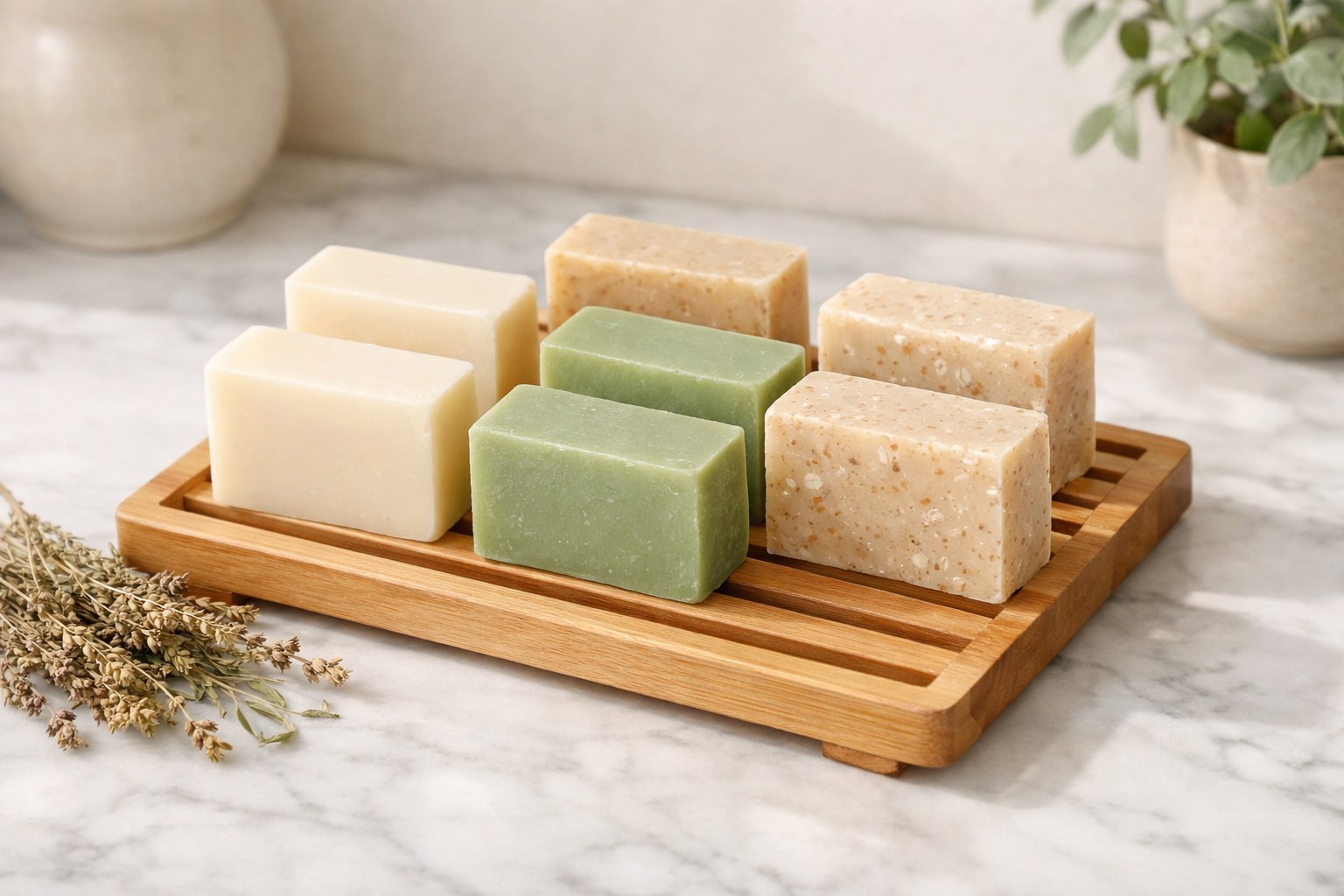
Featured Options Compared in This Guide
Full specs & notes ↓For a paper-packaged body wash, consider a fragrance-free soap bar such as Dr. Bronner’s Unscented Pure-Castile Magic Bar Soap. If true soap leaves your skin uncomfortable, compare a non-soap cleansing bar even if its packaging contains some plastic. A useful replacement needs to clean comfortably and suit your storage space; being solid does not guarantee either result.
Two current products make the tradeoff clear: Dr. Bronner’s discloses a recycled-paper wrapper, while Vanicream Cleansing Bar’s disposal instructions identify plastic film inside its packaging.
True soap and cleansing bars are different
Traditional soap is made by reacting fats or oils with an alkali. Properly made finished soap does not retain the lye used in that reaction. Many modern solid cleansers use synthetic detergents instead, or a combination of cleansing ingredients. The FDA explains that a product sold as “soap” may not meet the regulatory definition of true soap. FDA soap guide.
“Syndet” is shorthand for a synthetic-detergent cleanser. It does not mean inferior or unsafe. Conversely, “natural soap” does not establish suitability for eczema, a particular pH, or suitability for your face. Choose according to the complete formula and its labeled use.
Compare two real options
| Product | Formula information | Packaging information | Best reason to consider it |
|---|---|---|---|
| Dr. Bronner’s Unscented Pure-Castile Magic Bar Soap | Oil-based true soap; no added fragrance or essential oils in this variant | Brand states 100% post-consumer recycled paper wrapper | You want a paper-wrapped, unfragranced true soap |
| Vanicream Cleansing Bar | Mainly non-soap surfactants, including sodium cocoyl isethionate; no botanical extracts or essential oils | Box plus #5 plastic film identified in recycling directions | You want a non-soap bar and accept some packaging plastic |
Sources: Dr. Bronner’s product page and Vanicream Cleansing Bar.
Dr. Bronner’s: the paper-wrapper choice
The Unscented bar’s listed ingredients include coconut, palm, olive and hemp oils, sodium hydroxide used in saponification, and jojoba wax. The presence of palm oil is relevant if that is an ingredient you avoid; “Castile” should not be read as proof of an olive-oil-only recipe.
The manufacturer describes the wrapper as recycled paper. That does not establish that every seller’s shipping box, multipack or protective wrapping is plastic-free. Order a single bar first if you are uncertain about the formula.
Although the manufacturer also uses “Baby Unscented” in its description, the brand says it is not tear-free and directs users to keep it out of the eyes. No baby-use claim should be inferred from an unscented label.
Vanicream: the non-soap comparison, with a packaging compromise
Vanicream calls this a cleansing bar because most of its surfactants are non-soap ingredients. The published formula also contains ingredients such as petrolatum, simethicone and PEG compounds. Their presence does not make it reasonable to dismiss the product as an unsafe cleanser.
Its directions cover face, hands and body: lather with water, rinse and pat dry. The disposal section specifically mentions #5 plastic film, so this is not a fully plastic-free packaging option. It remains a useful comparison if you prioritize a non-soap formulation or have found traditional soap uncomfortable.
Make the bar work in your bathroom
Store the bar where it can drain between uses. A slatted dish or raised rack is useful if it keeps the bar above standing water; place it outside the direct shower spray. Clean the holder regularly. For travel, let the bar dry before closing the container when possible, and reopen it to dry at your destination.
You do not need to replace a functioning plastic soap case with a new metal one. Reusing what you already own avoids an additional purchase. These habits help manage wet storage, but they cannot establish a fixed number of showers per bar.
To compare cost, divide the delivered price by the labeled net weight, then note how long the bar lasts in your own routine. A bar’s hardness, size, application and storage all affect its usable life; price per ounce alone does not tell the whole story.
If your skin feels dry after washing
Use warm rather than hot water and avoid prolonged washing or aggressive scrubbing. AAD recommends short baths or showers, a gentle cleanser used where needed, and moisturizer while skin is still damp. It also recommends fragrance-free products for dry skin. AAD dry-skin guidance.
If a bar causes persistent stinging or irritation, stop using it. Do not add an exfoliating scrub or assume you need to adjust to it. A bottled cleanser that suits your skin can be a better purchase than repeatedly trying bars you cannot finish. See our fragrance-free routine guide for an alternative cleanser format.
Be precise about the environmental benefit
A paper-wrapped bar can avoid the immediate purchase of a plastic wash bottle. That is narrower than saying it is “zero waste,” harmless in waterways, or always lower-carbon. FTC guidance calls for qualification of recycling and composting claims according to actual disposal options. FTC Green Guides.
Check the wrapper, keep shipping materials in the comparison, and use your local disposal instructions. Our beauty-packaging guide explains how to compare refills and collection programs without assuming every sustainability claim means the same thing.
Sources
Products Compared in This Guide
Plastic-Free Body Wash — Certified Options
Compare current model specifications, material disclosures, and third-party certifications for plastic-free body wash.
Plastic-Free Body Wash — Lower-Impact Alternatives
Check verified ingredient/material disclosures and replacement options for plastic-free body wash.