Sustainable Hiking Footwear: Materials, Waterproofing, and Repair
Compare hiking footwear materials, recycled-content claims, waterproofing care, and repair limits before choosing boots or shoes.
Featured Options Compared in This Guide
Full specs & notes ↓Choose hiking footwear that fits your needs, then compare exactly which materials are recycled, what its waterproofing claim covers, and which worn parts can be repaired. These are separate decisions. A recycled lining cannot tell you how a shoe will fit or whether its sole can be replaced.
Compare components, not an overall green label
Two Merrell designs illustrate why the details matter. They share a brand and some component names, but their uppers, footbeds, and waterproofing descriptions differ. The table summarizes Merrell’s specifications without assigning an environmental ranking.
| Construction detail | Men’s Moab Speed 2 GORE-TEX shoe | Men’s Moab 3 Mid Waterproof boot |
|---|---|---|
| Upper | Ripstop nylon combined with TPU | Pig suede combined with mesh |
| Laces and webbing | Merrell specifies entirely recycled material | Merrell specifies entirely recycled material |
| Mesh lining | Entirely recycled, according to Merrell | Entirely recycled, according to Merrell |
| Footbed | Removable EVA insert with 50% recycled content; mesh cover described as entirely recycled | Contoured Moab 3 footbed; no recycled percentage stated for it |
| Midsole | FloatPro foam | Super Rebound Compound |
| Waterproofing | GORE-TEX membrane | Waterproof membrane, without a membrane brand identified in the feature list |
| Outsole | Vibram TC5+ | Vibram TC5+ |
Sources: Merrell Moab Speed 2 GORE-TEX and Merrell Moab 3 Mid Waterproof.
If avoiding animal materials is your priority, the Speed 2 is the relevant starting point: Merrell identifies it as vegan-friendly, while the Moab 3 Mid explicitly contains pig suede. That manufacturer designation does not establish a lower environmental footprint. If you want a mid-height boot and accept leather, try the Moab 3 Mid rather than assuming the two designs are interchangeable.
For either pair, use your intended hiking socks during fitting. Compare toe room, heel movement, forefoot comfort, and collar contact within the retailer’s fitting arrangements. Treat this as a buying decision separate from the recycled-content comparison.
What a recycled percentage leaves unanswered
The Speed 2’s recycled EVA claim applies to its removable footbed. It does not describe the separate FloatPro midsole. Likewise, recycled laces and lining do not establish the recycled share of the entire shoe. You cannot calculate that share by counting the components with recycled claims; their material quantities also matter.
The FTC’s Green Guides summary calls for specific qualifications when only part of a product uses recycled material. It also treats recycled content, recyclability, compostability, and degradability as distinct claims.
For a practical comparison, record the component alongside each percentage. Prefer a statement about a named lining or footbed over an unexplained environmental badge, but do not turn that disclosure into a whole-shoe verdict. Neither Merrell description supplies a comparable lifecycle assessment that establishes an environmental winner between these designs.
A synthetic upper may meet an animal-material preference; leather may meet another buyer’s material preference. Neither material name establishes repairability. If repair is the deciding factor, investigate the service available for the exact boot before choosing the upper material.
Separate the membrane from the surface treatment
Waterproofing and surface water repellency need different attention. Gore’s footwear instructions say to renew the durable water-repellent treatment when water stops forming beads and running off. A wet-looking upper is therefore a reason to assess surface care, not sufficient evidence by itself that the membrane has failed. GORE-TEX footwear care.
For GORE-TEX footwear, Gore recommends a water-based pump-spray treatment and advises against waterproofing waxes or greases because they can impair breathability. Follow the shoe manufacturer’s material-specific instructions as well. Do not automatically apply a treatment intended for one leather boot to a different shoe construction.
PFAS claims also need a defined scope. Gore describes its next-generation expanded polyethylene, or ePE, membrane bonded to selected textiles as producing laminates without deliberately added PFAS; it acknowledges that traces may remain. Its reduced-carbon-footprint statement concerns particular laminates and cites the Higg Materials Sustainability Index. These are material-level statements, not a lifecycle comparison of finished hiking shoes. Gore’s materials explanation.
The Merrell Speed 2 description names GORE-TEX but does not identify ePE or provide a complete-shoe PFAS statement. If that distinction determines your purchase, request confirmation for the exact model covering both the membrane and the water-repellent finish. Do not transfer a claim about Gore’s newer laminates to every shoe carrying its name.
Repairability depends on the model and the damage
A named outsole compound is not a repair commitment. The two Merrell descriptions identify Vibram TC5+, but neither states that these models qualify for a resole service.
Danner’s recrafting program shows what a more concrete repair route looks like: model eligibility, an assessment, and different service options. It also shows the limits. Danner says leather uppers must lack holes and major cracks, and that excessive wear around the welt can prevent attachment of a replacement sole. The company cannot patch or replace leather components or replace nylon side panels.
Even within that program, services differ. Danner specifies that the Mountain 600 Leaf GTX qualifies only for resoling. Its eligibility should not be read as access to every rebuild service.
Before budgeting around future repairs, establish:
- Whether the exact model qualifies, rather than relying on the brand’s general repair page.
- Which components the proposed service replaces, especially when both tread and cushioning are worn.
- Whether upper damage rules out the repair.
- The total quote, shipping arrangements, and expected time without the boots.
For a pair you already own, seek an assessment while the upper is still serviceable. Danner’s requirements make upper care part of preserving access to its repair program, not merely a cosmetic task.
Choose maintenance that addresses the problem
Dirt and routine cleaning: For GORE-TEX footwear, remove laces and loose debris, taking out the footbed if possible. Use a brush or sponge, lukewarm water, and a little liquid detergent. Gore advises against bleach and machine washing, and directs leather-shoe owners to the footwear manufacturer’s instructions.
Wet footwear: Let it dry at a moderate temperature away from direct heat. Gore advises against leaving footwear wet for prolonged periods.
Loss of surface beading: Follow the compatible water-repellent treatment instructions. Treating the surface does not establish that other damage has been repaired.
Worn soles or damaged uppers: Ask about a model-specific repair assessment rather than expecting cleaning or a spray treatment to solve structural wear.
Sources: GORE-TEX cleaning, drying, and treatment guidance and Danner repair requirements.
Where to browse
Prices and availability change. These search listings are a place to check the current product.
Sources
Products Compared in This Guide
Merrell Moab Speed 2
Compare current manufacturer specifications, materials, and package options for Merrell Moab Speed 2.
Merrell Moab 3 Mid
Compare current manufacturer specifications, materials, and package options for Merrell Moab 3 Mid.
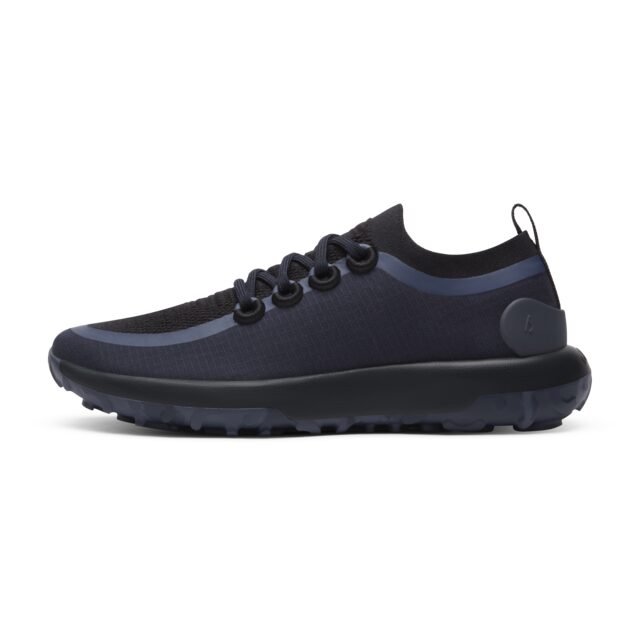
Allbirds Trail Runner SWT
Merino wool upper, sugarcane EVA midsole (SweetFoam), 7.1 kg CO₂e per pair printed on the box. Comfortable for all-day hiking on groomed and light off-trail. Runs true to size. Merino regulates temperature better than synthetic in warm weather. Best choice if you hike maintained trails and want a zero-stress footwear story.
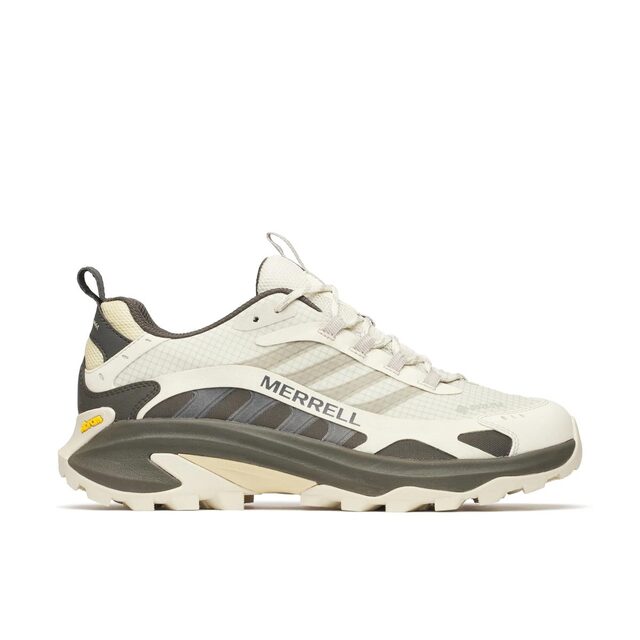
Merrell Moab Speed 2 GTX
Recycled materials in upper and lining, GORE-TEX waterproof membrane, Vibram outsole. The Moab name has 15 years of reliability behind it. The Speed 2 adds more aggressive lugs than the original Moab for better traction on loose terrain. Runs slightly narrow; size up half a size if you have wide feet.
Frequently Asked Questions
Does a Vibram outsole mean a boot can be resoled?
The outsole name alone does not establish repair eligibility. Confirm the exact model and the repair service available. Danner's recrafting program also requires the existing boot to meet condition requirements.
Does recycled content make hiking footwear recyclable or biodegradable?
No. Recycled content concerns material inputs. Recycling access, biodegradability, and compostability require separate evidence; a recycled lining does not establish any of these properties for the complete shoe.
Does the GORE-TEX name establish that a shoe contains no PFAS?
No. Gore describes particular ePE laminates as made without intentionally added PFAS, while allowing for traces. That statement does not identify the membrane or every material in an individual shoe.