Sustainable Rain Jackets: Fit, PFAS Claims and Repair
Choose a hiking rain jacket by practical fit, specific environmental claims and repair options, with guidance for buying new or used.
Featured Options Compared in This Guide
Full specs & notes ↓Choose a hiking rain jacket you can move in, then compare the scope of its environmental claims and the help available when it is damaged. A recycled-fabric statement, a PFAS declaration and a repair service answer different questions; none alone establishes the best jacket for your use.
Compare jackets around the hike you actually take
Use the same clothing and pack when trying different shells. This gives you a practical basis for choosing between them without relying on a sustainability slogan.
| Your likely use | What to compare | Decision to make |
|---|---|---|
| A shell carried for occasional rain | Space it occupies in your own pack and ease of putting it on over your layers | Reject a compact option if it restricts movement when worn |
| Regular hiking with a loaded pack | Hood movement, hem coverage and access to pockets with the hipbelt fastened | Prefer the fit that works with your pack, rather than judging the jacket on a hanger |
| Cool-weather walks with a thicker midlayer | Room through the shoulders, elbows and chest | Try it over that midlayer before selecting a size |
| Buying used | Interior condition, visible damage and the seller’s return terms | Resolve signs of flaking or separation before committing |
| Keeping an existing shell | The location and extent of damage, plus repair-service advice | Seek an assessment before deciding that replacement is necessary |
Zip each jacket fully and turn your head in both directions with the hood adjusted. Raise your arms, reach toward your pack’s bottle pocket and bend as you would to tie a boot. Check whether the hem still provides the coverage you want.
With your hipbelt fastened, try the pockets and any ventilation openings. A feature is only useful to you if you can reach and operate it in the clothing system you intend to wear. For online purchases, compare the seller’s size guidance and return conditions before ordering.
Separate three environmental questions
What exactly is recycled?
Distinguish a claim about the outer fabric from a claim about the entire garment. Record the named component and any stated recycled proportion when comparing jackets; do not treat different scopes as equivalent.
The FTC says recycled-content claims should concern material recovered or diverted from the waste stream, and products made partly from recycled material need qualified claims. It also cautions against broad environmental-benefit claims that a specific attribute cannot substantiate. A recycled outer fabric therefore does not, by itself, establish an overall environmental winner. FTC Green Guides summary.
Where does the PFAS statement apply?
For a rain jacket, ask whether the statement names only the water-repellent finish or also addresses the other garment components. Keep the manufacturer’s wording attached to that scope when comparing options.
Also distinguish a declaration about intentionally added PFAS from a claim about measured content. New York DEC defines intentional addition in terms of a chemical’s intended function in a product or component, and separately encourages manufacturers to prevent contamination during production. These are different issues; an intentional-addition statement should not be read as a laboratory finding of zero detectable PFAS. New York DEC apparel guidance.
For an older or secondhand jacket, request information tied to that garment’s identifying label. A current brand-wide statement should not be assumed to describe an earlier purchase.
What does legal compliance tell you?
New York’s restriction on intentionally added PFAS in new apparel took effect on January 1, 2025. Its separately defined category of outdoor apparel for severe wet conditions has restrictions taking effect on January 1, 2028. DEC describes that category around extreme and extended wet-weather uses. Do not assume every hiking rain jacket falls under the same deadline, or that availability for sale establishes a particular jacket’s composition. DEC recommends asking the manufacturer or supplier about intentionally added PFAS. New York DEC apparel guidance.
Small damage and a failing interior are different buying decisions
Before replacing a jacket with a small hole, ask about a suitable repair. Patagonia’s Australian repair guidance says small holes or tears can usually be addressed with a patch and explains that repair decisions depend on the individual garment. That supports seeking help for localized damage; it does not promise that every damaged shell is repairable. Patagonia repair guidance.
The same guidance lists delaminated items—described as having an interior lining that flakes off—among items Patagonia cannot repair through that service. This is a meaningful distinction when shopping used. Ask for close photographs of the interior, including the shoulders, hood and visibly damaged areas. If the lining is flaking or separating, get an assessment before treating the jacket as a repair bargain. That published guidance is from Patagonia’s Australian service; confirm the options with the service handling your garment. Patagonia repair guidance.
When requesting help, include photographs of the damage and garment label, explain where you notice water entering, and describe any previous repair. Ask what the proposed work can address, what it will cost and when it can be completed. Follow the particular garment’s care instructions instead of applying a washing or drying recipe to every rain jacket.
Make the purchase decision
Keep an existing jacket in consideration if it still meets your needs; a new environmental label alone is a weak reason to replace it. For a new purchase, prioritize fit with your hiking layers, clearly scoped material and PFAS statements, and usable repair support. For a used purchase, give condition and repair feasibility more weight than the original marketing description.
If two jackets both fit well, compare the actual declarations side by side: the component covered by recycled content, the scope of the PFAS statement, and the repair options available to you. Choose according to those specific differences without turning any single attribute into an unsupported claim of overall sustainability.
Sources
Products Compared in This Guide
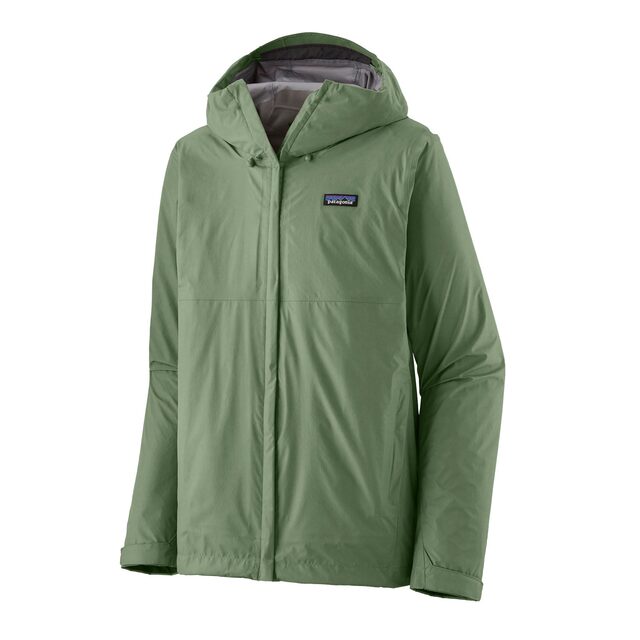
Patagonia Torrentshell 3L Rain Jacket
100% recycled nylon face, PFC-free DWR, three-layer construction. The benchmark sustainable rain shell. Handles sustained Pacific Northwest rain for hours. Pit zips for ventilation. Stuffs to its own jacket pocket. Patagonia's Worn Wear program frequently stocks them at 40-50% off retail.
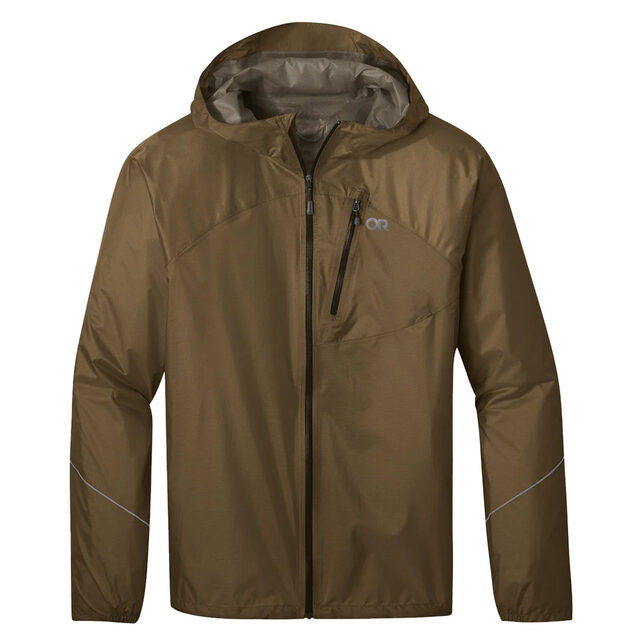
Outdoor Research Helium Rain Jacket
20D recycled nylon shell, 6.5 oz total weight—the lightest functional rain jacket in this roundup. PFC-free DWR. Best for fast-and-light hiking where pack weight is the priority. Less durable than the Torrentshell under heavy sustained rain or abrasion.
REI Co-op Rainier Rain Jacket
BLUESIGN-certified recycled nylon, PFC-free DWR. Pit zips. Helmet-compatible hood. REI's lifetime satisfaction guarantee covers it. The best value in sustainable rain shells—performance is within 10-15% of the Torrentshell at $30 less.
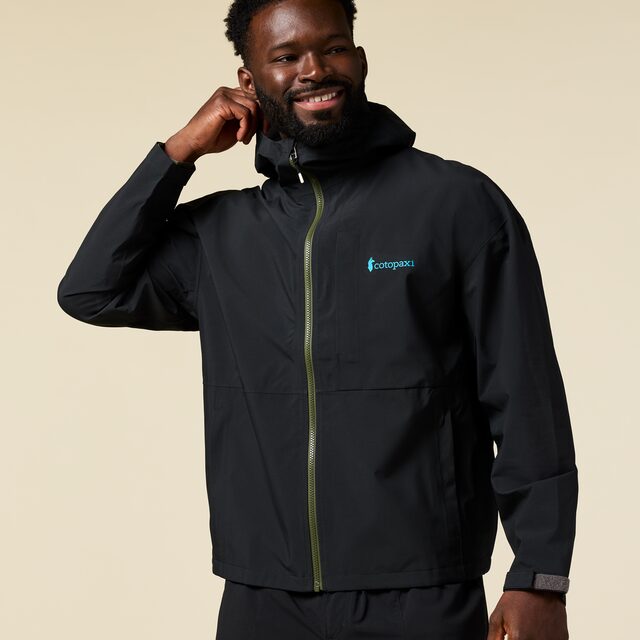
Cotopaxi Cielo Wind Hoodie
Recycled nylon, PFC-free DWR, wind-blocking. Not waterproof—it's a windshell that handles light rain and drizzle, not sustained downpours. At $90 it's the most affordable option for Pacific Crest Trail-style hiking where precipitation is mostly brief showers rather than sustained rain.
Frequently Asked Questions
Does a statement about the water-repellent finish cover the entire jacket?
Do not extend a finish-specific statement to the whole garment. Ask whether the manufacturer's declaration also covers the other components. New York DEC identifies manufacturers and suppliers as the best sources for information about intentionally added PFAS.
Can a delaminated rain jacket be repaired?
Do not assume so. Patagonia's Australian repair guidance lists delaminated items, described as having an interior lining that flakes off, among items it cannot repair. Ask the relevant repair service to assess the garment before paying for a used jacket with this damage.
Does recycled fabric make a jacket environmentally better overall?
A recycled-content claim describes a material attribute. It does not establish the environmental impact of the whole jacket. The FTC advises that broad environmental claims need substantiation and that partial recycled content should be clearly qualified.