Budget Hiking Boots: Fit, Recycled Materials, and Buying Advice
Compare new, clearance, and used hiking boots by fit, recycled components, return terms, and repair costs before spending your budget.
Featured Options Compared in This Guide
Full specs & notes ↓For a limited budget, prioritize fit, usable condition, and the total cost of getting onto the trail. Recycled components can help distinguish otherwise suitable boots, but they do not make an uncomfortable or damaged pair good value.
Compare the exact size and width you would buy. Include shipping, any immediate replacement parts, and proposed repairs in your spending limit. A discount percentage alone cannot answer whether a pair is affordable for you.
New, clearance, or used: where the savings can disappear
| Buying route | When to consider it | What to settle before paying |
|---|---|---|
| New with fit returns | You are trying an unfamiliar model or width | Which indoor fit checks are permitted, the return deadline, and any return costs |
| Clearance or final sale | You already know the exact model fits | Whether the selected item can be returned or exchanged |
| Used | You can inspect the pair and assess fit | Wear, storage history, damage, and whether a fit return is available |
| Repairing boots you own | The fit already works and a repairer accepts the job | The complete repair estimate and expected turnaround |
Merrell’s Moab 3 Mid Waterproof page illustrates why return details matter. It states a 30-day fit guarantee for footwear that remains unworn, unwashed, and unaltered, while the site’s final-sale notice excludes returns and exchanges. Confirm which terms apply to your selected item; do not assume the general returns banner overrides a final-sale designation. Merrell product page
For a fitting session, bring your usual hiking socks and any orthotics. Try both boots and compare adjacent sizes or widths where available. Walk, step up, and use a fitting ramp if the shop has one. Treat toe contact on a descent, rubbing, forefoot pressure, or distracting heel movement as reasons to try another fit before committing. Keep these checks within the seller’s return conditions.
If the forefoot feels cramped, compare a wider option or another model before simply choosing more length. Avoid buying an uncomfortable final-sale pair on the hope that wear will solve the problem.
What recycled materials actually tell you
The FTC advises shoppers to identify whether recycled-content claims concern the product, its packaging, or both, and how much recycled material is involved. For boots, take that comparison down to the individual component. A recycled lining percentage and a recycled outsole percentage describe different parts; they cannot be added together to calculate the whole boot’s recycled content. FTC green-marketing guidance
The men’s Merrell Moab 3 Mid Waterproof offers a concrete example. Merrell lists a pig-suede leather and mesh upper, a waterproof membrane, laces and webbing made entirely from recycled material, and a mesh lining also described as entirely recycled. It identifies the outsole as Vibram TC5+. These specifications do not establish that the complete boot is recycled or recyclable. Merrell materials
Use that information to make specific decisions:
- If you avoid animal leather, the listed pig-suede upper rules this model out.
- If width is your main concern, compare the medium and wide options shown on the page, then check availability for your size.
- If recycled content matters, compare the same components across candidates. Recycled laces alone do not establish an environmental advantage over another complete boot.
- If you are shopping a sale, match the full model name: men’s Moab 3 Mid Waterproof. Do not transfer these specifications to another Moab variant.
This is a materials example, not a promise that the model will meet every budget. For broader construction comparisons, see our hiking-footwear materials guide.
Used boots: inspect storage damage as well as tread
Ask for photographs of both outsoles, the sole-to-upper joints, the interior heel lining, and the size labels. Compare the two boots for uneven wear. Ask when they were purchased and whether they spent long periods in storage.
Storage history matters particularly for polyurethane midsoles. LOWA explains that moisture-related aging, called hydrolysis, can deteriorate PU during prolonged storage. Its listed warning signs include midsole cracking, crumbling foam, and sole separation. Lightly worn tread therefore should not be your only reason to trust an older pair. LOWA warranty and hydrolysis guidance
Pass on a pair with crumbling material or a separating sole unless a repairer has assessed it and the repair cost makes sense. Do not budget on receiving a warranty replacement: LOWA’s U.S. warranty, for example, covers manufacturing defects for the original owner for two years from purchase and excludes hydrolysis. Those terms are specific to LOWA, but they show why a used purchase needs its own financial assessment. LOWA warranty
Get a repair quote before paying for repairability
A brand name or outsole logo is insufficient grounds to assume a boot can be resoled. LOWA’s U.S. service through Daub’s Cobbler Shop accepts certain cemented models, including the TIBET GTX and CAMINO GTX. It says injected-sole models such as the RENEGADE EVO and ZEPHYR MK2 cannot be resoled by that shop, although some stitching or hardware repairs may be possible. LOWA resoling service
Before buying a used pair that needs work, send the repairer the exact model and photographs. Request an itemized estimate and ask about shipping and turnaround. Compare purchase plus repair costs against a suitable replacement. Repairability is useful only when the available service, condition, and cost work for your pair.
Keep waterproofing separate from crossing decisions
Merrell describes the Moab’s membrane as resisting water entry while allowing moisture to escape. That specification is not a basis for deciding whether to enter a river. Merrell product details
For routes with crossings, the National Park Service recommends checking current conditions with a ranger or guide and having a backup plan when water is too high, cold, or swift. It also discusses bringing spare footwear and warns that barefoot crossings expose feet to submerged hazards. Choose your route and crossing plan independently of a boot’s waterproof label. NPS river-crossing guidance
Sources
Products Compared in This Guide
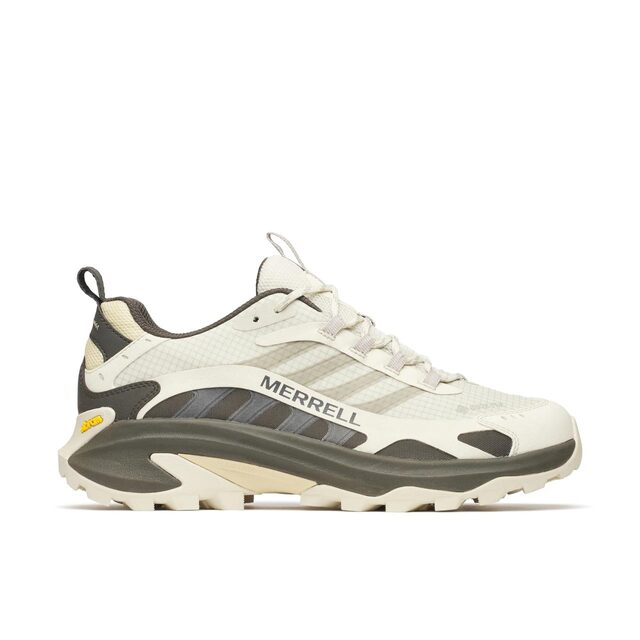
Merrell Moab Speed 2 GTX
The ceiling of the under-$150 category. Recycled materials in upper lining, GORE-TEX membrane, Vibram outsole (resoleable). 15 years of Moab reliability behind the design. Runs slightly narrow—size up half a size for wide feet. Best all-around sustainable hiking boot at this price point.
REI Co-op Trailmade Waterproof Boot
BLUESIGN-certified materials, KEEN.Dry waterproof membrane (PFC-free), REI's lifetime satisfaction guarantee. At $90 this is the strongest sustainability-credentials-per-dollar ratio in hiking boots. Good for occasional hikers (10-15 days/year) who don't need premium construction.
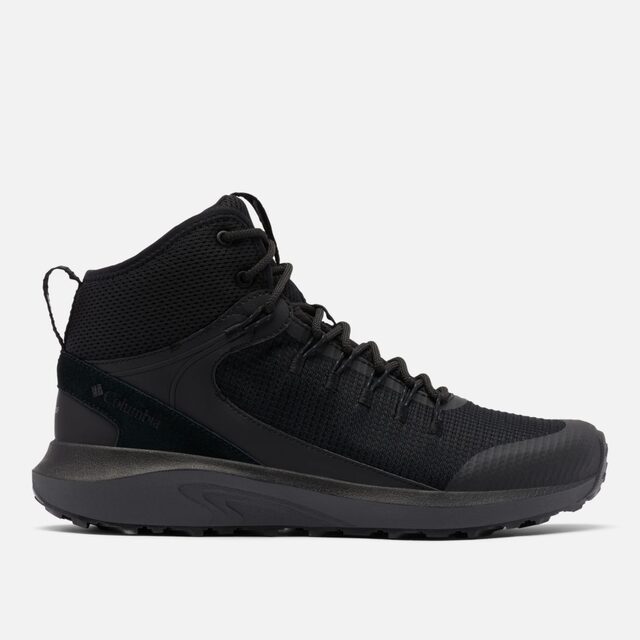
Columbia Trailstorm Waterproof Hiking Boot
Columbia uses recycled materials in upper fabrics across their Trail series and has committed to PFC-free DWR on new models. The Trailstorm is their most affordable waterproof hiking boot. Fits wider feet better than Merrell. Less durable than the Moab at high use intensity, but solid for occasional hiking.
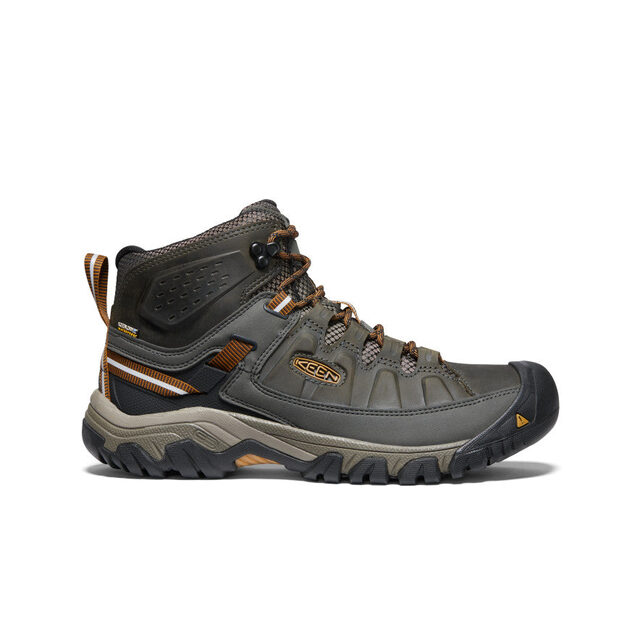
KEEN Targhee III Waterproof Boot
KEEN uses recycled materials across the Targhee line and their KEEN.Dry membrane is PFC-free. Wide toe box is KEEN's signature—natural comfort if you have wide feet or wide toes. The Targhee III has a more aggressive lug pattern than earlier versions. KEEN has a formal take-back program.
Frequently Asked Questions
Do recycled laces make a hiking boot fully recycled?
No. A recycled-content claim about laces or lining applies to those components. It does not establish the recycled content of the upper, midsole, outsole, or complete boot.
When is a clearance hiking boot worth buying?
Consider it when the exact size and width fit, the total cost meets your budget, and you accept the item's return terms. Avoid using a final-sale purchase to experiment with an unfamiliar fit.
Can used hiking boots always be resoled?
No. Repair options depend on construction and the repair service. LOWA's U.S. service accepts certain cemented boots for resoling but excludes injected-sole models such as the RENEGADE EVO and ZEPHYR MK2 from that service.