Organic Seed Starting Guide 2026: Trays, Light, Heat, and Timing
Start seeds for a small-space garden with practical advice on organic seed, tray sizes, grow lights, heat mats, watering, and transplant timing.
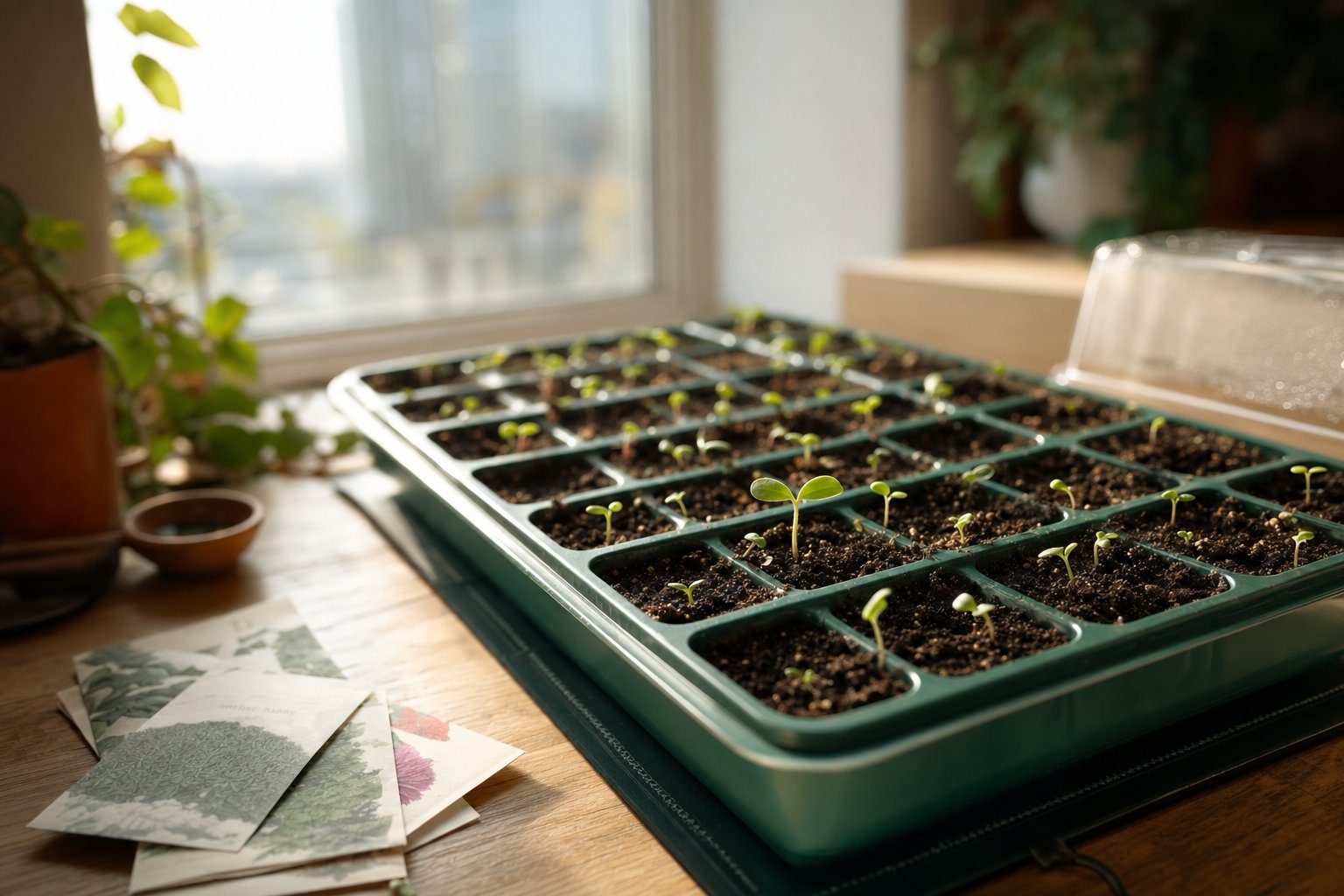
Featured Options Compared in This Guide
Full specs & notes ↓For an apartment or balcony garden, size your seed-starting setup around the plants you can eventually grow outdoors. Seedlings need additional space under lights when they move into larger pots. Count the planting spaces in your container garden before choosing tray capacity.
Tomatoes, peppers, and eggplants benefit from an indoor head start, while cucumbers, squash, and melons can be started indoors or sown directly outdoors. Starting from seed lets you choose varieties and schedule your transplants. Buying a few starts is also a practical option when indoor growing space is limited. University of Maryland Extension explains these crop choices and their space requirements.
What makes the seed choice organic?
Choose seed identified as organically produced when that is your goal. USDA explains that organic propagation materials exclude genetically engineered varieties and generally permit only treatments allowed in organic production, with an exception for treatments required by federal or state phytosanitary rules. Organic seed does not necessarily mean untreated seed.
For certified organic production, organic seed is required unless an equivalent organic variety is commercially unavailable. Using conventional seed under that exception requires documentation of availability, genetic-engineering status, and treatments. Annual transplants have separate organic-production requirements. These rules concern propagation materials; they do not establish organic credentials for a tray or heat mat. See the USDA Seeds and Planting Stock Practice Standard.
Select the variety for its growing habit and time to harvest as well as its organic status. Minnesota Extension recommends checking maturity information and avoiding more seed than you can use within a few years. Store leftover seed cool and dry; a large packet does not create more balcony space. Source: Minnesota Extension.
Schedule backward from planting out
Choose the crop’s suitable outdoor planting window, then work backward using its indoor growing interval. A last-freeze date helps with planning, but it cannot promise suitable weather. NOAA’s spring-freeze map uses historical climate averages, and actual conditions can differ substantially in any given year. Source: NOAA.
Maryland Extension gives these approximate indoor growing periods before plants transition outside:
| Crop | Approximate indoor growing period |
|---|---|
| Leafy greens | 2–4 weeks |
| Cabbage, broccoli, cauliflower | 4–6 weeks |
| Cucumber, squash, melons | 3–5 weeks |
| Tomato | 5–6 weeks |
| Pepper, eggplant, onion | 8–10 weeks |
Use these as planning ranges alongside the seed packet and local crop guidance. They are not a universal countdown from the last frost. Peppers and tomatoes need different indoor schedules even if they will share a balcony. Starting too early can leave you managing tall, root-bound plants while outdoor conditions remain unsuitable. Source: Maryland Extension.
For basil and other herbs, use species-specific packet instructions. Minnesota Extension emphasizes that sowing requirements vary by species. Source: Minnesota Extension.
Choose trays for root space and handling
Clean reused containers are a reasonable starting point. Maryland Extension recommends drainage holes and a depth of at least 2 inches. Individual cells make a group easier to move and keep neighboring roots from tangling. A flat without drainage can catch water underneath, but requires careful watering to avoid saturating the growing medium. Source: Maryland Extension.
For connected trays, Bootstrap Farmer’s two formats illustrate the tradeoff between cell width and capacity:
| Manufacturer-listed detail | 50-cell tray | 128-cell tray |
|---|---|---|
| Cell width | 1¾ × 1¾ inches | 1 × 1 inch |
| Overall tray dimensions | 21¼ × 11¼ × 2¼ inches | 21¼ × 11¼ × 2¼ inches |
| Suggested crops on the product page | Tomatoes, peppers, cucumbers, squash and other starts needing more room | Herbs, flowers, lettuce and cabbage-family crops |
| Practical tradeoff | More width per seedling | More individual starts in the same footprint |
Sources: Bootstrap Farmer’s 50-cell tray and 128-cell tray pages. These dimensions and crop suggestions come from the manufacturer.
Both listings give the same overall depth. The smaller cells in the 128-cell tray also do not eliminate later space needs. Maryland recommends larger individual growing spaces for tomato, pepper, and eggplant transplants and describes moving them into larger containers as they develop. For a handful of balcony plants, individual pots may be easier to accommodate than either full tray. Source: Maryland Extension.
Plan the cell insert and water-catching flat as separate items unless the package explicitly includes both. Reuse serviceable containers after cleaning and disinfecting them according to the disinfectant’s directions. Minnesota Extension recommends disinfecting previously used containers to reduce disease carryover. Source: Minnesota Extension.
Give light priority; add heat when needed
Light supports growth after emergence. Ordinary windows seldom provide enough light for sturdy seedlings, according to Maryland Extension. A south-facing bay window or sunroom with ample direct sunlight can work. Some direct sun on a windowsill does not establish that it will provide enough light throughout the day.
An adjustable LED grow light or fluorescent fixture lets you maintain the setup as plants grow. Maryland recommends 14–16 hours of light daily. Use a timer and leave a dark period each night. Sources: Maryland Extension, Minnesota Extension.
Follow the fixture’s seedling-distance and coverage directions, including any specified dimming setting. Arrange trays within that coverage and make the light height adjustable so you can maintain the recommended spacing as plants grow. Leave room for air to circulate around seedlings and disperse heat from the fixture. Iowa State Extension supports adjustable mounting and air circulation.
Heat addresses a cool growing medium. Maryland gives 65–75°F as a general germination range for many vegetables, while individual crops have different requirements. Measure the medium rather than assuming it matches room temperature: Minnesota notes that container mix can be cooler than indoor air. Sources: Maryland Extension, Minnesota Extension.
Bootstrap Farmer lists heat mats in 10 × 20, 20 × 20, and 20 × 48-inch sizes and describes a designed temperature rise of 10–20°F above ambient air. That specification does not establish a controlled final temperature. Match the mat to the tray arrangement, follow its operating instructions, and use a compatible temperature controller when needed. Source: Bootstrap Farmer heat mat.
After emergence, reassess the need for heat. Maryland explains that seedlings can grow in somewhat cooler conditions than those used for germination. Base continued heating on the crop and growing conditions. Source: Maryland Extension.
Sow into fresh mix and manage moisture
A fine seed-starting mix helps with very small seeds, but it is not essential for every vegetable. Maryland Extension also supports suitable soilless potting media. Use fresh mix; avoid dense garden soil, reused growing mix, and garden compost as substitutes in seed trays. Minnesota’s disease guidance recommends these precautions to reduce pathogen introduction. Sources: Maryland Extension, Minnesota damping-off guidance.
- Moisten the mix before filling containers. Work water through it until it is evenly damp without being saturated. Dry peat-based mix can repel water.
- Sow at the packet’s depth. Some seeds need light to germinate. Label the variety and sowing date so you can track each batch.
- Choose seed quantity by crop and seed condition. One seed per cell can suit tomatoes and peppers. For older seed, sowing extras can be useful. After true leaves develop, snip unwanted seedlings rather than pulling through neighboring roots.
- Use a cover if it helps retain moisture. A purchased dome is optional; Maryland also describes clear plastic covers. Keep the cover off the growing medium and remove it when sprouts appear, following Maryland’s approach.
Sources: Maryland Extension and Minnesota Extension.
Keep the medium moist during germination. After emergence, water as needed when the surface approaches dryness, without allowing the root zone to dry out completely. Water gently from above or let containers wick water from a shallow layer below. Drain excess water after either method; repeatedly misting only the surface can leave the deeper mix dry. Sources: Maryland Extension, Minnesota Extension.
Bottom-watering is convenient, but damping-off pathogens can move through shared irrigation water. Watch for soft, discolored stems that become thin near the mix surface. Infected seedlings rarely develop into vigorous plants. Discard affected plants and mix, then clean and disinfect containers and tools before restarting. Sources: Minnesota damping-off guidance, Maryland Extension.
Make room for the final indoor weeks
Fertilizer timing depends on the mix. Maryland notes that many potting mixes already contain enough fertilizer for at least six weeks. Minnesota recommends waiting until several true leaves develop before feeding seedlings in a mix that needs supplementation. Account for existing nutrients and follow the fertilizer’s transplant directions; an automatic feeding schedule can add nutrients the seedlings do not yet need. Sources: Maryland Extension, Minnesota damping-off guidance.
Move seedlings into larger pots when they outgrow their cells. Support the root ball and, if necessary, steady the plant gently by a leaf. Avoid gripping its delicate stem. Spread larger pots out under adequate light; allow for that expanded footprint when deciding how many seeds to start. Source: Minnesota Extension.
Begin acclimating plants to outdoor conditions about two weeks before planting out. Minnesota recommends starting with a few sheltered afternoon hours in shade, bringing plants inside before nighttime temperatures drop, then gradually increasing outdoor time and sun exposure. Adjust to the forecast and crop tolerance. Transplant on a cloudy day or in late afternoon once conditions are suitable. Source: Minnesota Extension.
For destination containers and layout, continue with the apartment garden guide.
Sources
- University of Maryland Extension: Starting Vegetable Seeds Indoors
- University of Minnesota Extension: Starting seeds indoors
- University of Minnesota Extension: How to prevent seedling damping off
- Iowa State University Extension: How do I set up supplemental lights for my seedlings?
- NOAA: When to Expect Your Last Spring Freeze
- USDA: Seeds and Planting Stock Practice Standard
- Bootstrap Farmer: 50 Cell Seed Planting Trays
- Bootstrap Farmer: 128-Cell Plug Trays for Seedlings
- Bootstrap Farmer: Seed Starting Heat Mat
Products Compared in This Guide
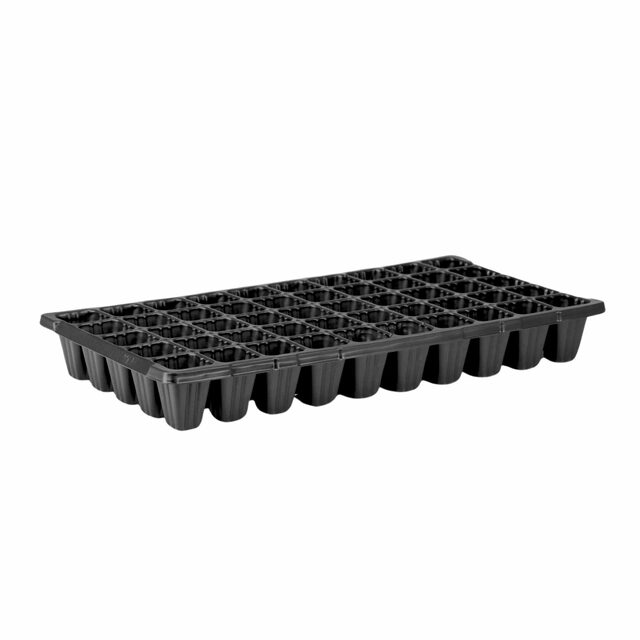
Bootstrap Farmer 50-Cell Seed Starting Tray (5-pack)
Thick-wall 1020 trays that survive 3–4 seasons without cracking or bowing. The 50-cell format gives cells deep enough for good root development before transplanting. Far thicker than the flimsy single-use trays sold at hardware stores. Comes with matching bottom tray for bottom-watering.
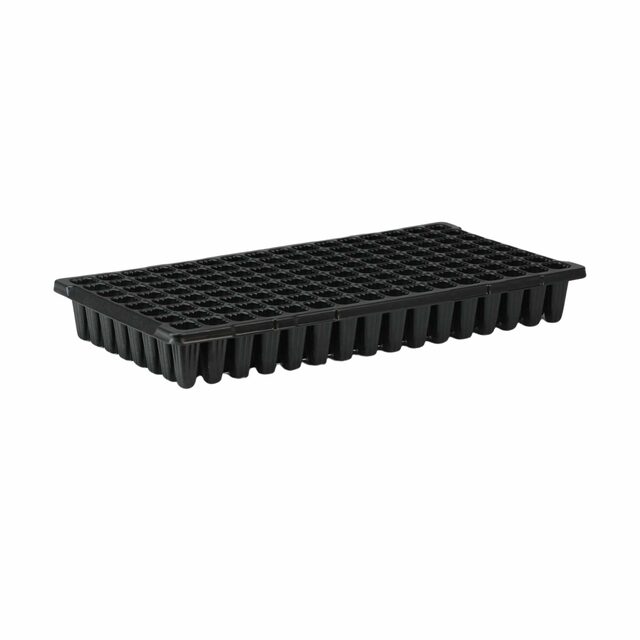
Bootstrap Farmer 128-Cell Plug Tray (5-pack)
For starting large batches of herbs, flowers, and greens where fine cell size is acceptable. The 128-cell format fits 3× more starts in the same tray footprint. Better for cut flowers, herb starts, and small-seeded crops (lettuce, basil). Bootstrap Farmer's thicker material quality holds here too.
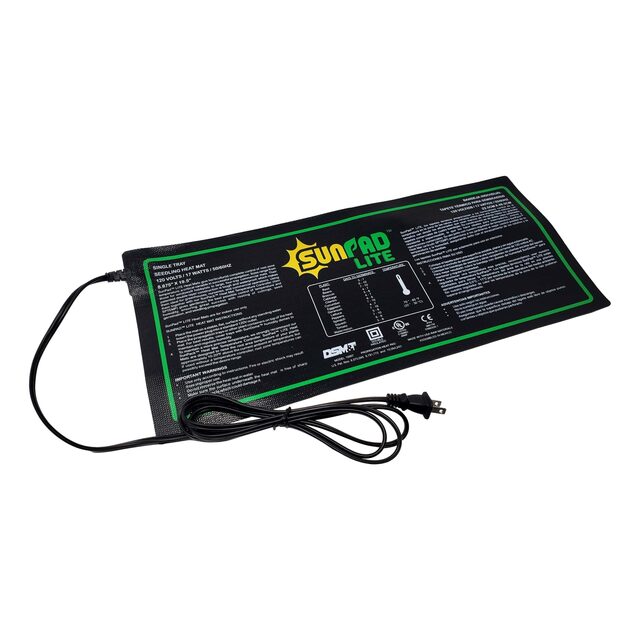
Bootstrap Farmer Seedling Heat Mat (20×20)
Raises soil temperature 10–20°F above ambient. Waterproof, wipe-clean surface. The 20×20 size fits one 1020 tray exactly — no overhang, no wasted heat. Tomato and pepper germination rate goes from 40–60% at room temperature to 80–95% with consistent soil warmth. Worth it.
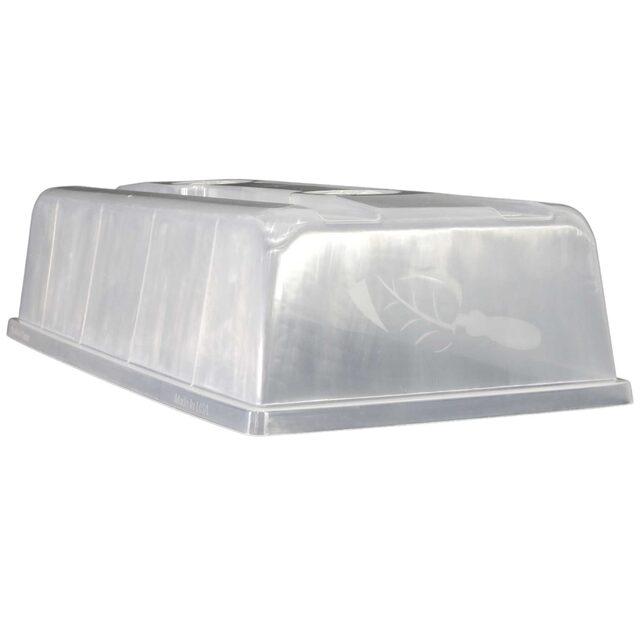
Bootstrap Farmer Humidity Dome (Standard Height)
Clear dome maintains 70–80% humidity above germinating seeds without creating the fog-out of cheaper domes. Vents on top for humidity adjustment. Remove when seedlings reach dome height — keeping it on after germination promotes damping off. A necessary part of the system, not an optional accessory.
Frequently Asked Questions
Do I need a special seed-starting mix?
A fine-textured seed-starting mix is useful for very small seeds, but a suitable fresh soilless potting mix also works for general vegetable seed starting. Avoid garden soil in trays, and account for any fertilizer already in the mix.
Should I choose a 50-cell or 128-cell tray?
The Bootstrap Farmer 50-cell tray has wider cells; its 128-cell tray fits more starts into the same listed outer dimensions. Both are starter containers. Plan larger pots when roots need more room, especially for tomatoes and peppers.
Can I start seeds without grow lights?
A very sunny south-facing bay window or sunroom may work, but ordinary windows often produce stretched seedlings. An adjustable grow light offers more control over light duration and coverage.
Does bottom-watering prevent damping off?
No. Either top-watering or bottom-watering can work when the mix drains properly. Damping-off pathogens can spread through shared water; clean containers, fresh mix, suitable warmth, and avoiding saturation all matter.