Sustainable Hair Care: Ethique, HiBAR, and Plaine Compared
Compare current shampoo bars and reusable liquid bottles by hair needs, fragrance, ingredients, storage, and the effort required to reduce packaging.
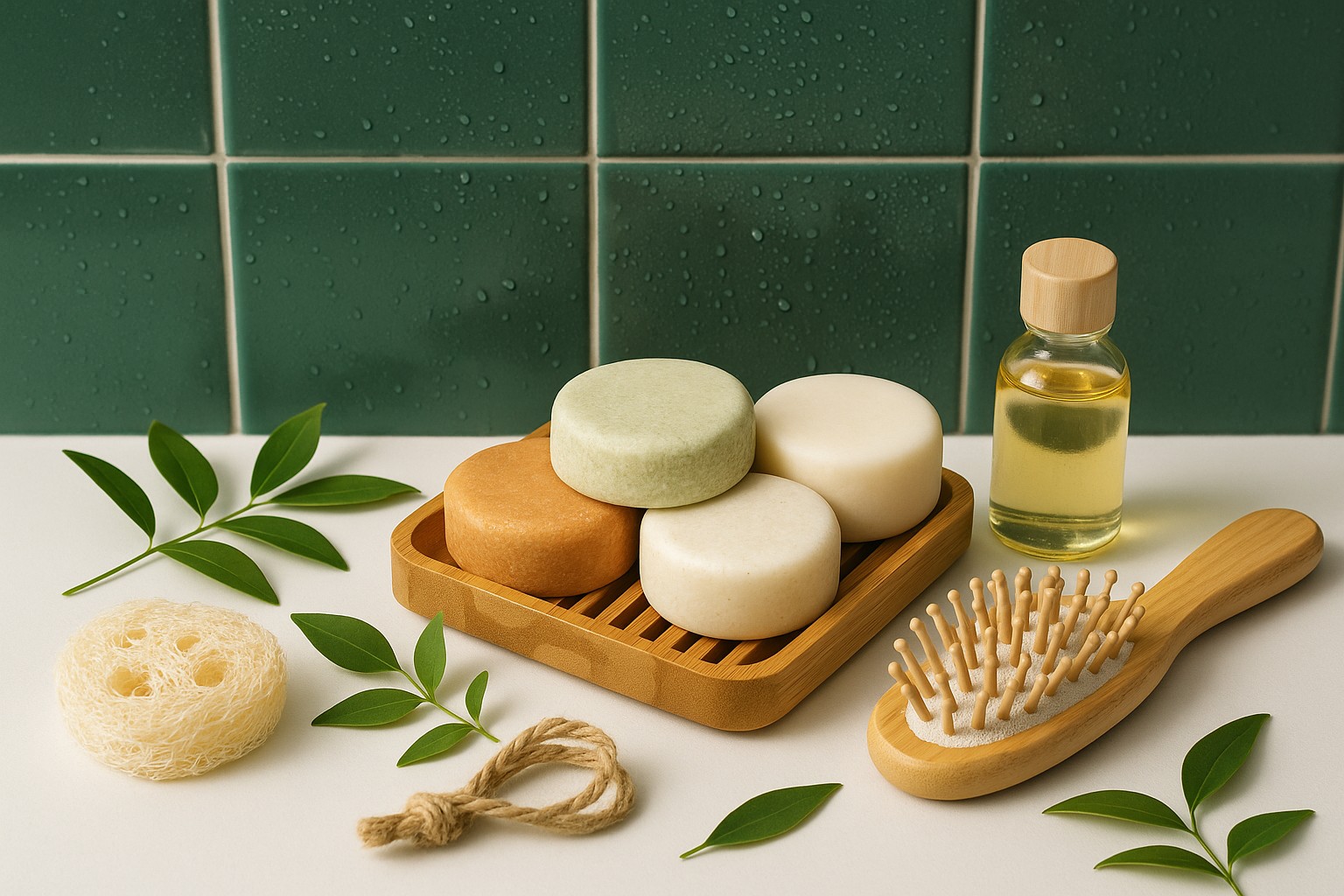
Featured Options Compared in This Guide
Full specs & notes ↓Choose Ethique GENTLE if fragrance avoidance is your main requirement, HiBAR Volumize if you want a bar aimed at fine hair and tolerate its citrus scent, or Plaine Products if you prefer liquid shampoo and will return its bottles. Ethique SMOOTHING is another option for frizz-focused care, but it contains both fragrance and sodium coco-sulfate.
These choices reduce disposable packaging in different ways. None earns a universal “most sustainable” ranking from its format alone: whether you finish the product, care for the bar, or return the bottle matters.
Compare the current options
| Option | Formula details that affect fit | Packaging habit required |
|---|---|---|
| Ethique GENTLE Shampoo Bar | Fragrance-free; no essential oils; sulfate-free; marketed for sensitive scalps and color-treated hair | Store dry between uses |
| Ethique SMOOTHING Shampoo Bar | Frizz-focused; contains sodium coco-sulfate and fragrance, including listed linalool | Keep away from standing water |
| HiBAR Volumize Shampoo Bar | Marketed for fine/thin and color-treated hair; lists rice protein, amino acids, and citrus/ginger fragrance oils | Stand on a draining surface |
| Plaine Products liquid shampoo system | Liquid format with scented and unscented choices | Keep the pump and return eligible aluminum bottles |
Ethique: the exact bar matters
The GENTLE formula lists sodium cocoyl isethionate and sodium cocoyl glycinate along with cocoa butter, babassu oil, and betaine. The SMOOTHING formula has a different ingredient list, including sodium coco-sulfate, fragrance, and linalool.
That difference matters more than a brand-wide “clean” description. Choose GENTLE when avoiding scent is a priority. Compare SMOOTHING when its frizz-focused positioning fits your goals and those ingredients suit you. The presence of a sulfate is not proof that a shampoo is bad; it means the product does not meet a sulfate-free shopping requirement.
For conditioning, the GENTLE Conditioner Bar is a separate product with a different job. Ethique directs users to glide it over wet mid-lengths and ends after shampooing, distribute it, and rinse. Conditioner does not have to produce shampoo-like foam to be applied correctly.
HiBAR: a fine-hair candidate with fragrance
HiBAR Volumize is positioned for fine or thin hair and is labeled suitable for color-treated hair. Its current ingredient list includes sodium cocoyl isethionate, rice-derived ingredients, and a natural fragrance blend of citrus peel and ginger oils.
Consider it if that hair-care purpose and the shaped bar appeal to you. “No synthetic fragrance” is different from fragrance-free. Its volumizing positioning should not be read as a medical treatment for hair loss, nor should a manufacturer performance claim be treated as a personal result guarantee.
HiBAR says to wet hair thoroughly, work the bar over the scalp and roots, massage, and rinse. Store it away from puddles and direct shower water.
Plaine: keep liquid, reuse the packaging
Plaine Products sends shampoo and conditioner in aluminum bottles. Order a replacement when needed, transfer the pump, and send eligible empty bottles back for cleaning and reuse through the brand’s return-label process. The pump is reusable rather than absent. Plaine return instructions.
The system is most useful if returns fit your habits. Keep the shipping cap and box, rinse and dry empty bottles as instructed, and check reuse eligibility. Damaged containers and travel sizes are treated differently. Plaine FAQ.
A refill system still uses energy for shipping and cleaning. Without comparable life-cycle data, there is no basis for a precise carbon-saving claim against a particular shampoo bar or local liquid shampoo.
If your first bar leaves hair waxy or uncomfortable
Do not assume the scalp needs to detox. First check that the product is intended as shampoo, wet hair thoroughly, use only enough to clean the scalp, and rinse completely. Keep the rest of your routine steady so you can judge the change.
If residue persists, the formula, amount, or water conditions may not suit you. Ask the manufacturer about compatibility instead of repeatedly adding homemade vinegar or acid rinses. A liquid shampoo that works for you remains an option. Stop a product that causes scalp irritation.
Persistent flaking is a separate issue. The AAD recommends dandruff shampoos with labeled actives such as ketoconazole, selenium sulfide, or zinc pyrithione, used according to the product’s directions. Do not infer medicated treatment from a botanical ingredient or a “soothing” bar name. Seek dermatology advice if dandruff is severe or does not improve. AAD dandruff guidance.
Start with one shampoo change, retain a conditioner that works, and judge the complete routine. For other packaging swaps, see plastic-free beauty options.
Where to browse
Prices and availability change. These search listings are a place to check the current product.
Sources
Products Compared in This Guide
Ethique shampoo bar
Compare current manufacturer specifications, materials, and package options for Ethique shampoo bar.
HiBAR shampoo bar
Compare current manufacturer specifications, materials, and package options for HiBAR shampoo bar.
Plaine hair
Compare current manufacturer specifications, materials, and package options for Plaine hair.
Frequently Asked Questions
Which shampoo bar here is fragrance-free?
Ethique GENTLE Shampoo Bar is described as free of added fragrance and essential oils. Ethique SMOOTHING and HiBAR Volumize contain fragrance ingredients.
Do I need a shampoo-bar detox period?
Do not assume waxiness or scalp irritation must be endured for weeks. Check the formula, application amount, rinsing, and water conditions. Stop a product that irritates your scalp.
Can any shampoo bar treat dandruff?
No. Choose a dandruff treatment by its labeled active ingredient and directions. Cosmetic shampoo bars should not be assumed equivalent to medicated shampoo.