Organic Wool Blankets: Warmth, Weight and Certification (2026)
Compare wool blanket materials, published weights and washing instructions, and understand what organic certification says about warmth and sourcing.
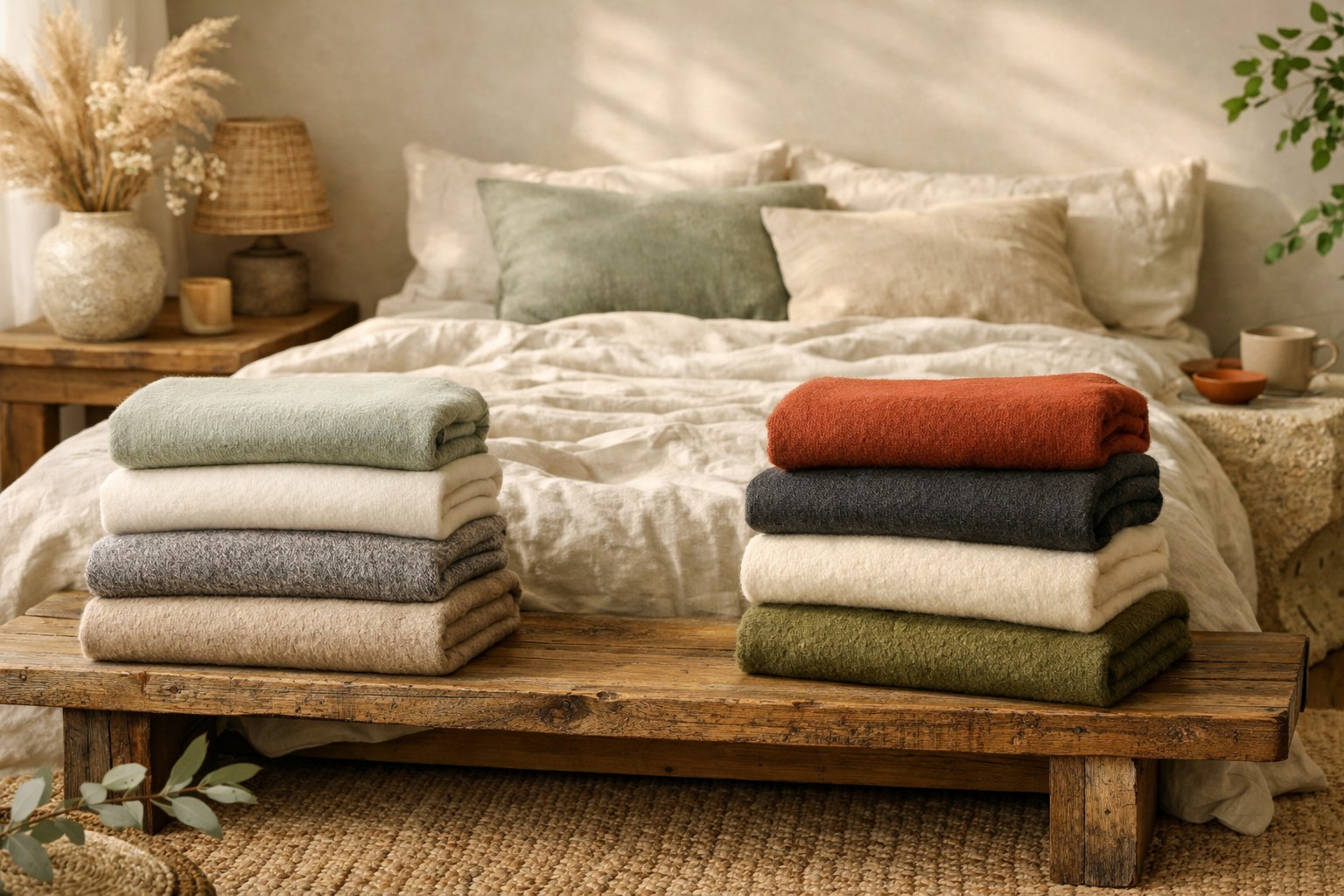
Featured Options Compared in This Guide
Full specs & notes ↓A wool blanket can absorb moisture vapor and provide insulation, but those properties do not guarantee a comfortable night under every blanket. Organic certification answers a different question: how the fiber and textile supply chain meet defined requirements. It does not tell you whether a blanket will feel too warm.
For a washable wool bed blanket, Pendleton Eco-Wise and Faribault Pure & Simple offer concrete specifications worth comparing. Neither product page establishes organic certification. Woolly Mammoth describes a wool blend intended for outdoor warmth. These are distinct choices, with no basis for assigning them bedroom temperature ranges or declaring a cooling winner.
What wool can—and cannot—tell you about warmth
Woolmark explains that wool’s natural waviness helps trap insulating air, while its internal structure can absorb moisture vapor. Those mechanisms explain why wool can help manage warmth and moisture; they do not establish the performance of a particular finished blanket. A fiber description is not a blanket temperature rating. Source: Woolmark
Keep three buying questions separate:
- Warmth: How much bedding do you need, and can you remove this layer easily?
- Feel: Will the blanket touch your skin, or sit above a sheet?
- Organic sourcing: Does the finished blanket carry an applicable certification?
Micron measurements describe fiber diameter. Coarser wool has a larger, not smaller, diameter. Woolmark associates finer fibers with less prickling against skin, but the word merino does not specify one narrow micron range or prove superior cooling. Use fineness information to assess likely feel, not to assign a room-temperature limit. Sources: CSU Extension, Woolmark
Pendleton and Faribault: a useful bed-blanket comparison
The following figures are manufacturer specifications. Total blanket weight refers to the stated size; GSM means grams per square meter of fabric.
| Detail | Pendleton Eco-Wise Wool Solid Blanket | Faribault Pure & Simple Wool Blanket |
|---|---|---|
| Fiber description | 100% virgin wool | 100% virgin wool |
| Twin dimensions and weight | 66 × 96 inches; 3.7 lb | 66 × 96 inches; 3.8 lb |
| Queen coverage and weight | Full/Queen: 90 × 96 inches; 5.5 lb | Queen: 90 × 96 inches; 5.4 lb |
| Separate full size | No separate full size listed | 80 × 96 inches; 4.8 lb |
| Fabric weight | GSM not stated | 477 GSM; described as middleweight |
| Published washing directions | Wash separately in cold water on gentle; no bleach; line dry | Machine wash; line dry |
| Manufacturing statement | Made in USA | Made in USA |
Sources: Pendleton Eco-Wise, Faribault Pure & Simple, Bone White.
Choose between them on fit and maintenance
For a full bed, Faribault offers a narrower option. Its full blanket is 80 inches wide, compared with Pendleton’s 90-inch Full/Queen. Choose according to the overhang you want and whether you tuck the sides under the mattress.
For a queen bed, weight does little to separate them. Both listed blankets measure 90 × 96 inches, and their published total weights are close. That does not establish equal insulation, but it gives no useful reason to classify one as a light summer blanket and the other as a heavy winter blanket.
Both allow machine washing and require line drying. Pendleton supplies more detailed cycle instructions on its page. If your routine depends on tumble drying large bedding, neither published care description supports that choice. Plan where the blanket will dry before buying. Sources: Pendleton, Faribault
Pendleton identifies the fiber as virgin wool, without specifying merino or a particular washable-wool treatment. Faribault’s US manufacturing statement does not establish where its sheep were raised. Neither page provides grounds to describe these blankets as certified organic or OEKO-TEX STANDARD 100 certified.
Woolly Mammoth: a blend for a different use
Woolly Mammoth describes its blankets as merino wool with a twill construction and milled finish. Its stated composition is 80% wool and 20% fibers described as dual-polymer; it also identifies polyester thread in the edging. The brand positions its Explorer blankets for cabins, campsites and an additional layer during cold nights. Source: Woolly Mammoth
This is a candidate for someone seeking a wool-blend outdoor blanket, rather than someone requiring all-wool fabric. The brand page does not supply enough dimensions, weight or washing instructions to compare it directly with the bed blankets above. Its FAQ headings alone do not establish machine washability.
The synthetic component does not justify claiming that all moisture management disappears. Equally, the wool percentage does not establish how warm the finished blanket will feel. Do not choose it over a bed blanket on an assumed weight or temperature advantage.
A plush blanket is not necessarily wool
Barefoot Dreams identifies its CozyChic Malibu Blanket as a jacquard knit made with CozyChic fabric, which the same page describes as 100% polyester microfiber. It is not a cashmere-wool alternative for an organic wool shortlist. Its stated material is enough to rule it out when wool content is your requirement; it does not establish whether an individual sleeper would overheat under it. Source: Barefoot Dreams
When organic certification is the deciding factor
GOTS covers textile processing through the finished product, including environmental, chemical and social criteria. Its two label grades have different organic-fiber thresholds:
- Organic: at least 95% certified organic fibers.
- Made with Organic Materials: at least 70% certified organic fibers.
GOTS can apply to wool, and it allows specified additional fibers. A GOTS label therefore does not automatically mean a blanket contains 100% wool. Read the certification grade alongside the fiber composition. Source: GOTS key features
OEKO-TEX STANDARD 100 concerns testing textiles and their components for harmful substances against the standard’s criteria. It does not establish organic wool sourcing or temperature performance. The organization provides a certificate-number or QR-code check for label validity. Source: OEKO-TEX STANDARD 100
If certified organic wool is essential, neither Pendleton nor Faribault above meets that buying requirement on the strength of its product description. Ask for certification covering the particular finished blanket before treating it as an organic option. A brand name, domestic manufacturing claim or general sustainability statement cannot answer that question.
Make the warmth decision around your existing bed
If you often feel too warm: decide which existing layer the wool blanket would replace. Start with it as a removable layer above your sheet instead of automatically adding it beneath your current comforter. Neither of the two bed blankets has a supported maximum bedroom temperature.
If you usually need more warmth: compare coverage first. A blanket that gives you the overhang you want may be more useful than choosing by a small difference in total weight. Faribault describes Pure & Simple as a layering blanket; that is a practical way to use it without assuming it replaces every winter bedding setup. Source: Faribault
If wool feels prickly: prioritize an opportunity to feel the fabric and return terms that suit your purchase. A sheet between you and the blanket is another option. Organic certification does not specify softness, and a merino label alone does not give the finished blanket’s fiber diameter. Sources: Woolmark, GOTS
For broader bedding certification questions, see GOTS vs. OEKO-TEX for bedding.
Sources
- Pendleton: Eco-Wise Wool Solid Blanket
- Faribault Mill: Pure & Simple Wool Blanket, Bone White
- Woolly Mammoth: blanket materials and construction
- Barefoot Dreams: CozyChic Malibu Blanket
- GOTS: key features and label grades
- OEKO-TEX: STANDARD 100
- Woolmark: wool fiber structure and properties
- Colorado State University Extension: glossary of wool and fiber terms
Products Compared in This Guide
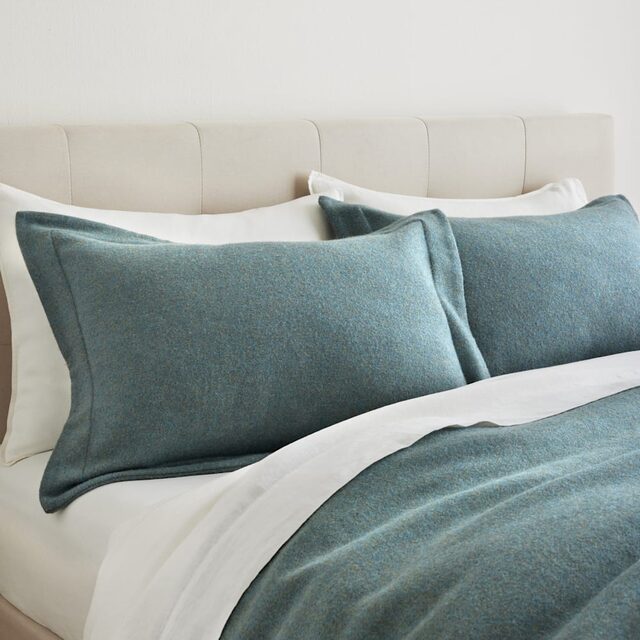
Pendleton Eco-Wise Wool Blanket (Twin)
100% American-grown merino wool, woven in Oregon. Washable wool (treated with a superwash process — OEKO-TEX certified). Temperature regulation was the best in the test: stayed comfortable across 55–75°F room temperatures. 300 gram weight — light enough for three-season use. Not GOTS but Pendleton's supply chain is US-traceable.
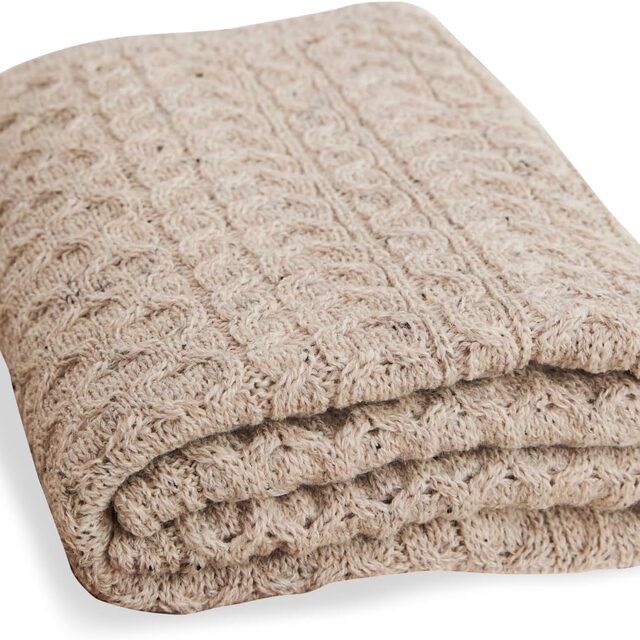
Woolly Mammoth Woolen Co. Merino Throw
500 gram merino wool, no superwash treatment (hand-wash or wool cycle). The heavier weight performs better in cold weather than the Pendleton. In rooms above 70°F, runs slightly warm. Best for cold climates or people who sleep cold year-round.
Coyuchi Pacific Merino Wool Blanket (Full/Queen)
GOTS-certified, organic merino. The most rigorously certified wool blanket in the test. Temperature performance matched the Pendleton Eco-Wise at equivalent weights. The certified supply chain and GOTS verification justify the price premium for buyers who prioritize chain-of-custody.
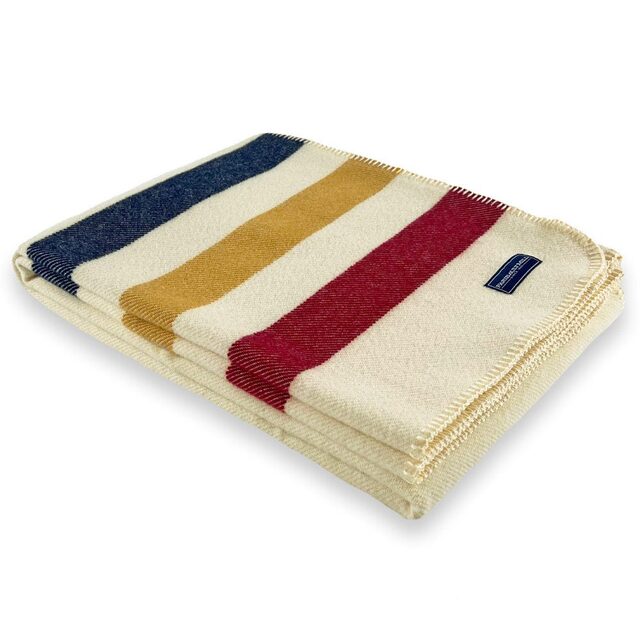
Faribault Mill Wool Blanket (Full)
American-made, 100% pure wool, woven in Minnesota since 1865. Not certified organic but US-traceable. Heavier weave (400g) performs well in variable temperatures. The blanket structure is denser than merino throws — it's a proper bed blanket, not a couch drape.