Off-Grid Cabin Solar: Load Worksheet and Component Choices
Use a hypothetical cabin energy worksheet to compare storage and solar assumptions, then assess controller limits, inverter demand, and backup connections.
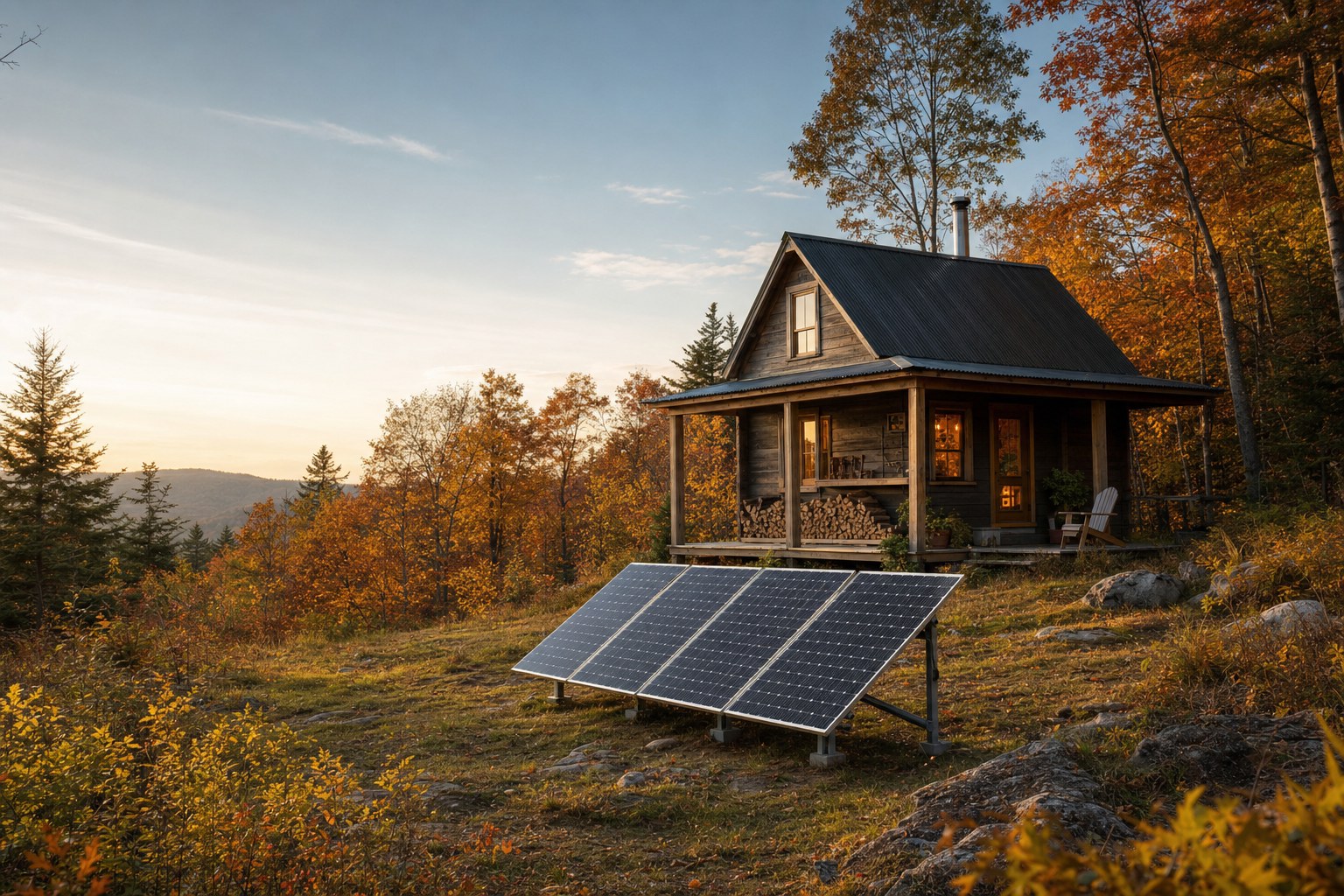
Featured Options Compared in This Guide
Full specs & notes ↓An off-grid cabin plan needs to answer two separate questions: how much energy you want available over a day, and which appliances must run together. A daily energy budget helps frame storage and generation choices. Inverter selection also requires simultaneous demand, startup loads, and the battery system’s ability to supply them—considerations described in Victron’s inverter/charger selection guide.
Start by defining the cabin’s use: occasional weekends, extended seasonal stays, or year-round occupancy. Write down what must stay powered between visits and what you are willing to switch off during a shortfall. Those decisions make a quote more useful than a panel count alone.
A cabin energy worksheet—with explicit assumptions
Use a load sheet with columns for appliance, daily energy, intended operating hours, and whether it remains on while the cabin is empty. Keep assumed consumption clearly separate from recorded consumption.
The following is an invented arithmetic example totaling 2,000Wh per day. None of its entries represents an appliance measurement or a typical-use claim.
| Load | Assumption for this example | Daily energy |
|---|---|---|
| Refrigeration | Assigned daily allowance | 800Wh |
| Lights | Constant 40W for 5 hours | 200Wh |
| Laptop | Constant 50W for 4 hours | 200Wh |
| Phones and small electronics | Assigned daily allowance | 100Wh |
| Water pump | Constant 400W for 0.5 hour | 200Wh |
| Internet equipment | Constant 15W for 24 hours | 360Wh |
| Other small loads | Assigned daily allowance | 140Wh |
| Total | 2,000Wh |
Heating, hot water, cooking, and equipment self-consumption are outside this example. Put any intended electrical uses in your own worksheet before comparing proposals.
For an intermittently occupied cabin, make separate occupied-day and empty-cabin sheets. In this example, leaving internet equipment on accounts for 360Wh each day whether anyone visits or not. If remote connectivity is optional, ask for proposals with and without that ongoing load. If refrigeration must remain on, identify it as an essential load rather than treating the empty cabin as having zero demand.
What the storage and array arithmetic can tell you
These calculations show how assumptions change a result. They are not a battery recommendation, a site forecast, or a complete sizing method.
Suppose the example must deliver 2,000Wh daily for two days without charging. That is 4,000Wh at the loads. Now assume, solely for this exercise, that 80% of nominal battery energy is available for use and 90% of that energy reaches the loads:
Nominal energy in this example = 4,000Wh ÷ (0.80 × 0.90) ≈ 5,556Wh.
The percentages are chosen inputs, not established performance figures for a battery or inverter. The result does not specify a battery bank, temperature allowance, aging allowance, or approved operating limits. For a purchasing decision, request the proposed battery’s documented usable energy and the losses included in the designer’s calculation.
For the array, consider a second simplified exercise. Assume daily delivered energy equals array watts multiplied by equivalent full-sun hours and an arbitrary 0.75 delivery factor:
| Assumed solar resource | Arithmetic to balance 2,000Wh/day | Result |
|---|---|---|
| 4 equivalent full-sun hours/day | 2,000 ÷ (4 × 0.75) | About 667W |
| 2 equivalent full-sun hours/day | 2,000 ÷ (2 × 0.75) | About 1,333W |
Halving the assumed resource doubles the calculated array size in this exercise. Neither row describes your cabin’s summer or winter production. The battery and array exercises are separate; their loss assumptions have not been reconciled into a system model.
There is also a recovery question. An assumed 2,000Wh of daily delivery serving 2,000Wh of daily demand leaves no surplus in this simplified balance. Ask a designer to show how a proposed system restores depleted storage while continuing to serve the cabin, and what happens if poor production continues.
PVWatts estimates grid-connected photovoltaic production. Its overview describes weather data and production-model updates, including monthly irradiance-loss inputs. That scope does not establish off-grid battery reserve or cabin reliability. Request a proposal that identifies the production assumptions for your occupancy months and explains the storage and shortfall calculations separately.
Compare charge controllers against the proposed array
The Victron SmartSolar MPPT 100/30 and 100/50 illustrate why a controller should be chosen alongside the battery voltage and array configuration.
| Published specification | SmartSolar MPPT 100/30 | SmartSolar MPPT 100/50 |
|---|---|---|
| Supported battery voltage | 12V or 24V | 12V or 24V |
| Rated charging current | 30A | 50A |
| Nominal PV power at 12V | 440W | 700W |
| Nominal PV power at 24V | 880W | 1,400W |
| Maximum PV open-circuit voltage | 100V | 100V |
| Maximum PV short-circuit current | 35A | 60A |
Source: Victron technical specifications. These are controller specifications, not daily energy outputs.
For a proposed 24V cabin system, the 100/50 offers more rated charging current and higher nominal PV power than the 100/30. Neither supports a 48V battery system. The hypothetical 1,333W array calculation is below the 100/50’s listed 1,400W nominal figure at 24V, but that comparison alone does not establish compatibility.
Victron states that excess connected PV power is limited by the controller. That does not remove the separate voltage and current constraints. Its installation manual requires array open-circuit voltage to stay within 100V and directs the designer to account for the panels’ voltage temperature coefficient: open-circuit voltage rises below 25°C. The specifications also require PV voltage to exceed battery voltage by 5V for startup, with a smaller 1V difference sufficient afterward.
For a woodland cabin, ask for the actual panel arrangement and cold-voltage calculation with the quote. A total array wattage cannot answer those compatibility questions.
Choose the inverter around simultaneous cabin use
The worksheet’s pump entry contributes only 200Wh per day under its assumptions. It does not establish what inverter can start the pump. Victron identifies pumps, compressors, and motors as examples of loads whose startup demand can exceed running demand. The inverter must also support appliances operating together. Source: Victron selection guide.
Give the designer concrete combinations to assess: the pump starting while refrigeration and lights run, or kitchen appliances operating during normal cabin use. Request the selected model’s continuous output, applicable startup capability, and output at the expected enclosure temperature.
Compare both watts and VA where specified. Victron explains that some loads require more apparent power, expressed in VA, than the real power they consume in watts. A model’s VA designation therefore should not be treated as an identical watt rating. If a well pump requires 240V, include that requirement explicitly; Victron describes 120/240V configurations as systems requiring appropriate equipment and installer design. Source: Victron selection guide.
Battery voltage is another system choice. Victron notes that higher voltage reduces current for a given power demand, while DC appliance voltage, cable length, and system size also affect selection. Its guide requires the battery, battery management system, conductors, and protection to support continuous and surge demands. This is why an inverter choice cannot rest on daily watt-hours alone.
Decide whether backup AC charging belongs in the system
If you intend to charge from a generator, include that requirement before selecting the inverter. Victron describes an inverter/charger as combining battery-to-AC conversion, battery charging, and automatic transfer. It suggests a standalone inverter for systems that do not need grid or generator charging. Source: Victron selection guide.
Within Victron’s ranges, MultiPlus provides one AC input, while Quattro provides two with source switching. A cabin with one planned generator connection therefore has a different input requirement from a system intended to accept two external AC sources. The second input is useful only if the design calls for it.
Victron also describes PowerControl, which reduces charging demand as other loads consume the available AC supply. Its guide excludes the 500VA model from that feature. Have the quote identify the exact inverter/charger, available input current, and charging behavior while cabin appliances are running; the range name alone does not establish the complete arrangement.
Make the equipment location part of the quote
A small utility cupboard still needs to meet the equipment’s installation requirements. For these SmartSolar controllers, Victron specifies vertical mounting on a nonflammable surface, terminals downward, at least 10cm clearance above and below, and placement within 3m of—but not directly above—the battery. The manual also requires guarded connections and battery-side fuse protection. Source: installation manual.
For winter use, distinguish controller ratings from battery requirements. The controller specifications list operation from −30°C to +60°C, with full rated output up to 40°C. Those figures do not establish a connected battery’s charging-temperature limits. For temperature-compensated charging, the installation manual calls for close controller and battery ambient temperatures or direct battery temperature sensing where larger differences are expected. Sources: specifications, installation.
Before accepting a winter-use proposal, request the selected battery’s charging limits and an explanation of operation at the planned enclosure temperature. Do not treat the controller’s cold-weather rating as an answer for the whole system.
Compare cabin quotes against the same occupied-day loads, unattended loads, reserve assumptions, and backup requirements. Ask each designer to identify what remains powered during a shortfall and how storage is replenished afterward.
If your design calls for this controller, search Amazon for the Victron SmartSolar MPPT 100/50. This is an affiliate search link; GreenChoice may earn a commission from qualifying purchases. Search results do not establish compatibility or a particular offer.
Sources
Products Compared in This Guide
The Victron SmartSolar MPPT 100/50
Compare current manufacturer specifications, materials, and package options for The Victron SmartSolar MPPT 100/50.
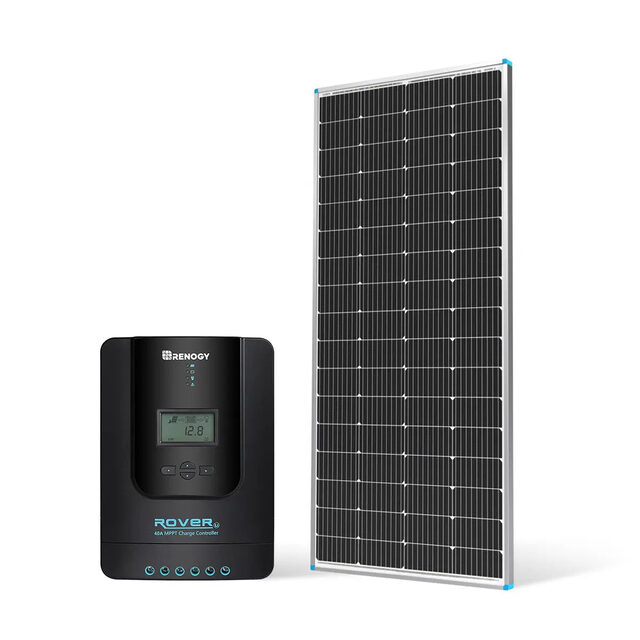
Renogy 200W 12V Monocrystalline Panel (4-Pack)
The foundation of a cabin solar array. Four 200W panels give you 800W—enough for a 4-season 1-2 person cabin with LED lighting, small appliances, a chest freezer, and device charging. 25-year power output warranty, pre-drilled for ground or roof mounting.
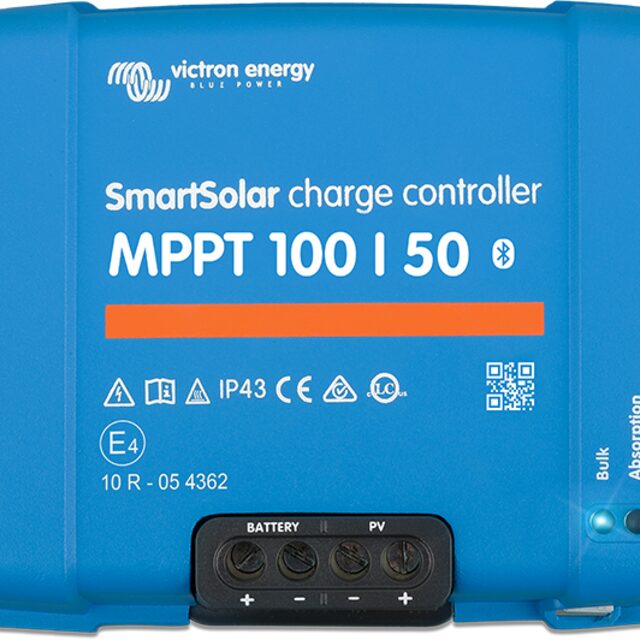
Victron SmartSolar MPPT 100/50
The professional-grade MPPT controller for cabin systems up to 700W (12V) or 1,400W (24V). Bluetooth built-in, integrates with Victron's Cerbo GX ecosystem, highly reliable. The 50A rating handles most 24V cabin builds. Industry standard.
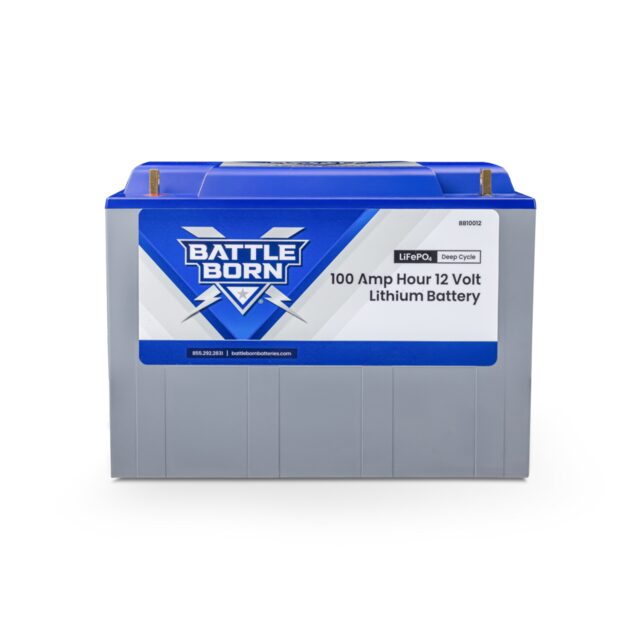
Battle Born 100Ah 12V LiFePO4 Battery (2-Pack)
200Ah LiFePO4 battery bank—the standard starting point for a serious off-grid cabin. 160–190Ah usable capacity handles 2–3 days of cloudy weather for a cabin drawing 600–800Wh/day. Built-in BMS, 10-year warranty, heated for cold-climate charging.