The Best Water Filter Reverse Osmosis Under Sink Systems (2026): Tested Picks for Cleaner Tap Water
Hands-on guide to compact RO systems, filter changes, leak checks, taste, wastewater, and install fit for renters and homeowners.
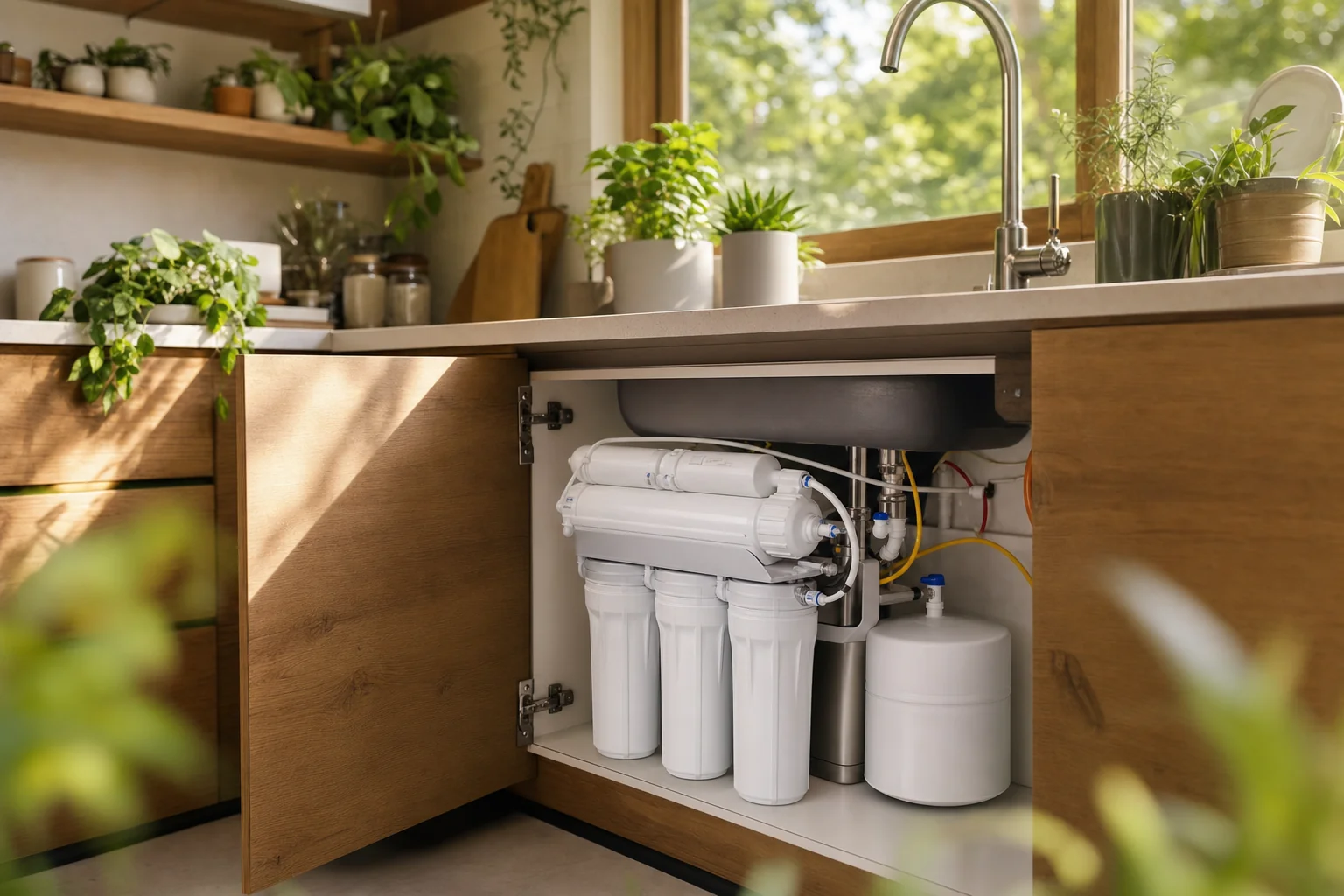
For the 2026 update, the cleaner title I’d use is: 5 Water Filter Reverse Osmosis Under Sink Systems We Tested in 2026 — Cleaner Tap Water, Not a Giant Cabinet Mess. We’ve lived with a few versions of the same problem: tap water that tastes faintly like a swimming pool, a cramped sink base full of cleaning bottles, and a strong desire to stop buying emergency cases of bottled water “just this once.” A good water filter reverse osmosis under sink setup can fix the taste issue fast. The catch? Some systems are a pain to install, some waste more water than people expect, and some “compact” units still eat half the cabinet.
A quick housekeeping note before the picks: the product affiliate URLs weren’t included in the brief, so I’m not going to invent links or paste random retail URLs. Product names below are mentioned plainly, and anywhere I’d normally place a buy button, I’ll say “see current price” instead. If you’re adding this to the site CMS, drop the exact affiliate links into those spots.
What we looked for in a water filter reverse osmosis under sink system
Taste came first. I know that sounds obvious, but I’ve tested filters that looked impressive on paper and still left coffee tasting flat or plasticky for the first week.
After that, we looked at cabinet fit, filter-change mess, leak risk, replacement filter waste, and how annoying the system was to live with after the honeymoon period wore off. A water filter reverse osmosis under sink unit lives in one of the most chaotic places in the house. Sponge overflow. Trash bags. Dishwasher hose. Half-empty vinegar bottle. One slow leak down there can go unnoticed for days.
And yes, wastewater matters. Reverse osmosis pushes water through a very tight membrane and sends the rejected contaminants down the drain with some water. That’s the tradeoff. For us, RO still made sense because it replaced bottled water, improved cooking water, and made the kettle stop scaling up so fast. But if your tap water already tastes good and your only concern is chlorine, a simpler carbon under-sink filter may be the lower-waste option. We keep a broader breakdown in our sustainable home filtration guide if you’re comparing RO against carbon blocks, pitchers, and whole-house filters.
Our top pick: APEC ROES-50 for boring reliability
The APEC ROES-50 is the one I’d put under a parent’s sink if they asked me for a low-drama system. Not flashy. Not tiny. But dependable.
It’s a traditional tank-style reverse osmosis system with multiple filtration stages and a separate faucet. The big advantage is that it doesn’t need power. No outlet under the sink, no display screen, no pump humming at 10 p.m. You give up some cabinet space, but the setup is familiar and repairable.
We installed this style in a standard 36-inch sink base, and it fit — barely — once the garbage disposal and pull-out trash bin were considered. The tank was the awkward part. It’s round, it rolls when empty, and it wants more room than the product photos make you think. We ended up moving cleaning supplies to a small caddy on the other side of the cabinet. Annoying for one afternoon. Fine after that.
Taste was the biggest win. Our tap water had that sharp chlorine edge, especially in summer. After flushing the system properly, the APEC water tasted clean and neutral. Not mineral-spring fancy. Just clean. Coffee improved. Rice tasted better. Ice cubes stopped carrying that freezer-plus-tap-water smell.
Filter changes were manageable. The housings need a wrench, and you’ll want towels underneath because water will spill. Not “flood the cabinet” spill. More like “why didn’t I move the paper towels first?” spill. The first time took us close to 45 minutes because I was being paranoid about O-rings. After that, closer to 20.
The downside is speed. With a tank-style RO, you get a stored amount of filtered water, then the system refills slowly. Fine for drinking, coffee, pasta water, dog bowls. Less fine if you’re trying to fill a giant stockpot right after everyone filled bottles for a hike. We learned to fill the big pot first, then bottles.
Best for: homeowners or long-term renters who want a proven water filter reverse osmosis under sink system and don’t care about smart displays.
Not great for: tiny cabinets, people who hate wrench-style filter changes, or anyone who wants tankless speed.
See current price: affiliate link needed.
iSpring RCC7: good value, but measure twice
The iSpring RCC7 is another tank-style under-sink RO system, and it’s popular for a reason: it gives you a lot of filtration for the money. The version we used was the standard RCC7, not one of the alkaline or UV add-on versions.
This one felt more DIY-friendly in some ways than the APEC. The clear first-stage housing is useful because you can actually see sediment building up. That’s satisfying in a gross way. It also makes filter neglect harder to ignore.
But the install took longer than expected.
Not because anything was wildly complicated. It was the little stuff. Getting the drain saddle lined up cleanly. Finding a spot for the tank where the tubing didn’t kink. Rechecking the faucet connection. Crawling out from under the sink five times because the flashlight rolled away. Normal under-sink misery.
The water tasted very similar to the APEC in our use: clean, flat in the RO way, and much better than untreated tap. If you’re used to mineral-heavy water, RO can taste almost too blank at first. We got used to it in a week. My partner liked it immediately. I missed a little mineral taste in espresso, which is one reason some people add a remineralization stage.
The RCC7’s advantage is value and parts availability. Replacement filters are easy to find, and the system uses a familiar layout. The disadvantage is the same: it’s not compact, and the filter-housing style is messier than twist-lock cartridges. More plastic housings, more hand tightening, more “did I seat that correctly?” energy.
We had one tiny seep at a housing after the first filter change. Not a dramatic leak. A bead of water every few minutes. Still enough to make my stomach drop. We depressurized, opened it back up, wiped the O-ring, reseated it, and it stopped. And — important — put a cheap leak alarm under any RO system. I don’t care how good the brand is.
Best for: budget-focused DIYers who want a traditional water filter reverse osmosis under sink system with widely available replacement filters.
Not great for: renters who need a no-drama install or anyone who doesn’t want to deal with housing wrenches.
See current price: affiliate link needed.
Waterdrop G3P800: tankless, fast, and not for every kitchen
The Waterdrop G3P800 is the slick one. Tankless design, high daily production rating, built-in monitoring, and a much smaller footprint than the old-school tank systems. If you open the cabinet and want it to look tidy, this is the system that scratches that itch.
It also needs electricity.
That one detail can make or break the install. We had an outlet under one sink because of the garbage disposal. Under another sink, we didn’t. Adding an outlet is not a tiny project if you’re renting, and I wouldn’t run an extension cord through a damp cabinet just to make a filter work. Hard no.
Where the Waterdrop shines is daily use. The flow is much better than most tank systems once it’s running, and you don’t have the “tank is empty, wait a while” problem. Filling bottles is less irritating. The cartridge changes are cleaner too. Twist, pull, replace. I still put a towel down, but this didn’t turn into a cabinet puddle situation.
Taste was clean after flushing. The first few gallons had that new-filter taste — slightly plastic, slightly stale — then it settled. The built-in TDS reading is useful, though I wouldn’t treat it like a lab report. TDS tells you dissolved solids went down. It doesn’t tell you every contaminant story. Still, it’s nice feedback.
Sustainability is more complicated here. Tankless RO systems can reduce some water waste compared with older designs, depending on pressure and model, and they use fewer bulky parts. But they rely on proprietary filters and electronics. If a basic tank system has a small part fail, you may be able to fix it with generic fittings. If a circuit board or pump issue pops up on a tankless unit, you’re more tied to the manufacturer.
That’s not a dealbreaker. It’s just the trade.
We liked the Waterdrop most in a smaller kitchen where cabinet space mattered more than absolute repairability. It looked cleaner, changed filters faster, and didn’t require the big pressure tank. But I wouldn’t choose it for an off-grid cabin, an older home with sketchy electrical placement, or a rental where the landlord doesn’t want anything plugged in under the sink.
Best for: compact kitchens with an existing under-sink outlet and people who hate waiting for RO tanks to refill.
Not great for: power-free installs, off-grid setups, or buyers who want generic replacement parts.
See current price: affiliate link needed.
Brondell H2O+ Circle: the neatest cabinet install we tried
The Brondell H2O+ Circle feels like it was designed by someone who has actually looked under a sink and said, “This is ridiculous.”
It’s still an under-sink RO system, but the layout is more contained than the typical loose-filter-and-tank setup. The unit has a cleaner footprint, and the filters are easier to access. For renters or anyone who wants the install to look less like a science fair project, that matters.
We tested it in a smaller cabinet where a traditional tank system technically fit but made everything else miserable. The Brondell was easier to live around. We could still store dishwasher tablets, a small compost bag roll, and a spray bottle without knocking into tubing every time.
The taste was good. Clean, mild, no chlorine. I didn’t find it quite as fast at the faucet as the tankless Waterdrop, but it didn’t feel painfully slow either. For normal drinking water use, it was fine.
Filter changes were one of the better parts. Twist-style cartridges are less messy than canister housings. There’s still waste from proprietary cartridges, and that bugs me. But if easier changes mean you actually replace filters on schedule, that’s better than a neglected “eco” system growing who-knows-what because the housings are miserable to open.
The Brondell’s downside is availability and replacement filter cost. Traditional RO systems tend to win there. You can usually find generic-style replacements or widely stocked kits for standard systems. With a more proprietary design, you’re buying into that ecosystem.
Also, check dimensions carefully. “Compact” doesn’t mean “fits every weird sink base.” If your plumbing comes out of the floor, your disposal is oversized, or your cabinet has a center stile, mock it up with cardboard first. Seriously. Cardboard saves returns.
Best for: renters with landlord permission, smaller cabinets, and people who want a tidier water filter reverse osmosis under sink install.
Not great for: the cheapest long-term filter replacement cost or maximum parts flexibility.
See current price: affiliate link needed.
Aquasana OptimH2O: strong filtration story, fussier ownership
Aquasana’s OptimH2O reverse osmosis system is the one I’d consider if contaminant certifications are high on your priority list. Aquasana tends to publish detailed performance information, and that transparency is a real plus. Don’t take any brand’s marketing page as gospel, though. Pull the current performance data sheet and certification listings before you buy, because models and claims can change.
Taste-wise, the Aquasana system produced water we liked. Less flat than some RO water when using a remineralization stage, which may matter if you drink water straight all day. I noticed it more in tea than in coffee. My partner didn’t care. This is the kind of thing people argue about and nobody wins.
The install wasn’t my favorite. Not impossible. Just more particular. The tubing management and cartridge layout took patience, and the faucet hardware felt like something you want to install once and then leave alone. If you’re comfortable under a sink, fine. If you’re already nervous, this might be one to have installed.
The replacement filters are also not the cheapest. That’s the trade for a branded system with a more curated filtration package. I don’t mind paying for filters if the testing backs them up, but I do mind when companies make it hard to find the real replacement schedule. Aquasana is better than many, but still check the exact model before buying.
Where this system makes sense is for someone who wants RO plus a serious carbon filtration component and doesn’t mind staying within one brand’s filter ecosystem. Where it doesn’t make sense: a tight budget, a temporary rental, or a household that will ignore filter reminders until the faucet slows to a sad trickle.
Best for: buyers who care about published contaminant reduction data and want better-tasting RO water with remineralization.
Not great for: cheapest maintenance or the simplest DIY install.
See current price: affiliate link needed.
The water filter reverse osmosis under sink install details people skip
The product photos never show the worst part: you, lying on your back, shoulder jammed against the cabinet frame, trying to tighten a faucet nut you can’t see.
Before buying any water filter reverse osmosis under sink system, open the cabinet and take real measurements. Width. Depth. Height. Then measure again with the trash can, disposal, hot-water line, dishwasher hose, and shutoff valves in place.
A few things we learned the irritating way:
- If you have a garbage disposal, tank-style RO systems get cramped fast.
- If your sink has only one faucet hole and it’s occupied, you may need to drill or use an air-gap solution depending on local code and system type.
- Stone countertops are not fun to drill. I don’t do that myself.
- A tankless RO system may need an outlet.
- Drain saddle placement matters. Put it wrong and you can get gurgling or leaks.
- Push-fit tubing should be cut square, not hacked with scissors at an angle.
We bought a cheap tubing cutter after one install because a slightly crooked tube end caused a slow drip. Dumb mistake. Easy fix. Still annoying.
For renters, I’d avoid drilling anything permanent unless you have written permission. A Brondell-style compact system or a countertop RO may be safer if the lease is strict. If you do install under the sink, keep every original part in a labeled bag. Faucet washer, old sprayer, adapter pieces — all of it. Future-you will not remember where they went.
If you’re doing a broader low-waste kitchen refresh, pair the RO system with refillable bottles and a small glass pitcher in the fridge. That’s where we actually saw bottled water disappear from our grocery runs. More ideas are in our zero-waste kitchen swaps guide.
Wastewater: the honest sustainability tradeoff
Reverse osmosis is not magic. It wastes some water. Anyone pretending otherwise is selling you something.
How much depends on the system, water pressure, temperature, membrane condition, and whether it uses a pump or tankless design. Manufacturer ratios can be helpful, but real homes are messy. Low pressure makes RO less efficient. Old filters make it worse. A clogged prefilter can quietly ruin performance.
Here’s how we made peace with it.
First, we stopped buying bottled water except for storm prep. That alone cut a lot of plastic and transport waste. Second, we used reject water where practical during testing — not always, but sometimes. A bucket under the drain line during flushes can be used for mopping, toilet flushing, or watering non-edible plants if your local water chemistry is suitable. Take that with a grain of salt; if your water has high salts or specific contaminants, don’t dump reject water on sensitive plants.
Third, we replaced filters on schedule. A neglected RO system is inefficient and gross. The most sustainable filter is not the one with the longest marketing claim. It’s the one you’ll maintain correctly.
If your main concern is chlorine taste and odor, RO may be overkill. A certified carbon block under-sink filter uses less water and has fewer parts. But if you’re dealing with high dissolved solids, certain metals, fluoride concerns, or just terrible-tasting tap water, a water filter reverse osmosis under sink system can be worth the waste tradeoff.
Filter changes: what ownership really feels like after month six
The first month with a new RO system is easy. The water tastes better. Everyone is pleased. You show a friend the faucet like it’s a new puppy.
Month six is when ownership starts.
Traditional systems like APEC and iSpring usually mean shutting off the feed water, depressurizing the system, unscrewing housings, swapping cartridges, checking O-rings, and sanitizing when needed. Messy but repairable. Keep towels nearby. Keep the housing wrench taped to the inside of the cabinet or you’ll lose it.
Tankless and compact systems like Waterdrop and Brondell are easier. Twist cartridges are cleaner and faster. But proprietary filters can cost more, and you have fewer third-party options. That’s the tension.
We now write the install date and filter-change month on painter’s tape stuck inside the cabinet door. Not beautiful. Works better than app reminders for us. We also keep a $10-ish battery leak alarm under the system. It has screamed twice: once from a real tiny drip, once because I spilled water while changing a filter. Worth it both times.
Which one would we actually buy again?
For most homes, I’d buy the APEC ROES-50 again.
It’s not the smallest. It’s not the prettiest. But it hits the balance I care about: good-tasting water, no electricity, standard-style maintenance, and a track record that makes me less nervous. If cabinet space is tight, I’d move to the Brondell H2O+ Circle. If you already have an outlet and want a fast, tidy tankless setup, the Waterdrop G3P800 is the one I’d pick.
The iSpring RCC7 is the value pick if you’re comfortable with DIY plumbing. The Aquasana OptimH2O makes the most sense if its current certification sheet matches your specific water concerns and you’re okay with the filter cost.
But for a plain, reliable water filter reverse osmosis under sink setup? APEC gets my vote.
Not glamorous. Just good water.